
5 Drawer Oak Chest of Drawers: The Complete Buying Guide
A five-drawer oak chest blends generous bedroom storage with the timeless warmth of solid hardwood. This guide breaks down dimensions, oak construction types, drawer glide systems, style options, and practical buying tips so you can choose with confidence.
Explore Recommended OptionsOn This Page
Why a 5 Drawer Oak Chest of Drawers Works So Well
Five drawers is the sweet spot for most bedrooms. It offers enough capacity for folded clothing, knitwear, and linens without demanding the floor space of a wide double dresser or the vertical footprint of a tallboy. Oak adds another layer of value: the dense grain resists everyday wear, ages gracefully, and pairs naturally with both painted walls and natural wood tones.
A 5 drawer oak chest typically sits between the compact five-drawer dresser category and the more storage-heavy six-drawer chest of drawers. That middle ground makes it a practical choice for primary bedrooms, guest rooms, and shared spaces where you want real storage without overwhelming the room.
Compared with a five-drawer pine chest of drawers, oak is harder and more resistant to dents, which matters in high-traffic rooms. Pine is lighter and shows a more casual character, while oak reads as more formal and structured. Neither is better in every case — the right pick depends on your room's style and how hard the piece will be used.
Dimensions, Capacity, and Drawer Layout
Understanding the standard size range helps you plan before you shop. A typical five-drawer oak chest falls into these approximate ranges:
| Layout Style | Typical Width | Typical Height | Best For |
|---|---|---|---|
| Single-column tall chest | 30–38 inches | 48–56 inches | Narrow bedrooms, small floor plans |
| Standard chest | 36–44 inches | 44–52 inches | Most primary and guest bedrooms |
| Wide two-column chest | 44–52 inches | 36–44 inches | Rooms needing a lower top surface |
Capacity depends on both drawer volume and how the space is divided. A single-column design with five stacked drawers usually gives you deeper drawers, which suits bulky items like sweaters and jeans. A two-column layout spreads storage across shallower drawers, which works better for folded tops, accessories, and delicates.
Measure three things before ordering: the wall width you can dedicate to the chest, the clearance needed for drawers to open fully (usually the drawer depth plus a few inches), and the height relative to your bed. A chest that stands noticeably taller than the mattress can feel top-heavy in a small room, while a lower profile keeps sightlines open. If your room is tight, the five-drawer wood dresser format may fit better than a tall chest, and if you need more width, stepping up to a six-drawer dresser 50 inches wide gives you a broader surface for the same vertical height.
Solid Oak vs Oak Veneer: What You Are Actually Buying
"Oak chest of drawers" can describe two very different constructions, and the distinction matters for durability and longevity.
Solid Oak Construction
Solid oak frames, drawer fronts, and side panels are the top-tier choice. Oak is a hard, dense hardwood with a pronounced grain, and a solid piece can be sanded and refinished several times over its life. Well-made solid oak chests use dovetail or box joints at the drawer corners and a reinforced frame at the base. Expect these pieces to be heavier and more stable, and to sit in the premium to luxury tier of the market.
Oak Veneer Over Engineered Wood
Oak veneer applies a thin layer of real oak over plywood or MDF. This delivers an authentic oak grain at a lighter weight and more consistent appearance, and the engineered core resists seasonal movement better than solid wood in humid climates. Veneer cannot be refinished as aggressively, so deep scratches are harder to repair. High-quality veneer chests sit in the mid-range to premium tier, while thinner veneer on particle board is typical of entry-level pieces.
How to Tell Them Apart
- Check the edges: Solid oak shows end grain at corners; veneer shows a thin layer with a visible core line.
- Look at the grain: Veneer patterns repeat across panels because they are cut from the same log slice.
- Check the weight: Solid oak is substantially heavier for the same dimensions.
- Inspect the drawer boxes: Quality solid oak chests often use solid wood drawer sides, while entry-level pieces use thinner plywood or MDF.
For a broader comparison of frame materials, see our guide to the five-drawer solid wood chest of drawers. If you are weighing oak against other hardwoods, the five-drawer wood chest of drawers overview covers walnut, maple, and mahogany alternatives.
Drawer Glides, Joints, and Hardware
The drawer mechanism is where mid-range and premium chests separate most clearly. A beautiful oak front is wasted if the drawers stick, wobble, or only open halfway.
Full-Extension Ball-Bearing Glides
Top-tier choice. Smooth, quiet, and rated for heavier loads, with full access to the back of the drawer. Often paired with soft-close dampers on premium models.
Side-Mounted Roller Glides
Common in mid-range chests. Reliable and smooth for typical bedroom loads, but usually three-quarter extension, so the back of the drawer stays partly hidden.
Wooden Center Glides
Traditional and found in entry-level and antique-style pieces. Charming, but more prone to sticking and seasonal swelling in humid rooms.
Dovetail vs Box Joints
Dovetail joints at drawer corners are the hallmark of professional-grade construction. Box or dowel joints are adequate for mid-tier pieces but less resistant to heavy use over decades.
Hardware matters more than many buyers expect. Solid brass or heavy zinc-alloy pulls feel substantial and resist loosening. Standardized pull spacing makes it easy to swap hardware later if your style changes — a small detail that extends the life of the piece. Soft-close glides are a worthwhile upgrade for bedrooms shared with light sleepers.
Weight ratings are another useful signal. Quality metal glides on a solid oak chest commonly support 50–75 pounds per drawer. Thicker drawer bottoms — usually 3/8 inch or more on premium pieces — prevent sagging when a drawer is loaded with denim or bedding.
Styles and Finishes for an Oak Chest
Oak's grain is bold and open, which makes it a strong visual element in a room. The finish you choose determines whether it reads as traditional, modern, or somewhere in between.
- Natural / clear finish: Shows the full grain and warm honey-to-tan tones. Works well in Scandinavian and organic-modern bedrooms.
- Whitewashed or limed oak: Softens the grain and brightens the room. A strong fit for coastal, farmhouse, and transitional styles.
- Smoked or fumed oak: Darker, richer, and more dramatic. Pairs well with moody or industrial-leaning rooms.
- Painted oak: Painted finishes over oak are common, though they obscure the grain. A painted oak chest still benefits from oak's density underneath.
- Two-tone: Oak tops with painted bases are a popular compromise that keeps the warmth of the grain while matching existing cabinetry.
Style also shapes the silhouette. Mid-century and modern oak chests favor tapered legs, flush fronts, and minimal hardware. Traditional chests use bracket feet, molded top edges, and more ornate pulls. If your room leans mid-century, the five-drawer dresser lineup includes several tapered-leg options, while farmhouse rooms often pair better with a six-drawer dresser and nightstand combination for a coordinated look.
Placement and Room Fit
A five-drawer oak chest is flexible, but placement still matters for both function and safety.
- Bedroom primary wall: Anchor the chest against a solid wall, leaving at least 24 inches of clearance in front for drawers to open fully.
- Small rooms: A narrow single-column chest preserves floor space and can double as a bedside surface. A five-drawer dresser and nightstand set keeps the styling cohesive in tighter layouts.
- Guest rooms: A standard-width chest gives guests a place to unpack and a landing surface for bags and lamps.
- Closets and dressing areas: A lower two-column chest can slide under a hanging rod or sit against a short closet wall.
- Safety: Always anchor chests taller than 30 inches to the wall, and avoid placing the chest where a drawer can block a doorway or walkway.
If your floor plan is unusually constrained, a 50 inch wide dresser or 52 inch dresser may offer a better balance of drawer access and walkway clearance than a tall chest.
Buying Checklist: What to Verify Before You Commit
- Confirm the construction: Solid oak, oak veneer, or mixed. Ask for the drawer box material and joint type.
- Test the glides: If shopping in person, open every drawer fully. Look for smooth travel, no wobble, and a soft close if specified.
- Measure the footprint: Width, depth, and height, plus the clearance needed for open drawers.
- Check the weight rating: Look for glide load ratings and drawer bottom thickness, especially if you store denim or bedding.
- Inspect the finish: A well-finished oak chest has consistent color, sealed edges, and no rough grain on touch surfaces.
- Plan for anchoring: Confirm the chest includes or accepts an anti-tip strap, and install it.
- Consider the tier: Entry-level pieces suit light use; mid-range and premium tiers are better for daily, long-term use.
Ready to Compare Oak Chest Options?
Browse curated five-drawer oak and wood chests, then check availability and read the full specifications for each model.
View Recommended ChestsFrequently Asked Questions
Most models measure 36–48 inches wide, 18–20 inches deep, and 44–56 inches tall. Single-column tall chests sit at the narrower and taller end, while two-column layouts are wider and lower.
Solid oak is more durable and can be refinished several times, making it a long-term investment. Oak veneer offers a consistent grain and better stability in humid climates, but it cannot be sanded as aggressively. Both are valid depending on your priorities.
Full-extension ball-bearing metal glides are the top-tier choice for smooth, quiet operation and full drawer access. Side-mounted roller glides are common in mid-range models, while wooden center glides appear in traditional and entry-level pieces.
A well-built solid oak chest with quality metal glides typically supports 50–75 pounds per drawer, depending on the glide rating and drawer bottom thickness. Distribute heavy loads across drawers rather than concentrating them.
Yes. Any chest taller than 30 inches should be anchored with an anti-tip strap or bracket, especially in homes with children or pets. Oak chests are heavy, and an unsecured tall unit can tip if a drawer is overloaded or used as a step.
Recommended 5 Drawer Oak Chests and Bedroom Storage
⚠️ AFFILIATE DISCLOSURE: This website contains affiliate links. As an Amazon Associate, we earn from qualifying purchases. If you make a purchase through these links, we may receive a small commission at no additional cost to you. Read our full affiliate policy.

Signature Design by Ashley 5 Drawer Tall Chest of Drawers, Rustic Brown | Rustic Dresser for Bedroom, Replicated Oak Grain Laminate, Smooth European Slides, Anti-Tip Kit Included, Trinell Series
Check price on Amazon
Garvee 5 Dresser for Bedroom, 43.3" Tall Dresser, Freestanding Horizontal Drawer with Storage, Wooden Closet Chest Storage for Living Room, Hallway, Entryway, Natural Oak
Check price on Amazon
Garvee 5 Drawer Dresser for Bedroom - Vertical Chest of Drawers, Farmhouse Tall Cabinet Organizer for Living Room, Hallway, Walnut Oak
Check price on Amazon
5 Drawer Dresser for Bedroom, 47.2" Tall Curved Chest of Drawers, Oak | Mid Century Modern Wood Dresser, Hidden Handle, Thickened Top, Closet Storage, Vertical Dresser for Bedroom, Living Room
Check price on Amazon
Garvee 5 Drawer Dresser for Bedroom - Vertical Chest of Drawers, Farmhouse Tall Cabinet Organizer for Living Room, Hallway, White Oak
Check price on Amazon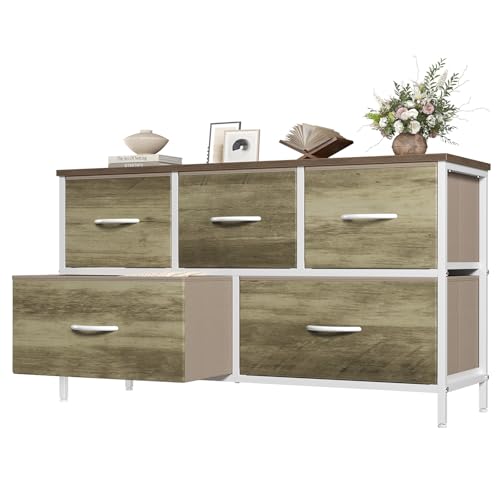
OLIXIS 5 Drawer Dresser for Bedroom, Storage Organizer Unit for Closet | Chest of Drawers for Clothes Storage with Bins, Wide Fabric Bedroom Dresser, Wooden Top, Living Room, Greige Oak
Check price on Amazon
BORNOON Tall Dresser with 5 Drawers, Modern Wooden Chest of Drawers with Diamond Panel, Anti-Tipping Device, Sturdy and Stable Storage Organizer for Bedroom, Hallway, Living Room
Check price on Amazon
Wayshome Solid Oak Wood Dresser, 5 Drawer Dresser for Bedroom, Solid Wood Nightstand with Drawers, Modern Chest of Drawers for Living Room, Hallway, Closet, Natural Oak (20.3" W x 15.74" D x 43.62" H)
Check price on AmazonDisclaimer
The information provided on DresserAdvisor is for educational and informational purposes only. We are not furniture professionals, and our content should not replace professional advice from qualified furniture makers, interior designers, or safety experts. Some content may use AI assistance. Always check product safety standards and certifications before purchasing. If you do not agree, please do not use this website. Read the full disclaimer.