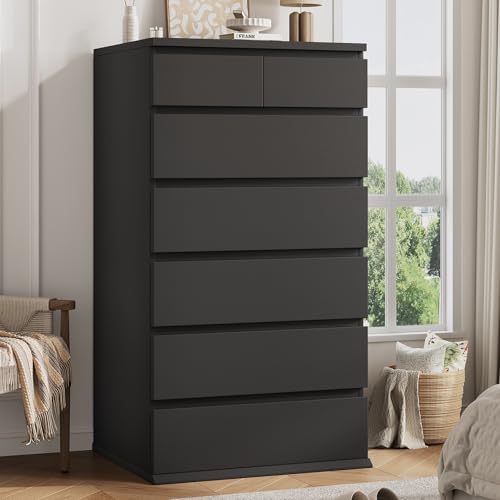
7 Drawer Dresser Tall: The Complete Vertical Storage Guide
Everything you need to know about choosing, organizing, and living with a tall 7 drawer dresser — from dimensions and materials to safety and styling.
Why a tall 7 drawer dresser? When floor space is at a premium but your wardrobe keeps growing, a tall dresser turns unused vertical space into serious storage. With seven drawers stacked in a compact footprint, these units are a favorite for small bedrooms, apartments, and shared spaces. This guide covers dimensions, drawer configurations, materials, safety, and organization so you can decide whether a tall 7 drawer dresser is the right fit for your home.
What Is a 7 Drawer Dresser Tall?
A 7 drawer dresser tall is a vertical storage unit featuring seven drawers stacked in a narrow footprint. Unlike wide dressers that spread storage horizontally, these pieces build upward — typically reaching between 50 and 60 inches in height while occupying only 30 to 40 inches of wall width. This makes them a practical solution for rooms where every square foot of floor space matters.
The seven-drawer configuration usually breaks down into a mix of drawer sizes: deeper drawers at the bottom for bulky items like sweaters and jeans, and shallower drawers near the top for smaller essentials such as socks, accessories, and folded shirts. Some models include a mix of full-width and split drawers, giving you flexibility in how you sort your belongings.
If you are comparing layouts, our guide to the standard 7 drawer dresser explains how wide and tall configurations differ in practice, while the 7 drawer tall chest of drawers page covers the chest-style variation of this format.
Typical Dimensions and Footprint
Understanding dimensions before you shop helps you avoid the two most common mistakes: buying a unit that towers over the room or one that leaves awkward gaps against the wall. While exact measurements vary by manufacturer, here is the typical range for a 7 drawer dresser tall:
| Measurement | Typical Range | What It Means for You |
|---|---|---|
| Height | 50–60 inches | Top drawers sit near eye level; consider reach and safety |
| Width | 30–40 inches | Fits narrow walls and tight corners |
| Depth | 16–20 inches | Keeps walkways clear in small rooms |
| Drawer Capacity | 7 drawers (mixed sizes) | Separate bulky and small items efficiently |
If your room leans toward a wider layout, the 7 drawer dresser format may suit you better. For rooms with even more vertical ambition, compare with the 8 drawer dresser tall for an extra tier of storage.
Pros and Cons of Tall 7 Drawer Dressers
Advantages
- Maximizes vertical space in small bedrooms
- Compact footprint leaves room for movement
- Seven drawers offer generous sorting capacity
- Top surface stays usable for decor or lighting
- Works well in narrow alcoves and beside beds
Considerations
- Requires wall anchoring for safety
- Top drawers may be out of reach for children
- Can visually dominate a room with low ceilings
- Heavier units are harder to move alone
- Limited horizontal surface compared to wide dressers
The trade-off is straightforward: you gain floor space and vertical storage but take on a taller profile that demands proper anchoring and thoughtful placement. For households with young children, wall anchoring is non-negotiable — tall furniture should always be secured to a stud.
Materials and Build Quality
Because a tall dresser carries more vertical load than a low one, build quality matters more than ever. The frame, drawer glides, and back panel all bear stress that increases with height. Here is how the main material categories compare:
Engineered Wood
Particle board and MDF with veneers. Adequate for light use, but check for reinforced backs and sturdy glides. Best suited to guest rooms and low-traffic spaces.
Engineered Core with Solid Trim
Solid wood fronts and trim over an engineered core. Better screw retention and smoother drawer action. A balanced choice for everyday bedroom use.
Solid Hardwood
Oak, maple, walnut, or mahogany. Dovetail joinery, metal glides, and a solid build that holds up over years of daily use. The long-term investment choice.
For a deeper look at how wood species affect durability and appearance, our guide to the 7 drawer dresser wood options breaks down grain patterns, hardness, and finish behavior. If you prefer a lighter, airier look, the white 6 drawer chest of drawers shows how finish choices change the visual weight of tall pieces.
Safety First: Anchoring and Drawer Stops
Tall dressers are among the furniture categories most frequently involved in tip-over incidents, especially when multiple drawers are left open. The good news is that prevention is simple and inexpensive. Every tall dresser should be anchored to the wall using the anti-tip kit that ships with the unit — and if a kit is missing, one can be sourced separately.
- Anchor to studs: Drywall anchors alone are not enough for heavy furniture. Locate wall studs and drive the anchor screws into them.
- Check drawer stops: Interlocking or stop mechanisms prevent multiple drawers from opening at once, reducing forward weight.
- Distribute weight: Place heavier items in lower drawers to keep the center of gravity low.
- Keep decor light: Avoid stacking heavy objects on top of a tall dresser.
Families with toddlers should treat anchoring as mandatory. The same principle applies to any tall storage piece, including the 6 drawer dresser tall and the 6 foot tall chest of drawers.
How to Organize Seven Drawers
Seven drawers give you room to sort by category rather than cramming everything together. A practical layout for a tall 7 drawer dresser looks like this:
- Top drawer: Accessories, socks, underwear, and small folded items.
- Second drawer: T-shirts and lightweight tops.
- Third drawer: Folded shirts, blouses, or activewear.
- Fourth drawer: Jeans and trousers, folded or rolled.
- Fifth drawer: Sweaters and knitwear.
- Sixth drawer: Loungewear, pajamas, or off-season items.
- Bottom drawer: Bulky items such as bedding, towels, or heavy knits.
Drawer dividers and shallow organizers keep smaller items from sliding around in wider drawers. For a full system, see our dresser organization guide and the drawer organization ideas collection.
Placement Ideas for Small and Mid-Size Bedrooms
A tall dresser works best when it is placed against a solid wall with enough clearance to open every drawer fully. Measure the swing of the deepest drawer and add a few inches of buffer. Common placements include:
- Beside the bed: Acts as a tall companion to a nightstand, keeping essentials within reach.
- In a narrow alcove: Fills awkward wall segments that a wide dresser cannot use.
- Opposite the foot of the bed: Creates a dressing zone without blocking circulation.
- Inside a walk-in closet: Adds drawer storage where hanging space dominates.
If you are furnishing a compact room from scratch, pairing a tall dresser with a 5 drawer dresser and nightstand set or a 6 drawer dresser and nightstand set keeps the style consistent across the room.
Tall 7 Drawer vs. Other Configurations
Buyers often weigh the tall seven-drawer format against neighboring options. Here is a quick comparison to help you decide:
| Configuration | Best For | Trade-Off |
|---|---|---|
| 7 Drawer Tall | Small rooms, vertical storage | Needs anchoring; taller profile |
| 7 Drawer Standard | Balanced width and height | Uses more floor width |
| 8 Drawer Tall | Extra sorting capacity | Even taller; more reach concerns |
| 6 Drawer Tall | Simpler, lighter footprint | One fewer drawer of storage |
For a full breakdown of the seven-drawer family, the 7 drawer dresser overview page covers standard, tall, and chest variations side by side.
Ready to compare models? Browse our recommended tall dressers and storage pieces below, filtered for the seven-drawer tall format.
View Recommended Dressers