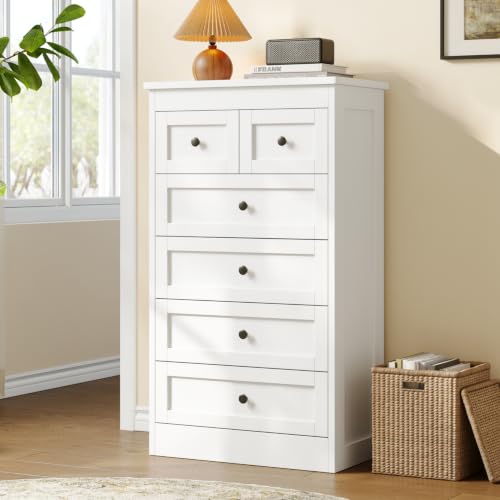
6 Drawer Wood Chest of Drawers: The Complete Buying Guide
A six-drawer wooden chest is one of the most versatile bedroom storage pieces you can own. This guide breaks down sizes, wood types, drawer layouts, build quality, and organization so you can choose with confidence.
JUMP TO CHECKLISTWhy focus on a 6 drawer wood chest of drawers? Six drawers hit a practical sweet spot: enough capacity for a full wardrobe of folded clothing, yet compact enough for most bedrooms. Unlike a wide double dresser, a six-drawer chest uses vertical space, which makes it a smart choice for smaller footprints. And compared with engineered wood, a solid wood chest is a long-term investment that can be repaired, refinished, and handed down. This guide explains exactly what to look for before you commit.
What Exactly Is a 6 Drawer Wood Chest of Drawers?
A 6 drawer wood chest of drawers is a vertical storage case built from solid wood or wood-based panels, featuring six individual drawers stacked in two to three columns. It sits between a compact nightstand-sized chest and a full double dresser in terms of capacity. In furniture terminology, the terms "chest of drawers," "chest," and "tallboy" are often used interchangeably, but a true chest is typically taller than it is wide, while a double dresser is wider than it is tall.
The six-drawer format is popular because it balances two competing needs: generous storage and a modest floor footprint. If you are still comparing formats, our breakdown of 6 drawer chest of drawers options explains how the category differs from wide dressers. For readers who want to compare directly, the 6 drawer dresser guide covers horizontal configurations, while the solid wood 6 drawer chest page digs deeper into material trade-offs.
Chest vs. Dresser: A Quick Clarification
- Chest of drawers: Taller than wide, usually 4 to 6 drawers stacked vertically, designed for folded clothing.
- Dresser: Wider than tall, often 6 to 9 drawers across two or three columns, sometimes paired with a mirror.
- Tallboy: A traditional term for a tall chest, often with 5 to 7 drawers and a compact footprint.
- Double dresser: A wide two-column design, ideal for couples who need side-by-side drawer access.
Dimensions and Footprint: Getting the Fit Right
Measure first, buy second. A six-drawer chest can look compact in a showroom but feel crowded in a small bedroom once doors, walkways, and bed clearance are accounted for. Use the table below as a planning reference, then verify the exact product dimensions before ordering.
| Configuration | Typical Height | Typical Width | Best For |
|---|---|---|---|
| Compact 6 drawer chest | 44–50 in | 30–36 in | Small bedrooms, guest rooms, apartments |
| Standard 6 drawer chest | 50–56 in | 36–42 in | Primary bedrooms, nurseries, shared rooms |
| Tall 6 drawer chest | 56–62 in | 32–38 in | Narrow walls, closets, vertical storage zones |
| Wide 6 drawer dresser | 30–38 in | 48–60 in | Couples, large bedrooms, under-window placement |
If your room is tight, study the 48-inch wide six drawer dresser and 50-inch wide six drawer dresser formats, which trade height for width. For larger rooms, the 60-inch wide six drawer dresser offers generous surface area for decor and lighting. Taller vertical options such as the tall 6 drawer chest of drawers are ideal when floor space is limited but wall height is available.
Clearance Rules of Thumb
- Leave at least 24 inches of walkway in front of the chest so drawers can open fully.
- Allow 2–3 inches of gap behind the chest for wall clearance and ventilation.
- Keep at least 12 inches between the chest and the side of the bed for comfortable access.
- If placing under a window, confirm the chest height does not block the sill or radiator.
Wood Types and Finishes: What to Look For
The wood species affects durability, grain character, weight, and how the piece ages. Solid wood is generally the most repairable option, while veneered engineered panels can be a solid choice within their tier. The table below compares common wood types used in six-drawer chests.
| Wood Type | Character | Durability Tier | Best For |
|---|---|---|---|
| Oak | Open grain, strong and heavy, takes stain well | Premium | Family homes, high-use bedrooms, rustic and farmhouse styles |
| Walnut | Rich dark grain, dense, refined look | Luxury | Mid-century and modern interiors, statement bedrooms |
| Maple | Fine grain, light tone, very hard surface | Premium | Minimalist and Scandinavian rooms, painted or natural finishes |
| Pine | Soft grain, lighter weight, knots and character | Entry-level to mid-range | Guest rooms, cottages, casual and country styles |
| Mahogany | Deep reddish-brown, traditional, formal | High-end tier | Traditional and colonial interiors, heirloom-style pieces |
| Engineered wood with veneer | Consistent finish, lighter weight, moisture-sensitive | Entry-level to mid-range | Apartments, temporary setups, secondary rooms |
For a deep dive into specific species, our 6 drawer wood dresser overview discusses how wood choice affects long-term wear. If you prefer a lighter, more contemporary look, the white 6 drawer chest of drawers guide covers painted and lacquered finishes and how they age.
Finish and Hardware Considerations
- Finish: Look for a low-VOC lacquer or hard-wax oil finish that resists stains and is easy to refresh.
- Drawer fronts: Solid wood fronts resist chipping better than veneered MDF fronts.
- Interior: Sanded, sealed drawer boxes protect clothing from splinters and moisture.
- Hardware: Metal glides and reinforced corner blocks are signs of durable construction.
Drawer Layout and Storage Capacity
Not all six-drawer chests are organized the same way. Drawer depth and height determine what each compartment can hold. A common layout uses two shallow top drawers for accessories and four deeper drawers below for folded clothing. Other configurations use six equal drawers or a mix of deep and split drawers.
| Drawer Layout | Typical Use | Best For |
|---|---|---|
| 2 shallow + 4 deep | Accessories, socks, underwear on top; shirts and sweaters below | Single adults, guest rooms |
| 6 equal drawers | Uniform folded clothing storage | Minimalist organizers, shared rooms |
| 3 wide + 3 deep | Wide drawers for linens; deep drawers for bulky items | Families, linen storage, nurseries |
| 2 columns of 3 | Side-by-side access, ideal for couples | Shared bedrooms, his-and-hers setup |
If you need matching bedroom furniture, a 6 drawer dresser and nightstand set simplifies coordination, while a 6 drawer dresser with matching nightstand is a good middle ground when you want a coordinated look without a full set. For nursery use, the 6 drawer changing table dresser adds a topper for diapering and keeps essentials close at hand.
Build Quality and Hardware: What Separates Tiers
Two chests can look identical in a listing photo but feel completely different after a year of daily use. The difference usually comes down to joinery, drawer glides, back panels, and finish quality. Use these checkpoints when comparing models.
Joinery and Frame Construction
- Dovetail joints at drawer corners indicate high-end tier construction and long-term durability.
- Dowelled or reinforced corner blocks are a solid mid-range standard.
- Stapled or glued butt joints are typical of entry-level construction and are less resistant to racking.
- A solid back panel adds rigidity; thin hardboard backs can loosen over time.
Drawer Glides and Slides
- Side-mounted ball-bearing glides are common in mid-range chests and offer smooth movement.
- Under-mount soft-close glides are typical of premium and luxury tiers and reduce noise.
- Wood-on-wood runners appear in traditional and some high-end pieces; they need periodic waxing.
- Check the weight rating per drawer if you plan to store heavy items like denim or linens.
Hardware and Finishing Details
- Metal pulls with threaded inserts hold up better than glued or stapled pulls.
- Sanded and sealed drawer interiors protect clothing and reduce snags.
- Adjustable levelers help stabilize the chest on uneven floors.
- Look for a manufacturer warranty that covers drawer glides and structural joints.
If you want a deeper comparison of construction tiers, the solid wood six drawer chest guide explains how to evaluate joinery and finish in person. Readers who prefer a specific style can explore the mid-century modern 6 drawer dresser format, which often pairs tapered legs with under-mount glides.
Safety and Anti-Tip Guidance
Tall chests must be anchored. A six-drawer chest with open drawers shifts its center of gravity forward, and children climbing on drawers can cause a tip-over. Follow these safety practices regardless of the brand or tier.
- Install the anti-tip strap or wall bracket included with the chest, using appropriate wall anchors for your wall type.
- Place the heaviest items in the bottom drawers to lower the center of gravity.
- Never leave multiple drawers open at once, especially in homes with young children.
- Keep the chest away from beds and play areas where children might climb.
- Check the anchor annually and re-tighten if the chest shifts.
Styling and Placement Ideas
A six-drawer chest is a flexible anchor piece. Because it is taller than a dresser, it can fill a narrow wall, sit beside a closet, or act as a secondary storage station in a guest room. Here are placement ideas that work in most bedrooms.
Placement Scenarios
- Primary bedroom: Place the chest opposite the bed or beside the closet for a natural dressing-zone flow.
- Small bedroom: Use a compact 6 drawer chest as the main storage piece and keep the top clear for a mirror and lamp.
- Guest room: A mid-range six-drawer chest provides ample space for linens and guest clothing without overwhelming the room.
- Nursery: Pair a changing-table dresser with a wall anchor and keep diapering supplies in the top drawers.
- Closet or dressing room: A tall chest fits well at the end of a closet run and keeps folded items visible.
Top Styling Tips
- Keep the top surface to three objects or fewer for a calm, uncluttered look.
- Use a tray to corral small items like jewelry, glasses, and keys.
- Layer a mirror above the chest to add light and make the room feel larger.
- Choose a lamp with a warm bulb for a soft dressing-area glow.
- Rotate seasonal decor rather than letting the surface become a catch-all.
For more styling inspiration, browse our 6 drawer bedroom dresser ideas, which cover color palettes, mirror placement, and lighting. If you are outfitting a shared room, the 6 drawer double dresser format offers side-by-side access that works well for couples.
Care and Maintenance
A solid wood chest can last for decades with basic care. The routines below are simple but make a meaningful difference over time.
- Dust weekly with a soft, dry cloth; avoid silicone-based polishes that can build up on the finish.
- Wipe spills immediately with a slightly damp cloth and dry the surface right away.
- Keep the chest out of direct sunlight to prevent uneven fading.
- Maintain indoor humidity between 35% and 55% to reduce wood movement and cracking.
- Lubricate metal glides annually with a dry silicone spray, and wax wood-on-wood runners if applicable.
- Check and re-tighten hardware every six months.
- For painted finishes, touch up chips promptly to prevent moisture ingress.
Final Purchasing Checklist
Before you order, run through this checklist to avoid the most common buying mistakes.
- Measure twice: Confirm height, width, depth, and walkway clearance.
- Match drawer layout to your folding style: Shallow top drawers for accessories, deep lower drawers for bulky items.
- Prioritize solid wood where it matters: Drawer fronts, drawer boxes, and frame rails are the highest-wear areas.
- Check the glides: Ball-bearing or under-mount soft-close glides last longer than basic side rollers.
- Confirm the anti-tip kit is included: If not, budget for a safety strap.
- Review the warranty: Look for coverage on structural joints and drawer glides.
- Consider delivery and assembly: Some chests ship fully assembled, others require two-person assembly.
- Compare tiers, not just looks: Entry-level models can work for guest rooms; mid-range and premium tiers are better for daily primary-bedroom use.
If you are still deciding between formats, our already assembled 6 drawer dresser guide is useful if you want to skip assembly, while the tall 6 drawer dresser page focuses on vertical storage options. For a classic look, explore the 6 drawer chest of drawers collection overview.
Frequently Asked Questions
What is a 6 drawer wood chest of drawers best used for?
A 6 drawer wood chest of drawers is ideal for bedrooms that need a balanced mix of folded clothing storage and a compact footprint. It works well as a primary dresser in small to medium bedrooms, as a secondary storage piece in larger rooms, or as a nursery and guest room chest.
How tall is a typical 6 drawer chest of drawers?
Most 6 drawer chests stand between 44 and 60 inches tall, with depth usually between 16 and 20 inches. Taller configurations are often called tall chests or tallboys, while wider, lower versions behave more like double dressers.
Is solid wood better than engineered wood for a 6 drawer chest?
Solid wood offers superior durability, repairability, and long-term structural integrity, making it a strong long-term investment. Engineered wood with quality veneers can be a solid choice within its tier, especially for guest rooms or temporary setups, but it is generally less repairable and more sensitive to moisture.
How do I stop a 6 drawer chest from tipping over?
Always use the anti-tip strap or wall anchor kit included with the chest, and never place heavy items in the top drawers. Keep the heaviest clothing in the bottom drawers and avoid letting children climb on open drawers. Anchoring is essential for tall 6 drawer chests, especially in nurseries and family homes.
When you are ready to compare specific models, the recommended products below are grouped by tier and use case so you can match a chest to your room and storage needs without second-guessing the essentials.