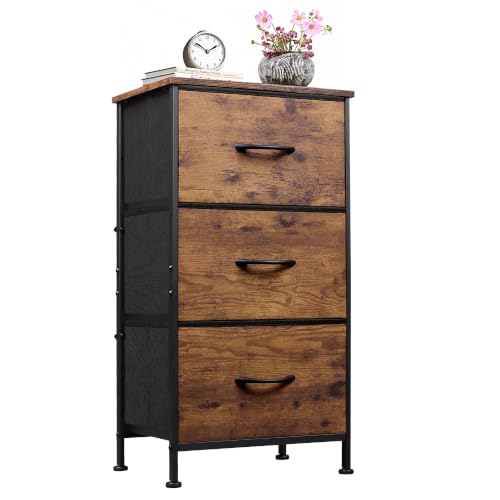
3 Drawer Wood Dresser: The Complete Buying Guide
A three-drawer wood dresser is one of the most versatile storage pieces you can own. Compact enough for a small bedroom, sturdy enough for daily use, and handsome enough to anchor a room, it balances capacity with a footprint that fits real living spaces. This guide walks you through wood types, drawer construction, sizing, and the details that separate a solid long-term investment from a piece you will want to replace in two years.
Start ReadingWhy Choose a 3 Drawer Wood Dresser
Most shoppers who land on this page already know they want wood, and they already know three drawers is the right count. The question is usually whether a compact piece can actually hold what they need. The answer depends on how you use the drawers. A three-drawer configuration typically splits into a deep bottom drawer for bulky items such as sweaters and folded jeans, with two shallower drawers above for shirts, undergarments, and accessories. That vertical hierarchy is efficient: heavy items stay low, light items stay within easy reach.
Compared with wider six-drawer units, a three-drawer wood dresser fits into tighter floor plans. It works as a standalone piece in a guest room, pairs naturally with a bed as a primary bedroom dresser, and functions as a secondary storage unit in a hallway or closet. If you are weighing drawer counts more broadly, our guide to 3 drawer dresser options covers the full range of configurations, and the three drawer dresser collection shows how different models compare on layout.
There is also a practical safety angle. Shorter, narrower dressers are easier to anchor and less prone to tipping when a heavy top drawer is pulled open. For households with children, that matters more than raw capacity.
Wood Types and What They Mean for Durability
The word "wood" on a product listing covers everything from solid hardwood to a thin veneer over particleboard. Understanding the difference is the single most important step in choosing a piece that lasts.
Solid Hardwood
Oak, maple, walnut, and mahogany are the classic hardwoods. They resist dents, hold screws and joinery securely, and can be sanded and refinished if the surface gets damaged. A solid wood dresser in the premium or high-end tier is a genuine long-term investment: the frame will outlast several moves. If you want to explore oak specifically, see our guide to solid wood three drawer dressers for construction details worth checking.
Softwoods: Pine and Cedar
Pine is lighter and softer than hardwood, which makes it easier to move but more vulnerable to scratches and dents. It takes paint and stain well, which is why it is common in farmhouse and cottage styles. A pine piece in the entry-level or essential tier can be a sensible choice for a guest room or a first apartment, but it will show wear sooner than oak or maple. Our pine chest of drawers guide covers what to look for in knot quality and finish.
Engineered Wood and Veneer
Particleboard and MDF cores with a wood veneer or laminate finish are common in the starter tier. They are dimensionally stable and resist warping, and a well-made veneered piece can look convincing. The trade-off is repairability: once a veneer chips or a laminate edge lifts, it is difficult to restore. If you choose this category, inspect drawer bottoms and the back panel, since those are where manufacturers cut corners first.
| Material | Market Tier | Best For | Durability Notes |
|---|---|---|---|
| Laminate / veneer over MDF | Entry-level | Guest rooms, temporary setups, tight budgets | Stable but not repairable once chipped |
| Pine and other softwoods | Essential tier | Painted finishes, cottage and farmhouse looks | Dents more easily; takes paint well |
| Oak and maple | Mid-range to premium | Primary bedrooms, daily heavy use | Hard, refinishable, holds joinery securely |
| Walnut and mahogany | Premium to luxury | Statement furniture, formal bedrooms | Dense grain, excellent long-term investment |
Size and Placement Guide
Three-drawer wood dressers cluster into a few common widths. Knowing which width suits your wall and walkway is more useful than memorizing exact dimensions from a listing.
- Narrow units (roughly 24 to 30 inches wide): ideal for small bedrooms, dorm rooms, and closets. These often double as oversized nightstands. See the 30 inch wide dresser guide for placement ideas.
- Standard units (roughly 32 to 38 inches wide): the most common three-drawer format and the best all-rounder for a primary bedroom. Our 36 inch wide three drawer dresser breakdown explains how drawer depth changes with width.
- Wide units (40 inches and up): less common with only three drawers, but useful when you want generous drawer depth rather than drawer count. The 40 wide dresser overview is a good starting point.
Whatever the width, keep at least 30 inches of clear floor space in front of the dresser so drawers can open fully. If you are furnishing a compact room, our 30 inches wide three drawer dresser notes cover narrow-room layouts, and the 24 dresser guide covers the smallest practical footprint.
Height matters too. A dresser top between 30 and 36 inches works as a surface for a lamp, mirror, or folded laundry. Very tall three-drawer units trade width for height and can feel top-heavy, so anchoring is essential.
Drawer Construction and Hardware
The frame gets the attention, but the drawers do the work. Three details separate durable pieces from ones that rattle and stick within a year.
Joinery
Dovetail joints interlock the drawer sides and front and are the benchmark of quality construction. Box joints and doweled joints are acceptable in the mid-tier. Staples and glue alone signal an entry-level build. If a listing shows a dovetail detail photo, that is a good sign the manufacturer is proud of its construction.
Drawer Glides
Wood-on-wood runners are traditional and fine on lightly used antique-style pieces, but they need waxing and can loosen over time. Ball-bearing metal slides are smoother and support more weight. Full-extension slides let you reach the back of the drawer, which matters more on a three-drawer unit where each drawer holds a large share of your clothing. Soft-close mechanisms are a pleasant upgrade in the premium tier.
Drawer Bottoms and Weight Rating
A thin, unsupported drawer bottom will bow under the weight of stacked sweaters. Look for bottoms at least a quarter inch thick with a center support on wider drawers. If you plan to store heavy items in the bottom drawer, check the slide's rated capacity, often listed in the specifications.
Hardware
Knobs and pulls are easy to replace later, so they should not be a dealbreaker. What matters is that the mounting screws are anchored in solid wood rather than particleboard, so the hardware does not work loose with daily use.
Styles That Work in Real Bedrooms
Three-drawer wood dressers appear across nearly every furniture style, which makes matching an existing room straightforward.
- Mid-century modern: tapered legs, clean lines, and a warm walnut or teak finish. Pairs well with low platform beds.
- Farmhouse and cottage: painted or distressed pine, beadboard details, and simple cup pulls. See our changing table dresser guide if the piece will double as nursery furniture.
- Modern minimal: flat fronts, handleless or slim bar pulls, and a natural or white finish.
- Traditional: raised panel fronts, bracket feet, and darker hardwood finishes such as mahogany.
If you are building a matching bedroom set, a three-drawer unit works well as the secondary piece alongside a larger dresser or a three piece dresser and nightstand set. For smaller rooms where the dresser doubles as a bedside surface, the three drawer dresser nightstand format is worth considering.
How to Organize Three Drawers Efficiently
With only three drawers, every inch counts. A simple system keeps the unit functional without constant re-sorting.
- Bottom drawer: bulky folded items such as sweaters, jeans, and seasonal layers. Use vertical folding so you can see every item at a glance rather than stacking.
- Middle drawer: everyday tops, t-shirts, and workout wear. Drawer dividers keep columns upright and prevent the pile from collapsing forward.
- Top drawer: undergarments, socks, accessories, and small items. Compartment inserts or small bins stop clutter from spreading.
Rotate seasonal clothing out of the bottom drawer at the start of each season, storing off-season items in under-bed bins or a closet. This keeps the dresser from becoming a compressed archive. If you want a deeper system, our three drawer dresser organization notes expand on divider sizing and folding methods.
Buying Checklist
Before you commit to a three-drawer wood dresser, run through these checks. They take a few minutes and prevent most returns.
- Measure the wall and walkway. Confirm the dresser width plus at least 30 inches of drawer clearance.
- Confirm the wood type. Look for the words "solid wood" rather than "wood finish" or "engineered wood" if durability is the priority.
- Inspect drawer joinery. Dovetail or box joints are preferable; staples alone are a warning sign.
- Check slide type. Ball-bearing full-extension slides are the most practical upgrade for daily use.
- Verify the anti-tip kit is included. Every dresser should be anchored to the wall, especially in homes with children.
- Read the finish care instructions. Oil-finished wood needs periodic re-oiling; lacquer and polyurethane finishes need only a damp cloth.
- Plan for assembly. Flat-pack units in the entry-level tier usually require two people and about an hour.