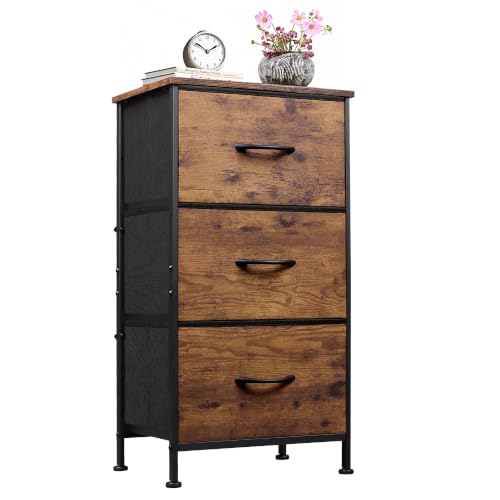
3 Drawer Dresser Nightstand: The Complete Buying Guide
Everything you need to know before choosing a compact bedside dresser with three drawers — sizing, materials, safety, and how to match it to your bedroom layout.
Expert research for buyers who already know what they want and need the details to decide.
Why this guide exists: A 3 drawer dresser nightstand is one of the most searched bedroom storage pieces because it solves two problems at once — bedside organization and extra drawer space. But the category is broader than it looks, and the wrong choice can leave you with a piece that crowds the bed, sits at the wrong height, or lacks the durability you expected.
This guide walks through the exact dimensions that matter, the drawer hardware that separates reliable models from disappointing ones, safety requirements, and the design tiers available on the market today — so you can compare options with confidence.
What Is a 3 Drawer Dresser Nightstand?
A 3 drawer dresser nightstand is a hybrid bedroom furniture piece. It has the footprint and function of a nightstand — a stable top surface for a lamp, book, or charging station — but stacks three full drawers instead of the usual one or two. The result is a compact storage unit that works as a bedside table while quietly absorbing clothing, accessories, or linens that would otherwise need a larger dresser.
These pieces are especially useful in bedrooms where a full-size dresser is impractical. If your room is tight, pairing a 3 drawer dresser with a compact bedside unit can cover both functions without overwhelming the floor plan. For very narrow spaces, a 22 inch wide dresser or a 24 inch wide dresser often fits better than a standard-width nightstand.
The category overlaps with a few related products. Some buyers searching for a 3 drawer dresser nightstand actually want a small 3 drawer wood dresser that happens to be short enough to sit beside the bed. Others are looking for a true nightstand with a taller drawer stack. Knowing which you need is the first decision — the rest of this guide helps you get the details right.
Why Choose a Three-Drawer Nightstand Over a Standard One?
A standard nightstand with a single drawer handles bedside clutter well enough, but it cannot replace meaningful storage. A three-drawer unit changes the math:
- More usable capacity in the same footprint. Three stacked drawers use vertical space efficiently, which matters when floor area is limited.
- Better organization. You can assign one drawer to sleepwear, one to socks and undergarments, and one to accessories or bedside essentials — no more mixing categories in a single shallow drawer.
- Fewer furniture pieces. In a small bedroom, two three-drawer nightstands can absorb a surprising amount of clothing, reducing or eliminating the need for a separate chest.
- Visual balance. Matching nightstands on either side of the bed create a symmetrical, intentional look that a single dresser often cannot achieve.
That said, a three-drawer nightstand is not a full dresser replacement. If you have a large wardrobe and need to store folded clothing for two people, a dedicated dresser remains the right primary solution. The nightstand version works best as a companion piece or as the main storage in compact, single-occupant rooms.
Dimensions That Actually Matter
Fit is the single most common reason buyers return a dresser nightstand. Before comparing finishes or drawer styles, confirm these three measurements:
| Measurement | Typical Range | Why It Matters |
|---|---|---|
| Height | 22–28 inches | Top surface should sit level with or slightly below the mattress top for comfortable reach from bed. |
| Width | 18–30 inches | Must fit between the bed and the wall or doorway with clearance to open drawers fully. |
| Depth | 15–20 inches | Affects walking space beside the bed; deeper units reduce drawer travel and may block access. |
| Drawer interior depth | 4–6 inches | Determines what fits inside; shallow drawers suit accessories, deeper drawers suit folded clothing. |
Measure the gap between your mattress edge and the nearest wall or doorway, then subtract at least two inches of clearance so the drawers can open without scraping. For very tight placements, a 20 inch wide dresser or a 24 inch dresser is often the realistic choice. If you want a slightly wider surface for a lamp and a book, a 26 inch wide dresser or 28 inch wide dresser gives more top area without dominating the bedside zone.
Height deserves equal attention. A nightstand that sits well below the mattress forces you to reach down awkwardly in the dark; one that sits too high becomes a tipping risk if you lean on it. Aim for the top surface to land within one or two inches of the mattress top.
Materials, Drawer Hardware, and Build Quality
The exterior finish gets the attention, but the drawer mechanism and case construction determine whether the piece lasts. Here is what to compare:
Case and drawer materials
Solid wood is the most durable option and can be refinished if the finish wears. A 3 drawer dresser solid wood construction typically uses dovetail or reinforced joints that hold up over years of daily use. Engineered wood with quality veneers is common in the mid-range tier — it is stable and resists warping, but the veneer can chip at drawer edges. A 3 drawer pine chest of drawers sits at the entry-level to mid-range boundary: lightweight and easy to move, but softer and more prone to dents than hardwood.
Drawer slides
This is where tiers separate most clearly. Entry-level units often use simple wood-on-wood runners or basic side-mounted slides that stick under load. Mid-range models typically use ball-bearing side slides with smoother travel. The high-end tier uses full-extension or undermount slides with soft-close mechanisms. If you plan to store heavier items, look for a model specified with reinforced or heavy-duty slides — the same principle that makes 22 inch heavy duty drawer slides desirable in demanding applications.
Joinery and back panels
A solid back panel and corner blocks add rigidity and reduce sway. On lower-tier units, the back is often a thin fiberboard sheet that offers little structural support. If the piece will be moved between rooms or apartments, this matters more than the finish.
Surface and finish
Look for a finish that resists moisture rings and scratches. Painted finishes hide wear better than high-gloss veneers, and matte or satin sheens show fewer fingerprints near the bed. If you want a specific look, painted options appear in many 3 drawer dressers collections, while natural wood tones work with a wider range of bedding and wall colors.
Market Tiers: How to Compare Without Getting Lost
Products in this category fall into three broad tiers. Use these descriptors to compare models consistently — each tier reflects relative position in the market, not a specific figure.
Essential-tier construction
These units prioritize compact size and straightforward assembly. Expect engineered wood cases, basic side-mounted slides, and simple finishes. They suit guest rooms, dorm rooms, or short-term rentals where the piece will not see heavy daily use. Drawer travel may be limited, and the back panel is often thin. For buyers who need a bedside surface and a few drawers with minimal commitment, this tier covers the basics.
Balanced-tier construction
This is the sweet spot for most households. You get smoother ball-bearing slides, sturdier case construction, and finishes that hold up to daily handling. Many solid wood and quality veneer options land here. Drawers open fully or nearly fully, and the top surface is stable enough for a lamp and a stack of books. If the piece will serve as a primary bedside storage unit for years, this tier is the sensible default.
High-end-tier construction
Flagship models in this tier use full-extension or undermount soft-close slides, dovetail joinery, and premium materials with refined finishes. They are heavier, more stable, and designed to be kept long-term — a worthwhile investment if the bedroom is a permanent space. The extra refinement is most noticeable in drawer feel and in how the piece holds up after several years of daily opening and closing.
When comparing across tiers, focus on the drawer mechanism and case rigidity rather than surface details. A mid-range unit with quality slides will outperform a premium-looking piece with basic runners in everyday use.
Safety Requirements You Should Not Skip
Any furniture with stacked drawers carries a tip-over risk if it is not secured. This is especially important in homes with children or pets.
- Anchor to the wall. Use the anti-tip kit that ships with the unit, or buy a furniture strap rated for the piece's weight. Anchoring is the single most effective safety measure.
- Check stability standards. Look for models that state compliance with current furniture stability requirements. This information is usually in the product documentation.
- Distribute weight low. Store heavier items in the bottom drawer and keep the top surface light. Open one drawer at a time, especially on taller units.
- Keep clearance from the bed. Leave enough space that drawers open without pressing against the mattress, and avoid placing the unit where it blocks an exit path.
- Nursery consideration. If the unit will be used in a nursery, place it away from the crib and secure it even if the child is not yet mobile. For dedicated nursery storage, a 3 drawer changing table dresser may be a more appropriate choice because it is designed with child safety in mind.
Matching the Piece to Your Bedroom Layout
The right unit depends on how much space you have and how much storage you need.
Small bedrooms and apartments
In compact rooms, a single three-drawer nightstand beside the bed may be the only storage you can fit. Choose a narrow footprint — models around 24 inch wide chest of drawers dimensions are common — and prioritize drawer depth over surface area if clothing storage is the goal. A 3 drawer dresser 30 inches wide offers more capacity but needs a longer wall.
Primary bedrooms
Pair two matching units for symmetry and shared storage. This arrangement works well when the room also has a closet and you mainly need bedside organization. If you prefer a coordinated set, look at 3 piece dresser and nightstand set options, which often include a larger dresser plus two matching bedside units.
Guest rooms and secondary bedrooms
A single unit with a lamp and a few drawers is usually sufficient. Entry-level and mid-range tiers cover this use case well without overspending on features the room will not exercise.
Coordination with existing furniture
If you already own a dresser, match the finish and hardware style rather than the exact model. A 3 drawer antique dresser with mirror style, for example, pairs naturally with traditional wood tones, while painted finishes suit farmhouse and modern rooms. For a fully coordinated look, a 2 piece dresser and nightstand set removes the guesswork.
How to Evaluate a 3 Drawer Dresser Nightstand Before Buying
Use this checklist when comparing listings or viewing a unit in person:
- Confirm the drawer count and interior dimensions. Three drawers sound simple, but interior height varies widely — check the usable depth, not just the exterior height.
- Test the slide type. If you can view the product, open each drawer fully. Smooth, consistent travel with no wobble indicates quality slides. If buying online, read the specification for slide type and extension.
- Check the anti-tip hardware. A reputable listing includes or specifies a wall-anchoring kit. If it does not mention one, plan to buy a strap separately.
- Verify the top surface load. The top should support a lamp and normal bedside items without flexing. Thin tops on lower-tier units can bow over time.
- Read assembly requirements. Some units ship fully assembled; others require significant assembly. Factor in the time and tools needed.
- Compare finish durability. Matte and satin finishes hide wear better near the bed. High-gloss surfaces show scratches and fingerprints more readily.
If you are still narrowing the category, browsing a broader selection of 3 drawer chest of drawers wood options can help you calibrate what is typical at each tier before committing to a specific model.
Ready to Compare Models?
Our recommended list below covers compact three-drawer units across construction tiers, with drawer hardware and safety details noted for each.
View Recommended OptionsFrequently Asked Questions
What is a 3 drawer dresser nightstand?
A compact bedroom storage piece that combines the height and surface area of a nightstand with three stacked drawers. It sits beside the bed and provides both bedside organization and additional clothing or accessory storage.
How tall should a 3 drawer dresser nightstand be?
The top surface should sit level with or slightly below your mattress top, typically between 22 and 28 inches from the floor. Measure your bed frame before choosing a model, since a piece that is too tall or too low affects both comfort and safety.
Is a 3 drawer dresser nightstand safe for a nursery?
It can be safe when it is anchored to the wall with the included anti-tip kit and meets current furniture stability standards. Avoid placing heavy items on the top surface and keep the piece away from cribs and toddler play areas.
What materials are best for a 3 drawer dresser nightstand?
Solid wood offers the most durable construction and can be refinished over time. Engineered wood with quality veneers is a solid choice for the mid-range tier. Metal and rattan options suit specific decor styles but vary in load capacity and long-term durability.
Can a 3 drawer dresser nightstand replace a full dresser?
In small bedrooms or studio apartments, a pair of 3 drawer dresser nightstands can handle essentials such as sleepwear, socks, and accessories. For households with larger wardrobes, a dedicated full-size dresser remains the better primary storage solution.