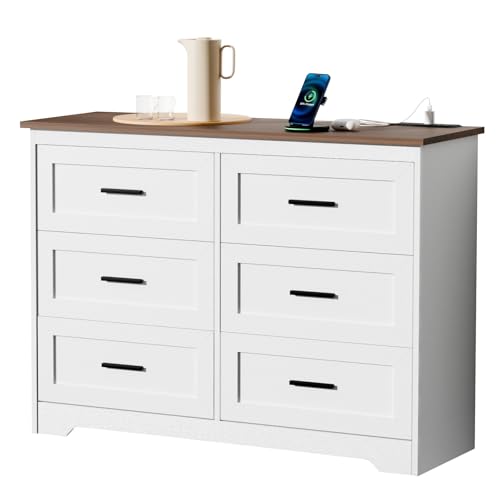
40 Wide Dresser: The Complete Buying Guide
A 40 wide dresser hits the sweet spot between compact and spacious. Explore sizing, storage capacity, material options, and expert recommendations to find the right 40-inch dresser for your bedroom.
Explore Top PicksWhat Is a 40 Wide Dresser?
A 40 wide dresser is a bedroom storage piece that measures approximately 40 inches across the front. It sits in the middle of the dresser size spectrum — wider than a compact 30-inch wide dresser but narrower than a 48 wide dresser. This moderate footprint makes it one of the most versatile dresser sizes for typical bedrooms, guest rooms, and even larger closets.
Most 40 wide dressers feature four to six drawers arranged in a single column or split configuration. The width allows for wider drawer faces, which means you can store folded clothing flat without overcrowding. For many households, this is the ideal balance between storage volume and floor space.
Quick definition: A 40 wide dresser is roughly 40 inches (about 102 cm) wide, typically 18 to 20 inches deep, and 30 to 42 inches tall depending on the model. It usually offers 4–6 drawers and works well as a primary or secondary bedroom storage unit.
Dimensions and Storage Capacity
Understanding the typical measurements of a 40 wide dresser helps you plan your space and anticipate how much it can hold. While exact dimensions vary by manufacturer, most models follow a predictable range.
| Specification | Typical Range | Notes |
|---|---|---|
| Width | 38–42 inches | Advertised as "40 wide"; slight variation is normal |
| Depth | 16–20 inches | Deeper units offer more storage but need more clearance |
| Height | 30–42 inches | Taller models provide more vertical storage |
| Drawer Count | 4–6 drawers | Some designs offer 7–8 smaller drawers |
| Drawer Interior (approx.) | 15–18 in. wide × 5–8 in. deep | Wide enough for folded shirts and jeans |
Storage capacity is more than drawer count. A 40 wide dresser with four deep drawers can hold as much as a six-drawer model with shallower drawers. Think about what you plan to store: bulky sweaters need depth, while accessories and delicates work better in shallower drawers with dividers. If you need maximum drawer count, explore 6 drawer dressers within this width range.
Will a 40 Wide Dresser Fit Your Room?
Before choosing a dresser, measure your available wall space and walking clearance. A 40 wide dresser is generally forgiving, but you still need to account for drawer extension and room flow.
Clearance Guidelines
- Drawer clearance: Allow at least 18–24 inches in front of the dresser so drawers can open fully.
- Walking space: Keep a minimum of 24–30 inches between the dresser and other furniture or walls.
- Door swing: Check that closet or room doors do not collide with the dresser when opened.
- Wall anchoring: Taller 40 wide models should be anchored to the wall for safety.
Room-by-Room Fit
In a small bedroom, a 40 wide dresser often fits along a side wall or opposite the bed without dominating the room. In a medium bedroom, it can serve as the primary clothing storage piece. For guest rooms, a 40 wide dresser offers generous storage without taking over the space. If your room is especially tight, consider a 36 wide dresser or a 30-inch wide dresser instead.
Materials and Build Quality
The material of a 40 wide dresser affects durability, weight, maintenance, and long-term performance. Here is how the main options compare.
Solid Wood
Solid wood dressers — oak, maple, walnut, cherry, and pine — offer the best durability and can last for decades with proper care. They resist warping and can be refinished if the surface becomes worn. These models sit in the premium to luxury tiers and represent a long-term investment. Solid wood is heavier, so plan for the weight during delivery and placement.
Engineered Wood with Veneer
MDF or particle board core with a quality wood veneer provides a balanced option. These dressers look like wood, cost less than solid wood, and perform well in dry indoor environments. They are more susceptible to moisture damage and generally cannot be refinished. This category fits the mid-range tier for most buyers.
Entry-Level Engineered Wood
Particle board with paper or laminate finish serves entry-level needs. These dressers are lighter and easier to move but have shorter lifespans. They work well for guest rooms, temporary setups, or as a starter piece. Check drawer glide quality carefully, as it varies widely at this tier.
Metal and Mixed Materials
Metal dressers and mixed-material designs offer modern aesthetics and solid durability. They resist warping and work well in contemporary or industrial-style bedrooms. Explore metal dressers for a different visual approach.
Build quality checklist: Look for dovetail or reinforced drawer joints, smooth metal glides (ball-bearing or undermount), a finished back panel, and solid feet or a stable base. These details separate well-built dressers from weaker alternatives at any tier.
Styles and Finishes for a 40 Wide Dresser
A 40 wide dresser is available in nearly every design style, which makes it easy to match your existing bedroom decor. Consider these popular directions.
Modern and Contemporary
Clean lines, minimal hardware, and flat fronts define modern 40 wide dressers. They pair well with platform beds and neutral color palettes. Explore modern dressers for sleek options.
Mid-Century Modern
Tapered legs, warm wood tones, and subtle brass or black hardware give mid-century dressers enduring appeal. A 40 wide mid-century piece often works as a statement furniture item.
Farmhouse and Rustic
Distressed finishes, planked details, and cup pulls create a relaxed farmhouse look. These dressers suit cozy, textured bedrooms and work well with natural wood tones.
Scandinavian and Minimalist
Light woods, white finishes, and simple silhouettes define Scandinavian design. A 40 wide dresser in this style keeps a small bedroom feeling open and airy.
Finish Colors
White and black remain the most versatile finishes. White dressers brighten small rooms, while black dressers add contrast and depth. Natural wood finishes showcase grain patterns and suit both traditional and modern interiors.
Drawer Configuration and Hardware
The internal layout of a 40 wide dresser matters as much as its external size. Consider how you organize clothing before choosing a configuration.
Common Configurations
- 4 drawers (2 large + 2 small): A balanced layout for mixed clothing types. Large drawers handle bulky items; small drawers suit accessories.
- 5 drawers (stacked column): Offers separation between categories — socks, shirts, pants, and more.
- 6 drawers (2 columns of 3): Maximizes organization with dedicated spaces for each clothing type.
- 7–8 drawers (mixed sizes): Ideal for detailed organization with many smaller items.
Drawer Glides and Hardware
Drawer glide quality directly affects daily use. Entry-level models often use simple side-mounted roller glides, while mid-range and premium dressers use ball-bearing or undermount soft-close glides. Test the drawers in person if possible, or read reviews about glide smoothness. Hardware — knobs and pulls — can be swapped later to refresh the look. Explore dresser knobs and drawer pulls if you plan to customize.
Safety and Stability
Dresser safety is non-negotiable, especially in homes with children or pets. A 40 wide dresser may be moderately sized, but tall models can still tip if overloaded or if a child climbs on open drawers.
- Wall anchoring: Use the included anti-tip kit or purchase one separately. Anchor the dresser to a wall stud whenever possible.
- Weight distribution: Place heavier items in lower drawers to lower the center of gravity.
- Drawer stops: Some dressers include drawer stops to prevent drawers from being pulled out completely.
- Stability on uneven floors: Adjustable leveling feet help keep the dresser stable on uneven flooring.
Check product safety certifications and standards before purchasing, and always follow the manufacturer's assembly and anchoring instructions. For a deeper look at safety considerations, see our dresser quality guide.
40 Wide vs Other Dresser Widths
Comparing a 40 wide dresser to nearby sizes helps you confirm it is the right choice for your space and storage needs.
| Width Category | Typical Range | Best For |
|---|---|---|
| 30-inch wide dresser | 28–32 inches | Small bedrooms, tight corners, secondary storage |
| 36 wide dresser | 34–38 inches | Compact primary storage, guest rooms |
| 40 wide dresser | 38–42 inches | Balanced storage and footprint; most bedrooms |
| 48 wide dresser | 46–50 inches | Larger bedrooms, shared storage, master suites |
A 40 wide dresser offers roughly 10–25 percent more drawer width than a 36 wide model, which translates into more comfortable storage for folded clothing. If you have the wall space and need even more capacity, a 48 wide dresser may be the better fit. If space is tight, stepping down to a 36 wide dresser keeps storage practical without crowding the room.
Also consider matching sets. A 2 piece dresser and nightstand set can unify your bedroom look while keeping proportions consistent.
Buying Tips and Checklist
Use this checklist to evaluate any 40 wide dresser before you commit.
Before You Buy
- Measure twice: Record wall width, available depth, and clearance for drawers and walking.
- Confirm delivery path: Check doorway widths, stair turns, and elevator dimensions.
- Decide storage priorities: Count how many drawers you need for shirts, pants, socks, and bulky items.
- Choose your tier: Entry-level for temporary or guest use; mid-range for balanced quality; premium or luxury for long-term daily use.
- Check assembly requirements: Some dressers arrive fully assembled; others require significant assembly time.
At the Store or Online
- Inspect drawer glides: Look for smooth, quiet operation and full-extension capability.
- Check joinery: Dovetail joints outperform stapled or glued joints.
- Verify stability: The dresser should sit flat without wobbling.
- Read the safety documentation: Confirm anti-tip hardware is included.
- Review the return policy: Furniture returns can be costly if the fit is wrong.
Tier guidance: Entry-level dressers suit low-traffic rooms and starter setups. Mid-range dressers offer the best balance of construction and longevity for most households. Premium and luxury dressers are long-term investments with superior materials, glides, and joinery.
Pros and Cons of a 40 Wide Dresser
✔ Advantages
- Balanced footprint fits most bedrooms
- Wider drawers accommodate folded clothing comfortably
- Wide style and material selection
- Works as primary or secondary storage
- Leaves room for other furniture and walking clearance
✘ Considerations
- Less storage than 48-inch and larger models
- Tall configurations still need wall anchoring
- Drawer count varies; confirm configuration before buying
- Some entry-level models have basic glide quality
Recommended 40 Wide Dressers
Below is a curated selection of 40 wide dressers and related storage pieces across quality tiers. Use the filters and product details to compare features, drawer configurations, and materials. Each listing links to current availability and specifications so you can make an informed decision.
Frequently Asked Questions
A 40 wide dresser is a storage unit approximately 40 inches wide, typically featuring 4 to 6 drawers. It offers a balanced footprint that fits comfortably in most bedrooms while providing generous storage capacity for clothing and accessories.
Most 40 wide dressers come with 4 to 6 drawers, though some configurations offer up to 8 or more with smaller drawer sizes. The drawer count depends on the height and the specific design of the unit.
Yes, a 40 wide dresser works well in small to medium bedrooms. Its moderate width leaves room for walking clearance and other furniture while still offering substantial storage. Measure your available wall space and account for drawer clearance before purchasing.
Solid wood options such as oak, maple, and walnut offer the best durability for a long-term investment. Engineered wood with quality veneers provides a balanced option for mid-range budgets, while MDF and particle board serve entry-level needs.
A typical 40 wide dresser stands between 30 and 40 inches tall. Taller models up to 50 inches offer more vertical storage but require secure wall anchoring, especially in homes with children.
Yes, provided the dresser is stable and the TV size and weight are within safe limits for the top surface. Anchor the dresser to the wall and ensure the TV is secure. Check the manufacturer's weight recommendations for the top surface before placing a television on it.