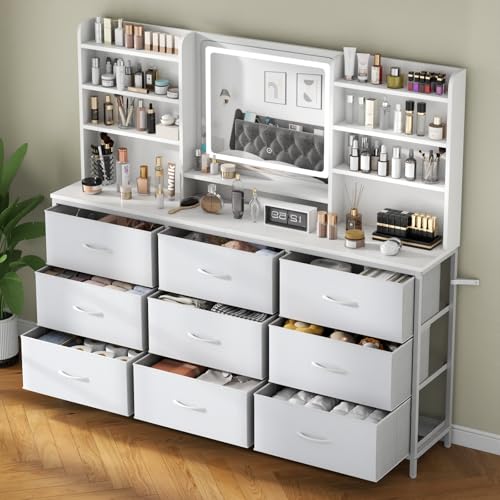
Vanity Dresser: The Complete Guide to Choosing a Bedroom Dressing Station
A vanity dresser blends clothing storage with a dedicated grooming area, giving you a place to organize outfits, apply makeup, and start the day with structure. This guide walks through styles, sizes, materials, mirror options, and safety considerations so you can choose a unit that fits both your room and your routine.
Explore the Buying FrameworkWhy a vanity dresser deserves careful consideration: Unlike a standard dresser, a vanity unit must balance clothing storage with a comfortable seated grooming area. The wrong height, drawer depth, or mirror placement turns a beautiful piece into a daily frustration. The sections below break down each decision so you can compare options with confidence before you buy.
What Is a Vanity Dresser and Who Is It For?
A vanity dresser is a hybrid furniture piece that combines the drawer storage of a traditional dresser with the functionality of a dressing table. It typically includes a flat top surface for grooming items, a mirror either attached or positioned above, and a recessed or open area where a stool or chair can slide in. Drawers are usually shallower at the top for cosmetics and jewelry, with deeper drawers below for clothing.
This format suits several buyer profiles. If you have a compact bedroom and want one piece to handle both clothing and grooming, a vanity dresser reduces furniture count. If you follow a daily makeup or skincare routine, a dedicated seated station improves ergonomics compared to standing at a bathroom mirror. And if you are furnishing a guest room or a teenager's bedroom, a vanity dresser adds practical function without requiring a separate desk.
Buyers researching this category often already know they want a dressing station but are unsure about mirror types, drawer layouts, or how much clearance the piece requires. The guidance below addresses those decisions directly. If you want to compare mirror-equipped models in more detail, the guide to a vanity dresser with mirror covers attachment styles and proportion considerations.
Main Types of Vanity Dressers
Vanity dressers fall into a few recognizable formats. Each format serves a different room layout and storage priority. The tier labels below describe relative market positioning and build ambition, not absolute quality.
Standard Single-Mirror Vanity
The most common format: a rectangular dresser with an attached central mirror and a knee space for a stool. Works well against a bedroom wall and keeps the footprint predictable. Best for buyers who want a cohesive all-in-one piece.
Tri-Fold Mirror Vanity
Adds two hinged side mirrors to the central panel, giving angled views for grooming and hairstyling. Usually paired with a wider top surface. Suits buyers who want a more complete dressing station without a separate wall mirror.
Corner Vanity Dresser
Angled or wedge-shaped to fit into a room corner, often with a triangular or curved top. Efficient for small bedrooms where a full-width wall unit is not feasible. Drawer capacity is typically reduced compared to full-width models.
Vanity with Jewelry Storage in Mirror
Conceals compartments, ring rolls, or necklace hooks behind or within the mirror panel. Prioritizes accessory organization over clothing volume. A strong fit for buyers whose primary need is jewelry and cosmetics storage. See the dedicated guide on a vanity with jewelry storage in mirror for layout details.
Vanity Dresser with Integrated Lighting
Includes built-in LED strips or bulb fixtures around the mirror frame. Improves grooming accuracy in rooms with weak overhead lighting. Requires a nearby outlet or cord management planning. The guide to a vanity dresser with mirror and lights explains wiring and placement trade-offs.
Freestanding Vanity Desk Hybrid
Blends a writing or work surface with shallow vanity drawers and a detachable mirror. Appeals to buyers who need the station to serve double duty. Storage depth is usually modest, so pair it with a separate chest if clothing volume is high.
The Buying Framework: Six Decisions That Matter Most
Instead of comparing products feature-by-feature, work through the six decisions below in order. Each one narrows the field and prevents the most common post-purchase regrets.
- 1. Seated height and knee clearance The top surface should sit roughly 28 to 32 inches from the floor for comfortable seated grooming. Confirm that the knee opening is wide enough for your stool and that drawer fronts do not protrude into leg space.
- 2. Drawer depth mix Prioritize a shallow top drawer for cosmetics and accessories, with deeper drawers below for clothing. A unit with only deep drawers forces small items to rattle around; a unit with only shallow drawers cannot hold folded garments efficiently.
- 3. Mirror configuration Decide between attached, tri-fold, and mirrorless designs before comparing anything else. Attached mirrors save wall space but limit repositioning. Mirrorless units allow a larger wall-mounted mirror with better lighting angles.
- 4. Material and finish durability Solid wood frames and drawer boxes hold up best over years of daily opening and closing. Engineered wood with quality veneers is a reasonable mid-range option. Check drawer glide ratings, since vanity drawers are opened more frequently than standard dresser drawers.
- 5. Footprint and clearance Measure wall width, then add 24 to 30 inches of clearance in front for a stool and comfortable movement. Corner models need less wall width but require checking door swing and walkway clearance.
- 6. Safety anchoring Any unit taller than 30 inches or heavier than 50 pounds should be anchored to the wall. Verify that the product includes an anti-tip kit, and plan the anchor point before assembly.
Vanity Dresser Formats Compared
Use this table to match a format to your room and routine. The "Best For" column focuses on use case rather than any commercial ranking.
| Format | Tier Positioning | Storage Profile | Best For |
|---|---|---|---|
| Standard single-mirror vanity | Essential tier | 2–4 drawers, mixed depths | Compact bedrooms needing one cohesive piece |
| Tri-fold mirror vanity | Balanced tier | 3–6 drawers, wider top surface | Daily grooming and hairstyling routines |
| Corner vanity dresser | Mid-range | 2–4 drawers, reduced width | Small rooms with unused corner space |
| Vanity with mirror jewelry storage | High-end tier | Shallow accessory drawers plus concealed compartments | Buyers prioritizing jewelry and cosmetics organization |
| Vanity with integrated lighting | Top-tier | 3–6 drawers, cord management features | Rooms with weak overhead lighting |
| Freestanding vanity desk hybrid | Flagship tier | Shallow drawers plus work surface | Multi-use stations in guest or teen rooms |
Materials, Finishes, and Hardware
Because a vanity dresser is opened and closed more often than a standard dresser, material choices affect long-term satisfaction more than they might in other furniture categories. Solid wood frames with dovetail or doweled drawer boxes represent the durable end of the market. Engineered wood with quality veneers sits in the mid-range and can perform well if the drawer glides are rated for frequent use.
Finishes matter for maintenance as much as appearance. Painted finishes hide minor scuffs and suit light, airy bedrooms. Natural wood finishes show grain character and pair with mid-century or traditional decor. If you are drawn to textured surfaces, the guide to upholstered dressers explains how fabric panels affect cleaning and wear. Buyers restoring an older piece may also find the notes on using chalk paint on furniture useful for refreshing a worn finish.
Hardware is a small detail with outsized daily impact. Knobs work well for shallow cosmetic drawers, while bar pulls suit deeper clothing drawers. Check that pulls are securely fastened and that any decorative hardware does not catch on clothing as drawers slide.
Organizing a Vanity Dresser for Daily Use
A vanity dresser only delivers its full value when the interior layout matches how you actually get ready. Start with the top drawer: divide it into zones for skincare, cosmetics, and tools using removable dividers or small trays. Keep the most-used items nearest the front edge so you are not reaching over clutter every morning.
Reserve at least one deeper drawer for clothing you reach for during grooming, such as undergarments, loungewear, or accessories. This reduces trips to a separate closet. If the unit includes a jewelry compartment, dedicate it to pieces you wear weekly rather than long-term storage, which belongs in a closed jewelry box to limit dust exposure.
Seasonal rotation keeps the unit functional year-round. Move heavy sweaters to under-bed storage during warmer months and bring lighter garments forward. Buyers who want to extend storage beyond the vanity itself can review options like a vertical dresser with deep drawers for overflow clothing capacity.
Practical tip: Before buying, place a measuring tape at the intended seated height and simulate reaching into the top drawer. If your knees contact the drawer front or the mirror sits below eye level when seated, the unit's proportions will be uncomfortable regardless of how it looks in photos.
Matching a Vanity Dresser to Your Bedroom Style
Style coordination keeps the vanity from looking like an afterthought. In modern and minimalist bedrooms, choose clean-lined units with flat drawer fronts and minimal hardware. Mid-century interiors pair well with tapered legs and warm wood tones. Traditional and farmhouse bedrooms suit painted finishes, turned legs, and framed mirror panels.
If your bedroom already leans vintage, a restored or vintage-style vanity dresser can anchor the room's character. The guide to a vintage style dresser covers proportion cues and finish details worth checking. Buyers working with an older piece should also confirm drawer glide condition, since vintage glides often need lubrication or replacement.
Color is the final coordination lever. White and gold combinations brighten small rooms, while walnut and dark wood finishes add visual weight suitable for larger bedrooms. The overview of a white and gold dresser with mirror illustrates how finish pairings change the perceived scale of a vanity unit.
Safety and Placement Considerations
Vanity dressers carry the same tip-over risk as any tall storage furniture, with the added complication of a mirror that can break if the unit falls. Always use the included anti-tip kit, and if the unit does not include one, purchase a wall anchor rated for the furniture's weight. Anchor into a wall stud where possible.
Placement affects both safety and usability. Avoid positioning the vanity directly in front of a radiator or heating vent, since heat can warp finishes and dry out wood joints over time. Keep the unit out of high-traffic walkways, and confirm that the mirror does not reflect a bright window directly into your seated eyeline, which causes glare during grooming.
If the unit includes integrated lighting, route cords along the wall rather than across the floor, and use a cord cover if the outlet is not directly behind the furniture. This reduces tripping hazards and keeps the station looking intentional.
Frequently Asked Questions
What is the difference between a vanity dresser and a standard dresser?
A vanity dresser combines clothing storage with a dedicated grooming area, typically featuring a mirror, a seating space, and often shallower drawers designed for cosmetics and accessories. A standard dresser focuses solely on clothing storage and does not include a built-in mirror or seating recess.
How much space do I need for a vanity dresser?
Plan for at least 40 to 60 inches of wall width for the vanity unit itself, plus an additional 24 to 30 inches of clearance in front for a stool or chair. Corner vanity dressers can work in tighter spaces with as little as 36 inches of wall width.
What drawer configuration works best in a vanity dresser?
The most practical setup pairs two to three deep drawers for clothing with a shallow top drawer divided into compartments for cosmetics, jewelry, and grooming tools. Mid-range and premium models often add felt-lined jewelry drawers and adjustable dividers.
Do vanity dressers need to be anchored to the wall?
Yes. Any vanity dresser taller than 30 inches or weighing more than 50 pounds should be secured with an anti-tip strap or wall anchor. This is especially important in households with children or pets, and it is a standard safety recommendation from furniture safety organizations.
How do I choose between a vanity dresser with a mirror and one without?
Choose a built-in mirror if you want a single cohesive piece and have limited wall space. Choose a mirrorless vanity dresser if you prefer a freestanding mirror that can be repositioned, or if you plan to mount a larger mirror on the wall above the unit for better lighting control.
Ready to Compare Vanity Dresser Options?
Review the recommended models below, filtered for vanity dresser storage and grooming features. Each listing includes specifications and availability so you can shortlist the formats that match your room measurements and drawer priorities.
View Recommended Vanity Dressers