White Corner Vanity Dresser: Space-Smart Bedroom Storage Guide
A white corner vanity dresser pairs drawer storage with a vanity surface and mirror, fitting neatly into the often-wasted corner of a bedroom. This guide explains how to size, choose, and organize one so it becomes the hardest-working piece in your room.
Jump to Buying ChecklistWhy this piece earns its place: Corners are the most underused real estate in most bedrooms. A corner vanity dresser reclaims that footprint for clothing storage and a grooming station, while the white finish reflects light and keeps the room feeling open. If you are comparing this format against a standard layout, our dresser with mirror and chair guide is a useful companion read.
What Exactly Is a White Corner Vanity Dresser?
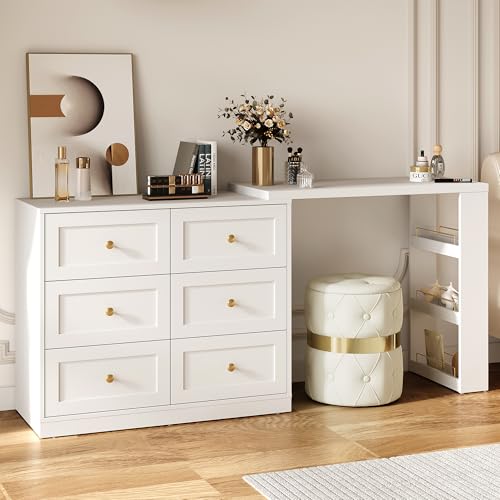
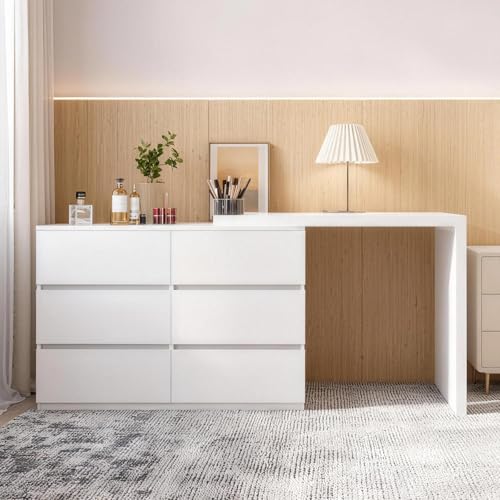
A white corner vanity dresser is a three-in-one furniture piece: a drawer chest for clothing and accessories, a vanity surface for grooming and display, and a mounting point for a mirror. The defining feature is the angled or wedge-shaped footprint that tucks into a 90-degree corner, letting the piece sit flush against two walls instead of one. Most models are finished in white paint or white lacquer, which is the most versatile option for small bedrooms because it bounces natural light around the room.
These pieces come in two broad formats. The first is a true corner unit with a triangular or angled top that follows the wall line. The second is a compact rectangular dresser slim enough to slide into a corner beside a bed, often paired with a wall-mounted mirror. Both formats deliver the same benefit: storage without consuming a full wall.
Key Benefits of Choosing a Corner Vanity Dresser
Reclaims Dead Space
The corner footprint converts an area that usually holds nothing more than a laundry basket into a full storage and grooming station.
Brighter Room Feel
A white finish reflects daylight and artificial light, which is why white dressers so often make compact bedrooms feel larger and cleaner.
Two Functions, One Footprint
Drawer storage and a vanity surface share the same base, so you do not need to buy or place separate furniture pieces.
Styling Flexibility
White pairs with virtually every wood tone, wall color, and hardware finish, from brushed gold to matte black.
How to Measure a Corner Before You Buy
Corner furniture fails when buyers skip the measuring stage. Work through these steps in order before committing to any model.
- Measure both wall runs. From the corner, measure along each wall to the nearest obstruction such as a door frame, window trim, or bed frame. The shorter of the two measurements caps the width your dresser can occupy.
- Confirm the depth. Measure how far the dresser will project into the room. Leave at least 24 inches of open floor in front so drawers can pull out fully and you can stand or sit at the vanity.
- Check drawer swing. A corner unit with side-opening drawers needs clear space beside it. Models with drawers that face the room are easier to live with in tight corners.
- Account for the mirror. If the mirror is attached, confirm the total height against your ceiling and any wall sconces. If it is wall-mounted, mark the mirror position on the wall before purchase.
- Verify door and outlet clearance. Ensure the corner position does not block a closet door, light switch, or the outlet you plan to use for a lamp or hair tool.
If your corner is unusually shallow, a narrow format is the safer choice. Our guide to a white narrow dresser covers the sizing trade-offs in more detail.
Sizing Guide: Matching the Dresser to Your Room
| Room Type | Suggested Footprint | Drawer Count | Best For |
|---|---|---|---|
| Compact bedroom or apartment | Slim corner unit, up to 36 inches on the longest wall run | 3 to 4 | Single sleepers and guest rooms |
| Standard bedroom | Mid-size corner unit, 36 to 48 inches per wall run | 5 to 6 | Couples who share storage |
| Primary suite | Large corner unit, 48 inches or more per wall run | 6 to 8 | Full wardrobes, linens, and accessories |
| Shared kids' room | Mid-size unit with lock option | 4 to 6 | Two children sharing one piece |
If the corner sits in a very small room, pair the unit with other compact storage so clothing has room to breathe. Our small bedroom dresser guide and the shallow dressers for small spaces collection are both worth reviewing before you settle on a footprint.
Materials and Finishes: What to Look For
A white finish hides scratches less well than wood grain, so material quality matters more than usual. Compare these common constructions:
| Material | Tier | Best For | Notes |
|---|---|---|---|
| Solid wood with painted white finish | High-end tier | Long-term use and refinishing | Durable construction; can be repainted or touched up over time |
| Engineered wood with quality laminate | Mid-range | Stable, uniform white surfaces | Resists warping in humid rooms; check edge banding quality |
| Engineered wood with thin veneer | Entry-level | Occasional or secondary rooms | Lighter build; inspect drawer runners and joints closely |
| White-painted MDF with reinforced frame | Essential tier | Smooth, seamless painted look | Look for metal drawer glides and solid back panels |
Whichever material you choose, check the drawer runners, corner joinery, and back panel. These three areas separate a piece that lasts from one that loosens within a year. For a deeper comparison, read our solid wood dresser buying guide.
Drawer Configuration and Internal Layout
Corner units rarely offer uniform drawer sizes, and that is an advantage if you plan the layout. A typical configuration works like this:
- Top drawer: shallow, for jewelry, watches, and grooming tools that you want within arm's reach of the vanity surface.
- Middle drawers: medium depth, for folded tops, sleepwear, and workout clothing.
- Lower drawers: deep, for jeans, knitwear, and off-season items stored in bins.
- Side compartments: some corner designs add a narrow vertical cabinet for tall bottles or folded linens.
Drawer internals matter as much as drawer count. Metal ball-bearing glides with a soft-close mechanism are the mark of a well-built piece, and they are especially important in a corner where a drawer may be opened at an angle. See our notes on heavy-duty drawer slides if you plan to upgrade or replace hardware.
Styling a Corner Vanity Dresser
A corner position changes how you style the piece. Keep the vanity surface uncluttered: a small tray for daily items, one decorative object, and a lamp if the corner lacks overhead light. Because the unit sits against two walls, wall-mounted shelving above the vanity can add vertical storage without adding floor footprint. A framed mirror or a pair of small prints on the adjacent wall balances the angle.
For hardware, white furniture accepts nearly any finish. Brushed gold warms the look, matte black sharpens it, and clear or white ceramic knobs keep it quiet. If you want to coordinate with other pieces, our guides to a white dresser with silver handles and a white dresser with a wooden top show how small hardware and surface choices change the whole feel of the piece.
White Corner Vanity Dresser vs. Other Bedroom Storage
| Option | Footprint | Best For | Trade-Off |
|---|---|---|---|
| White corner vanity dresser | Angled, fits into a corner | Small rooms and dual-purpose storage | Less total drawer width than a full-wall dresser |
| Standard wide dresser | Full wall run | Maximum drawer capacity | Consumes an entire wall |
| Tall vertical dresser | Narrow but tall | High storage in tiny rooms | Needs wall anchoring for safety |
| Armoire or wardrobe | Deep rectangular footprint | Hanging plus drawer storage | Projection can crowd a small room |
If you are deciding between formats, our comparison of dressers with cabinets and drawers explains when mixed storage beats a pure drawer unit.
Buying Checklist: 8 Points to Verify Before Purchase
- Wall-run measurements match the unit. Confirm both wall lengths with a tape measure, not an estimate.
- Drawer clearance is adequate. At least 24 inches of open floor in front of the unit.
- Mirror mounting is settled. Attached or wall-mounted, the mirror position must clear outlets and sconces.
- Drawer runners are metal. Ball-bearing glides with soft-close are the reliable standard.
- Back panel is rigid. A thin, flimsy back panel is the first sign of a light build.
- Finish is sealed. Painted white surfaces should have a protective topcoat to resist scuffs.
- Anti-tip hardware is included. Any tall or narrow dresser should be anchored to the wall.
- Assembly requirements are clear. Check whether the unit ships flat-packed and what tools are needed.
Organizing the Drawers After Setup
Once the unit is in place, organize by frequency of use rather than by clothing category alone. Items you reach for daily belong in the top drawer nearest the vanity surface. Seasonal items go to the bottom, and anything you use weekly sits in the middle. Dividers keep small items from sliding into the corner where the drawer meets the frame.
For a full method, see our clothes drawer organizer guide. If the corner dresser is part of a matching set, our two nightstands and dresser set guide helps you plan the whole room layout.
Common Mistakes to Avoid
- Buying before measuring the corner. The single most common cause of returns on corner furniture.
- Ignoring drawer swing. A unit that fits the corner but cannot open its drawers is a failed purchase.
- Skipping the anti-tip kit. Tall corner units must be anchored, particularly in homes with children.
- Overfilling the vanity surface. A cluttered top defeats the purpose of a grooming station.
- Mismatching the finish with the room's light. Pure white and warm white read differently under different bulbs; check a sample if possible.
Frequently Asked Questions
What is a white corner vanity dresser?
It is a storage piece shaped to fit into a bedroom corner, combining drawers, a vanity surface, and often a mirror. The white finish reflects light and suits most decor styles.
How do I measure a corner for a vanity dresser?
Measure from the corner along both walls to the nearest obstruction, note the shorter length, and confirm the depth projection leaves at least 24 inches of open floor in front for drawers and seating.
What materials are best for a corner vanity dresser?
Solid wood with a painted finish sits in the high-end tier for durability and refinishing. Quality engineered wood with laminate or veneer is a solid mid-range choice with good stability.
Can a white corner vanity dresser work in a small bedroom?
Yes. Corner placement uses otherwise wasted space, and white reflects light to make the room feel larger. Choose a slim profile and vertical storage to maximize capacity.
How should I organize drawers in a corner vanity dresser?
Put daily items in the top drawer near the vanity surface, folded clothing in the middle, and bulky or seasonal items in the bottom. Dividers keep small pieces from sliding into the corner.
Final Thoughts
A white corner vanity dresser is one of the few pieces that solves two bedroom problems at once: it adds real drawer storage and it creates a grooming station, all without taking over a wall. Measure the corner carefully, prioritize metal drawer runners and a rigid back panel, and anchor the unit to the wall. Do those three things and the piece will serve the room for years. When you are ready to compare specific models, the recommendations below are a practical starting point.