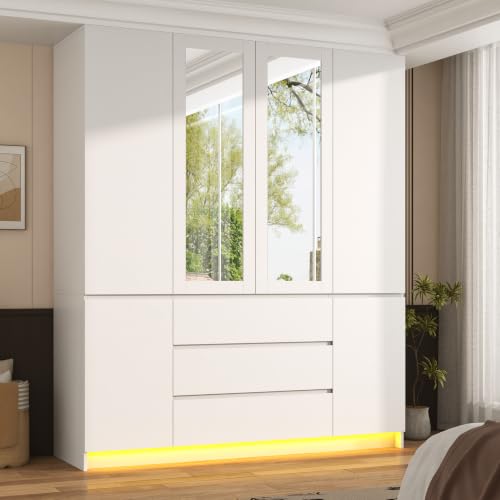
Wardrobe Armoire with Hanging Rod and Drawers: The Complete Buyer's Guide
One freestanding piece that handles both hanging garments and folded clothing. Learn how to size, evaluate, and choose a wardrobe armoire with a hanging rod and drawers that fits your bedroom and your daily routine.
Jump to Buying ChecklistWhy this piece earns its place: A wardrobe armoire with a hanging rod and drawers solves a common bedroom problem — not enough closet. It consolidates a hanging section and a drawer stack into a single vertical footprint, so you get full-length garment storage and folded-item storage without adding a separate dresser. For renters and small bedrooms, that consolidation is often the deciding factor.
If you have been searching for storage that does more than a standard dresser, a wardrobe armoire with hanging rod and drawers is likely the answer. Unlike a plain chest of drawers, it gives you a proper hanging section for dresses, coats, and shirts that should not be folded. Unlike a basic wardrobe, it adds a bank of drawers for folded clothing, linens, and accessories. The result is a hybrid piece that behaves like a compact closet with built-in dresser storage.
This guide walks through the practical details that matter before you commit: how much hanging clearance you actually need, how drawer configurations differ, which materials hold up over years of daily use, and how to place the armoire so it does not overwhelm the room. By the end, you should be able to evaluate any listing with confidence and know exactly which specification matters for your situation.
What Exactly Is a Wardrobe Armoire with a Hanging Rod and Drawers?
The term describes a tall, freestanding cabinet divided into two functional zones. The upper zone contains a horizontal hanging rod, sometimes with a shelf above it. The lower zone contains a stack of drawers — typically two to four — mounted on glides. Doors may cover the entire front, or the piece may be open with the rod exposed.
This layout differs from related furniture in a few important ways. A standard wardrobe armoire with drawers may place drawers at the bottom but lack a dedicated full-height hanging rod. A wardrobe dresser combo blends the two functions but sometimes in a wider, lower silhouette. The hanging-rod-plus-drawers configuration is specifically designed for bedrooms where both long garments and folded items need a home in one narrow footprint.
It also sits in a useful middle ground between other storage categories. If you are comparing a wardrobe dresser against a full closet system, the armoire offers flexibility because it is freestanding and can move with you. And if your room already has a dresser but no hanging space, an armoire fills that gap without duplicating drawer storage elsewhere.
Anatomy of the Piece: Hanging Zone vs. Drawer Zone
Hanging Rod Zone
The upper section holds a horizontal rod, usually positioned 40 to 55 inches above the base in full-size models. This clearance accommodates dresses, coats, and long shirts. Compact models may offer 30 to 40 inches, better for shirts and shorter garments. Some models include a shelf above the rod for boxes or hats.
Drawer Zone
The lower section holds two to four drawers, often in a stacked or side-by-side layout. Drawer depth matters: deeper drawers suit sweaters and linens, while shallower drawers work better for accessories and folded shirts. Check whether the drawers run on metal glides or wooden runners.
Doors & Hardware
Doors may cover the full front, the hanging zone only, or neither. Hinges should be adjustable and rated for the door weight. Knobs and pulls should feel solid in the hand. Hardware is one of the clearest signals of overall build quality.
Base & Stability
Look for a solid base with a center support on wider models. Anti-tip hardware is essential, especially in households with children. A level base protects drawer alignment over time and prevents the doors from drifting out of square.
Sizing Guide: How Much Space Do You Need?
Sizing is where most buyers get tripped up. The armoire must fit the room, but it also must fit the garments you plan to hang and the folded items you plan to store. Work through these dimensions before you shop.
Measure the Room First
- Wall width: Leave at least 2 to 3 inches on each side for door swing and airflow.
- Ceiling height: Full-size armoires often run 70 to 80 inches tall. Confirm the piece clears any ceiling fan or light fixture.
- Door swing: Measure the arc of the doors. In tight rooms, a model with sliding or bi-fold doors may be smarter.
- Path to the room: Check stairwells, hallways, and doorway widths. A tall armoire that cannot make the turn is a costly mistake.
Measure Your Garments
- Long garments: Dresses and coats typically need 50 to 60 inches of clearance. Confirm the rod height accounts for the hanger hook.
- Shirts and blouses: 36 to 42 inches is usually sufficient.
- Folded items: Measure the depth of your folded stacks. Drawers should be at least 14 to 16 inches deep for sweaters.
Footprint Categories
| Category | Typical Width | Best For |
|---|---|---|
| Compact | 24–36 inches | Small bedrooms, apartments, guest rooms, narrow wall segments |
| Standard | 36–48 inches | Primary bedrooms, shared rooms, mixed hanging and folded storage |
| Full-Size | 48–60 inches | Rooms replacing a closet, households with long garments and coats |
| Wide / Dual-Zone | 60+ inches | Master suites, dual-sided hanging, separate his-and-hers zones |
Drawer Configurations and What They Suit
The drawer zone is not one-size-fits-all. The number, depth, and arrangement of drawers determine how useful the lower half of the armoire will be. Consider these common layouts:
- Two deep drawers: Best for bulky items — sweaters, jeans, linens. Deep drawers reduce the number of folds but can become disorganized without dividers.
- Three to four medium drawers: The most versatile layout. Suitable for folded shirts, trousers, and accessories in separate compartments.
- Side-by-side drawers: Two smaller drawers next to a larger one, often used for accessories paired with folded clothing. Useful when the armoire is shared between two people.
- Drawer plus shelf: Some models replace one drawer with an open shelf, which suits shoes or baskets but offers less protection from dust.
If organization is a priority, plan how you will divide the drawers before purchase. Drawer dividers, stackable trays, and labeled bins turn deep drawers into usable space. For a deeper look at keeping the drawer zone functional, see our guide to deep drawer storage configurations.
Materials and Build Quality: What to Look For
An armoire is a long-term piece, and the material determines how it ages. Use the tier descriptors below to compare models on a relative scale rather than on any single specification.
| Tier | Typical Construction | What It Means for You |
|---|---|---|
| Entry-Level | Engineered wood with paper or thin veneer, basic metal glides | Functional for guest rooms or temporary setups. Expect lighter hardware and less resistance to humidity changes. |
| Mid-Range | Engineered wood with quality veneers, solid wood drawer fronts, metal glides with soft-close | A balanced tier for daily use. Better drawer action and more consistent finish. Good value for its class. |
| Premium | Solid wood carcass (oak, maple, walnut, pine), dovetail or reinforced drawer joints | Durable construction that can be refinished. Heavier piece, but stable and long-lasting. |
| Luxury | Hardwood with hand-finished details, premium hardware, custom sizing | A long-term investment. Often built to order with tailored internal layouts. |
Beyond the carcass, inspect the hardware. Drawer glides should extend fully and return smoothly. Hinges should be adjustable and rated for the door weight. A solid back panel adds rigidity, which matters for tall pieces. If you are considering a painted finish, our guide to chalk paint finishes explains how different coatings age and how to maintain them.
For a broader comparison of wood species and finishes, the walnut dresser overview and the unfinished solid wood chest guide are useful references. If you prefer a natural finish that you can customize later, an unfinished wood dresser paired with a separate hanging solution may also be worth considering.
Placement and Room Integration
Where the armoire sits affects both usability and the feel of the room. A tall piece draws the eye, so placement should feel intentional.
- Against a solid wall: The safest choice. Anchor the piece to a stud for stability, especially in homes with children.
- Beside the bed: Creates a natural dressing zone. Leave enough clearance for the doors to open fully.
- In a walk-in closet: An armoire can serve as the hanging core of a closet system. See our notes on walk-in closet chest of drawers layouts for complementary storage.
- In a guest room or home office: A compact model doubles as a storage cabinet for linens, files, or seasonal items.
If the room is small, consider a vertical dresser as a companion piece, or explore wardrobe closet configurations with drawers and shelves if you are planning a full closet build-out.
How It Compares to Other Storage Pieces
Buyers often weigh an armoire against a dresser, a chest, or a full closet. The table below summarizes the trade-offs.
| Storage Type | Hanging Space | Drawer Space | Best For |
|---|---|---|---|
| Wardrobe armoire with hanging rod and drawers | Yes, full-height rod | Yes, stacked drawers | Rooms without a closet; combined hanging and folded storage |
| Standard dresser | No | Yes, wide drawer bank | Rooms with existing closet space for hanging garments |
| Chest of drawers | No | Yes, tall stack | Narrow wall segments; folded-only storage |
| Wardrobe without drawers | Yes | No (or minimal) | Hanging-heavy wardrobes; users with a separate dresser |
| Built-in closet system | Yes | Configurable | Permanent installations; maximum customization |
If you already own a dresser and only need hanging space, a wardrobe without drawers may be sufficient. If you have no closet at all, the combined armoire is usually the most efficient single purchase. For rooms where a full armoire is too tall, a wall-mounted dresser or a wardrobe dresser combo can provide a similar function in a lower profile.
Buying Checklist: Evaluate Any Armoire in Minutes
- Measure the wall, ceiling, and doorway before you browse. Confirm the piece clears fixtures and fits the delivery path.
- Check rod clearance against your longest garments. Add a few inches for hanger hooks.
- Confirm drawer depth and glide type. Full-extension metal glides are preferable to basic runners.
- Inspect the door hinges. Adjustable hinges accommodate seasonal humidity shifts.
- Look for anti-tip hardware. Tall pieces should always be anchored to the wall.
- Verify the carcass material. Solid wood for long-term use; quality veneer for a balanced tier.
- Plan the drawer layout around what you fold most: sweaters, shirts, or accessories.
- Read the assembly requirements. Some models ship flat-packed; others arrive assembled.
- Consider finish maintenance. Painted finishes touch up easily; natural wood can be refinished.
- Check return and delivery terms before ordering, especially for oversized furniture.
Common Mistakes to Avoid
- Ignoring rod height. A rod set too low turns long dresses into a crumpled mess. Measure before you buy.
- Overlooking door swing. Doors that open into a walkway make the piece annoying to use daily.
- Choosing drawers by look, not function. Deep drawers look generous but need dividers to stay organized.
- Skipping the anchor. A tall, heavy armoire without anti-tip hardware is a safety risk.
- Forgetting humidity. Solid wood expands and contracts. Keep the piece away from direct heat sources and radiators.
Frequently Asked Questions
What is a wardrobe armoire with a hanging rod and drawers?
It is a tall freestanding storage piece that combines a full-height hanging section on a rod with a stack of drawers below, giving you both hanging space for garments and folded storage in a single footprint.
How much hanging space does a typical armoire with a hanging rod provide?
Most full-size models offer between 40 and 55 inches of vertical rod clearance, enough for dresses, coats, and long shirts. Compact models may offer 30 to 40 inches, better suited to shirts and shorter garments.
Are wardrobe armoires with drawers suitable for small bedrooms?
Yes, when you choose a narrower footprint. A compact armoire consolidates hanging and folded storage into one vertical unit, which is often more space-efficient than a separate dresser plus wardrobe.
What materials are best for a wardrobe armoire with hanging rod and drawers?
Solid wood such as oak, walnut, maple, or pine offers the most durable construction. High-grade engineered wood with quality veneers is a solid mid-range option. Check drawer glides and hinge hardware, since these determine long-term usability.
Can a wardrobe armoire replace a closet entirely?
For many renters and small bedrooms, yes. A full-size armoire with a hanging rod and two to four drawers can hold a capsule wardrobe. If you own many long garments or formal wear, pair it with additional storage.
How do I keep the drawers organized?
Use drawer dividers for folded shirts and trousers, stackable trays for accessories, and labeled bins for seasonal items. Rotate clothing by season to keep the most-used items in the most accessible drawers.