Unfinished Solid Wood Chest of Drawers: The Complete Buyer's Guide
Everything you need to know about choosing, finishing, and caring for a raw solid wood chest — from wood species and construction to stains, paints, and protective topcoats.
What Exactly Is an Unfinished Solid Wood Chest of Drawers?
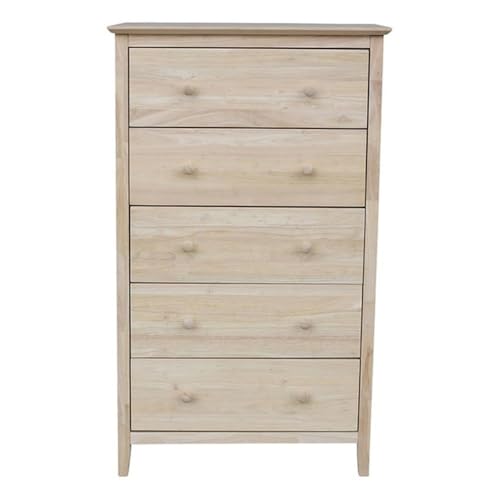
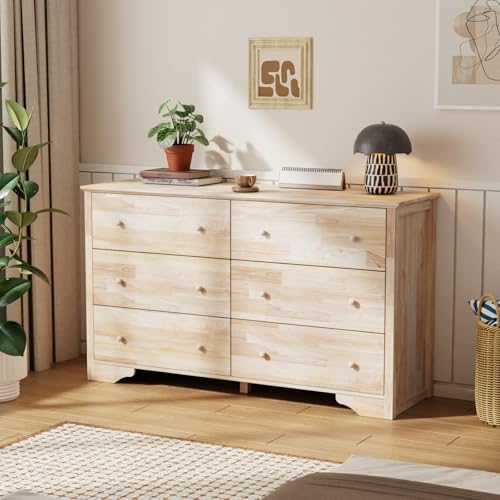
An unfinished chest is built from planks of real wood — not particleboard, MDF, or veneer over engineered core — and it leaves the factory without stain, paint, or a sealing topcoat. The surfaces are typically sanded to a smooth, workable state so the buyer can apply their own finish. This is different from a standard unfinished dresser only in proportion and drawer layout: a chest of drawers is generally taller than it is wide, with drawers stacked vertically, while a dresser is typically wider and lower.
The appeal is control. You are not locked into a factory color that may clash with your bedroom palette, and you are not paying for a finish that may need stripping later. You also get transparency about materials: with an unfinished piece, the grain and joinery are visible, so you can inspect exactly what you are buying before any coating hides defects.
If you are still deciding between a chest and a wider dresser form, our comparison of a wood chest of drawers versus a wood dresser walks through footprint, storage volume, and room layout considerations.
Why Choose Unfinished Solid Wood Over a Pre-Finished Piece?
There are several practical reasons buyers gravitate toward raw wood chests:
- Finish control: You can match an exact paint color, replicate a family heirloom's stain, or keep the wood natural with a clear oil. This is especially useful in rooms with fixed color schemes.
- Material transparency: Solid wood construction is visible and verifiable. You can check drawer sides, dust panels, and joinery before committing.
- Repairability: Solid wood can be sanded back and refinished repeatedly. Engineered boards with thin veneers usually cannot.
- Lower chemical exposure at purchase: You choose the topcoat, which matters for nurseries and chemically sensitive households. Water-based and low-VOC options are widely available.
- Long-term durability: A well-built solid wood chest is a long-term investment that can be handed down or adapted to new rooms.
The trade-off is effort. You will spend time sanding, conditioning, staining or painting, and applying topcoats. For many buyers that is part of the appeal — the finished piece is genuinely yours. For a deeper look at the raw wood category across furniture types, see our guide to unfinished wood dressers.
Comparing Wood Species for Unfinished Chests
The species determines grain pattern, hardness, how evenly it accepts stain, and how it behaves over time. The table below compares the most common options using neutral market-tier descriptors rather than currency figures.
| Wood Species | Market Tier | Grain & Appearance | Best For |
|---|---|---|---|
| Pine | Entry-level | Prominent grain, knots, warm pale tone that deepens with age | Painted finishes, farmhouse and cottage styles, starter-tier bedrooms |
| Oak | Mid-range | Strong open grain, heavy and hard-wearing, takes stain well | High-traffic bedrooms, natural or light-stain finishes, heirloom pieces |
| Maple | Mid-range | Tight, uniform grain with a clean look, resists denting | Painted finishes, modern and minimalist rooms, children's furniture |
| Walnut | Premium | Rich dark chocolate tone, elegant straight grain, naturally dramatic | Clear natural finishes, mid-century and contemporary interiors |
| Mahogany | High-end tier | Deep reddish-brown, fine grain, excellent machining qualities | Traditional and formal bedrooms, polished antique-style finishes |
If you already know you want pine, our dedicated guide to an unfinished pine dresser covers the species-specific quirks, including knot sealing and sap bleed. For a broader treatment of solid wood chests across materials, see our page on unfinished solid wood chests.
Construction Details That Separate Good Chests From Great Ones
Because an unfinished chest exposes its construction, you can inspect quality directly. Focus on these elements:
Drawer Boxes and Joinery
Look for drawer sides that are solid wood rather than thin particleboard. Dovetail joinery at the front corners is the traditional benchmark for durability and is common on mid-range and premium pieces; stapled or glued butt joints are typical of entry-level construction. Drawer bottoms should be captured in a groove rather than stapled to the underside.
Drawer Glides
Unfinished chests may ship with wooden runners, ball-bearing side-mount slides, or under-mount slides. Wood-on-wood runners are traditional and quiet but require waxing; ball-bearing slides are smoother under heavy loads. If smooth, full-extension travel matters to you, check the glide specification before buying.
Dust Panels and Back Panels
Dust panels between drawer rows keep clothing free of debris and add structural rigidity. A solid wood or thick plywood back panel is preferable to a thin hardboard sheet, which can warp and let the chest rack out of square.
Frame and Case Construction
Check that corner joints are tight and reinforced. On a solid wood chest, expect some seasonal movement — wood expands and contracts with humidity — so well-built cases allow for this rather than fighting it. Avoid chests with large panels glued rigidly on all four edges, which can crack over time.
How to Finish an Unfinished Solid Wood Chest of Drawers
Finishing is the step that turns a raw chest into a finished piece of furniture. The sequence matters more than any single product.
Step 1: Sand and Prepare
Even factory-sanded chests usually need a final pass. Work through progressively finer grits, sanding with the grain, and vacuum or tack-cloth all dust before moving on. Pay attention to end grain, which absorbs finish differently from face grain.
Step 2: Condition the Wood (If Staining)
A pre-stain wood conditioner helps pine and other softwoods absorb stain evenly and reduces blotching. Hardwoods such as oak and maple are less prone to blotching but still benefit from a light conditioning pass on end grain.
Step 3: Apply Stain or Paint
For a natural look, choose a penetrating oil stain in a tone that complements your room. For painted finishes, a primer followed by two thin coats of a quality furniture paint works well. If you are exploring a painted, matte, or antiqued look, our guide to using chalk paint on furniture covers surface prep and sealing for that style.
Step 4: Protect With a Topcoat
Stain and paint alone do not protect against moisture, spills, or wear. Apply at least two coats of a protective topcoat — polyurethane, lacquer, hardwax oil, or a water-based clear finish — sanding lightly between coats. Water-based topcoats dry faster and have lower odor; oil-based topcoats amber the wood slightly and offer a warmer depth.
Step 5: Cure Before Loading
Let the finish cure fully before putting clothes inside. A fully cured topcoat resists sticking and off-gassing, and it prevents drawer fronts from bonding to the case if humidity rises.
If you want a different final aesthetic, an unfinished dresser can also be styled with decorative hardware after finishing — knobs and pulls are a simple way to shift the look from rustic to modern without redoing the finish.
Sizing and Placement: Matching the Chest to Your Room
A chest of drawers is a vertical storage form, which makes it a strong choice for narrow walls and small footprints. Before buying, measure the wall space, the swing of nearby doors, and the clearance needed to open the bottom drawer fully. A chest placed too close to a bed can make the bottom drawer unusable.
For compact bedrooms, a narrow unfinished chest can replace both a dresser and a nightstand. If your space is genuinely tight, our guide to a vertical dresser explains how height compensates for a small footprint, while a vertical dresser with deep drawers is worth considering if you store bulky knitwear or linens.
In larger rooms, a chest can work alongside a wider dresser or as a standalone piece. Consider sightlines from the doorway: a tall chest anchors a wall, while a lower dresser keeps the room feeling open. Our overview of unfinished wood chest of drawers options covers both proportions.
Caring for a Finished Solid Wood Chest
Solid wood responds to its environment. Keep the chest away from direct heat sources and prolonged direct sunlight, which can dry the wood and fade finishes. Maintain indoor humidity in a moderate range where possible; extreme swings cause drawers to stick in summer and rattle in winter.
- Dust regularly with a soft, slightly damp cloth and dry immediately.
- Avoid silicone-based polishes, which can build up and interfere with future refinishing.
- Wipe spills promptly — even a cured topcoat is not waterproof indefinitely.
- Check drawer glides annually and lubricate according to the manufacturer's guidance.
- If the finish dulls, a light refresh coat can restore sheen without a full strip-down.
Because the piece is solid wood, minor scratches can often be sanded out locally and re-finished. That repairability is one of the strongest arguments for choosing solid wood over veneered engineered boards.
Quick Buying Checklist
Use this checklist when evaluating an unfinished solid wood chest of drawers, whether in a store or from an online listing:
- Confirm the wood species and that the case and drawer fronts are solid wood, not veneer.
- Inspect drawer joinery — dovetails are a strong signal of mid-range or premium construction.
- Check drawer glide type and test full-extension travel if possible.
- Look for dust panels between drawer rows and a sturdy back panel.
- Feel the sanding quality; uneven surfaces will show through stain.
- Measure your wall space and confirm the bottom drawer opens without obstruction.
- Decide your finish route before purchase so you buy the right conditioner, stain, and topcoat together.
- For nurseries, plan a low-VOC topcoat and secure the chest to the wall with an anti-tip strap.
Frequently Asked Questions
What does unfinished solid wood mean on a chest of drawers?
It means the chest is built from real wood planks and has not been stained, painted, or sealed. The surface is sanded and ready for you to apply your own finish, giving you full control over color and sheen.
What are the benefits of buying an unfinished wood chest of drawers?
You get complete control over the finish, transparency about materials, and a piece that can be sanded and refinished repeatedly. It also lets you choose a low-VOC topcoat, which matters for nurseries and chemically sensitive households.
Which wood species are best for an unfinished chest of drawers?
Pine is the most common entry-level choice and takes paint well. Oak offers superior durability and prominent grain, maple provides a tight uniform grain ideal for painting, and walnut and mahogany sit at the premium and high-end tiers with rich natural color.
How should I finish an unfinished solid wood chest of drawers?
Sand progressively to a fine grit, remove all dust, apply a wood conditioner if staining, then stain or paint. Finish with at least two coats of a protective topcoat such as polyurethane or hardwax oil, sanding lightly between coats, and let it cure fully before loading.
Are unfinished wood chests suitable for a nursery or child's room?
Yes, if you finish the wood with a low-VOC or water-based topcoat and secure the chest to the wall with an anti-tip strap. Choosing your own child-safe finish is one of the main advantages of an unfinished piece.
Can I paint an unfinished chest instead of staining it?
Absolutely. A primer followed by two thin coats of furniture paint gives a durable painted finish. If you want a matte or antiqued look, chalk paint is a popular option — just seal it with a topcoat for durability.
Ready to Compare Unfinished Chests?
Browse our curated selection of unfinished solid wood chest of drawers below. Each listing is chosen for solid construction and finish-ready surfaces, so you can move from research to your first sanding pass with confidence.
Explore Recommended Options