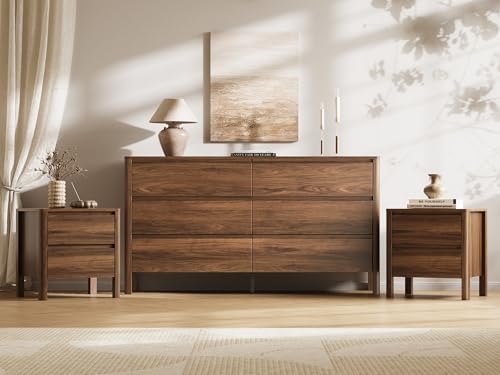
Walnut Dresser and Nightstand Set: Complete Buying Guide
Everything you need to choose a matched walnut bedroom set — from grain and finish to drawer construction, sizing, and quality tiers. Make a confident, well-informed decision before you buy.
EXPLORE THE GUIDEWhy a matched walnut set? A coordinated walnut dresser and nightstand set brings visual harmony to the bedroom while ensuring consistent wood tone, hardware, and craftsmanship. Walnut's deep chocolate-to-honey hues and striking grain make it one of the most sought-after hardwoods for bedroom furniture. This guide walks you through the decisions that matter most so you can select a set that fits your room, your storage needs, and your long-term expectations.
What Makes Walnut a Standout Choice
Walnut (particularly American black walnut) is a dense, closed-grain hardwood known for its rich color range — from pale honey brown in the sapwood to deep chocolate in the heartwood. Its grain can be straight, wavy, or figured, giving each piece a one-of-a-kind appearance. Unlike softer woods, walnut holds up well to daily wear, resists dents, and takes a fine finish that deepens with age.
When you choose a walnut dresser and nightstand set, you are investing in furniture that typically outlasts veneered or engineered-wood alternatives. The key is understanding how the set is constructed — solid walnut, walnut veneer over a stable core, or a combination — because that distinction affects durability, weight, and long-term appearance.
- Solid walnut: The most durable option, with consistent grain throughout. Heavier and typically positioned in the premium to luxury tiers.
- Walnut veneer over plywood or MDF: Offers the walnut look with greater dimensional stability and lighter weight. Quality varies widely — high-grade veneer with thick facing performs well in mid-range to high-end tiers.
- Walnut-finished hardwood: A different species stained to resemble walnut. Entry-level and mid-tier sets sometimes use this approach; inspect the grain pattern to confirm.
What's Typically Included in a Walnut Dresser and Nightstand Set
Most matched sets pair one dresser with one or two nightstands. Some collections also offer a chest of drawers, a mirror, or a bed frame as optional add-ons. Before committing, confirm exactly which pieces are included so you are comparing like for like.
| Component | Typical Configuration | Best For |
|---|---|---|
| Dresser | 6–8 drawers, 60–72 inches wide | Primary clothing storage for one or two people |
| Nightstand (single) | 1–2 drawers, 20–26 inches wide | Bedside essentials, solo sleepers, compact rooms |
| Nightstand (pair) | Two matching 1–2 drawer units | Couples, symmetrical bedroom layouts |
| Chest of drawers (optional) | 4–5 drawers, taller profile | Extra storage, smaller footprints, guest rooms |
| Mirror (optional) | Attached or freestanding | Dressing, visual height, traditional styling |
Style Variations to Consider
Walnut works across a remarkably wide range of interior styles. The finish, hardware, and leg profile determine whether a set reads as sleek and contemporary or warm and traditional.
- Mid-century modern: Tapered legs, clean lines, and minimal hardware. Walnut is the signature wood of this style and pairs naturally with it. See our mid-century walnut dresser guide for deeper detail.
- Modern and minimalist: Flat-front drawers, recessed or integrated pulls, and a low profile. A modern walnut dresser often uses a darker, more uniform stain.
- Traditional and transitional: Bracket feet, decorative pulls, and optional mirrors. These sets blend walnut warmth with classic detailing.
- Scandinavian-inspired: Lighter walnut finishes, rounded corners, and simple round knobs. Often paired with white or neutral walls.
If you are still exploring wood options, our broader walnut dressers collection and walnut chest of drawers guides provide additional context on finishes and configurations.
Drawer Construction: The Detail That Determines Longevity
The drawer is where a dresser either proves its quality or reveals its shortcuts. For a walnut set intended as a long-term investment, pay close attention to three elements:
| Feature | Entry-Level | Mid-Range | Premium / Luxury |
|---|---|---|---|
| Drawer joints | Stapled or nailed | Glued and screwed | Dovetail (English or French) |
| Drawer bottom | Thin hardboard | Plywood with center support | Thick plywood, dadoed into sides |
| Glides | Basic side-mounted rollers | Ball-bearing side or under-mount | Soft-close under-mount, full extension |
| Interior finish | Raw or thin coat | Sanded and sealed | Fully finished, smooth-touch interior |
Dovetail joints are the gold standard because they mechanically resist pulling apart under load. Soft-close under-mount glides prevent slamming and extend the life of the drawer box. If the set uses side-mounted roller glides, that is acceptable in entry-level and mid-tier products, but verify that the drawers open smoothly and do not wobble when extended.
Sizing the Set to Your Room
A walnut dresser and nightstand set should feel proportionate to the bedroom, not dominate it. Measure your available wall space and the clearance around your bed before choosing a configuration.
- Dresser width: 60–72 inches is standard for a primary bedroom. Rooms under 10 feet wide may suit a 54–60 inch dresser or a six-drawer walnut dresser instead.
- Nightstand height: Ideally within 2–4 inches of the mattress top so items are reachable without stretching.
- Walking clearance: Leave at least 30 inches between the dresser front and the bed or opposite wall.
- Drawer extension: Allow roughly 18–20 inches of open space in front of the dresser so drawers can fully extend.
For tighter rooms, our vertical dresser guide explains how taller, narrower profiles preserve floor space. If you are furnishing a larger suite, a standard walnut dresser paired with two nightstands and an optional chest creates a cohesive storage plan.
Mixing a Walnut Set With Other Furniture
A matched set is the simplest path to a cohesive bedroom, but walnut is versatile enough to blend with other finishes. The key is to repeat one or two visual cues — such as black metal hardware, brass accents, or a similar leg shape — so the room feels intentional rather than accidental.
- Pair walnut with white bedding and neutral walls to let the wood grain stand out.
- Combine a walnut dresser with a lighter white and walnut dresser accent piece if you want contrast without breaking harmony.
- For a softer look, consider a washed natural dresser as a secondary piece in an adjacent room.
- If you prefer a vintage character, explore vintage dresser and nightstand sets for inspiration on patina and proportion.
Understanding Quality Tiers Without Guessing
Walnut sets span a wide range of construction quality. Rather than focusing on any single number, use the tier descriptors below to frame your expectations and compare products fairly.
| Tier | Typical Construction | Best For |
|---|---|---|
| Entry-level / starter tier | Walnut veneer over engineered wood, basic glides, stapled joints | Guest rooms, first apartments, short-term setups |
| Mid-range / balanced tier | Solid walnut top with veneered sides, ball-bearing glides, glued joints | Primary bedrooms, daily use, moderate storage needs |
| Premium / high-end tier | Mostly solid walnut, dovetail drawers, soft-close under-mount glides | Long-term investment, design-focused rooms |
| Luxury / flagship tier | Fully solid walnut, hand-finished, premium hardware, heirloom construction | Custom interiors, collector-grade furniture |
Within each tier, the best sets are the ones that are well-specified for their class — consistent finish, smooth drawer action, and sturdy joinery. A mid-range set with dovetail drawers often outperforms a premium set with weaker internals, so read the construction details rather than relying on tier labels alone.
Caring for a Walnut Dresser and Nightstand Set
Walnut is forgiving but not indestructible. A few simple habits keep the finish rich and the wood stable for decades:
- Dust with a soft, dry cloth weekly; avoid abrasive pads that dull the finish.
- Keep the set out of direct sunlight to prevent uneven fading.
- Use coasters and felt pads under lamps and decor to avoid ring marks and scratches.
- Re-oil or re-wax oil-finished walnut every 12–18 months, following the manufacturer's guidance.
- Maintain indoor humidity between 30–50 percent to minimize seasonal wood movement.
Ready to Compare Walnut Sets?
Browse curated walnut dresser and nightstand options with verified construction details and coordinated styling.
View Recommended SetsFrequently Asked Questions
What should I look for in a walnut dresser and nightstand set?
Focus on solid walnut construction or high-grade walnut veneer, dovetail drawer joints, smooth metal glides, and a consistent finish across both pieces. Check that the nightstand height aligns comfortably with your bed and that the dresser offers adequate drawer depth for your clothing.
Is walnut a good wood for bedroom furniture?
Yes. Walnut is a dense hardwood prized for its rich color, distinctive grain, and long-term durability. It resists wear well and develops character over time, making it an excellent choice for dressers and nightstands that see daily use.
How do I match a walnut dresser with a nightstand set?
Look for sets that share the same finish tone, hardware style, and drawer-front design. A coordinated set creates visual harmony, while mixing a darker walnut dresser with a lighter walnut nightstand can add depth if the grain and hardware are consistent.
What drawer count is best for a walnut dresser set?
Most bedroom sets pair a six- to eight-drawer dresser with a one- or two-drawer nightstand. Choose based on your clothing volume: six drawers suit singles or couples with modest wardrobes, while eight or more drawers help organize larger collections.
Related Reading
Continue exploring walnut furniture and bedroom storage with these guides: