Walnut 6 Drawer Dresser: The Complete Buyer's Guide
Rich grain, generous storage, and timeless character. Learn how to evaluate a walnut 6 drawer dresser across construction, drawer mechanics, finish quality, and room fit so you can choose with confidence.
Explore Buying FactorsWhy a walnut 6 drawer dresser deserves careful research: Walnut is a high-grade hardwood prized for its deep color and distinctive grain. A six-drawer configuration sits in the sweet spot between compact and capacious. Together, they make a substantial bedroom investment, so understanding construction details, drawer hardware, and finish before you buy is essential.
Why Choose Walnut for a 6 Drawer Dresser?
Walnut has long been associated with premium furniture. Its tight grain, warm brown tones, and natural resistance to wear make it a favorite for bedroom storage pieces that are meant to last. Compared with open-grain alternatives, walnut typically takes a finer finish and develops a richer patina over time.
A six-drawer dresser offers an efficient balance: enough capacity for clothing, linens, and accessories without the footprint of a wider eight- or nine-drawer unit. For many bedrooms, that combination of material quality and practical storage is exactly what buyers in the research stage are looking for.
Visual Warmth
Walnut's deep chocolate and honey tones bring natural warmth to bedrooms with neutral, cool, or earthy color palettes.
Density & Durability
Walnut is a dense hardwood that resists dents and holds joinery well, supporting long-term structural integrity.
Grain Character
Each board carries unique figure and cathedrals, so a walnut dresser reads as a considered, individual piece rather than a mass-produced look.
Six-Drawer Efficiency
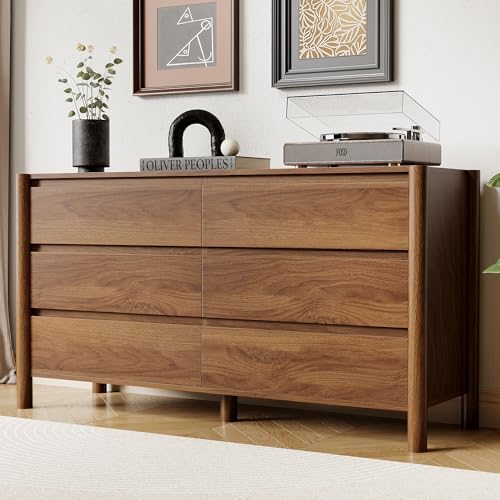
Six drawers typically divide into two smaller top drawers and four larger lower drawers, a practical split for mixed clothing storage.
Construction and Drawer Mechanics to Evaluate
The quality of a walnut 6 drawer dresser is decided less by the wood species alone and more by how the piece is built. Two dressers made from comparable walnut can differ significantly in drawer glide smoothness, joint strength, and finish durability.
Drawer Glides and Slides
Entry-level dressers often use side-mounted roller glides, which function but can feel less refined and offer limited extension. Mid-range models commonly move to side-mounted ball-bearing slides, while premium and high-end tiers typically use under-mount soft-close slides that glide smoothly and reduce noise. For a six-drawer unit used daily, under-mount soft-close hardware is a meaningful upgrade in day-to-day experience.
Joinery and Case Construction
Look for dovetail or doweled drawer boxes rather than stapled or glued-only construction. Dovetail joints remain a reliable marker of drawer durability. The dresser case itself should feel rigid, with reinforced corner blocks or corner braces that prevent racking when drawers are opened fully loaded.
Drawer Bottoms and Capacity
A six-drawer dresser needs drawer bottoms sturdy enough for folded clothing and linens. Thin plywood bottoms may sag over time; thicker panels or solid-wood bottoms with center supports hold their shape better. Consider the split between smaller top drawers and deeper lower drawers and match it to how you fold and store clothing.
Walnut 6 Drawer Dresser Tiers Compared
Rather than comparing by any single figure, it helps to understand how walnut 6 drawer dressers fall into broad market tiers. The descriptors below are relative and reflect how products are positioned within the category.
| Tier | Typical Construction | Drawer Hardware | Best For |
|---|---|---|---|
| Entry-level | Walnut veneer over engineered core; simple joinery | Side-mounted roller glides | Buyers prioritizing walnut appearance in a secondary bedroom or guest room |
| Mid-range | Walnut veneer with solid walnut drawer fronts; doweled cases | Side-mounted ball-bearing slides | Everyday primary-bedroom use with a balance of construction and feature set |
| Premium | Solid walnut case and drawer fronts; dovetail drawer boxes | Under-mount soft-close slides | Buyers seeking long-term durability and refined drawer feel |
| Luxury | Solid walnut throughout; hand-finished joinery and interior detailing | Premium soft-close slides or hand-crafted wood runners | Collectors and design-led bedrooms where craftsmanship is the priority |
Walnut Finishes and Bedroom Styles
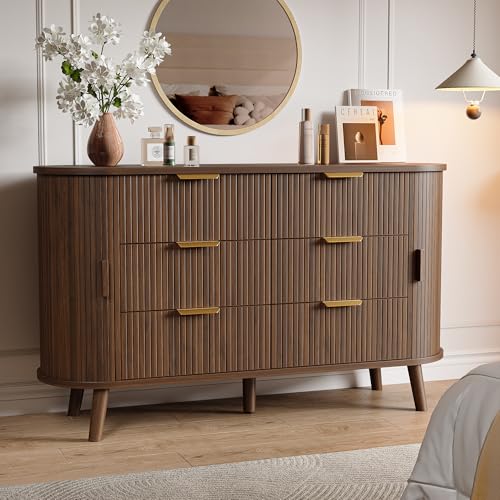
Walnut accepts a range of finishes, and the choice of finish changes how the piece reads in a room. A clear or low-sheen finish emphasizes natural grain and suits modern and mid-century interiors. A warmer, satin finish deepens the color and pairs well with traditional and transitional bedrooms. Matte or oiled finishes offer a tactile, natural look but require more attentive maintenance.
For a cohesive bedroom, match the walnut tone to other wood elements rather than trying to make every piece identical. A walnut six-drawer dresser can anchor a room alongside lighter oak or painted nightstands, creating contrast without visual clutter. If you are still comparing dresser formats, our guide on walnut dressers explores broader style options, and our overview of walnut chests of drawers helps distinguish between tall and wide configurations.
Sizing and Placement for a Six-Drawer Dresser
Six-drawer dressers vary in width, depth, and height, so measure your space before committing. A common configuration places two smaller drawers at the top and four larger drawers below, which suits folded shirts, knitwear, and linens. Deeper drawers are useful for bulkier items, while shallower top drawers work well for accessories.
- Width: Confirm the dresser fits your wall with comfortable clearance for doors and walkways.
- Depth: Deeper cases hold more but intrude into floor space; measure door swing and furniture spacing.
- Height: A dresser top around waist height is comfortable for daily access and styling.
- Anchoring: Secure the dresser to the wall, particularly in homes with children or pets.
If floor space is limited, a vertical dresser with deep drawers can deliver similar capacity in a narrower footprint. For bedrooms that need matching pieces, a walnut dresser and nightstand set simplifies the coordination process.
Buying Checklist Before You Decide
- Confirm whether the walnut is solid wood, veneer, or a combination, and check that the drawer fronts match the case.
- Ask about drawer glide type and whether the slides are soft-close or full-extension.
- Inspect or confirm drawer box joinery, especially dovetail construction.
- Review finish type and care requirements, particularly for oiled or matte finishes.
- Measure room clearance and verify wall anchoring hardware is included.
- Compare drawer layout against how you actually fold and store clothing.
- Read assembly and delivery details, especially for larger six-drawer cases.
Readers exploring broader bedroom storage can also review our guides on modern walnut dressers and walnut wood dressers for additional style and construction context. If you are comparing horizontal and vertical formats, the six-drawer dresser overview is a useful companion.
Frequently Asked Questions
Is solid walnut better than walnut veneer for a six-drawer dresser?
Solid walnut offers greater durability and a more consistent grain, but quality veneer over a stable engineered core can be a sound choice. The key is construction quality: veneer should be applied evenly with no lifting, and drawer boxes should be sturdy regardless of the case material.
How many clothes does a six-drawer dresser hold?
Capacity depends on drawer depth and how you fold. A typical six-drawer layout with four deeper drawers and two shallow top drawers comfortably stores folded clothing, knitwear, and linens for one or two people.
Do I need to anchor a walnut six-drawer dresser to the wall?
Yes. Wall anchoring is strongly recommended for any dresser, especially taller or heavily loaded units, to prevent tipping and improve safety in homes with children or pets.
What finish is easiest to maintain on walnut?
A satin or low-sheen lacquer finish is generally straightforward to maintain with a soft cloth and mild cleaner. Oiled finishes offer a natural look but typically require periodic re-oiling.