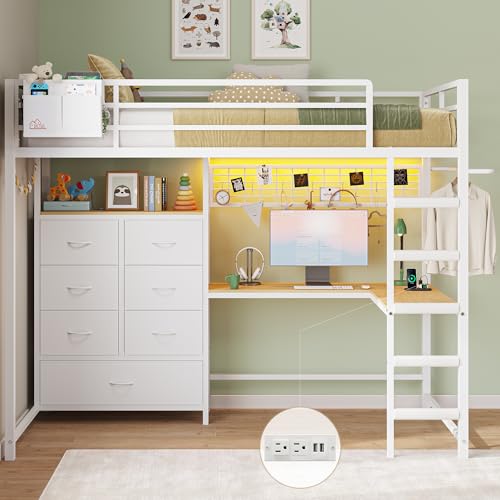
Twin Size Loft Bed With Dresser: A Complete Space-Saving Guide
A twin size loft bed with dresser turns one footprint into two functional zones: a raised sleeping area and a full clothing storage station underneath. This guide explains the layouts, clearance rules, safety features, and material choices that help you pick the right loft bed for a small bedroom, guest room, or shared kids' space.
Explore the Buying ChecklistWhy this configuration works: A standard twin bed occupies roughly the same floor area as many dressers. By lifting the sleeping platform, a twin loft bed with dresser underneath reclaims that floor space for storage without adding another piece of furniture along the wall. The result is a calmer room with a clear walking path, which matters most in compact bedrooms and multi-purpose rooms.
What Is a Twin Size Loft Bed With Dresser?
A twin size loft bed with dresser is a raised twin bed frame designed so that the area beneath the sleeping platform can hold a dresser, a drawer chest, or a built-in storage unit. Unlike a standard bunk bed, the lower zone is not another mattress. Instead, it becomes a dedicated storage bay that keeps clothing, bedding, and daily essentials within easy reach.
This design is closely related to other space-saving combinations. If you are comparing layouts, our guide to twin bed with built-in dresser options explains how integrated drawer units differ from freestanding dressers placed under the frame. You can also review twin loft bed with dresser underneath layouts to see how clearance and dresser height interact in real rooms.
Many buyers begin by searching for a twin loft bed with dresser as a single solution, then realize the dresser placement matters as much as the bed itself. The dresser can be built into the frame, tucked under the loft as a freestanding unit, or replaced with a taller storage piece such as a tall dresser when vertical clearance allows.
The Three Main Layouts
Most twin loft beds with dresser storage follow one of three layouts. Each one changes how the room feels and how easily you can access clothing.
| Layout | Best For | Key Consideration |
|---|---|---|
| Built-in dresser under the loft | Tight bedrooms, shared kids' rooms, dorm-style spaces | Most stable and streamlined, but the dresser cannot be repositioned later |
| Freestanding dresser under the loft | Renters, growing children, rooms that may be rearranged | More flexible, but the dresser must fit the clearance and be secured to the frame or wall |
| Loft bed with dresser and desk combination | Study areas, teen rooms, guest rooms with a workspace | Storage and workspace share the lower zone, so width and depth planning becomes critical |
If a workspace matters more than a full drawer stack, a twin loft bed with desk and dresser split may suit the room better. Buyers who prefer a broader sleeping surface sometimes move up to a twin over full bunk bed with dresser layout, which adds a full-size lower mattress but requires more floor depth.
Clearance and Dimensions You Need to Measure
The most common mistake is buying a loft bed before checking the under-bed clearance against the dresser height. A dresser that is too tall for the frame creates a cramped, awkward storage zone, and a dresser that is too shallow wastes the bay. Measure these four dimensions before you shop:
- Under-bed clearance: the distance from the floor to the bottom of the loft frame. Most twin loft beds with dresser storage fall in the 40 to 55 inch range.
- Dresser height: a low, wide dresser typically needs less vertical clearance than a tall chest with five or more drawers.
- Mattress thickness: a thicker mattress raises the sleep surface and can reduce guardrail effectiveness. Check the maximum mattress height in the product manual.
- Room walkway: leave at least 24 to 30 inches of clear floor space in front of the dresser so drawers can open fully without hitting a door or another bed.
When the under-bed bay is narrow, a thin dresser for small spaces can fit where a standard-width unit will not. If the bay is tall but shallow, a tall narrow dresser with drawers uses vertical space efficiently. For a broader storage base, a wide dresser may work better than a tall chest.
Safety Features That Matter Most
Loft beds raise the sleep surface, so safety features deserve more attention than they do on a standard bed. The essentials are straightforward but easy to overlook during a quick online purchase.
- Full-length guardrails: the rail should extend along the entire open side of the upper platform, not just part of it.
- Sturdy ladder or stair system: wide, textured treads and a secure attachment to the frame reduce slip risk. Some models use angled stairs that are easier for younger children.
- Weight rating: confirm the frame's rated capacity matches the intended user and check whether the dresser adds any load to the frame.
- Wall anchoring: freestanding dressers and tall loft frames should be anchored to the wall or integrated into the bed structure to prevent tipping.
- Stable base: reinforced legs, cross-bracing, and a solid build reduce wobble during climbing and everyday use.
For buyers who prioritize structural rigidity, a sturdy dresser paired with a well-braced loft frame is a stronger combination than a lightweight drawer unit that shifts when opened. If the dresser will hold heavier items, drawer hardware matters too; our overview of super heavy-duty drawer slides explains what to look for in smooth, load-bearing glides.
Materials and Build Quality by Tier
Twin loft beds with dresser storage span a wide range of construction quality. Rather than comparing figures, it helps to think in market tiers and match the tier to how the bed will be used.
| Tier | Typical Construction | Best For |
|---|---|---|
| Entry-level | Engineered wood panels, basic hardware, thinner drawer bottoms | Guest rooms, temporary setups, light daily use |
| Mid-range | Reinforced frame joints, smoother drawer slides, sturdier ladder treads | Daily use in kids' rooms and teen bedrooms |
| Premium | Solid wood or high-grade composite, heavy-duty hardware, refined finish | Long-term daily use, shared bedrooms, high-traffic homes |
| Luxury | Hardwood construction, custom joinery, premium drawer mechanisms | Design-focused rooms and long-term investment pieces |
Solid wood frames generally resist wobble better than thin engineered panels, while high-grade composite can be a solid choice when the joints are reinforced. If the dresser portion will see daily opening and closing, mid-range and premium tiers usually deliver noticeably smoother drawer action than entry-level units.
Matching the Dresser to the Loft
The dresser is not an afterthought in this setup. Its size, drawer count, and finish determine how usable the under-bed zone becomes. A three-drawer unit keeps the bay open and airy, while a five- or six-drawer chest maximizes clothing capacity in the same footprint.
If the room needs serious storage, a tall dresser with lots of drawers can replace a low unit when clearance permits. For smaller clothing collections, a three drawer dresser in solid wood keeps the bay visually light. Buyers who want a matched bedroom set sometimes pair the loft with a twin bed and dresser set or a twin bedroom set with dresser for consistent finishes across the room.
When the loft bed doubles as a display or media zone, a TV dresser for bedroom can sit beneath the platform, though you should confirm the viewing height is comfortable from the main seating position. A swivel stand for TV on dresser adds flexibility if the screen needs to angle toward the bed.
Room-by-Room Use Cases
The same loft bed layout can serve very different rooms. In a small primary bedroom, the under-bed dresser replaces a bulky chest and frees wall space for a tall bedroom cabinet with drawers or a reading nook. In a guest room, a twin size bed set with dresser keeps the room ready for visitors without consuming the entire floor.
In shared kids' rooms, two loft beds with dressers create separate storage zones and reduce morning congestion. For dorm-style or studio spaces, a twin bed frame with dresser underneath keeps clothing off the floor and leaves room for a compact desk. If the loft bed sits in a room with limited closet space, pairing it with under bed storage bins handles seasonal items that do not fit in drawers.
Final Buying Checklist
Before You Buy a Twin Size Loft Bed With Dresser
- Measure the room's ceiling height and confirm the loft bed leaves enough headroom for the user to sit up on the upper level.
- Check the under-bed clearance against the dresser height, including drawer pull clearance.
- Confirm the mattress maximum height and keep the sleep surface safely below the guardrail.
- Verify the frame's weight rating and whether the dresser is integrated or freestanding.
- Look for full-length guardrails, a secure ladder, and wall-anchoring hardware.
- Plan a walkway of at least 24 to 30 inches in front of the dresser so drawers open fully.
- Match the dresser tier to daily use: entry-level for guest rooms, mid-range or premium for daily use.
- Read the assembly manual before purchase to confirm ladder placement and dresser orientation.
Used together, these checks turn a twin size loft bed with dresser from a space-saving idea into a practical, safe, and long-lasting bedroom solution. The right combination gives you a comfortable sleep surface, a full clothing storage station, and a room that still feels open enough to move through easily.
Frequently Asked Questions
What is a twin size loft bed with dresser?
A twin size loft bed with dresser is a raised twin bed frame that uses the vertical space above the floor for sleeping while placing a dresser or drawer chest directly beneath the bed. This layout combines sleeping and clothing storage in the footprint of a single bed, making it a strong option for small bedrooms, guest rooms, dorm-style spaces, and shared kids' rooms.
How much clearance is needed under a twin loft bed with dresser?
Most twin loft beds with dresser storage provide roughly 40 to 55 inches of clearance beneath the sleeping platform. A dresser usually needs 30 to 40 inches of height depending on drawer count. Measure the underside clearance, the dresser height, and the mattress thickness together before buying so the bed does not feel cramped when you use the dresser.
Is a twin loft bed with dresser safe for children?
Safety depends on design and assembly. Look for full-length guardrails on the upper level, a sturdy ladder with wide treads, a weight rating that matches the intended user, and a dresser that is either built into the frame or anchored to the wall. Follow the manufacturer's age and weight guidance, and never place the ladder where it blocks a doorway or walkway.
Should the dresser be built in or freestanding under the loft bed?
Built-in dressers are integrated into the loft bed frame and usually offer the most stable, streamlined result. Freestanding dressers offer more flexibility because you can reposition or replace them, but they must fit the under-bed dimensions and should be secured to the frame or wall. Built-in units are generally the better choice for tight rooms and shared spaces.
What mattress thickness works best with a twin loft bed?
A mattress that is too thick can raise the sleep surface above the guardrail, which reduces safety. Check the manufacturer's maximum mattress height recommendation and choose a twin mattress that keeps the top of the mattress at least several inches below the top of the guardrail. A supportive, medium-thickness twin mattress is usually the safest all-around choice.