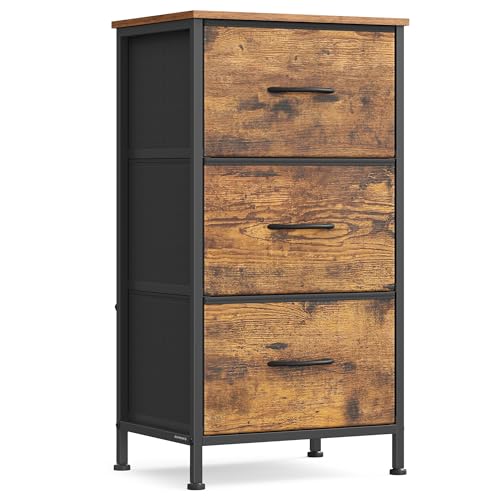
Three Drawer Dresser Solid Wood: The Complete Buying Guide
A three drawer dresser built from solid wood is one of the most practical and durable storage pieces you can add to a bedroom. It offers a compact footprint, a timeless look, and construction that can hold up to years of daily use. This guide explains everything you need to know before choosing one, from wood species and drawer construction to sizing, organization, and long-term care.
If you are researching this category, you likely already know you want a small wooden dresser with three drawers. The real questions are which wood type suits your room, how to judge build quality, and what size will actually fit. Below, we break down each of those decisions so you can buy with confidence.
Quick Summary: A three drawer solid wood dresser is best suited to small bedrooms, guest rooms, nurseries, and closets where floor space is limited but durable storage is still a priority. Focus on solid wood drawer boxes, quality slides, and anti-tip hardware rather than cosmetic details alone.
Why Choose a Three Drawer Solid Wood Dresser?
The three drawer format is a balanced compromise between capacity and footprint. It is large enough to store a meaningful amount of folded clothing, accessories, and personal items, yet compact enough to fit into a narrow wall segment or a small bedroom that cannot accommodate a wide six drawer unit. A solid wood build raises that practicality further, because the material itself contributes to stability, longevity, and a more refined finish.
Compared with engineered wood or particleboard dressers, a solid wood three drawer dresser tends to resist sagging under load, holds screws and hardware more securely over time, and can be sanded and refinished if the surface becomes worn. For buyers who prefer furniture they can keep rather than replace, solid wood is the more resilient choice. It is also a natural fit for interior styles ranging from traditional and farmhouse to Scandinavian and mid-century modern, since wood grain reads well in almost any palette.
One more advantage is weight distribution. A solid wood dresser is heavier, which makes it less likely to shift when drawers are opened fully. That stability matters in a compact bedroom where the dresser may sit close to a bed or walkway. If stability and everyday durability are your main priorities, you may also want to explore options in our broader guide to sturdy dresser construction.
Solid Wood Types Compared
The wood species determines hardness, grain appearance, weight, and how well the piece accepts different finishes. The table below compares the most common options for a three drawer dresser.
| Wood Type | Durability | Grain & Appearance | Best For |
|---|---|---|---|
| Oak | High hardness, excellent wear resistance | Prominent, open grain with strong character | Traditional, farmhouse, and rustic bedrooms |
| Maple | High hardness, tight and uniform structure | Subtle grain, smooth surface, takes paint well | Modern, minimalist, and painted finishes |
| Walnut | Medium-high hardness with natural resilience | Rich dark tone with elegant flowing grain | Mid-century and high-end tier interiors |
| Pine | Softer wood, more prone to denting | Knotty, warm, casual appearance | Entry-level and cottage-style rooms |
| Mahogany | Dense and stable with good longevity | Deep reddish-brown tone, fine grain | Traditional and formal bedrooms |
Oak and maple are the most practical choices for a piece that will see daily use, while pine suits a more casual look at the entry-level tier. Walnut and mahogany sit at the premium and luxury end of the spectrum and reward buyers who want a distinctive grain pattern. Whatever species you choose, confirm that the drawer fronts, top, and frame are actually solid wood, and that any secondary panels such as drawer bottoms or back panels use a stable material that will not warp.
Construction Details That Determine Quality
Two dressers made from the same wood species can differ dramatically in how long they last. The difference usually comes down to joinery and hardware rather than the wood itself.
Drawer joinery. Dovetail joints are the benchmark for solid wood drawer boxes because they interlock mechanically and resist pulling apart under load. Box joints and reinforced rabbet joints are also acceptable at the mid-range tier. Stapled or glued butt joints are a warning sign, particularly on a solid wood piece where the rest of the construction is intended to last.
Drawer slides. Look for side-mounted or under-mount slides with a smooth, full-extension action. Metal slides with ball bearings or nylon rollers generally outperform simple wood-on-wood runners. If you want to understand what separates basic slides from long-lasting ones, our guide to super heavy duty drawer slides explains the difference in load capacity and smoothness.
Drawer box material. A solid wood dresser should ideally have solid wood drawer sides and fronts, even if the drawer bottom is a plywood panel for stability. Solid wood sides hold slides and joints far better than thin particleboard.
Finish and sealing. A well-sealed finish protects the wood from humidity changes and everyday spills. Check the edges and the inside of drawers for consistent sealing, since unfinished interiors can absorb moisture and cause swelling.
Stability and safety. A quality three drawer dresser should feel solid when you push on a fully opened drawer. Look for leveling feet on uneven floors and an anti-tip strap for wall anchoring, which is essential in homes with children.
Size and Placement Guidance
Three drawer dressers vary widely in width, height, and depth, so measure your space before comparing models. As a starting point, a compact three drawer unit often sits in a footprint similar to a nightstand but is taller, making it a good fit for narrow wall segments beside a bed or between a door and a closet.
Pay attention to drawer extension as well as the dresser's body dimensions. A deep drawer that pulls out fully needs clear floor space in front of the unit, so leave a walkway of at least a comfortable step. If your room is especially tight, a tall, narrow format is often the better solution, and you can compare those designs in our guide to tall narrow dresser solid wood options.
Height matters for ergonomics. A dresser top that sits near hip or waist height is comfortable for daily access, while a lower unit works well as a console beneath a window. If you plan to place a mirror or lamp on top, confirm the top surface is deep enough to support it securely.
How to Use Three Drawers Efficiently
Three drawers is a small number, so the way you divide your belongings matters. A common and effective approach is to assign one drawer to each category of daily use:
- Top drawer: smaller items such as socks, undergarments, accessories, and jewelry. Shallow drawers work well here, and drawer dividers keep everything visible.
- Middle drawer: folded tops such as shirts, t-shirts, and knitwear. Use vertical folding so items stand upright rather than stacking.
- Bottom drawer: bulkier items such as jeans, sweaters, bedding, or off-season clothing. Deep drawers are especially useful in this position.
If you need more capacity than three drawers provide but want to keep a compact footprint, a tall dresser with additional drawers is a logical next step. Our overview of tall dressers with lots of drawers shows how vertical designs add storage without widening the footprint.
Choosing Within Your Tier
Three drawer solid wood dressers are available across every tier of the market, and the differences between them are mostly about construction refinement rather than appearance alone. Use the following tier framework to set expectations.
| Tier | Typical Construction | Best For |
|---|---|---|
| Entry-level | Solid wood fronts and top with simpler joinery and basic slides | Guest rooms, first apartments, low-traffic spaces |
| Mid-range | Solid wood frame and drawer boxes, dovetail or box joints, smooth full-extension slides | Primary bedrooms with daily use |
| Premium | Hardwood construction throughout, refined joinery, soft-close or high-grade slides | Long-term use and design-focused interiors |
| Luxury | Select hardwood, hand-finished details, premium hardware, exceptional stability | Statement pieces and heirloom furniture |
At the entry-level tier, solid wood construction often appears in the visible surfaces while secondary components use stable engineered materials. That is a reasonable compromise for a low-traffic room. At the mid-range tier, expect solid wood drawer boxes and better slides, which is where most buyers find the best balance of durability and refinement. Premium and luxury tiers focus on joinery precision, hardware quality, and finish work, and they are a worthwhile investment for a primary bedroom where the dresser is used every day.
If your priority is a dresser that will not shift or flex over time, our guide to storage dresser construction covers how internal structure affects long-term stability.
Care and Maintenance for Solid Wood
Solid wood responds to humidity and temperature, so a few simple habits keep a three drawer dresser in good condition. Keep the piece away from direct heat sources and prolonged sunlight, which can dry the wood and fade the finish. Dust regularly with a soft cloth, and wipe spills promptly rather than letting moisture sit on the surface. Avoid placing the dresser against a damp exterior wall, since moisture transfer can cause swelling at the back panels.
Periodically check the drawer slides and tighten any hardware that has loosened with use. If the finish becomes dull or scratched, a light sanding and reapplication of the original finish can restore the surface, which is one of the main advantages of solid wood over veneered alternatives. For a deeper look at protecting your furniture investment over time, see our guidance on choosing a traditional wood dresser built to last.
Final Buying Checklist
- Confirm the dresser front, top, and frame are solid wood, not veneer over particleboard.
- Check that drawer boxes use dovetail or box joints rather than staples or simple glue joints.
- Test the drawer slides for smooth, full-extension movement.
- Measure the wall space and required drawer clearance before ordering.
- Verify that an anti-tip strap is included or available.
- Inspect the finish on edges and drawer interiors for consistent sealing.
- Match the wood species and finish to the rest of your bedroom furniture.
Frequently Asked Questions
Is a three drawer solid wood dresser durable enough for daily use?
Yes. A three drawer dresser made from solid wood is generally more durable than engineered wood alternatives because the drawer fronts, frame, and often the drawer boxes are constructed from a single wood species. With proper care, a solid wood dresser can last for decades and is considered a long-term investment for the bedroom.
What is the best wood type for a three drawer dresser?
Oak, maple, and walnut are among the best wood types for a three drawer dresser. Oak offers excellent hardness and a visible grain pattern, maple provides a smooth and uniform surface that takes paint well, and walnut delivers a rich tone with natural resistance to wear. Each wood type suits a different style and level of maintenance.
How much storage space does a three drawer dresser provide?
A standard three drawer dresser typically offers enough space for folded clothing, accessories, and personal items for one to two people. Deep drawers add significantly more volume, while shallow drawers work better for smaller items like socks, undergarments, and jewelry. Consider drawer depth and interior dimensions rather than drawer count alone.
Can a three drawer solid wood dresser fit in a small bedroom?
Yes. Three drawer dressers are often the ideal choice for small bedrooms and compact spaces because they have a smaller footprint than larger six or nine drawer models. Measure your available wall space and clearance for drawer extension before choosing a model, and consider a tall narrow design if floor space is limited.
What should I check before buying a solid wood three drawer dresser?
Check the drawer joinery, the quality of the drawer slides, whether the drawer boxes are solid wood or engineered material, the finish and edge sealing, and the overall weight and stability of the piece. Also verify whether the dresser includes an anti-tip safety strap, which is important for households with children.
Ready to compare three drawer solid wood dressers? Browse the recommended options below to view details, check availability, and compare features across models.