
Tall Sideboard Cabinet with Drawers
Your complete guide to choosing a vertical storage cabinet that combines closed-door shelving with easy-access drawers — perfect for dining rooms, hallways, and compact living spaces.
EXPLORE RECOMMENDED OPTIONSWhy a tall sideboard cabinet with drawers? Unlike a low, wide sideboard that claims floor space, a tall sideboard uses vertical wall area to deliver generous storage in a compact footprint. The combination of cabinet doors and drawers gives you a place to hide clutter and a place to keep everyday items within arm's reach. This guide explains what to look for, how to size it, and which design details matter most before you commit.
What Is a Tall Sideboard Cabinet with Drawers?
A tall sideboard cabinet with drawers is a vertical storage furniture piece that pairs closed cabinet compartments with a stack or row of pull-out drawers. It is taller than a conventional sideboard, often reaching between 48 and 72 inches in height, while keeping a relatively narrow depth. The upper section typically houses adjustable shelves behind doors, while the lower section or one side features drawers for smaller items.
This hybrid format sits somewhere between a sideboard, a chest of drawers, and a storage cabinet. It borrows the serving-surface convenience of a sideboard, the organized small-item storage of a drawer chest, and the concealed volume of a cabinet. If you are comparing formats, our dresser buying guide explains how drawer-based storage differs from cabinet-based storage in everyday use.
How It Differs from a Standard Sideboard
| Feature | Standard Sideboard | Tall Sideboard Cabinet with Drawers |
|---|---|---|
| Height profile | Low, usually below waist height | Tall, reaching chest height or higher |
| Floor footprint | Wide and shallow | Narrow and compact |
| Storage direction | Horizontal spread | Vertical stacking |
| Best for | Wide walls and serving surfaces | Narrow walls, alcoves, small rooms |
| Typical mix | Doors and shallow drawers | Doors, adjustable shelves, deeper drawer stacks |
For a broader comparison of storage formats, see our guides on wide chests of drawers and tall chests of drawers to understand how drawer depth and height affect usability.
Why Choose a Tall Sideboard with Drawers?
The tall sideboard format solves a specific set of storage problems that low sideboards and standalone chests handle less efficiently. Here are the practical benefits that make it worth considering.
1. Maximum Storage in a Minimal Footprint
Because the cabinet grows upward rather than outward, it fits into narrow walls, alcoves, and awkward corners where a wide sideboard would not work. In apartments and smaller dining rooms, this vertical approach is often the difference between having dedicated storage and having none.
2. A Dual Storage System
Doors conceal bulkier or less attractive items — stacked dishes, board games, linens, or media accessories. Drawers keep frequently used small items organized and visible at a glance. This two-part system reduces the need for separate storage boxes and baskets on open shelves.
3. A Defined Visual Anchor
A tall cabinet adds vertical weight to a room and can make a wall feel intentional rather than empty. In a dining room, it can frame a serving area. In a hallway, it can anchor an entryway zone. In a living room, it can act as a display and media hub. The visual effect is stronger than a low sideboard, which can sometimes feel like it is floating.
4. Better Use of Wall Height
Most rooms have unused wall space above waist height. A tall sideboard claims that space for storage instead of decoration alone. If you are organizing a compact bedroom, the same logic applies to tall skinny dressers for bedroom layouts.
Where to Place a Tall Sideboard Cabinet
The tall sideboard is more versatile than its name suggests. It works in several rooms, provided the surrounding clearance is planned correctly.
Dining Room
Use the drawers for cutlery, napkins, and serving utensils, and the cabinet section for dinnerware, glassware, and table linens. A tall sideboard keeps these items off the dining table and within reach during meals. If you entertain often, look for adjustable shelves that can accommodate stack heights that change with your collection.
Hallway and Entryway
In an entryway, drawers can hold keys, gloves, mail, and small accessories, while the cabinet hides shoes, bags, and seasonal gear. A tall profile suits narrow hallways better than a wide console because it preserves walking clearance. For related compact solutions, see our guide on a narrow entryway cabinet with doors.
Living Room
As a media or display cabinet, the tall sideboard can conceal cables and devices behind doors while keeping remotes and controllers in drawers. A storage dresser for living room serves a similar purpose, and the choice often comes down to whether you prefer a drawer-forward or door-forward look.
Bedroom
In a bedroom, a tall sideboard can function as a hybrid dresser-cabinet, especially in rooms where a low dresser would consume too much wall space. If you need a mirrored option, a mirrored chest of drawers can serve a similar role with a different visual effect.
What to Look For When Buying
Tall sideboards vary widely in construction quality, and the differences are not always visible in product photos. Focus on the following criteria to separate a solid long-term investment from a piece that will sag, stick, or wobble within a year.
Construction and Material
- Frame material: Solid wood and high-grade engineered wood with thick panels resist racking better than thin particleboard. If you prefer natural grain, explore solid walnut dresser construction as a reference point for quality framing.
- Joinery: Dovetail or mortise-and-tenon joints in drawer boxes signal durability. Stapled or glued-only boxes are a warning sign.
- Back panel: A rigid back panel, ideally inset rather than stapled onto the rear, prevents the cabinet from twisting over time.
- Finish: A consistent, well-sealed finish protects against moisture and everyday wear. Matte and satin finishes hide fingerprints better than high-gloss surfaces.
Drawer Glides and Hardware
- Glide type: Ball-bearing or undermount glides with soft-close action are the mid-range and premium standard. Basic nylon roller glides are common at the entry-level tier.
- Weight rating: Check that the glides are rated for the load you plan to store. Heavy dishware or tools need higher-rated slides; our note on heavy-duty locking drawer slides explains why load rating matters.
- Hardware feel: Knobs and pulls should be firmly attached with no play. If you plan to customize, our guide on bureau drawer knobs covers replacement options and spacing.
Doors and Shelving
- Adjustable shelves: At least two adjustable positions per cabinet section allow the unit to adapt as your storage needs change.
- Door hinges: Soft-close hinges reduce slamming and wear. Check that hinges are adjustable for alignment.
- Interior depth: Confirm the usable interior depth, not just the exterior depth. Door thickness and hinge clearance reduce usable space.
Safety and Stability
- Anti-tip hardware: Any tall cabinet should include or accept a wall-anchoring strap. This is non-negotiable in homes with children or pets.
- Base design: A solid base or well-braced legs reduce wobble. Avoid cabinets with a single central support under a wide span.
- Weight distribution: Store heavier items in lower drawers and lower shelves to keep the center of gravity low.
Size and Clearance
- Width: Narrow formats around 24 to 36 inches suit hallways; wider formats around 40 to 60 inches suit dining rooms.
- Depth: Standard depths range from 15 to 20 inches. Deeper cabinets hold more but require more clearance for drawer extension.
- Door and drawer clearance: Allow 30 to 36 inches of open floor space in front of the cabinet for comfortable use.
- Delivery path: Measure doorways, stair turns, and elevator dimensions before ordering a tall, fully assembled piece.
Style Options to Match Your Room
Because the tall sideboard is a prominent vertical element, its style has an outsized effect on the room. Choose a look that either matches the existing furniture or deliberately contrasts with it.
Modern and Minimalist
Clean lines, handleless fronts, and a matte finish suit contemporary interiors. A fluted wood dresser shows how vertical texture can add interest without ornamentation. Light finishes such as a light oak dresser keep small rooms feeling open.
Traditional and Transitional
Raised panel doors, decorative hardware, and turned legs give a classic look. A white French provincial dresser illustrates how traditional detailing translates into storage furniture. For a softer traditional feel, a Shaker dresser offers clean but warm lines.
Industrial and Mixed Material
Metal frames, exposed rivets, and reclaimed wood surfaces create an industrial character. A metal dresser can be paired with wood shelving for a mixed-material cabinet. If sustainability matters to you, reclaimed wood dressers for sale offer a distinctive texture.
Color and Finish
White and light neutrals make tall cabinets feel less imposing in small rooms. Dark finishes add drama and hide everyday marks. A black velvet dresser demonstrates how a dark finish can become a focal point. For a bolder choice, a turquoise dresser shows how color transforms a storage piece into a statement.
Tall Sideboard Size Guide
Use the table below to narrow down the format that fits your space. Dimensions are typical ranges, not fixed standards; always confirm the exact measurements of a specific product before ordering.
| Format | Typical Height | Typical Width | Typical Depth | Best For |
|---|---|---|---|---|
| Narrow tall cabinet | 60–72 in | 24–32 in | 15–18 in | Hallways, alcoves, small apartments |
| Standard tall sideboard | 48–60 in | 36–48 in | 16–20 in | Dining rooms, living rooms |
| Wide tall sideboard | 48–60 in | 50–60 in | 16–20 in | Large dining rooms, open-plan spaces |
| Compact drawer-top cabinet | 40–48 in | 30–40 in | 15–18 in | Entryways, bedrooms, home offices |
If your room is very tight, compare the tall sideboard against a small cabinet with doors and drawers to see whether a lower, narrower unit is a better fit. For wider walls, a 48 wide dresser or 70 inch dresser may offer a similar storage volume in a horizontal layout.
How to Organize a Tall Sideboard Cabinet
A tall sideboard is only as useful as its organization system. Plan the interior before you fill it, and the cabinet will stay functional instead of becoming a catch-all.
- Assign zones by frequency. Keep daily-use items in the drawers at waist height. Store occasional items on upper shelves and heavy items on lower shelves.
- Use drawer dividers. Dividers keep cutlery, stationery, and small accessories from sliding into a single pile. Our guide on bureau drawer liners explains how liners protect both the drawer and its contents.
- Group by category, not by size. Keep all table linens in one section and all serving pieces in another. Category grouping makes it easier to find items and to notice when something is missing.
- Leave breathing room. Do not pack shelves to the ceiling. A small gap at the top of each section makes it easier to remove and replace items.
- Label concealed storage. If the cabinet doors are solid, use small interior labels on shelves or bins so you do not have to open every door to find what you need.
For a deeper approach, our dresser buying guide covers drawer layout planning, and our under bed storage guide explains how to decide which items belong in a cabinet versus elsewhere in the room.
Common Mistakes to Avoid
- Buying without measuring the delivery path. A tall cabinet that cannot fit through the stairwell is a problem no amount of rearranging will solve.
- Skipping the anti-tip anchor. Tall furniture should be anchored to the wall. This is a safety requirement, not an optional extra.
- Ignoring drawer extension clearance. Drawers need room to pull out fully. A cabinet placed too close to a doorway or wall will be frustrating to use.
- Choosing doors only. Without at least some drawers, small items get lost in deep cabinet cavities. The drawer component is what makes the tall sideboard practical.
- Overloading upper shelves. Heavy items on high shelves increase tip risk and make the cabinet harder to use safely.
- Mismatching the style scale. A very tall, ornate cabinet in a small minimalist room can overwhelm the space. Match visual weight to room size.
Recommended Tall Sideboard Cabinets with Drawers
⚠️ AFFILIATE DISCLOSURE: This website contains affiliate links. As an Amazon Associate, we earn from qualifying purchases. If you make a purchase through these links, we may receive a small commission at no additional cost to you. Read our full affiliate policy.

HOSTACK 55"W Kitchen Buffet Sideboard Cabinet with 4 Storage Drawers, Black | Tall Buffet Cabinet with Practical 25" Wide Drawers, Farmhouse Coffee Bar, Storage Cabinet with Doors / adjustable Shelves
Check price on Amazon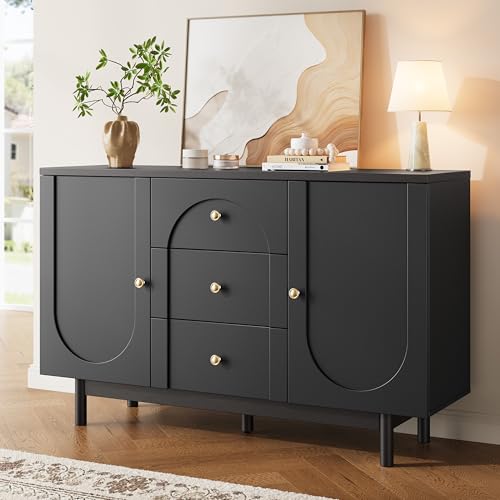
OneBlis Buffet Cabinet with Drawers, 54" Large Sideboard Buffet Storage Cabinet with Adjustable Shelves and Doors, Modern Coffee Bar Station Kitchen Table for Kitchen, Dining Room, Black
Check price on Amazon
VASAGLE Farmhouse Buffet Cabinet, Coffee Bar with 2 Drawers | White Sideboard, 55.1 x 15.7 x 31.5 in, Adjustable Shelves, Rustic White and Honey Brown, LIRY Collection, UBBK381W01V1
Check price on Amazon
Shintenchi 53.4" Buffet Cabinet, Kitchen Storage Sideboard, White | Wood Farmhouse Buffet Sideboard with with 3 Drawers 4 Doors,Adjustable Shelf for Kitchen Living Room
Check price on Amazon
71" Sideboard Buffet Cabinet with Storage, 6 Doors, Black | 6 Soft-Close Doors, 2 Drawers, 4 Adjustable Shelves and 7 Compartments for Coffee Bar, Dining Room and Kitchen Storage
Check price on Amazon
HOSTACK 60" W Sideboard Buffet Cabinet with Storage, Kitchen Cabinet, White | 36 Tall Kitchen Buffet Storage Cabinet with 4 Drawer, Large Coffee Bar Cabinet, Modern Buffet Table for Dining Living Room
Check price on Amazon
usikey 55" Buffet Cabinet with Storage and Drawers, Large Sideboard Buffet Cabinet with Adjustable Shelves and Doors, Modern Coffee Bar for Kitchen, Living Room, White
Check price on Amazon
ONBRILL 48 Inch Buffet Cabinet with Storage, Blue&Walnut | Farmhouse Sideboard Buffet w/2 Drawers and 3 Doors, Wood Coffee Bar Cabinet with Adjustable Shelves for Kitchen, Living Room
Check price on AmazonFrequently Asked Questions
What is the difference between a tall sideboard and a chest of drawers?
A chest of drawers is primarily a drawer-only storage piece, usually designed for clothing. A tall sideboard cabinet with drawers combines closed cabinet doors with shelves and a smaller drawer section, making it more versatile for mixed storage such as dishware, linens, media accessories, and entryway items. The sideboard format also typically includes a flat top surface intended for display or serving.
Can a tall sideboard cabinet be used in a small apartment?
Yes, tall sideboards are particularly well suited to small apartments because they use vertical space instead of spreading outward. A narrow tall cabinet can fit in a hallway, beside a dining table, or against a short wall segment where a wide sideboard would block traffic flow. Just confirm that the cabinet height does not conflict with wall-mounted items or low ceilings.
How do I keep a tall sideboard from tipping over?
Always install the anti-tip hardware included with the cabinet, or purchase a wall-anchoring strap if none is provided. Store heavier items in lower drawers and lower shelves. Avoid placing a television or other heavy objects on the top surface unless the manufacturer explicitly states that the top is rated for that load.
Should I choose a tall sideboard with soft-close drawers?
Soft-close drawer glides reduce noise and wear, and they prevent drawers from slamming shut. They are a common feature in the mid-range and premium tiers. If the cabinet will be used frequently — for example, as an entryway organizer — soft-close hardware is a worthwhile long-term investment.
Can I use a tall sideboard cabinet in a bedroom instead of a dresser?
Yes, a tall sideboard can function as a hybrid storage piece in a bedroom, especially if you need a mix of hanging or folded storage behind doors and smaller drawer storage for accessories. If your primary need is clothing storage, compare it with a tall skinny dresser for bedroom or a tall bedroom dresser to see which drawer depth and configuration suits your wardrobe.
What is the ideal height for a tall sideboard cabinet?
There is no single ideal height, but the most common range is 48 to 60 inches for a standard tall sideboard and 60 to 72 inches for a narrow tall cabinet. The right height depends on the room: a dining room cabinet often works well at roughly the same height as a dining table plus serving space, while a hallway cabinet can go taller to maximize storage without obstructing movement.
Ready to Choose Your Tall Sideboard?
Review the recommended options above, compare features such as drawer glides, shelf adjustability, and safety hardware, and select the format that fits your room’s dimensions and storage needs.
View Recommended Options