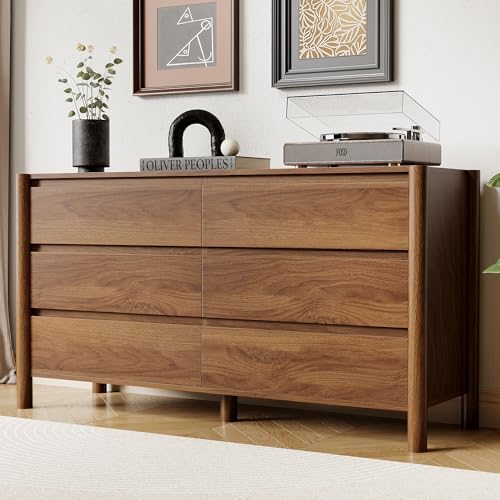
Solid Wood Dresser with Soft Close Drawers: The Complete Buying Guide
A solid wood dresser with soft close drawers combines enduring craftsmanship with quieter, safer daily use. This guide explains construction, glide mechanics, wood species, sizing, and how to evaluate quality before you buy.
Why this combination matters: Solid wood gives a dresser its structural integrity and refinishable surface, while soft close glides protect the drawer box, frame, and your fingertips over thousands of open-and-close cycles. Together, they define a piece built for long-term daily use rather than short-term furnishing.
What Makes a Dresser "Solid Wood"?
A solid wood dresser uses lumber milled from a single wood species for its primary structural components, including the case frame, drawer fronts, and often the drawer sides and back. This is distinct from engineered wood products such as MDF, particleboard, or plywood, which are reconstituted from wood fibers or veneers.
In practice, "solid wood" on a specification sheet can mean different things. Some dressers use solid wood for the visible case and drawer fronts but engineered materials for internal panels. Others use solid wood throughout. The difference affects weight, durability, repairability, and how the piece responds to humidity changes. For a detailed comparison, see our guide on solid wood versus engineered furniture construction.
- Case frame and drawer fronts: Usually solid wood on quality pieces; the most visible and touchable surfaces.
- Drawer box: Solid wood sides with dovetail or box joints signal higher-grade construction. Stapled or glued engineered sides are entry-level.
- Back panels and dust boards: Often thinner solid wood or plywood; less visible but relevant to structural rigidity.
- Finish: Solid wood accepts stain, paint, and refinishing better than veneered surfaces, extending the useful life of the piece.
How Soft Close Drawers Work
Soft close is a property of the drawer glide mechanism, not the wood. The glide includes a dampening element — typically a small hydraulic piston or a spring-loaded cam — that engages as the drawer approaches the fully closed position. Instead of snapping shut, the drawer is pulled in slowly over the final portion of travel.
Undermount Soft Close Glides
Mounted beneath the drawer box, hidden from view. They typically offer smoother travel, higher load ratings, and a cleaner visual line. Often found on mid-range and premium dressers.
Side-Mount Soft Close Glides
Visible along the drawer sides. Common on entry-level and some mid-range pieces. Soft close versions are available, but load ratings and smoothness vary more widely in this category.
Center-Mount Glides
A single slide under the drawer center. Less common on modern dressers. Soft close center-mount options exist but are limited; check specifications carefully.
Push-to-Open Soft Close
No handle required — a light push releases the drawer, and a second push closes it with dampening. Useful for a minimalist look, but the mechanism adds complexity and potential wear points.
Glide quality matters as much as the soft close feature itself. Look for load ratings appropriate to the drawer size, full-extension travel (so you can reach the back of the drawer), and a mechanism that stays smooth across the full range of motion. For heavy-duty applications, stainless steel drawer slides offer corrosion resistance and high load capacity.
Why Combine Solid Wood with Soft Close Drawers?
Each feature is valuable on its own, but the combination delivers practical benefits that compound over years of use:
- Reduced wear: Slamming stresses the drawer box, the case frame, and the glide mounts. Soft close removes that repeated impact, which matters more on a heavier solid wood drawer.
- Quieter bedrooms: Soft close glides eliminate the bang of a closing drawer, which is especially noticeable in small rooms and shared bedrooms.
- Child safety: Dampened closing reduces the risk of pinched fingers. Pair with drawer stops or tip-restraint hardware for a safer nursery or family bedroom.
- Longer service life: A solid wood dresser is a long-term investment; soft close hardware protects that investment by reducing mechanical wear on the structure.
- Refinishable surface: Solid wood can be sanded and refinished, so the piece can be updated aesthetically without replacing the drawer mechanism.
Choosing the Right Wood Species
The wood species affects weight, grain character, hardness, and how the dresser responds to seasonal humidity changes. Common options for solid wood dressers include:
- Oak: Dense, durable, and strongly grained. A solid oak dresser is a robust choice for high-use bedrooms.
- Walnut: Rich, dark tone with a smooth grain. A solid walnut dresser suits mid-century and contemporary interiors.
- Pine: Softer and lighter, with a casual character. A solid pine dresser is common in farmhouse and cottage styles.
- Maple: Hard, fine-grained, and light in color. Often used in painted or natural-finish pieces.
- Mahogany: Dense and reddish-brown, traditionally used in formal and antique-style furniture.
Harder species generally resist dents and scratches better, which is relevant on drawer fronts and top surfaces. Softer species may show wear sooner but are easier to sand and refinish. Regardless of species, check that the drawer sides are solid wood and that the joinery is sound.
Sizing and Drawer Count Considerations
A solid wood dresser with soft close drawers is available in a range of sizes and configurations. The right choice depends on the room, the clothing volume, and how the dresser will be used.
| Configuration | Typical Use | Best For | Notes on Soft Close |
|---|---|---|---|
| 6-drawer dresser | Primary bedroom storage | Couples and individual adults | Multiple drawers mean more glides; confirm all drawers are soft close, not just some. |
| 9-drawer dresser | Large capacity storage | Family bedrooms, shared rooms | Heavier loaded drawers benefit most from dampened closing and higher load ratings. |
| Tall dresser | Vertical storage in compact footprints | Small bedrooms, apartments | Check glide alignment; tall stacks place more demands on consistent drawer travel. |
| Deep drawer dresser | Bulky clothing, linens | Bedrooms with limited closet space | Deep drawers need higher load ratings; soft close prevents heavy drawers from slamming. |
| Small chest of drawers | Secondary storage | Guest rooms, nurseries, closets | Soft close is especially valuable in small rooms where sound carries. |
Quality Tiers: What to Expect at Each Level
Market positioning for solid wood dressers with soft close drawers generally falls into three broad tiers. These descriptors reflect relative construction quality, not absolute values.
- Entry-level — Solid wood on visible surfaces, often with engineered internal panels. Soft close glides may be side-mount with lower load ratings. Joinery is typically simpler (staples, dowels, or basic box joints).
- Mid-range — Solid wood drawer boxes with dovetail or reinforced joints. Undermount soft close glides are more common, with full-extension travel. Finish quality is more consistent.
- Premium — Solid wood throughout, including internal components. High-grade undermount soft close glides with strong load ratings, full extension, and smoother travel. Dovetail joinery, careful grain matching, and durable finishes.
Within a given tier, look for consistency: are all drawers soft close, or only the top drawers? Are the glides rated for the drawer size? Does the drawer box feel rigid when you pull it fully open? These details distinguish a well-specified piece from one that merely lists the feature. For more on construction standards, see our guide to deep drawer dressers and our solid wood dresser overview.
Buying Checklist
Before purchasing, verify these points — either in the product specifications or by asking the seller directly:
Construction Checklist
☐ Solid wood on case frame and drawer fronts (and drawer sides, if possible) | ☐ Undermount or side-mount soft close glides on all drawers | ☐ Full-extension travel | ☐ Glide load rating appropriate to drawer size | ☐ Dovetail or reinforced drawer box joinery | ☐ Finish suitable for your climate and use | ☐ Tip-restraint hardware included or available | ☐ Dimensions match your room and clearance needs
If the product listing is vague about glide type, look for terms like "undermount soft close," "full extension," and "dampened." If the listing only says "soft close" without specifying glide type, ask for confirmation. Also check whether the dresser ships assembled or requires assembly, since soft close glides can be sensitive to alignment during assembly. For pieces that arrive ready to use, consider a no-assembly-required dresser as a secondary option for smaller rooms.
Care and Maintenance
Solid wood and soft close hardware both benefit from simple, consistent care:
- Keep humidity stable: Solid wood expands and contracts with humidity. Avoid placing the dresser near heating vents or in damp rooms, and use a humidifier or dehumidifier to keep indoor humidity in a moderate range.
- Clean glides occasionally: Dust and debris can affect soft close performance. Wipe glide tracks with a dry cloth and avoid lubricants unless the manufacturer recommends them.
- Do not overload drawers: Stay within the glide load rating. Overloading stresses the mechanism and can cause the soft close feature to disengage or fail prematurely.
- Check alignment: If a drawer begins to close unevenly, check that the glide is seated correctly and that the drawer box is square. Realignment is usually straightforward on quality glides.
- Refinish when needed: Solid wood can be sanded and refinished to extend its life. Use a finish appropriate to the species and your desired sheen.
Frequently Asked Questions
What does soft close mean on a dresser?
Soft close refers to a drawer glide mechanism with a built-in dampening system. When you push a drawer closed, the mechanism engages near the end of travel and pulls the drawer gently into the cabinet, preventing slamming and protecting the drawer front and frame.
Are soft close drawers worth it on a solid wood dresser?
For a solid wood dresser, soft close drawers are a worthwhile investment. Solid wood construction is already a long-term purchase, and soft close glides reduce wear on the drawer box, frame, and hardware over years of daily use. They also improve safety in households with children.
How can I tell if a dresser is truly solid wood?
Check the drawer sides, the back panel, and the interior of the cabinet. Solid wood pieces typically show continuous grain patterns, visible end grain on drawer sides, and joinery such as dovetails. Engineered or veneered pieces often show uniform edges and repeated grain patterns. Look for a specification sheet or ask the manufacturer directly.
Do all solid wood dressers have soft close drawers?
No. Soft close is a feature of the drawer glide hardware, not the wood itself. Some solid wood dressers use standard side-mount or center-mount slides without dampening. Always confirm the glide type in the product specifications, and check whether glides are rated for the drawer weight.
Related Guides and Recommendations
- Solid Wood Dresser Overview
- Solid Wood Dressers for Sale
- Solid Wood Dresser and Nightstand
- Solid Wood Bedroom Dresser
- Solid Wood Bedroom Dresser Set
- Solid Wood Mid-Century Modern Dresser
- Solid Wood Dresser with Shelves
- Solid Wood Dresser and Chest of Drawers
- Solid Wood Chest of Drawers for Bedroom
- Solid Wood Tall Chest of Drawers
- Solid Wood Armoire with Drawers
- Solid Wood Dressing Table with Drawers