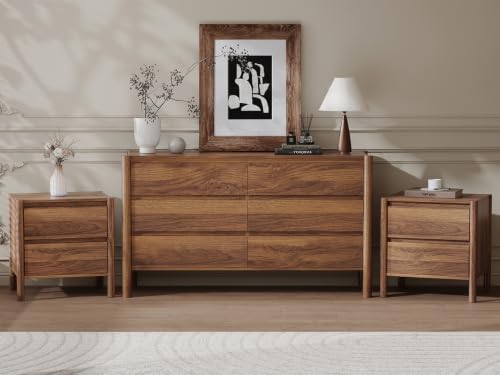
Solid Wood Dresser and Nightstand: A Complete Buyer's Guide
Everything you need to know before choosing a matched solid wood dresser and nightstand set — wood types, drawer construction, proportions, and styling for a bedroom that lasts.
Explore Wood TypesWhy this guide matters: A solid wood dresser and nightstand pair is a long-term investment in your bedroom. Unlike engineered alternatives, solid wood pieces can be sanded, refinished, and repaired across decades. This guide walks you through the decisions that matter most: species selection, drawer engineering, sizing, and finish, so you can buy with confidence from the store of your choice.
What Sets Solid Wood Apart
Solid wood furniture is milled from a single piece of timber rather than layered veneers or particleboard. That distinction affects almost every ownership experience: how the piece ages, how it feels when a drawer slides, and how easily it can be restored after years of daily use. A solid wood dresser and nightstand set typically belongs to the premium to luxury tier of bedroom furniture, with entry-level solid pine sets occupying the essential tier.
Solid wood offers natural grain variation, meaning no two pieces are identical. It also responds to humidity, so proper seasonal care matters. For a deeper comparison between construction methods, see our guide on solid wood vs engineered wood.
Key construction markers to inspect
- Dovetail drawer joints — interlocking joints that resist pulling apart over years of use.
- Solid wood drawer boxes and runners — smoother movement and easier repair than stapled particleboard.
- Soft-close or ball-bearing slides — a hallmark of the premium and luxury tiers.
- Mortise-and-tenon or dowel joinery — structural framing that stays square.
- Finished backs and drawer bottoms — a sign the maker did not cut corners on unseen surfaces.
Choosing the Right Wood Species
The species you choose determines hardness, grain character, color depth, and how the piece ages. The table below compares the most common solid wood options for a dresser and nightstand set.
| Wood Species | Best For | Grain & Character | Market Tier |
|---|---|---|---|
| Oak | Heavy daily use, family bedrooms | Pronounced, textured grain; very hard | Mid-range to premium |
| Walnut | Statement bedrooms, modern interiors | Rich chocolate tones, flowing grain | Premium to luxury |
| Pine | Farmhouse and cottage styles | Knots, warm honey color, softer surface | Entry-level to mid-range |
| Maple | Clean, contemporary rooms | Fine uniform grain, pale tone | Mid-range to premium |
| Cherry | Traditional and transitional interiors | Deepens in color with light exposure | Premium to luxury |
If you prefer a specific tone, our collections for solid oak dressers and solid wood white dressers are good starting points. For a darker aesthetic, review the solid wood black chest of drawers options before committing to a set.
Sizing the Dresser and Nightstand Together
A matched set works only when the proportions are right for your room. The dresser is usually the anchor piece, and the nightstand should complement rather than compete with it. Consider these practical guidelines before ordering.
- Dresser width should be roughly 2.5 to 3 times the width of a single nightstand for visual balance.
- Nightstand height should sit close to the top of the mattress, typically within a few inches.
- Walking clearance of at least 24 inches between the dresser and the bed keeps the room comfortable.
- Drawer count — a six- or nine-drawer dresser paired with a two- or three-drawer nightstand covers most couples' storage needs. See the solid wood 6 drawer dresser and solid wood 9 drawer dresser collections for reference.
For compact rooms, a solid wood small chest of drawers paired with a narrow nightstand preserves floor space. If you need extra vertical storage, a solid wood tall dresser may suit better than a wide model.
Common Set Configurations
Buying a dresser and nightstand together is convenient, but the right configuration depends on your bedroom layout. Here are the most common pairings.
| Configuration | Best For | Storage Profile |
|---|---|---|
| Wide dresser + two nightstands | Primary bedrooms with a centered bed | High capacity, symmetrical look |
| Tall chest + single nightstand | Compact bedrooms, one-sleeper rooms | Vertical storage, small footprint |
| Small dresser + one nightstand | Guest rooms and apartments | Essential tier, space-efficient |
| Dresser + armoire-style nightstand | Rooms needing enclosed display space | Mixed open and closed storage |
If you are furnishing a nursery or guest room, explore the solid wood dresser and nightstand and solid wood bedroom dresser set collections. For a coordinated primary suite, the solid wood bedroom dresser range offers wider silhouettes.
Drawer Function: The Detail That Defines Quality
Drawers are used dozens of times a day, so their construction matters as much as the wood species. When comparing sets, focus on these components:
- Slides: Ball-bearing metal slides and soft-close mechanisms belong to the premium and luxury tiers. Basic wood-on-wood runners appear in entry-level pieces.
- Box material: Solid wood or high-grade plywood drawer boxes outlast particleboard boxes by a wide margin.
- Joinery: English or French dovetails signal a professional-grade build. Stapled or glued butt joints are a warning sign.
- Stops: Drawer stops prevent accidental pull-out, an important safety feature in family homes.
For deep storage needs, review the solid wood dressers with deep drawers and solid wood deep drawer dresser options. If you value quiet closing in shared bedrooms, the solid wood dresser with soft close drawers collection is worth exploring.
Style Directions for Solid Wood Sets
Solid wood adapts to nearly every interior style. The finish and silhouette you choose determine whether the set reads as traditional, modern, or rustic.
Modern and Mid-Century
Clean lines, tapered legs, and warm walnut or oak finishes define the modern solid wood look. Our solid wood mid-century dresser and solid wood dresser mid century modern guides cover proportion and styling in detail. Pair with a solid wood dresser with shelves if you want open display space.
Farmhouse and Rustic
Pine and reclaimed-look oak bring texture and warmth. A spindle or slat-front silhouette adds character without sacrificing storage. If you want a lighter palette, the solid wood white 6 drawer dresser pairs naturally with farmhouse nightstands.
Traditional and Transitional
Cherry and mahogany tones, bracket feet, and framed drawer fronts suit classic bedrooms. Pair a solid wood tall chest of drawers with a low nightstand for a layered traditional look.
Caring for a Solid Wood Set
Solid wood rewards simple, consistent care. Keep the pieces away from direct heat sources, dust with a soft cloth, and reapply a furniture wax or oil every six to twelve months depending on your climate. Avoid silicone-based polishes that can build up on the finish.
In dry seasons, a humidifier protects against seasonal checking. If a drawer begins to stick, a light application of paraffin on the runner often solves it before any repair is needed. For more in-depth maintenance guidance, see our solid wood dresser reference page and the broader solid wood chests guide.
A Practical Buying Checklist
Use this checklist before finalizing any solid wood dresser and nightstand purchase:
- Confirm the wood is solid on drawer fronts, tops, and side panels — not veneered over particleboard.
- Check drawer joinery for dovetails and confirm slide type.
- Measure your room and tape the footprint before ordering.
- Compare nightstand height to your mattress top.
- Ask about the finish: lacquer, oil, or wax, and how each ages.
- Review delivery access, since solid wood pieces are heavy and require care.
- Read reviews focused on drawer movement and finish durability after months of use.
For larger rooms, the solid wood extra large dresser and solid wood dresser and chest of drawers collections provide generous storage. For storage-led layouts, consider the solid wood dresser with shelves or a solid wood armoire with drawers.
Frequently Asked Questions
Is solid wood better than engineered wood for a dresser and nightstand?
Solid wood generally offers greater durability, repairability, and longevity. It can be sanded and refinished, making it a long-term investment. Engineered wood may resist warping in humid conditions, but solid wood remains the preferred choice for those seeking heirloom-quality bedroom furniture.
What wood types are best for a solid wood dresser and nightstand set?
Oak, walnut, maple, cherry, and pine are among the most popular choices. Oak is known for hardness, walnut for rich color, maple for a clean uniform look, cherry for warmth that deepens with age, and pine for a classic farmhouse aesthetic at an entry-level tier.
Do I need matching dresser and nightstand sets?
Matching sets create a cohesive bedroom look and simplify the buying process. However, many designers mix complementary solid wood pieces from the same wood family for a curated feel. What matters most is consistent wood tone and proportion.
What drawer construction should I look for?
Look for dovetail joints, solid wood drawer boxes, and metal ball-bearing or soft-close slides. Dovetail joinery is a mark of quality construction. Soft-close mechanisms are a hallmark of premium and luxury tiers.
Ready to Choose Your Set?
Use the recommendations below to compare solid wood dresser and nightstand options side by side. Each listing includes construction details, available sizes, and customer feedback to help you decide.
View Recommended Sets