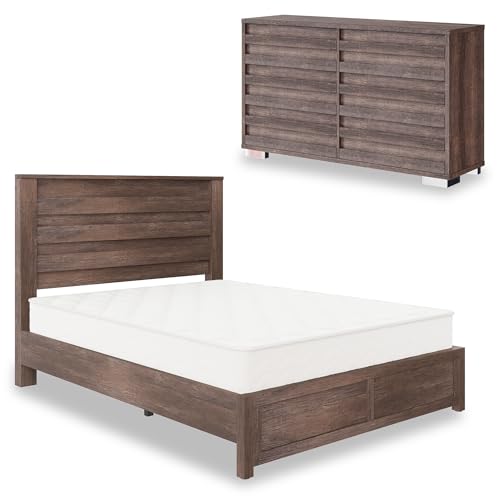
Queen Bed With Matching Dresser: The Complete Guide
Everything you need to know before choosing a coordinated queen bed and dresser set — sizing, materials, styles, storage, and room layout — so your bedroom feels cohesive, functional, and built to last.
Start the GuideWhy this guide matters: A queen bed with a matching dresser is one of the most practical and visually satisfying furniture investments for a primary or guest bedroom. This guide is written for shoppers who already know they want a coordinated set but need clear, trustworthy answers on fit, finish, and function before making a final decision. If you are still weighing individual pieces, you can also explore our queen bed, dresser, and nightstand guide for a three-piece perspective.
What to Look For in a Queen Bed and Matching Dresser Set
A coordinated bedroom set is more than two pieces of furniture in the same color. The best sets share proportional scale, consistent materials, and complementary hardware. Before comparing individual collections, understand the five factors that determine whether a queen bed and dresser will work together in your space.
1. Proportional Scale Between Bed and Dresser
A queen bed is typically 60 inches wide and 80 inches long. A dresser that spans roughly 60 to 75 percent of the bed width — about 56 to 72 inches — creates visual balance without overwhelming the room. A narrow dresser under 48 inches can look undersized next to a queen bed, while an oversized dresser above 76 inches may crowd walking space. If your room is compact, a tall, narrow dresser or a queen bed with built-in dresser can preserve floor area while keeping storage close at hand.
2. Wood Species and Finish Consistency
Matching sets usually share the same wood species — oak, walnut, pine, or maple — and the same stain or paint system. Consistent grain direction and sheen matter as much as color. A natural oak bed paired with an oak dresser and nightstand set reads as intentionally coordinated, while a painted dresser with a wood bed can feel mismatched unless the palette is deliberately designed. If you prefer a lighter look, an off-white dresser and nightstand set can soften a wood-framed queen bed without breaking cohesion.
3. Drawer Count and Storage Depth
Pair your bed with a dresser that matches your actual clothing volume — not just the showroom look. A 6-drawer dresser is the most common match for a queen bed because it balances wide, shallow top drawers with deeper lower drawers. If you share the bedroom, consider an 8- or 9-drawer model or supplement with a queen bed with dresser underneath for seasonal overflow.
4. Hardware and Style Language
Handles, knobs, and feet are the details that make a set feel designed rather than assembled. Match metal tone — brushed nickel, matte black, brass, or wood — across both pieces. A Queen Anne dresser with cabriole legs pairs naturally with a traditional sleigh or panel bed, while a clean-lined modern dresser suits a platform frame with straight legs.
5. Clearance and Drawer Swing
Measure the distance between the bed and the dresser with drawers fully open. You need at least 24 inches of walking clearance, and 30 inches is comfortable. On a queen bed, the foot of the bed is often the best placement point for the dresser, but confirm that drawer extension does not block the primary walkway.
Queen Bed and Dresser Size Compatibility
Use the table below as a planning reference when comparing collections. It shows how common dresser widths relate to a standard queen bed footprint.
| Dresser Width Category | Approximate Width | Best For | Relationship to Queen Bed |
|---|---|---|---|
| Narrow / Tall | 30–42 in | Small bedrooms, closets | Undersized next to bed; best used as secondary storage |
| Mid-Size | 48–56 in | Guest rooms, apartments | Balanced with a compact layout; works well on a side wall |
| Standard | 56–66 in | Primary bedrooms | Ideal proportional match for a 60-inch queen bed |
| Wide / Double | 66–76 in | Large primary bedrooms | Slightly wider than bed; needs generous clearance |
| Oversized | 76 in+ | Very large suites | Can dominate a standard queen room; measure carefully |
If you need help translating these measurements into a furniture layout, our queen size bed frame with dresser guide breaks down room-by-room placement.
Style Directions for a Coordinated Set
Matching does not mean identical. The strongest queen bed and dresser pairings share a design language while allowing one piece to lead visually. Below are the most common style approaches and the matching considerations that make each one work.
Modern and Minimalist
Platform beds with low profiles pair best with dressers that have flat fronts, integrated pulls, and a matte or satin finish. Keep hardware minimal and avoid ornate detailing. A natural oak dresser with flush drawers can anchor a modern queen bed without visual noise.
Farmhouse and Rustic
Weathered finishes, planked headboards, and cup pulls define this direction. A pine chest of drawers or reclaimed wood dresser complements a farmhouse queen bed, especially when the wood tones share the same warm undertone.
Traditional and Transitional
Molded edges, bracket feet, and classic hardware suit traditional bedrooms. A provincial dresser with a curved apron pairs naturally with a panel or sleigh bed. For transitional spaces, mix a traditional bed with a cleaner dresser, as long as the finish and hardware tone stay consistent.
Painted and Color-Led
A painted dresser can be the accent piece in an otherwise neutral set. A white dresser paired with a natural wood queen bed creates contrast without breaking cohesion. Keep the bed frame simple so the dresser carries the color interest.
Materials: What Separates Quality Tiers
Quality in a queen bed and matching dresser set comes down to construction, not surface appearance. Use the tier framework below to compare collections fairly. These tiers describe relative market positioning and build characteristics — not figures of any kind.
Entry-Level Tier
Engineered wood cores with veneer or laminate finishes. Drawers run on basic side-mounted glides. Suitable for guest rooms and low-traffic spaces where the set will not see daily heavy use.
Mid-Range Tier
Solid wood frames with veneer panels, dovetail or stapled drawer boxes, and smoother ball-bearing glides. A strong balance of durability and design for primary bedrooms used every day.
Premium Tier
Solid hardwood construction throughout, dovetail joinery, soft-close or undermount drawer slides, and hand-finished surfaces. Built as a long-term investment for a permanent home.
Luxury Tier
Fully solid hardwood, reinforced corner blocks, premium hardware, and artisan finishing. Typically made in smaller production runs or as part of a curated collection with matching case goods.
For a deeper material comparison, see our guide to real wood dressers, which explains how solid wood and engineered construction differ in longevity and feel.
Storage Planning: Making the Set Work for You
A matching dresser should reduce clutter, not just complete a look. Plan storage around how you actually use the bedroom.
- Shared bedrooms: Assign drawer zones per person. A 6- to 8-drawer dresser is usually the minimum for two adults.
- Seasonal clothing: Use top drawers for everyday items and lower drawers for off-season layers. Pair with under-bed storage if the dresser fills quickly.
- Guest rooms: Leave at least two empty drawers for visitors and keep the dresser top clear for luggage and personal items.
- Small rooms: Choose a tall, narrow dresser and consider a queen bed with dresser and mirror to combine storage and dressing in one footprint.
How to Evaluate a Set Before You Commit
Use this checklist during showroom visits or online comparisons. It is designed to surface the details that separate a well-built set from a short-lived one.
- Check drawer boxes: Dovetail joints and solid wood sides indicate mid-range or higher construction. Stapled or glued boxes are typical of entry-level tier.
- Test the glide action: Drawers should open smoothly without wobble or side-to-side play. Soft-close mechanisms are a premium feature.
- Inspect the back panels: A finished or at least sealed back panel suggests better moisture resistance and overall build attention.
- Confirm finish consistency: Compare the bed and dresser under natural light. Stain lots can vary between production runs.
- Ask about assembly: Some sets ship flat-packed; others arrive pre-assembled. A pre-assembled dresser reduces setup time but may affect delivery logistics.
Room Layout: Placing the Bed and Dresser Together
Placement affects both the visual balance and daily usability of a queen bed and matching dresser. The most common layouts are:
- Foot-of-bed placement: The dresser faces the bed and acts as a visual anchor. Keep at least 30 inches of clearance for drawer access and walking.
- Side-wall placement: The dresser sits perpendicular to the bed, often near the closet. This works well in narrow rooms where foot-of-bed clearance is limited.
- Floating layout: In larger rooms, place the bed against a feature wall and the dresser on an adjacent wall to create distinct zones for sleeping and dressing.
If your room is tight, a queen bed frame with matching dresser layout guide can help you choose between these configurations before you buy.
Coordinating Beyond the Dresser
A queen bed and dresser are the core of the set, but a fully cohesive bedroom often benefits from one or two supporting pieces. A matching nightstand improves symmetry, while a mirror above the dresser adds function and light. Our guides to queen bed, dresser, and nightstand combinations and queen bedroom sets with dressers explain how to extend a two-piece set into a complete room without overspending on pieces you do not need.
Editorial note: Matching sets are a design convenience, not a requirement. If a coordinated collection does not fit your room or your style, combining complementary pieces — such as a queen size bed and dresser set from one collection with a dresser from another — can produce a more personal result. Focus on proportion, finish, and hardware consistency rather than brand matching.
Frequently Asked Questions
What size dresser pairs best with a queen bed?
A dresser between 56 and 72 inches wide typically balances a queen bed well. The dresser should span roughly 60 to 75 percent of the bed width to create visual harmony without crowding the room.
Should a matching dresser be the same wood finish as the bed?
Matching wood finishes create a cohesive, traditional look. However, complementary finishes — such as a painted dresser with a natural wood bed — can also work well in transitional and modern spaces, provided the undertones and hardware tones are consistent.
How much clearance do I need between a queen bed and a matching dresser?
Leave at least 24 to 30 inches of walking clearance between the bed and the dresser drawers when fully open. This ensures comfortable movement and safe drawer access, especially in shared bedrooms.
Can I buy a queen bed and dresser separately and still get a matching look?
Yes. Focus on consistent wood species, finish tone, and hardware style. Many retailers offer open-stock collections where individual pieces share the same design language, allowing you to build a coordinated set over time without buying everything at once.
Is a matching set better than mixing styles?
Neither is inherently better. Matching sets reduce decision fatigue and guarantee visual consistency. Mixed sets allow more personal expression but require careful attention to scale, finish, and hardware. For most shoppers in the research stage, a matching set is the lower-risk choice for a primary bedroom.