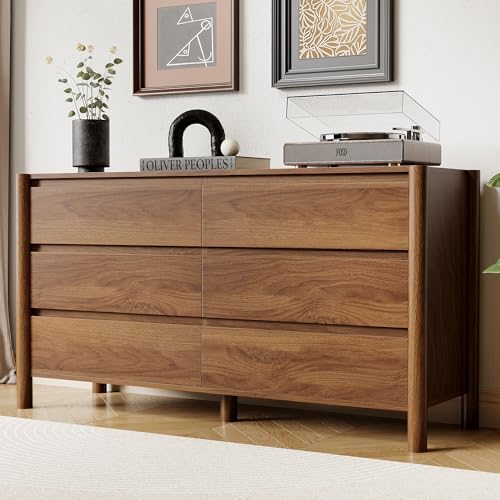
Real Wood Dressers: The Complete Buying Guide
Everything you need to know about solid wood dressers and real wood chests of drawers — wood species, construction quality, finishes, sizing, and how to choose a piece that lasts for decades.
Why Real Wood Dressers Are Worth the Research
A real wood dresser is one of the few bedroom furniture investments that can genuinely outlast the room it lives in. Unlike engineered panels wrapped in printed foil, genuine wood offers repairability, refinishability, and a natural grain pattern that no laminate can replicate. For buyers in the research phase, the challenge is not finding real wood dressers — it is distinguishing true solid hardwood construction from veneered or partially wood-built pieces that use similar marketing language.
This guide walks through the practical details that matter before you commit: which wood species perform best in which climates, how drawer joinery signals overall quality, what finish types mean for daily maintenance, and how to match dresser dimensions to your bedroom layout. Each section is written for buyers who already know roughly what they want and now need confidence in the specifics.
What Counts as a Real Wood Dresser?
The term "real wood" is used loosely across the furniture industry. In practice, it covers a spectrum from fully solid hardwood construction to pieces that combine solid wood frames with wood veneers over engineered cores. Understanding where a specific dresser sits on that spectrum is the single most important step in evaluating whether it is right for you.
Solid Wood Construction
A solid wood dresser uses planks of a single wood species for the top, sides, drawer fronts, and often the drawer boxes. Grain patterns continue across adjacent surfaces, and the piece can typically be sanded and refinished multiple times over its life. Solid hardwood dressers sit at the premium and luxury tiers and are the benchmark against which other constructions are measured.
Solid Wood with Veneer Panels
Many mid-range and premium dressers use solid wood for structural elements such as the frame, legs, and drawer fronts, while using wood veneer over plywood or engineered board for large side and back panels. This is still legitimately a real wood dresser — the veneer is genuine wood sliced thin — and it reduces weight and movement while controlling dimensional stability. The key is transparency: reputable brands list which parts are solid and which are veneered.
What to Watch For
- "Wood finish" or "wood look": usually indicates laminate or foil over engineered board, not real wood.
- "Engineered wood with wood veneer": contains real wood on the surface but the core is composite; refinishing options are limited.
- "Solid wood and wood products": a mixed claim that often means solid wood is used only for select components.
- Missing species names: a genuine solid oak or solid walnut dresser will almost always name the species explicitly.
If a listing avoids naming the wood species and the solid components, treat it as a signal to ask the seller directly before purchasing.
Wood Species Compared: Which Is Right for You?
Wood species determine hardness, grain character, color stability, and how the dresser responds to humidity changes. The table below compares the most common species found in real wood dressers, along with the market tier where each typically appears.
| Species | Character | Durability | Typical Tier | Best For |
|---|---|---|---|---|
| Oak | Prominent open grain, warm honey to golden tones | High — dense and impact-resistant | Mid-Range to Premium | Family bedrooms, high-traffic use |
| Maple | Fine, closed grain; pale and uniform | Very high — among the hardest domestic species | Premium | Modern and minimalist interiors |
| Walnut | Rich chocolate tones, subtle grain movement | High — stable and resistant to wear | Premium to Luxury | Statement bedrooms, refined decor |
| Cherry | Smooth grain, deepens in color with age | Moderate to high | Premium | Traditional and transitional styles |
| Pine | Knotty, rustic character; soft grain | Moderate — prone to denting | Entry-Level to Mid-Range | Farmhouse and cottage aesthetics |
| Mahogany | Deep reddish-brown, tight grain | High — traditional heirloom quality | Luxury | Formal and classic bedrooms |
Climate Considerations
All solid wood moves with humidity, but species differ in how dramatically they expand and contract. Oak and maple are relatively stable in most indoor environments. Pine is more responsive to humidity swings and may show seasonal gaps at joints in very dry or very humid climates. If your bedroom experiences wide humidity variation, consider a premium or luxury tier piece built with kiln-dried hardwood and reinforced joinery, or plan to use a room humidifier during dry months.
Grain and Aesthetic Match
Species choice is also an aesthetic decision. Oak's bold grain suits rustic and farmhouse schemes, while maple's quiet surface fits modern and Scandinavian interiors. Walnut's deep tone anchors a room and pairs well with brass or black hardware. If you are coordinating with existing pieces, our guide to oak dressers explains how oak finishes vary across producers and what to check when matching a new dresser to older furniture.
Construction Quality: What Separates Good From Great
Wood species gets the headlines, but construction determines whether a real wood dresser stays square and smooth for twenty years or develops sticking drawers within three. Use the checklist below when evaluating any candidate.
Drawer Joinery
- Dovetail joints: interlocking wedge-shaped cuts at drawer corners; the strongest and most durable option, typical of premium and luxury tiers.
- Box joints: square interlocking fingers; strong and common in mid-range and premium pieces.
- Stapled or nailed joints: weakest option; often found in entry-level construction and prone to loosening over time.
Drawer Glides and Runners
- Wood-on-wood runners: traditional, quiet, and repairable with wax or paraffin; common in heritage-style solid wood dressers.
- Side-mounted ball-bearing glides: smooth and consistent; a good sign in mid-range pieces.
- Undermount soft-close glides: the smoothest and quietest option; typical of premium and luxury construction.
Frame and Carcass
A well-built real wood dresser has a rigid carcass with corner blocks, glue blocks, or a dado-and-groove system holding the panels together. Check that the back panel is attached securely and that the dresser does not rock on a flat floor — rocking indicates a twisted frame. For larger pieces, anti-tip hardware should be included or at least pre-drilled.
Drawer Bottoms and Dust Panels
Drawer bottoms should be at least 3/8 inch thick and set into a groove rather than stapled to the drawer sides. Dust panels between drawer rows prevent clothes from catching on the drawer above and are a hallmark of careful construction. If a dresser lacks dust panels, inspect whether the drawer fronts are finished smoothly on the interior side.
Finishes and Surface Protection
The finish on a real wood dresser protects the wood and defines its appearance. Finish quality varies as much as wood species, and the right choice depends on how much maintenance you are willing to do.
Common Finish Types
- Lacquer: fast-drying, clear, and widely used on mid-range and premium pieces; can be touched up but not always spot-repaired invisibly.
- Polyurethane: highly durable and water-resistant; common on family-friendly dressers at the mid-range tier and above.
- Conversion varnish: catalyzed finish with excellent chemical and moisture resistance; typical of professional-grade and commercial-grade furniture.
- Oil and wax: penetrates the wood for a natural feel; requires periodic reapplication but is the easiest finish to repair at home.
- Water-based finishes: low odor and low VOC; durability has improved significantly and now appears in premium eco-focused lines.
Sheen and Color
Matte and satin sheens hide dust and fingerprints better than high-gloss finishes and suit most modern bedrooms. High-gloss finishes show every mark but create a striking reflective surface for luxury statement pieces. If you plan to pair the dresser with existing painted furniture, our guide to painted dressers with wood tops explains how to balance a natural wood surface against a colored surround.
Hardware and Details
Hardware is the easiest component to upgrade later, so do not let it make or break a purchase decision — but do check that the pulls are solid metal rather than hollow castings, and that the screw holes are not stripped. If you prefer a darker accent, our overview of oak dressers with black handles shows how hardware choice changes the character of a natural wood piece.
Sizing and Room Fit
A real wood dresser is a long-term purchase, so getting the dimensions right matters more than it does for a temporary piece. Measure the wall space, the walking clearance, and the door swing before you compare models.
Standard Size Categories
| Category | Typical Width | Typical Height | Best For |
|---|---|---|---|
| Small dresser | Under 40 inches | 30–36 inches | Guest rooms, apartments, narrow walls |
| Standard dresser | 40–60 inches | 30–40 inches | Primary bedrooms, paired with a mirror |
| Wide dresser | 60–72 inches | 30–36 inches | Large bedrooms, shared storage |
| Tall chest | 30–40 inches | 45–60 inches | Small footprints with high storage needs |
Clearance and Placement
Allow at least 30 inches of walking space in front of the dresser so drawers can open fully without blocking the room. If the dresser sits opposite the bed, check that the open drawer depth does not collide with the foot of the bed. For rooms with limited floor area, a tall chest preserves floor space while providing comparable storage volume — our guide to real wood dressers and nightstands covers matched sets that keep proportions consistent across the room.
Matching With Other Furniture
If you are building a coordinated bedroom, matching wood species and finish sheen matters more than matching exact models. A walnut dresser paired with walnut nightstands reads as intentional even if the silhouettes differ. If you need a complete set, review oak dresser and nightstand sets for examples of how producers align grain direction and hardware across pieces.
Market Tiers: What to Expect at Each Level
Real wood dressers span a wide range of construction quality. The tiers below describe relative market position and the features typically associated with each — they are not tied to any specific figure or currency.
| Tier | Construction Signals | Wood Use | Expected Lifespan |
|---|---|---|---|
| Entry-Level | Stapled or nailed drawer joints; basic side glides; thinner panels | Pine or mixed solid wood with veneer panels | 5–10 years with careful use |
| Mid-Range | Box joints; side-mounted ball-bearing glides; dust panels on better models | Solid oak or pine frames with veneer sides | 10–20 years |
| Premium | Dovetail joints; undermount soft-close glides; corner-blocked carcass | Solid oak, maple, cherry, or walnut throughout | 20–40 years |
| Luxury | Hand-finished dovetails; custom glides; fully finished drawer interiors | Solid walnut, mahogany, or specialty hardwoods | 40+ years, heirloom potential |
The jump from entry-level to mid-range is usually the most noticeable in daily use: drawers glide more smoothly, the piece feels more rigid, and the finish resists marks better. Moving from mid-range to premium mainly buys longevity and refinement — dovetail joinery, quieter glides, and more consistent grain matching. Luxury tier pieces are for buyers who value craftsmanship details and plan to keep the dresser for decades.
Within any tier, look for producers who clearly disclose which components are solid wood and which are veneered. Transparency is a better quality signal than a long list of superlatives.
Long-Term Care and Maintenance
Real wood dressers are low-maintenance compared with painted or laminate furniture, but a few habits extend their life significantly.
Routine Care
- Dust weekly with a soft, dry microfiber cloth; avoid abrasive pads.
- Wipe spills immediately with a slightly damp cloth, then dry the surface.
- Use coasters or felt pads under lamps and decorative objects to prevent rings and scratches.
- Keep the dresser out of direct sunlight to slow color shifts, especially on cherry and walnut.
Humidity and Temperature
Maintain indoor humidity between 40 and 60 percent. In very dry winters, a room humidifier prevents drawer fronts from shrinking and joints from opening. Avoid placing the dresser next to radiators, heating vents, or exterior doors that create drafts.
Refinishing and Repair
One of the strongest arguments for real wood is repairability. Light scratches on oil-finished pieces can be blended with a matching oil. Lacquer and polyurethane finishes can be scuffed and recoated by a professional. Solid wood tops can be sanded and refinished multiple times, which is rarely possible with veneered or laminate surfaces. If you are considering refreshing an older piece, our guide to refinished dressers covers what to expect from the process and how to assess whether a piece is worth the effort.
Frequently Asked Questions
What is the difference between solid wood and real wood dressers?
Solid wood dressers use planks of a single wood species throughout the main structure, while real wood dressers may combine solid wood frames with wood veneers over engineered cores. Both contain genuine wood, but solid wood typically offers greater durability and refinishing potential at the premium and luxury tiers. A real wood dresser with veneered side panels is still a legitimate wood piece — the key is that the veneer is genuine wood, not a printed laminate.
Which wood species is best for a real wood dresser?
Oak and maple are excellent for everyday durability, walnut suits premium and luxury aesthetics, cherry develops a rich patina over time, and pine works well for entry-level and mid-range pieces with a rustic character. The best choice depends on your style preference, climate, and long-term maintenance expectations. In humid climates, species stability matters more than grain appearance.
How can I verify a dresser is made of real wood?
Check the product specifications for terms like solid oak, solid walnut, or kiln-dried hardwood. Inspect drawer interiors and the back panel — real wood grain should continue consistently. Avoid vague labels such as wood-finish or wood-look, which often indicate veneers or engineered materials. When buying online, read the materials section carefully and look for explicit statements about which components are solid wood.
Do real wood dressers require special maintenance?
Real wood dressers benefit from dusting with a soft cloth, avoiding prolonged direct sunlight, and maintaining indoor humidity between 40 and 60 percent. Periodic application of a furniture-grade conditioner or wax helps preserve the finish, especially on premium and luxury tier pieces. Oil-finished dressers need more frequent conditioning than lacquered or polyurethane-finished ones.
Is a real wood dresser worth it compared with engineered wood?
For long-term use, yes. Real wood dressers can be repaired, refinished, and adjusted over time, while engineered wood pieces are difficult to repair once the surface is damaged. Entry-level real wood options exist, but the most noticeable jump in longevity and daily usability typically occurs at the mid-range tier and above. If you plan to keep the dresser for more than a decade, real wood is the more durable path.
Ready to Compare Real Wood Dressers?
Browse our curated selection of solid wood dressers and real wood chests of drawers. Each listing includes construction details and material specifications so you can evaluate quality before you buy.
View Recommended Dressers