Pink Dressers: A Complete Buying Guide for Every Bedroom
Pink dressers bring warmth, personality, and a soft design touch to any bedroom. This guide explains how to choose the right pink dresser by covering finishes, materials, drawer counts, size planning, and organization so you can make a confident, well-informed decision.
Start the GuideDresserAdvisor Approach: We believe a pink dresser should be more than a color statement. It should fit the room, hold what you own, and last through daily use. Use this guide to match a pink dresser to your space, your storage needs, and the way you actually live.
Why Pink Dressers Work in Real Bedrooms
Pink is one of the most versatile accent colors in bedroom furniture. A pink dresser can act as a soft neutral when the shade is muted, or as a confident focal point when the tone is saturated. Because pink sits comfortably next to white, gray, natural wood, and black, it adapts to many design styles without forcing a full room redesign.
Beyond appearance, a pink dresser solves practical storage problems. It gives you a dedicated place for folded clothing, linens, and accessories while adding visual warmth that plain white or dark wood often cannot provide. For anyone researching bedroom furniture, pink dressers are a strong option when you want a storage piece that feels intentional rather than purely functional.
This guide is written for research-stage shoppers. You likely know you want a pink dresser, but you may still be deciding between a chest of drawers and a wider dresser, or between a painted finish and a natural wood body. The sections below answer those questions directly and point you to related guides when you want more depth.
Pink Dresser Styles and Finishes
The finish is the first decision because it determines how the dresser fits your room. Pink covers a wide range from barely-there blush to deep berry tones, and each finish suits a different design direction.
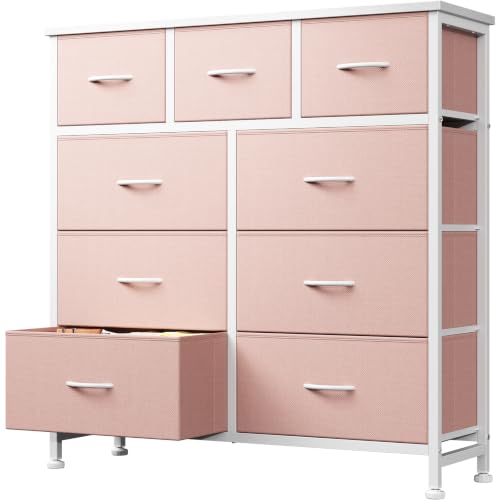
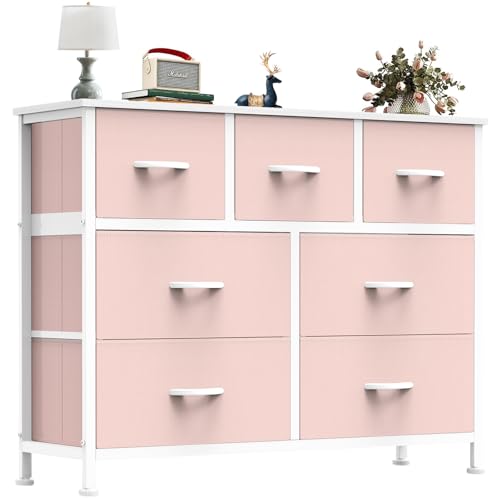
- Soft blush and pastel pink: Best for calm, airy bedrooms. These tones work well with white walls and light wood floors, and they feel natural in nurseries and guest rooms. A pink and white dresser is a straightforward way to combine this soft palette with clean contrast.
- Dusty rose and mauve: Slightly muted and grown-up. These shades pair well with gray, navy, and brass hardware, and they suit mid-range and premium bedroom setups that lean toward a refined look.
- Bright and saturated pink: A statement finish for playful or maximalist rooms. Use it as the single bold piece in the room and keep surrounding furniture quiet so the dresser leads the design.
- Pink painted wood: A painted body with a wood top or wood drawer fronts adds texture. A painted dresser with a wood top keeps the pink from feeling flat, and a painted dresser with wood drawers offers a similar warm contrast.
If you are drawn to a specific niche, explore options like a princess dresser for a decorative bedroom style, a preppy dresser for a crisp, colorful look, or a pink and black bedroom palette if you want higher contrast. For a broader comparison of color options across furniture, see our guide to materials and finishes.
Pink Chest of Drawers vs Pink Dresser
Shoppers often use the terms interchangeably, but the two forms serve different rooms. A chest of drawers is typically taller than it is wide, which makes it efficient in narrow spaces and small bedrooms. A dresser is usually wider and lower, giving you a broader top surface and a more furniture-like presence.
If your room has limited floor space, a pink chest of drawers may be the better fit because it uses vertical space. If you want a piece that anchors the room, holds a mirror, or doubles as a surface for decor and daily items, a wider pink dresser is usually the stronger choice.
Think about how you fold and store clothes. Tall chests work well for folded tops and accessories, while wide dressers suit linens, denim, and larger items. Matching the form to your storage habits matters more than following a naming convention.
How to Choose a Pink Dresser: A Step-by-Step Framework
Use this framework to narrow your options before you compare specific products. Each step removes a category of uncertainty, which makes the final decision faster and more reliable.
- Measure the room, not just the wall. Record the available width, the height of any window or outlet, and the clearance you need for drawers to open fully. A pink dresser that fits the wall but blocks a drawer is still the wrong size.
- Set your drawer count by inventory. Count the categories you store in drawers: tops, bottoms, undergarments, loungewear, linens, accessories. Each category usually needs its own drawer or a divided section. A three-drawer piece works for a guest room, while a five- or six-drawer piece suits a primary bedroom.
- Choose the finish against your existing palette. Pull the dominant wall color, floor tone, and bedding color. A pink dresser should either harmonize with those tones or deliberately contrast with one of them.
- Decide on material and construction tier. Entry-level pieces often use engineered wood with a painted finish. Mid-range and premium pieces move toward solid wood bodies, dovetailed drawers, and smoother glides. The tier you choose should match how heavily the dresser will be used.
- Plan the top surface. A dresser top collects lamps, mirrors, jewelry trays, and decor. If you need the surface for daily use, choose a wider dresser with a stable top rather than a narrow chest.
- Check hardware and safety. Drawer pulls should feel solid, and tall pieces should include or accept an anti-tip strap. Safety matters most in nurseries and children's rooms.
Pink Dresser Sizes and Drawer Counts
Size and drawer count are linked. A wider dresser can spread storage across fewer, larger drawers, while a tall chest stacks many smaller drawers. The right balance depends on what you store and how much floor space you can spare.
| Category | Typical Form | Best For |
|---|---|---|
| Compact / starter tier | 3-drawer chest or narrow dresser | Guest rooms, small bedrooms, first apartments |
| Mid-tier | 4- to 5-drawer dresser | Primary bedrooms with moderate storage needs |
| High-end tier | 6- to 9-drawer wide dresser | Couples, large bedrooms, full wardrobe storage |
| Specialty | Tall chest or lingerie chest | Narrow spaces, accessory-heavy storage |
For a deeper breakdown of dimensions, see our guides to oversized dressers and oak dressers if you are comparing wood-based options. If you are furnishing a child's room, a nursery dresser or the broader nursery dressers collection will help you match pink finishes with safe, age-appropriate designs.
Pink Dressers by Room
The same pink dresser can read very differently depending on where it lives. Use these room-specific notes to align the finish and form with the space.
- Primary bedroom: Choose a wider dresser in a muted pink or dusty rose. Pair it with a matching nightstand if you want a coordinated set, and use the top for a lamp and a small tray. A pink dressers collection overview helps you compare these wider forms side by side.
- Guest room: A compact pink chest of drawers keeps the room useful without crowding it. A soft pastel finish feels welcoming and photographs well for short-stay guests.
- Nursery and children's room: Pink dressers are a natural fit here. Prioritize a stable base, rounded edges where possible, and an anti-tip strap. A nursery dresser guide covers safety and changing-table considerations.
- Small apartment: A tall pink chest maximizes vertical storage and leaves floor space free. Pair it with under-bed storage if the room is very tight.
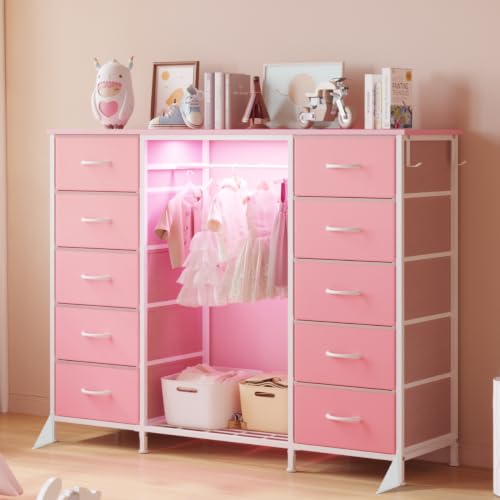
- Closet or dressing area: A pink dresser inside a walk-in closet or dressing nook adds color while keeping folded items organized. See portable dresser closet options if you need flexibility.
Organizing a Pink Dresser
Color does not change how a dresser functions, but it does change how you style the top. A pink dresser top benefits from a limited palette: one lamp, one tray, and one decorative object is often enough. Too many small items compete with the color and make the surface feel cluttered.
Inside the drawers, divide by category rather than by season. Keep daily items in the top drawers and occasional items lower down. If you need ideas for the surface, our guides to on-top-of-dresser storage ideas and an organizer for on top of a dresser show how to keep the top functional without losing the visual effect of the pink finish.
For drawer-level organization, consider dividers for accessories and folded stacks for clothing. If you want a broader system, our bedroom storage section covers closet, under-bed, and dresser organization together so the whole room works as one storage plan.
Materials, Construction, and Finish Quality
A pink dresser is only as good as the body underneath the paint. Entry-level pieces often use engineered wood with a painted finish, which is appropriate for light use and guest rooms. Mid-range pieces typically add solid wood drawer fronts, smoother glides, and better joinery. Premium and luxury tiers move toward solid wood bodies, dovetailed drawers, and hardware that feels substantial in the hand.
When you evaluate a pink finish, check how the color sits on the surface. A well-applied painted finish should look even across edges and recesses, with no thin spots around drawer fronts. On wood-based pieces, look for a finish that lets some grain texture show through if you want a warmer, more natural look.
If you are comparing wood tones, our guides to oak dressers, pine dressers, and real wood dressers explain how those materials behave over time. Many shoppers combine those wood options with a painted pink finish, which is why a painted dresser with wood top or a painted dresser with wood drawers is a practical middle path.
Matching Pink Dressers with Bedroom Sets
A pink dresser does not need to match the bed exactly, but it should share a tone or a material with the rest of the room. If you want a coordinated look, start with the dresser and build outward. A matching nightstand keeps the bedside area consistent, while a contrasting bed frame prevents the room from feeling too uniform.
If you are furnishing a full bedroom, explore matching options like a dresser and nightstand set or the broader dresser and nightstand sets category. For couples furnishing a shared room, a queen bed and dresser set or a queen bedroom set with dressers can simplify the buying process. If you are building the room around the dresser, look at queen bed with matching dresser options to keep the proportions balanced.
Common Mistakes When Buying a Pink Dresser
- Choosing the color before the size. A beautiful pink finish cannot fix a dresser that blocks a doorway or leaves no room for drawers to open. Measure first, then choose the finish.
- Underestimating drawer count. Shoppers often buy one size too small and run out of space within a year. Count your storage categories before you choose a drawer count.
- Ignoring the room's existing palette. Bright pink can overwhelm a room that already has strong colors. Pull one existing tone from the room and let the dresser echo it.
- Skipping the hardware check. Pulls and knobs are the parts you touch every day. A solid pull makes a mid-tier dresser feel much better than a loose one on a higher tier.
- Forgetting safety straps. Tall pink chests, especially in children's rooms, should be anchored. This is a basic safety step, not an optional upgrade.
Frequently Asked Questions About Pink Dressers
What is the difference between a pink dresser and a pink chest of drawers?
A pink dresser is usually wider and lower, with a broader top surface. A pink chest of drawers is taller and narrower, which makes it better for small rooms and vertical storage. The color is the same; the difference is proportion and how you use the surface.
Which pink shade works best in a small bedroom?
Soft blush, pastel pink, and dusty rose tend to work best in small rooms because they reflect light and keep the space feeling open. A pink and white dresser is a reliable combination for compact bedrooms because the white keeps the piece from feeling heavy.
How many drawers do I need in a pink dresser?
For a guest room or a single person with a small wardrobe, three to four drawers is usually enough. For a primary bedroom shared by two people, five to six drawers is a more practical baseline. Tall chests with seven or more drawers suit accessory-heavy storage.
Can a pink dresser work in a nursery?
Yes. Pink dressers are common in nurseries, but safety comes first. Choose a stable piece with a wide base, and anchor it to the wall. If you plan to use the top as a changing surface, confirm the dresser's dimensions and add a secure changing tray rather than balancing one on the edge.
How do I style the top of a pink dresser?
Keep it simple. One lamp, one tray for small items, and one decorative object is usually enough. Our guides to on-top-of-dresser storage ideas and dresser-top organizers cover practical layouts for daily use.
What should I check before buying a pink dresser online?
Check the listed dimensions against your wall space, confirm the drawer count, review the material and construction description, and look for safety anchoring information. If the listing is unclear on any of these, treat that as a reason to keep comparing options rather than a reason to buy quickly.
Final Thoughts on Choosing a Pink Dresser
A pink dresser is a practical storage piece and a design decision at the same time. Start with measurements and drawer count, then choose the finish that fits your room's palette. Confirm the material tier and construction quality, and plan the top surface before you commit. Done in that order, the right pink dresser will serve your storage needs for years while giving the room a clear, intentional look.
If you are still comparing forms, our pink dressers overview and the pink chest of drawers guide will help you decide between wide and tall configurations. For broader bedroom planning, the bedroom storage section connects dresser organization with closet and under-bed storage.