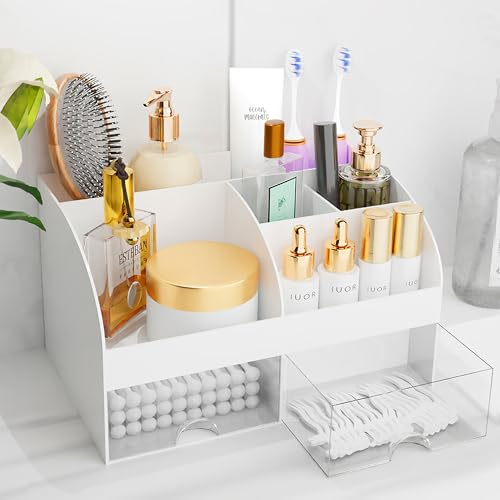
Organizer For On Top Of Dresser: The Complete Guide to a Clutter-Free Surface
Your dresser top is prime real estate. It is the first surface you see when you walk into the bedroom and the last place you set things down at night. Without a system, it quickly becomes a catch-all for loose change, receipts, half-used perfume bottles, and stray earrings. The right organizer for on top of your dresser transforms that chaos into an intentional display and a functional staging area. This guide walks you through every organizer type, how to choose one that fits your habits, and how to maintain a tidy surface for good.
Why a Dresser Top Organizer Matters
A dresser is not just a storage chest for clothes. Its top surface serves as a landing zone, a vanity, and sometimes a display shelf. When that surface is disorganized, two things happen: you lose track of small items, and the visual clutter makes the entire bedroom feel unsettled. An organizer for on top of the dresser solves both problems by giving every item a defined home.
Beyond tidiness, a well-chosen organizer protects your belongings. A lined jewelry tray prevents scratches on watch faces and ring bands. A compartmentalized box keeps necklaces from tangling. A raised shelf keeps a water glass away from wood finishes. These small protections add up over time, especially on solid wood surfaces where moisture rings and scratches are difficult to reverse.
If you are still deciding how to arrange your bedroom storage overall, our guide to on top of dresser storage ideas pairs well with this article. It covers layout strategies that work alongside the organizers discussed here.
The Main Types of Dresser Top Organizers
Organizers for dresser tops fall into a handful of categories, each suited to different storage needs and room aesthetics. Below is a breakdown of the most useful options.
1. Vanity Trays and Decorative Trays
A tray is the simplest and most versatile organizer for a dresser top. It corrals daily essentials — perfume, lotion, a watch, a hairbrush — into a contained zone while leaving the rest of the surface visually open. Trays come in wood, metal, glass, acrylic, and fabric-lined versions. A rectangular wood tray suits oak dresser tops especially well because the grain and tone blend naturally. Round trays work nicely on smaller dressers or on models like a oval dresser where straight edges feel out of place.
The key advantage of a tray is flexibility. You can group items by morning routine, by jewelry type, or by how often you reach for them. Trays are also easy to lift and clean underneath, which matters on wood surfaces that need dusting.
2. Jewelry Boxes and Jewelry Organizers
If your dresser top doubles as a jewelry station, a dedicated jewelry organizer is essential. Look for models with divided compartments, ring rolls, and necklace hooks or slots. Soft lining — velvet, felt, or suede — protects metal finishes and prevents stones from scratching. A lid keeps dust off and makes the box feel like a deliberate piece of decor rather than a utility item.
Multi-tier jewelry boxes suit larger collections, while single-drawer organizers work well for everyday pieces. If you wear only a few items regularly, a small open tray with a ring roll may be all you need.
3. Stackable Drawer Organizers and Small Bins
Small stackable bins are a practical choice for dresser tops that need to hold more than jewelry. They work well for hair accessories, sunglasses, phone chargers, and small tech items. Acrylic or clear bins let you see contents at a glance, while fabric or woven bins hide clutter and add texture.
Stackable designs make efficient use of vertical space, which is helpful on narrow dressers or in bedrooms where the dresser top is the only available surface. Just be careful not to stack so high that the arrangement feels top-heavy or blocks access to the back of the dresser.
4. Display Shelves and Risers
A small riser or tiered shelf lifts items off the main surface and creates visual layering. This works especially well for perfume collections, small plants, framed photos, and decorative objects. Risers also free up the front edge of the dresser for everyday items you need to reach quickly.
On a dresser with a mirror attached, a riser can bridge the gap between the mirror base and the front edge, turning an awkward dead zone into usable display space. If your dresser setup includes a mirror, our guide to dressers with mirror covers how to work with that configuration.
5. Drawer-Style Organizers for the Top Surface
Some organizers for dresser tops include their own small drawers. These are useful for items you want close at hand but out of sight — reading glasses, hand cream, nail files, spare hair ties. A two-drawer unit in wood or metal can sit on the dresser top without overwhelming the surface, and it keeps small clutter contained.
How to Choose the Right Organizer for Your Dresser
Choosing an organizer is less about finding the single best product and more about matching the organizer to your dresser, your items, and your habits. Work through the following considerations before you commit.
Measure the Dresser Top First
Depth matters more than width. Most dressers offer roughly 16 to 20 inches of usable depth, but decorative trim, mirror bases, and curved fronts reduce that. Measure the flat area, then choose an organizer that leaves a few inches of clearance at the front and back. An organizer that fills the entire depth makes the surface feel cramped and leaves no room for a glass, a lamp, or a book.
Match the Organizer to the Dresser Style
A farmhouse-style dresser pairs naturally with wood trays, woven baskets, and ceramic dishes. A modern dresser suits acrylic bins, metal trays, and clean-lined risers. A vintage or provincial piece — like a provincial dresser — benefits from organizers with a bit of patina or traditional detail. The organizer should look like it belongs, not like it was dropped in from another room.
Finish also matters. On painted pieces such as an off-white dresser or a pebble grey dresser, avoid organizers with rough bases that could scuff the paint. Felt pads or a soft cloth liner underneath solve this cheaply and invisibly.
Decide What Needs to Be Visible vs. Hidden
Some items should be on display — a favorite perfume bottle, a decorative dish, a small plant. Others should be tucked away — receipts, spare chargers, hair ties. A good dresser top setup usually combines both: an open tray for display items and a lidded box or small drawer unit for the rest. This mix keeps the surface looking styled rather than utilitarian.
Consider Your Morning and Evening Routines
Think about the order in which you use items. If you put on jewelry last before leaving, place the jewelry organizer near the front edge where you can reach it easily. If you set down your watch and glasses at night, a tray near the bed-facing side of the dresser makes sense. Organizers work best when they follow your actual habits rather than an abstract ideal of tidiness.
Practical tip: Before buying any organizer, empty your dresser top completely for one week. Notice which items you actually reach for and which ones sat untouched. Buy organizers only for the items that earned their place. This one-week test prevents you from buying storage for things you do not need to keep on the surface at all.
Comparison of Dresser Top Organizer Types
The table below summarizes the main organizer categories by their best use, typical tier, and the dresser styles they suit. Tier descriptors reflect relative market positioning, not any specific figure.
| Organizer Type | Best For | Typical Tier | Suits These Dressers |
|---|---|---|---|
| Vanity tray | Daily essentials, perfume, watches | Entry-level to mid-range | Oak, off-white, pebble grey, provincial |
| Jewelry box | Rings, necklaces, earrings, bracelets | Mid-range to premium | Any style; lined models protect finishes |
| Stackable bins | Hair accessories, chargers, sunglasses | Entry-level to mid-range | Modern, small, narrow dressers |
| Display riser | Perfume collections, decor, plants | Mid-range | Dressers with mirror, wide dressers |
| Small drawer unit | Glasses, hand cream, nail files | Mid-range to premium | Solid wood and traditional dressers |
Organizer Ideas by Dresser Type
Different dressers call for different organizer approaches. Here are starting points based on common dresser styles and sizes.
On a Solid Wood Dresser
Wood surfaces deserve protection. Choose organizers with felt or cork bases, or add a soft liner underneath. A wood vanity tray in a matching or complementary tone looks intentional and protects the finish. Avoid metal organizers with sharp edges that could dent the surface if set down carelessly. For more on wood options, see our oak dressers collection guide.
On a Small or Narrow Dresser
Space is tight, so vertical organization wins. A small stackable bin set or a single tiered riser adds capacity without spreading across the surface. Keep the footprint compact and leave the front edge clear so the dresser still functions as a landing zone. If your dresser is especially compact, our small dressers guide offers additional layout ideas.
On a Dresser in a Nursery
Safety comes first. Avoid heavy organizers that a child could pull down, and skip glass or ceramic pieces on a dresser that a toddler can reach. Soft fabric bins and lightweight trays are safer choices. Keep small items like jewelry and coins out of reach entirely. For nursery-specific storage, see our nursery dressers guide.
On a Dresser Used as a Vanity
A dresser that doubles as a vanity needs organizers that support a grooming routine. A tray for daily skincare, a jewelry box for pieces you remove before washing your face, and a small bin for cotton pads and hair ties create a workable flow. Keep the center of the surface clear for a mirror or a makeup station.
How to Style and Maintain a Dresser Top Organizer Setup
Buying an organizer is the easy part. Keeping the surface tidy over months and years requires a simple system. These habits make the difference between a setup that lasts and one that collapses within a week.
- Limit the count. Choose a small number of organizers — two or three is usually enough — and resist adding more. Each additional container invites more items onto the surface.
- Assign one home per item. Every object on the dresser top should belong to a specific organizer or be a deliberate display piece. If an item has no home, it does not belong on the surface.
- Reset weekly. Set aside five minutes each week to return stray items to their places and wipe down the surface. A quick reset prevents gradual accumulation.
- Rotate decor seasonally. Swap display items — a candle in winter, a small vase in spring — to keep the surface feeling fresh without adding clutter.
- Clean underneath regularly. Lift trays and boxes monthly to dust the dresser top. This also catches moisture or spills before they cause damage.
Editorial note: The most common mistake is buying an organizer that is too large. A tray that covers most of the dresser top leaves no room for anything else and makes the surface feel heavier, not lighter. Choose an organizer that occupies roughly one-third of the usable surface and leave the rest open.
Common Mistakes to Avoid
Even with a good organizer, a few habits undermine the result. Watch for these pitfalls.
- Using the dresser top as a permanent storage space. Organizers should hold daily-use items and a few display pieces, not become an overflow closet. Seasonal clothing and rarely used accessories belong inside drawers or in closet storage.
- Ignoring the dresser's finish. Rough bases, moisture, and direct sunlight all damage finishes over time. Use liners, avoid placing drinks directly on wood, and keep the dresser out of harsh afternoon sun where possible.
- Over-stacking. Stackable bins are useful, but tall stacks become unstable and block access to the back of the dresser. Keep stacks to two or three levels at most.
- Buying before measuring. An organizer that does not fit the dresser top is a guaranteed return. Measure depth and width, then shop.
Frequently Asked Questions
What is the best type of organizer for on top of a dresser?
The best organizer depends on what you need to store. Vanity trays work well for daily essentials like perfume and watches, while multi-tier jewelry boxes suit larger collections. Stackable drawer organizers are ideal for small accessories, and display shelves help showcase decor. Many people combine two types — a tray for daily items and a lidded box for everything else.
How do I keep my dresser top from becoming cluttered?
Start by decluttering and removing items you no longer use. Group remaining items by category, then assign each group a dedicated organizer such as a tray, box, or shelf. Limit the number of items on display and commit to a weekly reset routine. The one-week empty-surface test described above is a reliable way to identify what actually belongs on the dresser.
What size organizer fits a standard dresser top?
Measure your dresser top depth and width first. Most standard dressers offer 16 to 20 inches of depth. Choose an organizer that leaves at least a few inches of clearance at the front and back so the surface still feels open and usable. On smaller dressers, prioritize vertical organizers over wide trays.
Can I use an organizer on top of a dresser for jewelry?
Yes. A dedicated jewelry organizer with divided compartments and ring rolls keeps necklaces tangle-free and earrings paired. Look for models with soft lining to protect finishes and a lid to keep dust away. For larger collections, a multi-tier jewelry box keeps everything visible and accessible without spreading across the dresser top.
Final Thoughts
An organizer for on top of your dresser is a small purchase with an outsized effect on how your bedroom feels. The right tray, jewelry box, or stackable bin turns a chaotic surface into a calm, functional staging area — one that supports your morning routine and makes the room feel finished. Start by emptying the surface, measure carefully, choose organizers that match both your items and your dresser's style, and commit to a light weekly reset. The result is a dresser top that stays orderly without constant effort.
Ready to complete your bedroom setup? Explore our dresser types guide to understand how different dresser configurations affect storage and layout, or browse buying guides for advice on choosing the right piece for your space.