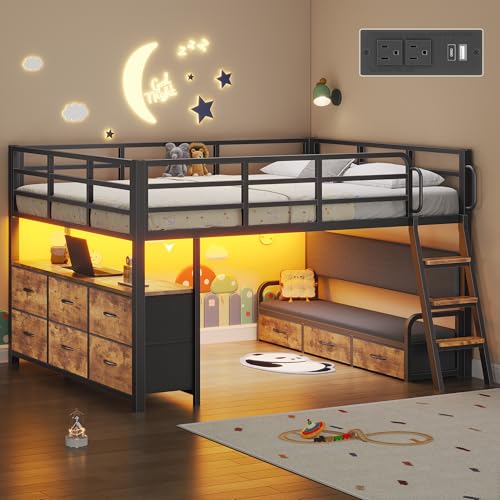
Low Loft Bed with Dresser Underneath: The Complete Buying Guide
Maximize a small bedroom with a raised sleeping platform that hides a full dresser below. Learn how clearance, frame design, safety, and drawer layout work together before you choose your setup.
Start With The Buying CriteriaWhy this configuration works: A low loft bed with a dresser underneath reclaims the floor area a traditional bed and dresser would otherwise consume separately. The result is a compact sleep-and-store zone that suits guest rooms, dorms, studios, and children's bedrooms. This guide explains exactly what to measure, which frame types hold up over time, and how to pair the loft with the right drawer unit.
What Is a Low Loft Bed with Dresser Underneath?
A low loft bed is a raised bed frame that sits noticeably higher than a standard bed but much lower than a full-size loft. Rather than lifting the mattress to ceiling height, a low loft keeps the sleeping platform within easy reach, usually between 50 and 60 inches from the floor. That moderate height creates a usable open zone underneath, which is where the dresser goes.
Unlike a bunk bed, a low loft has no lower mattress. The entire space below belongs to storage, a dresser, a desk, or a reading nook. When you place a dresser underneath, you effectively create a vertical storage column: clothing and linens at arm's reach, sleep above, and no wasted footprint. This is the same principle behind other compact configurations such as a loft bed with dresser underneath and a loft bed with desk and dresser, but the low variant is easier to climb and feels less enclosed.
If you are still comparing storage-first bedroom layouts, our broader guide to bedroom storage solutions explains how loft beds, dressers, and closets can be combined into one coherent plan.
Buying Criteria: What Actually Matters
Most shoppers focus on the look of the frame. The details that determine long-term satisfaction are clearance height, frame material, weight capacity, and how the dresser interacts with the bed's support structure. Use the checklist below before you compare models.
Under-Bed Clearance
Aim for at least 32 inches of clearance if you plan to place a standard-height dresser below. Less than 28 inches limits you to low-profile drawer units.
Frame Material & Build
Solid wood and reinforced metal frames hold their shape better than thin particle board. Check the weight capacity and the joinery at the corner posts.
Dresser Depth vs. Bed Length
Measure the dresser's depth against the under-bed footprint. A shallow dresser leaves walking room; a deep one may block the ladder or guardrail access.
Safety & Anchoring
Guardrails are essential for children. Wall-anchoring hardware is non-negotiable for any raised bed, and it also prevents the frame from shifting against the dresser.
Ladder or Stair Access
An end-mounted ladder keeps the long side free for the dresser. Stairs are easier for young children but take up under-bed space.
Drawer Glide Quality
Because the dresser sits in a confined zone, smooth glides matter more than usual. Metal ball-bearing slides outperform basic roller glides over time.
Sizing: Match the Bed, the Dresser, and the Room
Low loft beds are commonly sold in twin and full sizes. Twin frames are the most space-efficient and pair well with narrow dressers; full frames give a wider sleeping surface and can accommodate a wider drawer unit underneath. Before ordering, write down three numbers: the room's free wall length, the bed's outer frame dimensions, and the dresser's height and depth.
The clearance rule is simple but often ignored: the dresser height must be lower than the underside of the bed rail minus a safety margin of two to four inches. That margin allows drawers to open without scraping and leaves room for bedding to hang down. If you prefer a storage piece with deeper drawers, our guide to low chest of drawers for the bedroom covers options that fit tight vertical zones.
For very compact rooms, a low dresser for a closet can also be repurposed under a loft bed, provided its height stays within the clearance. Conversely, if the under-bed area is generous, a long low dresser can span most of the bed's length and create a clean, built-in appearance.
Quality Tiers: How to Read the Market
Low loft beds with dressers sit in a wide range of construction quality. Instead of focusing on numeric figures, use these universal tier descriptors to compare frames and drawer units consistently.
| Tier | Typical Build | Best For |
|---|---|---|
| Entry-level | Engineered wood frame, basic roller glides, simple ladder | Guest rooms, occasional use, first apartment |
| Mid-range | Solid wood or reinforced metal frame, metal ball-bearing glides, guardrails included | Daily use in a child's or teen's bedroom |
| Premium | Hardwood frame, dovetail drawer joints, integrated stair access, wall-anchoring kit | Long-term daily use, shared bedrooms |
| Luxury | Custom hardwood, soft-close glides, modular dresser and desk configurations | Primary residences and design-led rooms |
In practice, mid-range frames usually offer the best balance of stability and straightforward assembly. Entry-level models can work well in low-traffic rooms, while premium and luxury tiers are worthwhile investments if the bed will be used every night for years. For a deeper comparison of drawer mechanics, see our notes on heavy-duty drawer slides, which apply equally to dressers placed under a bed.
Configuration Options to Consider
The low loft bed is a platform, not a fixed layout. Depending on the frame's length and your storage needs, you can arrange the space below in several ways.
Dresser Only
The simplest and most common setup. A single dresser occupies one half of the under-bed zone, leaving the other half open for a laundry basket or floor cushions. This works best when the ladder is mounted at the end of the bed rather than the long side.
Dresser and Desk
If the frame is long enough, a narrow dresser on one side and a compact desk on the other turns the under-bed area into a study corner. This is the same concept used in a loft bed with desk and dresser underneath, and it suits students and remote workers in small rooms.
Dresser and Stairs
Stair-access loft beds are easier for young children, but the staircase consumes part of the under-bed footprint. In this layout, the dresser is usually narrower and positioned on the opposite end from the stairs. Compare this with a loft bed with dresser and stairs before deciding which access method fits your room.
Adult-Friendly Layouts
Low loft beds are not only for children. Adults in studios and small apartments often choose a full-size low loft with a dresser underneath to separate sleep from storage. Our guide to a loft bed with dresser for adults covers weight capacity, aesthetics, and ceiling-height considerations.
Choosing the Right Dresser for the Space Below
The dresser you place underneath determines how usable the setup feels day to day. A tall, deep dresser in a low-clearance zone becomes a frustration; a well-proportioned unit turns the space into a functional closet. Keep these points in mind:
- Height first: Confirm the dresser's total height against the bed's clearance, then subtract a safety margin for drawer travel.
- Depth matters: A shallow dresser (around 15 to 18 inches deep) leaves room to stand and open drawers without stepping back into the room.
- Drawer count: Three to five drawers is typical for under-bed use. More drawers mean a taller unit, which may not fit.
- Finish and material: A painted or laminate finish is easy to wipe down in a confined area; solid wood offers better long-term durability.
- Hardware: Low-profile pulls reduce the chance of snagging clothing as you move around the bed.
If you want a wider storage surface that still stays low, a low chest of drawers is a natural fit. For rooms where the under-bed area is longer than average, a long dresser can run nearly the full length of the frame and provide generous drawer space without adding height. Those who prefer a streamlined, nearly floor-level look may prefer a low-profile dresser for the bedroom.
Safety, Assembly, and Long-Term Use
A raised bed with a heavy dresser underneath introduces two safety priorities: keeping the bed stable and keeping the dresser from tipping or sliding. Both are manageable with correct assembly and a few inexpensive additions.
- Anchor the bed to the wall. Use the manufacturer's wall-anchoring kit or a suitable furniture strap. This prevents lateral movement and reduces tip-over risk.
- Anchor the dresser too. Even a low dresser should be secured to the bed frame or wall, especially in homes with children.
- Check guardrails. For children, guardrails should extend at least five inches above the mattress top and run along the open sides.
- Respect weight limits. Do not overload the dresser or the bed frame. Distribute weight evenly across drawers.
- Re-tighten hardware. Loft beds experience more movement than standard beds. Check bolts and brackets every few months.
- Keep the ladder clear. Never place the dresser where it blocks ladder access or the path to the guardrail opening.
These steps mirror the advice we give for any raised storage furniture, including dressers used in closets and compact bedrooms. The principle is consistent: secure the piece, respect the clearance, and keep access routes open.
Will It Fit Your Room?
A low loft bed with a dresser underneath is a space-saving tool, but it still needs breathing room. Leave at least 24 inches of walking space on the side where drawers open, and confirm that the ceiling height allows comfortable sitting up in bed. For a twin frame, plan for roughly the bed's length plus a few inches of clearance at each end; for a full frame, add width accordingly.
If the room is exceptionally tight, consider a narrow dresser paired with a twin low loft. If the room has a long, empty wall, a long narrow dresser may fit under a full-size frame and provide more drawer capacity without increasing depth. And if the under-bed zone is used for clothing only, a low dresser designed for closets is often the most efficient choice because it is built to fit tight vertical clearances.
Frequently Asked Questions
What is a low loft bed with dresser underneath?
It is a raised sleeping platform, typically 50 to 60 inches high, with an open area below sized to hold a dresser or chest of drawers. It combines sleep and clothing storage in a single footprint, which is ideal for small bedrooms and studios.
How much clearance is needed under a low loft bed for a dresser?
Look for at least 32 inches of under-bed clearance if you plan to use a standard-height dresser. Most low loft beds provide between 28 and 40 inches. Always leave a two- to four-inch margin so drawers open without scraping the bed rail.
Is a low loft bed safe for children and adults?
Yes, when assembled correctly and anchored to the wall. Low loft beds are generally safer than tall lofts because the sleeping surface is closer to the floor. Use guardrails for children, respect the frame's weight capacity, and secure both the bed and the dresser.
Can I fit a dresser and a desk underneath a low loft bed?
Sometimes. A longer or wider frame can accommodate a narrow dresser on one side and a compact desk on the other. Measure the under-bed length carefully and choose a dresser no taller than the clearance minus a few inches.
Should I choose a ladder or stairs?
Ladders preserve more under-bed space for the dresser and are common on low lofts. Stairs are easier for young children and older adults but reduce the usable area below. Choose based on who will use the bed most often.
Ready to Compare Low Loft Bed and Dresser Setups?
Review the recommended frames and drawer units below, then match the clearance and footprint to your room.
View Recommended Options