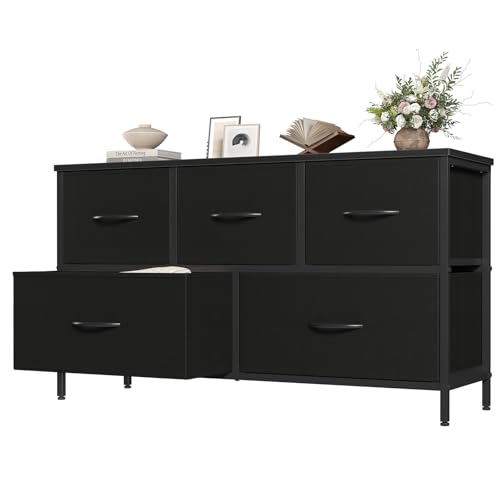
Long Narrow Dresser: The Space-Smart Storage Solution
Quick summary: A long narrow dresser is an elongated, shallow-depth storage piece designed to fit tight bedroom layouts, narrow walls, and closet corridors. Typical dimensions run 55–72 inches wide at only 15–18 inches deep. It delivers full-width drawer capacity without stealing walking space — making it one of the most practical furniture choices for small bedrooms, apartments, and compact primary suites.
What You'll Learn on This Page
What Defines a Long Narrow Dresser
A long narrow dresser sits at the intersection of two furniture categories: the long dresser and the slim, space-conscious profile. The defining trait is the ratio between width and depth — the unit is intentionally stretched horizontally while compressed front-to-back. This proportion serves a specific purpose: it lets you line a storage piece along a wall or hallway without intruding into the room's usable footprint.
Unlike a long low dresser, which prioritizes a broad top surface at lower height, a long narrow dresser keeps the depth minimal so the unit hugs the wall. The result is a tall, wide, and thin silhouette that looks almost like a built-in console in compact bedrooms.
This category overlaps with several related searches. If you are weighing options, our guide to the narrow dressers category explains how slim profiles compare, while the long chest of drawers for bedroom page covers taller variants with similar footprints.
Key Dimensions & Sizing Guide
Understanding the dimensional sweet spot is the single most important step before buying. The table below summarizes the ranges that most manufacturers follow for this category.
| Dimension | Typical Range | Why It Matters |
|---|---|---|
| Width | 55–72 inches | Determines drawer count and how much wall length the unit occupies |
| Depth | 15–18 inches | Controls how far the unit protrudes into walkways; below 15 inches drawers become impractical |
| Height | 30–40 inches | Balance between top-surface usability and visual weight on a narrow wall |
| Drawer interior depth | 12–15 inches | Must accommodate folded clothing without overhang |
| Front clearance | 24–30 inches | Minimum open-drawer clearance for comfortable daily use |
Depth is the make-or-break metric. A unit at 15 inches deep is genuinely shallow and works in corridor-style bedrooms or closet walkways. At 18 inches, it behaves more like a standard dresser and needs slightly more breathing room. Always measure the full extension of an open drawer — a 15-inch cabinet with a drawer that pulls out 14 inches needs roughly 30 inches of clearance in front.
Width flexibility is where the long narrow format shines. Because the same basic cabinet design can be produced at 55, 60, 66, or 72 inches, you can usually find a version that fits an exact wall span. If your wall is shorter than 55 inches, explore the small dressers category for compact alternatives.
Measure Twice, Buy Once
Measure the wall span, then subtract at least 4 inches for breathing room on each side if the unit sits between walls. Check door swing paths and baseboard thickness. Baseboards reduce usable wall depth by up to 1 inch, which matters when the dresser depth is already only 15 inches.
Drawer Configurations Explained
The elongated shape unlocks drawer layouts that are impossible on a compact footprint. Most long narrow dressers use one of three configurations:
- Six-drawer layout (3 columns × 2 rows): The most common arrangement. Two wide drawers per column give generous space for folded shirts and linens, while the middle row often hosts a split drawer for smaller items.
- Eight-drawer layout (4 columns × 2 rows): Maximizes compartmentalization. Great for couples who want separate storage zones or for households that sort clothing by category.
- Ten to twelve drawer layout: Found on premium and boutique-style pieces, often with a mix of wide and narrow drawers. Ideal for organized users who store jewelry, accessories, and folded garments in dedicated slots.
Drawer glides deserve equal attention. Entry-level units typically use basic side-mounted rollers, while mid-range models step up to ball-bearing slides that operate more smoothly and hold heavier loads. Top-tier and premium dressers often feature full-extension, soft-close undermount glides that let you reach the back of every drawer — a meaningful advantage in a shallow cabinet where the drawer back is only 12–15 inches away.
If deep storage for bulkier items matters to you, compare this format against the long dresser with deep drawers, which trades some slimness for more front-to-back capacity.
Materials & Build Quality
A dresser is a long-term investment. Build quality determines how well the piece survives daily opening and closing, humidity shifts, and the occasional move.
| Material Category | Characteristics | Best For |
|---|---|---|
| Engineered wood with laminate | Entry-level tier; lightweight, consistent finish, good stability in dry climates | Rentals, guest rooms, short-term setups |
| Veneered wood on plywood core | Mid-range tier; real wood surface over stable core, better hardware compatibility | Primary bedrooms, everyday use |
| Solid hardwood (oak, maple, walnut) | Premium to luxury tier; heavy-duty construction, refinishable, generations of service | Long-term investments, heirloom furniture |
| Metal frame with wood or glass panels | Mid-tier to high-end tier; industrial aesthetic, rust-proof finish options, sturdy under load | Modern and industrial interiors |
For a long narrow dresser specifically, structural rigidity matters more than usual. The elongated shape places torque on the cabinet frame every time a wide drawer is pulled. A solid build with reinforced corner joinery — dovetail or dowel-and-glue rather than staples — keeps the cabinet square over years of use. Check that the back panel is attached with screws rather than tacks, and that the drawer bottoms are at least 1/8 inch thick.
Style is the final variable. If you want a lighter, airier look that suits compact rooms, explore light-colored dressers or the light wood dresser category. For contrast against pale walls, a long black dresser makes a strong statement.
Placement Strategies for Tight Rooms
A long narrow dresser solves a specific spatial problem: it stores more clothing per square foot of floor than almost any other furniture format. Placement, therefore, is about protecting circulation.
1. The Long Uninterrupted Wall
The natural home. Placing the unit along the longest solid wall keeps it out of traffic lanes and creates a clean visual line. It works especially well opposite the bed, where its wide, low profile does not overwhelm the room.
2. Behind the Door
A shallow 15-inch depth means the dresser can sit behind a swinging door without blocking it — provided the door opens against the adjacent wall. This reclaims otherwise dead space.
3. Inside a Walk-In Closet
Closet corridors are typically 24–36 inches wide, which is exactly the sweet spot for a slim dresser. Placing one inside the closet turns a pass-through into a functional dressing zone. See our related guide on the long dressers for sale page for ready-made closet-friendly options.
4. Foot of the Bed
A long narrow unit can sit at the foot of the bed as a slim storage bench hybrid, though this demands at least 30 inches of clearance to the bed. For lower-profile alternatives, the low dresser for end of bed guide is worth reviewing.
5. Alcove or Recessed Niche
If your room has a recessed alcove, a long narrow dresser can slide into it almost like a built-in. Measure the alcove width precisely and choose the nearest standard width below it.
Buying Checklist
Use this checklist before finalizing any purchase decision:
- Confirm depth ≤ 18 inches. Anything deeper loses the slim advantage.
- Verify drawer interior depth ≥ 12 inches. Shallow interiors defeat the purpose of a dresser.
- Test glide type. Full-extension undermount slides are the gold standard for shallow cabinets.
- Check the back panel. Screwed-on panels keep the cabinet square; tacked panels loosen over time.
- Review the base. A center support leg prevents sag on longer units.
- Consider an anti-tip kit. Essential for tall, narrow furniture in homes with children.
- Match hardware to your routine. Long bar pulls suit wide drawers; knobs work on narrow columns.
- Plan for delivery. A 72-inch unit may not clear a narrow stairwell — measure the package dimensions.
Ready to Explore Long Narrow Dressers?
Browse our curated selection of slim, space-smart dressers that fit narrow walls and compact bedrooms without compromising storage.
View Recommended OptionsLong Narrow vs. Other Dresser Types
Understanding where this format fits helps you make a confident decision. Here is how it compares to related categories:
| Format | Footprint | Best For |
|---|---|---|
| Long narrow dresser | 55–72 in wide × 15–18 in deep | Tight walls, closet corridors, narrow bedrooms |
| Standard double dresser | 55–65 in wide × 18–20 in deep | Rooms with comfortable wall depth |
| Tall chest of drawers | 30–40 in wide × 18–20 in deep | Vertical storage in corners |
| Dresser with mirror | 40–60 in wide × 18–20 in deep | Primary bedrooms needing a full mirror |
If your priority is a full-width drawer face with a mirror above, the long white dresser with mirror and long dresser with lots of drawers pages cover similar silhouettes with added functionality. For a bedroom-ready wooden option, the long wooden dresser for bedroom guide focuses on natural materials.
Frequently Asked Questions
What is considered a long narrow dresser?
A long narrow dresser typically measures around 55 to 72 inches in width while keeping depth between 15 and 18 inches. This elongated, shallow profile lets it fit along a corridor-style wall or behind a door without crowding the walking path.
How deep should a narrow dresser be?
Most slim dressers are 15 to 18 inches deep. Below 15 inches, drawers become too shallow for folded clothing. Above 18 inches, the unit starts to protrude into walkways and loses its space-saving benefit.
Can a long narrow dresser hold as much as a standard dresser?
It can hold comparable volume by using more drawers across its length. A six to eight drawer layout in a long narrow frame often matches the capacity of a shorter, deeper double dresser while occupying less floor depth.
Where should I place a long narrow dresser in a small bedroom?
The most effective placements are along the longest uninterrupted wall, opposite the bed foot, or inside a walk-in closet. Avoid blocking window light and keep at least 24 inches of clearance in front of open drawers.
Does drawer glide quality really matter in a slim dresser?
Yes, more than in a standard dresser. Because the drawer back is only 12–15 inches from the front, cheap glides that stop short of full extension leave a meaningful portion of the interior unreachable. Full-extension slides are strongly recommended.
Related Guides
Final Thought
The best long narrow dresser is the one that matches your exact wall span, respects your walking clearance, and offers drawer internals deep enough for real clothing. Prioritize depth, drawer mechanics, and structural rigidity — then choose the finish and style that suits your room. A well-specified unit in this format is a long-term investment that quietly solves a persistent spatial problem.