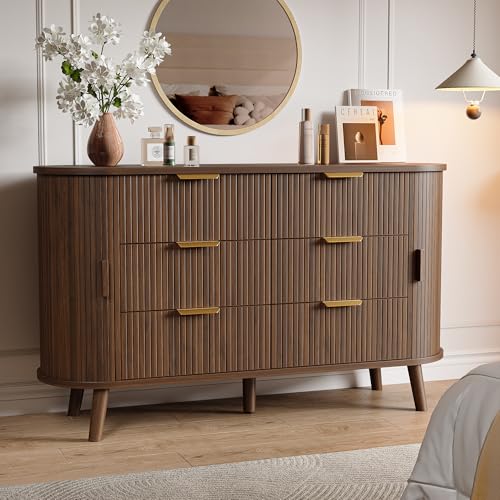
Inlay Dresser: A Complete Guide to Decorative Inlaid Storage
Learn how inlay dressers are made, which materials and patterns define them, how they compare with marquetry and painted finishes, and what to check before choosing one for your bedroom or living space.
What Is an Inlay Dresser?
An inlay dresser is a chest of drawers whose surface is decorated by setting pieces of contrasting material into recesses cut into the base wood. The inserted pieces—called the inlay—may form geometric borders, floral motifs, pictorial scenes, or repeating patterns. The technique transforms an ordinary storage piece into a decorative focal point that reads as furniture and as craftsmanship at the same time.
Inlay is one of the oldest decorative furniture techniques in the world. It appears in historic European cabinetry, in South Asian bone and shell work, in Japanese woodcraft, and in contemporary designer collections. Because the inlay sits flush or nearly flush with the surrounding surface, an inlay dresser keeps clean lines while offering visual richness that a plain painted or veneered piece cannot match.
For buyers researching bedroom storage, an inlay dresser usually occupies the decorative end of the market: it is chosen for its appearance as much as for its drawers. If your priority is a statement piece that anchors a room, inlay is worth serious consideration. If your priority is maximum hidden storage with minimal ornament, a simpler high dresser or a horizontal dresser may serve you better.
Quick definition: Inlay = inserting contrasting material into a recessed surface. Marquetry = assembling veneer pieces into a pattern applied to a substrate. Both decorate dressers, but they are different crafts and often appear together on the same piece.
How Inlay Work Is Crafted
Understanding the production process helps you judge quality when you inspect an inlay dresser in person or read a product listing. Most inlay dressers move through a sequence of steps:
- Design and pattern layout. The maker drafts the motif, then transfers it onto the drawer fronts, top, or side panels. Complex pictorial scenes require far more layout time than repeating geometric borders.
- Recessing the base surface. Channels or shallow cavities are carved or routed into the wood to receive the inlay. Precision here determines whether the final surface feels smooth or catches on cloth.
- Cutting the inlay pieces. Bone, shell, wood veneer, or metal is cut to shape. Hand-cut pieces show slight variation; laser-cut pieces are more uniform.
- Fitting and adhesion. Each piece is set into its recess with adhesive. Gaps, lifted corners, and misaligned seams are the most common defects at this stage.
- Sanding and leveling. The surface is sanded flush so the inlay and base read as one plane. Aggressive sanding can scratch soft inlay materials.
- Finishing. Sealant, lacquer, or wax protects both the inlay and the base wood. A good finish is even, non-tacky, and does not yellow the inlay.
- Assembly and hardware. Drawer boxes, slides, and pulls are installed. On decorative pieces, hardware is often chosen to complement the inlay pattern rather than dominate it.
Handcrafted inlay is labor-intensive, which is why the technique concentrates in the premium and luxury segments. Machine-assisted production has made inlay-style dressers more accessible, but the trade-off is usually thinner inlay material and simpler patterns.
Materials Used in Inlay Dressers
The inlay material determines the look, the durability, and the maintenance requirements of the piece. The base carcass matters just as much—an exquisite inlay on a flimsy frame is still a flimsy dresser.
Bone and shell inlay
Bone inlay is the most recognizable style, typically associated with South Asian craft traditions. Small bone pieces are set into a wood base to form floral or geometric patterns, often on a contrasting dark or colored ground. Mother-of-pearl and other shell inlays add iridescence and are common on premium and luxury pieces. Both materials are durable when sealed, but they can chip if struck hard and should be cleaned gently.
Wood inlay
Wood inlay uses contrasting species—for example, walnut set into oak, or maple into mahogany—to create bands, motifs, or pictorial scenes. It is the most traditional European approach and tends to age gracefully. Wood inlay is more forgiving of humidity changes than bone or shell, though it still benefits from stable indoor conditions.
Metal and mixed-media inlay
Brass, copper, and pewter inlay appear on both antique-inspired and contemporary dressers. Metal inlay can be polished for shine or left to patina. Mixed-media pieces combine wood, metal, and sometimes resin for a more sculptural look. These pieces are often found in the high-end tier and are chosen as design statements.
The base carcass
Look for solid wood or high-grade engineered cores with reinforced joinery. Drawer boxes should be sturdy, and slides should feel smooth. A premium inlay surface paired with weak drawer slides is a false economy; the drawers are what you use every day. If you are comparing construction approaches, our guide on solid wood versus engineered wood explains the trade-offs in plain terms.
Popular Inlay Dresser Styles
Inlay dressers span a wide stylistic range. The categories below are not rigid—many pieces blend influences—but they help you articulate what you are looking for.
Traditional and antique-inspired inlay
These dressers draw on European cabinetmaking traditions: floral marquetry, bordered drawer fronts, cabriole legs, and brass hardware. They suit classic bedrooms and formal guest rooms. Antique examples reward buyers who learn to identify antique dresser styles before shopping.
Boho and global inlay
Bone inlay in floral or geometric patterns on a colored ground is the signature look here. These pieces pair naturally with rattan, textiles, and layered accessories. A boho chest or an inlay dresser styled with woven baskets can anchor an eclectic bedroom without feeling cluttered.
Modern and geometric inlay
Contemporary makers use inlay for clean geometric lines rather than pictorial scenes. Think brass strips forming a grid, or shell inlay in a repeating diamond pattern on a minimal silhouette. These pieces work in modern and minimalist bedrooms where ornament is used sparingly.
Japanese-inspired inlay
Japanese woodcraft traditions emphasize restraint, precise joinery, and subtle material contrast. A Japanese dresser with inlay detailing often features low profiles, natural finishes, and patterns that reward close looking rather than dominate the room.
Lacquer and inlay combinations
High-gloss lacquer grounds make inlay patterns pop. If you are drawn to reflective finishes, explore high-gloss dressers and black lacquer dressers to see how inlay can be paired with a polished surface.
Inlay vs. Marquetry vs. Painted Finishes
Buyers often encounter these terms together, and listings sometimes use them loosely. Here is the practical distinction:
- Inlay inserts solid pieces of contrasting material into recesses in the base surface. The result is a surface with real material depth.
- Marquetry assembles thin veneer pieces into a pattern or picture, then applies the assembled sheet to a substrate. It can be extraordinarily detailed and is often combined with inlay borders.
- Painted or printed decoration simulates inlay visually but has no inserted material. It can look convincing at a distance and is usually found in the entry-level and mid-range segments.
None of these approaches is inherently better—they serve different goals. If you want the tactile reality of inserted material and are prepared to care for it, choose true inlay. If you want the look with easier maintenance, a high-quality painted or veneered piece may be the practical choice. If you are comparing broad furniture categories before committing, our dresser versus chest of drawers guide clarifies the terminology.
Quality Tiers at a Glance
Inlay dressers range from accessible decorative pieces to heirloom-grade furniture. The table below uses universal quality descriptors rather than any numeric figures, so it stays useful regardless of market conditions.
| Tier | Typical Construction | Inlay Detail | Best For |
|---|---|---|---|
| Entry-level | Engineered panels, basic drawer slides, simplified joinery | Machine-cut inlay-style patterns, thinner inserts, occasional printed simulation | Decorative accent pieces, guest rooms, first apartments |
| Mid-range | Mixed solid and engineered construction, smoother slides, reinforced corners | Genuine inlay with consistent patterns, better sealing, cleaner fit | Primary bedroom storage, everyday use with decorative appeal |
| Premium | Solid wood carcass, quality drawer boxes, refined hardware | Hand-finished inlay, complex motifs, durable protective finish | Statement bedroom pieces, long-term use |
| Luxury | Heirloom-grade joinery, custom hardware, meticulous finishing | Master-craft inlay, rare materials, signed or limited production | Collectors, designer interiors, investment furniture |
Within each tier, construction quality varies. A well-built mid-range inlay dresser will outlast a poorly made premium one. Check drawer slides, corner joinery, and the evenness of the inlay before you decide.
How to Choose the Right Inlay Dresser
An inlay dresser is a visual commitment as much as a storage purchase. Work through these questions in order:
- Where will it live? A bedroom focal wall, a guest room, a dressing area, or a living room console each calls for a different scale and pattern density.
- What storage do you actually need? Count the categories of items you plan to store—folded clothing, linens, accessories—and match drawer count and depth. Our dresser size guide helps translate needs into dimensions.
- How much visual pattern suits the room? Inlay is inherently decorative. In a busy room, choose a restrained border pattern; in a calm room, a bolder motif can carry the space.
- Which material fits your lifestyle? Bone and shell need gentler care than wood inlay. Households with young children may prefer wood inlay for its resilience.
- What is your construction baseline? Decide the minimum quality tier you will accept for drawer slides and joinery before you fall in love with a pattern.
- Can you inspect or verify? Ask for close-up photos of the inlay seams, drawer interiors, and hardware. Reputable sellers provide them.
If this is your first decorative furniture purchase, our broader complete dresser buying guide and how to choose a dresser articles provide the foundational framework. For a nursery context, review nursery dresser considerations before selecting a decorative piece for a child's room.
Placement and Styling Ideas
An inlay dresser can anchor a room or serve as a supporting character. A few approaches that work well:
- Bedroom focal piece: Place the dresser on the wall opposite the bed, centered or aligned with the bed frame. Keep the top styling minimal so the inlay reads clearly.
- Guest room: A smaller inlay dresser adds character to a guest room furniture arrangement without overwhelming the space.
- Living room or entryway console: A low inlay chest can serve as a console for lamps, books, and a tray for keys—decorative storage in plain sight.
- Dressing area: Pair with a mirror and a stool for a focused getting-ready zone. See dresser styling tips for composition guidance.
- Nursery and kids' rooms: If you want inlay in a child's room, prioritize rounded edges, stable anchoring, and a durable finish. Our kids dresser guide covers safety fundamentals.
For small spaces, consider a narrow or tall inlay piece rather than a wide one—our small dressers and tall dressers collections show how decorative pieces can fit tighter footprints.
Care and Maintenance
Inlay dressers are not fragile, but they reward consistent, gentle care:
- Dust weekly with a soft, dry microfiber cloth. Work along the inlay lines rather than across them.
- Avoid harsh cleaners. Solvent-based products can dull shell and bone and strip protective finishes. A slightly damp cloth is usually sufficient.
- Control humidity and sunlight. Bone and shell expand and contract with moisture; keep the dresser away from radiators, humidifiers, and direct sun.
- Use coasters and felt pads. Protect the top surface from glasses, hot items, and abrasive objects.
- Inspect seams occasionally. If an inlay piece lifts, address it early with a furniture restorer rather than pressing it back yourself.
- Re-seal sparingly. Reapply a suitable sealant only when the finish shows visible wear, and test on a hidden area first.
For broader routine guidance, see our how to clean a dresser article. If you are restoring an older piece, our how to refinish a dresser guide covers the steps that apply to inlaid surfaces.
Frequently Asked Questions
What is an inlay dresser?
An inlay dresser is a storage piece whose drawer fronts, top, or sides are decorated by inserting contrasting materials such as wood veneer, bone, shell, or metal into a recessed base surface to form patterns or pictorial designs.
Is a bone inlay dresser durable?
A well-made bone inlay dresser is durable when the inlay pieces are properly set and sealed. The base carcass quality matters most; solid wood or high-grade engineered cores with reinforced joinery hold up far better than thin panels.
How do I care for an inlay dresser?
Dust regularly with a soft dry cloth, avoid harsh chemical cleaners, keep the piece away from direct sunlight and moisture, and use coasters on the top surface. Reapply a suitable sealant only when the finish shows wear.
What is the difference between inlay and marquetry?
Inlay inserts small pieces of contrasting material into recesses cut into a solid surface, while marquetry assembles veneer pieces into a pattern that is then applied to a substrate. Both can appear on the same dresser.
Which rooms suit an inlay dresser best?
Inlay dressers work well in bedrooms as a focal storage piece, in guest rooms, dressing areas, and even living rooms or entryways where a decorative chest doubles as a console.
Explore Inlay Dressers and Compare Options
Ready to see how inlay dressers compare in construction, patterns, and drawer layouts? Browse a curated selection below and check availability for the styles that fit your bedroom plan.
View Recommended Inlay DressersRecommended Inlay Dressers and Decorative Storage
⚠️ AFFILIATE DISCLOSURE: This website contains affiliate links. As an Amazon Associate, we earn from qualifying purchases. If you make a purchase through these links, we may receive a small commission at no additional cost to you. Read our full affiliate policy.

Signature Design by Ashley 9-Drawer Bedroom Dresser, Light Brown | Ash Swirl Veneer Inlays, Serpentine Curves, Felt-Lined Top Drawers, Ball-Bearing Side Glides, Ardenfield Series
Check price on Amazon
YITAHOME Fluted Dresser with 6 Drawers, Arc Wood TV Stand, 47" Wide Modern Chest of Drawers with Metal Handle, Dresser for Bedroom Storage Organizer for Living Room, Hallway, Walnut
Check price on Amazon
Jocoevol Fluted 5 Drawer Dresser, 43" Tall Dresser Chest of Drawers Curved Profile Design, Wood Mid Century Vertical Dresser Natural Texture for Bedroom, Natural Dresser
Check price on Amazon
OneBlis 55" Wide 6-Drawer Dresser for Bedroom, Fluted Dresser with Storage, Modern Wood Chest of Drawers, Long Dresser Storage Cabinet for Living Room Entryway Hallway, Walnut
Check price on Amazon
54"W Fluted 6 Drawer Bedroom Dresser, with Faux Marble Top,Natural Oak | Mid Century Modern Storage 6 Drawers, Smooth Slides , Metal Handles, Fluted Chest of Drawers for Closet, Large Wooden Dresser
Check price on Amazon