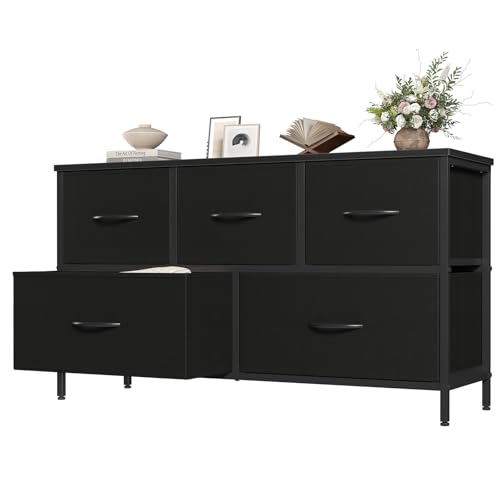
Horizontal Dresser: The Complete Guide to Wide, Low-Profile Storage
A horizontal dresser turns a broad bedroom wall into a functional, elegant storage surface. Learn how width, drawer layout, materials, and placement work together to help you choose the right wide dresser for your space.
Explore Buying FactorsQuick definition: A horizontal dresser is wider than it is tall. Instead of stacking drawers vertically, it spreads them across a long front, creating a low silhouette, a generous top surface, and easier access to every drawer without bending or reaching high.
What Is a Horizontal Dresser?
A horizontal dresser, sometimes called a wide dresser or low dresser, is a storage case built with its longest dimension running left to right. The drawer bank may span four, six, or even nine drawers across a single broad face. Because the height stays modest, usually between 28 and 36 inches, the top surface sits comfortably within reach and can double as a display area for decor, a mirror, or everyday essentials.
This layout suits bedrooms where wall width is plentiful but vertical space is limited, such as rooms with sloped ceilings, large windows, or artwork that already claims the upper wall. It also pairs naturally with a bed placed against the same wall, creating a balanced, grounded composition. If you are still comparing shapes, our guide to dresser types explains how horizontal, tall, and specialty formats differ.
Horizontal Dresser vs. Tall Dresser: Key Differences
Choosing between a horizontal dresser and a tall dresser comes down to room geometry and how you use storage. A high dresser concentrates capacity into a narrow footprint, which helps in tight rooms but can feel visually heavy. A horizontal dresser spreads the same capacity across a wider base, keeping sightlines low and the room feeling open.
| Feature | Horizontal Dresser | Tall Dresser |
|---|---|---|
| Footprint | Wide and shallow | Narrow and deep |
| Height range | 28 to 36 inches | 45 to 60 inches |
| Top surface | Generous, usable for decor | Small, often below eye level |
| Best for | Long walls, shared bedrooms, low ceilings | Small rooms, narrow alcoves, vertical storage |
| Accessibility | All drawers at easy reach | Top drawers may need a step or stretch |
| Visual effect | Grounded, spacious | Tall, space-saving |
Horizontal Dresser Sizes: Finding the Right Width
Width is the defining measurement of a horizontal dresser. Before browsing styles, measure the wall you intend to use and leave at least 2 to 3 feet of clearance in front of the drawers for comfortable opening. A common mistake is choosing a dresser that fits the wall but blocks a doorway swing or leaves no room to walk past.
- Compact horizontal dressers: roughly 40 to 50 inches wide, suited to smaller bedrooms, guest rooms, and apartments.
- Standard horizontal dressers: roughly 55 to 65 inches wide, the most versatile size for primary bedrooms.
- Oversized horizontal dressers: roughly 70 to 80 inches wide, ideal for large rooms, shared bedrooms, or as a statement piece.
Depth usually falls between 18 and 20 inches, while height stays in the 28 to 36 inch band. Pairing a wide dresser with a matching dresser and nightstand set keeps proportions consistent across the room. For a deeper breakdown of dimensions, see our dresser size guide.
Drawer Layouts That Work in a Wide Format
A horizontal dresser can be organized in several ways, and the layout affects both usability and style.
- Single-row layout: three to five wide drawers stacked in a single column across the front. Simple and easy to organize by category.
- Double-column layout: two stacks of drawers side by side, often with a split top. Great for couples who want separate zones.
- Triple-column layout: three narrow stacks across the width, maximizing drawer count for smaller items.
- Mixed layout: a combination of wide bottom drawers and smaller upper drawers, useful for bedding and accessories.
Drawer slides matter as much as layout. Look for full-extension slides on a mid-range or premium model so the entire drawer interior is reachable. For heavy loads, explore heavy-duty full-extension drawer slides and self-closing drawer slides to keep wide drawers gliding smoothly.
Ready to compare specific models? Browse curated options below and check availability for the width that fits your wall.
View Recommended Horizontal DressersPopular Styles for Horizontal Dressers
The wide format amplifies whatever style you choose, so the finish and hardware should match the rest of the bedroom.
Modern and Minimalist
Clean lines, handleless fronts, and matte finishes suit contemporary rooms. A high-gloss dresser or a high-gloss white lacquer dresser reflects light and makes a wide piece feel lighter.
Mid-Century Modern
Tapered legs, warm wood tones, and angled drawer pulls define this style. A green mid-century modern dresser adds a confident color accent without overwhelming a wide wall.
Farmhouse and Rustic
Distressed finishes, plank details, and metal pulls create a relaxed, lived-in look. Natural wood and painted finishes both work well in this category.
Industrial
Metal frames, exposed hardware, and dark wood combine for a loft-inspired feel. An industrial dresser in a wide format becomes a strong focal point.
Glam and Jewelry-Inspired
Mirrored fronts, glass tops, and metallic trim elevate a horizontal dresser into a statement piece. A jewelry dresser with glass top blends display and storage.
Materials and Quality Tiers
Because a horizontal dresser has a long span, construction quality matters more than in a compact piece. A wide case needs a rigid frame and well-supported drawer bottoms to avoid sagging over time.
Solid wood such as oak, walnut, and maple offers the most durable construction and can be refinished. Engineered wood with quality veneers provides a stable, consistent surface at a mid-range tier. Particleboard with thin laminate sits at the entry level and is best reserved for light use or temporary setups.
Hardware is a useful quality signal. Dovetail joinery, metal drawer glides, and reinforced corner blocks indicate a higher tier. For longevity, a high-quality solid wood dresser is a long-term investment that holds up to daily use.
Entry-Level Tier
Engineered panels, basic slides, and simple finishes. Suitable for guest rooms and light-duty storage.
Mid-Range Tier
Solid wood frames with veneered panels, full-extension slides, and durable finishes. A balanced choice for daily use.
Premium and Luxury Tier
Hardwood construction, dovetail joinery, soft-close hardware, and hand-finished surfaces. Built to last for decades.
Whichever tier you choose, verify that the drawer slides are rated for the load you plan to store. Wide drawers holding bedding or denim benefit from heavier-duty hardware, such as heavy-duty drawer slides or roller bearing drawer slides. Our dresser quality guide walks through joinery, finishes, and hardware in more detail.
Where to Place a Horizontal Dresser
Placement determines whether a wide dresser feels intentional or cramped. Consider these arrangements:
- Opposite the bed: the classic position, providing a balanced focal wall and easy morning access.
- Beside the bed as a layered wall: pair with a headboard and nightstands for a cohesive bedroom suite.
- In a walk-in closet: an inside closet dresser keeps clothing organized and frees bedroom wall space.
- In a guest room: a wide dresser doubles as a luggage station; see our guest bedroom storage ideas for layout tips.
- Under a window: only if the sill height allows clearance and the piece is not exposed to direct moisture.
Anchor the dresser to the wall, especially in homes with children or in earthquake-prone regions. Anti-tip straps are inexpensive insurance for any tall or wide case piece.
How to Choose a Horizontal Dresser: A Practical Checklist
Use this checklist before committing to a model.
- Measure the wall and clearance: confirm width, depth, and at least 2 to 3 feet of drawer-opening space.
- Count your storage categories: wide drawers suit folded clothing and bedding; narrow columns suit accessories.
- Check the drawer slides: full-extension and soft-close are worth prioritizing at the mid-range tier and above.
- Verify construction: dovetail joints, solid drawer bottoms, and reinforced frames resist sagging across a long span.
- Match the finish to the room: light finishes open up small rooms; dark or saturated finishes add drama to large ones.
- Plan the top surface: a wide top invites decor, a mirror, or a jewelry organizer for the dresser top.
- Consider future moves: a modular or flat-pack design is easier to transport, while a solid built piece is a long-term investment.
If you are still weighing formats, our how to choose a dresser guide and complete dresser buying guide provide a broader decision framework.
Styling a Wide Dresser Top
A horizontal dresser offers one of the largest decor surfaces in the bedroom. Treat it as a composition rather than a catch-all.
- Anchor with a mirror or artwork: a wide mirror above the dresser reinforces the horizontal line and adds light.
- Layer heights: combine a tall lamp, a medium plant, and a low tray to create visual rhythm.
- Keep a functional zone: reserve one section for daily items such as a jewelry tray or a catch-all bowl.
- Limit clutter: edit to three to five objects so the surface remains usable.
For more ideas, browse our dresser styling tips and dresser top decor guides.
Color and Finish Ideas
Color changes how a wide piece reads in the room. Neutral finishes such as grey, ivory, and natural wood blend into most palettes. A grey dresser or grey wood dresser is a versatile mid-tone choice that hides minor wear. For a softer look, an ivory dresser brightens the room. If you want a statement, consider a green dresser or a hunter green dresser, both of which pair well with brass hardware.
Hardware swaps are an easy way to refresh a wide dresser without replacing it. Explore handles for dresser drawers and dresser knobs to change the character of the piece.
Care and Maintenance
A horizontal dresser has a long top surface that collects dust, and wide drawers that carry more weight. Keep it in good condition with a few habits:
- Dust the top weekly with a soft, dry cloth to prevent buildup in the finish.
- Avoid placing drinks directly on wood; use coasters or a tray to prevent rings.
- Do not overload wide drawers; distribute weight evenly and keep heavy items in lower drawers.
- Lubricate drawer slides annually with a silicone-based product if they begin to stick.
- Address musty odors early; our guide on how to remove musty smell from dresser drawers covers the common causes.