Inside Closet Dresser: Smart Storage for a Clutter-Free Bedroom
An inside closet dresser turns unused closet space into a highly efficient storage hub. This guide explains how to choose the right size, drawer layout, and placement so your closet becomes the organized core of your bedroom.
Explore the GuideIf your bedroom feels cramped but your closet has empty corners, an inside closet dresser may be the most practical upgrade you can make. Placing a dresser directly inside a closet consolidates clothing storage, frees up floor space in the bedroom, and keeps your daily routine streamlined. For many households, it is the difference between a room that feels chaotic and one that feels calm and intentional.
This guide walks through what an inside closet dresser is, how it differs from a standard bedroom dresser, how to measure your closet for a proper fit, and which drawer configurations work best for reach-in versus walk-in closets. You will also find organization strategies and a quick comparison of storage tiers to help you choose a unit that matches your needs.
What Is an Inside Closet Dresser?
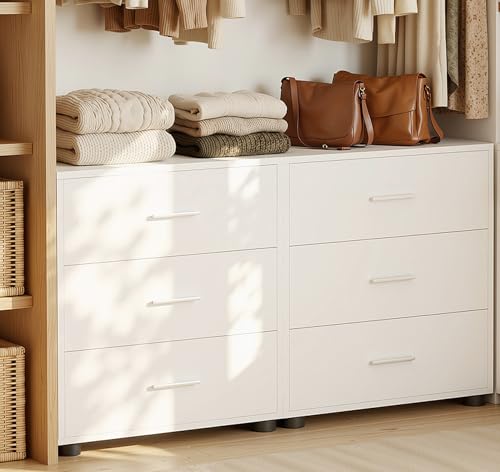
An inside closet dresser is a drawer-based storage unit designed or selected specifically to sit within a closet, wardrobe alcove, or walk-in storage area. Unlike a traditional bedroom dresser that faces the open room, a closet dresser is positioned where clothing is already stored, reducing the need to move folded items between zones.
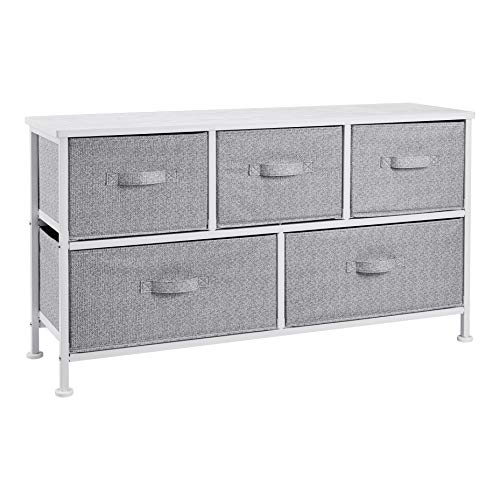
These units range from compact two-drawer cabinets that tuck under hanging rods to full-height chests with six or more drawers. Many models are designed with shallower depths to preserve walking clearance, while others are repurposed standard dressers placed thoughtfully within larger walk-in closets.
The concept overlaps with broader closet organization strategies. If you are exploring how dressers fit into compact footprints overall, our dressers for small spaces guide pairs well with this article. For a deeper look at the closet category itself, see our dressers for closet resource.
Why Put a Dresser Inside Your Closet?
Moving a dresser into the closet is not just a space-saving trick. It changes how you interact with your clothing and can simplify your entire morning routine.
- Reclaims bedroom floor space: Removing a dresser from the bedroom opens wall space for seating, artwork, or simply a calmer visual field.
- Consolidates storage: Folded clothing, undergarments, and accessories live in one zone alongside hanging garments.
- Reduces visual clutter: Drawers hide everyday items that would otherwise stack up on a bedroom dresser top.
- Improves workflow: Dressing becomes a single-stop task: open the closet, choose hanging items, and pull folded pieces from drawers in the same motion.
- Makes better use of awkward spaces: Deep closets, alcoves, and dead corners can become functional with a well-fitted drawer unit.
For households with limited bedroom square footage, this approach is often more effective than buying a larger dresser. Our small bedroom storage ideas guide expands on complementary tactics.
Reach-In vs Walk-In Closet Dressers
The type of closet you have determines what kind of dresser will actually work. A unit that fits beautifully in a walk-in closet may be unusable in a shallow reach-in closet because the drawers cannot open fully.
Reach-In Closets
Reach-in closets typically offer 24 to 30 inches of depth and limited floor area. The best approach is a narrow, tall dresser or a compact chest placed at one end of the closet. Shallow drawers (12 to 15 inches deep) are ideal because they leave room for the door to close and allow you to stand outside the closet while accessing contents.
Walk-In Closets
Walk-in closets provide more flexibility. You can place a standard-depth dresser against a side wall, use a longer low dresser as a folding station, or integrate a tall chest between hanging sections. The key constraint is walking clearance: aim for at least 24 to 30 inches in front of the unit so drawers can extend without blocking passage.
If you are working with a tall, narrow footprint, a high dresser or a narrow dresser can be an excellent fit for closet placement.
How to Measure Your Closet for a Dresser
Accurate measurements prevent the most common closet dresser mistake: buying a unit whose drawers cannot open. Follow these steps before you shop.
- Measure closet depth: From the back wall to the front opening or door. Subtract at least 24 inches for standing and drawer clearance.
- Measure available width: Identify a wall segment free of hanging rods, shelving, or door swing. Leave a few inches on each side for easy access.
- Measure height clearance: Check for shelves, hanging rods, or lighting fixtures above. A tall chest may not fit under a low shelf.
- Account for drawer extension: A 16-inch-deep dresser with full-extension drawers needs roughly 16 inches of forward clearance plus room to stand.
- Check door swing: If the closet has a swinging door, confirm the dresser does not block it. Sliding or bifold doors are more forgiving.
- Verify outlet and lighting access: If you plan to add lighting or a charging station, ensure outlets remain reachable.
For a broader breakdown of sizing standards across dresser categories, our dresser size guide provides reference dimensions you can compare against your measurements.
Choosing the Right Drawer Configuration
Drawer layout matters as much as overall dimensions. A well-planned configuration keeps folded clothing visible and accessible, while a poorly planned one leads to digging and clutter.
| Configuration | Best For | Typical Placement |
|---|---|---|
| 2–3 drawer compact chest | Reach-in closets, accessory storage, small bedrooms | End of closet, under short hanging section |
| 4–5 drawer standard dresser | Everyday folded clothing, walk-in closet side walls | Against a side wall with clearance in front |
| 6+ drawer tall chest | Full wardrobe storage, shared closets, vertical spaces | Between hanging sections or at the closet end |
| Wide low dresser | Folding station, walk-in closets with long wall space | Beneath a window or along a back wall |
Shallow top drawers are ideal for undergarments, socks, and accessories. Deeper lower drawers handle folded shirts, sweaters, and linens. If you share the closet, consider a unit with split drawer sizes so each person has a dedicated section.
For walk-in closets with vertical room, a tall dresser maximizes storage without consuming floor width. If you prefer a lower profile for folding, a wide dresser can serve double duty as a workspace.
Organizing an Inside Closet Dresser
Placement is only half the equation. How you organize the drawers determines whether the system stays functional over time.
Assign Drawers by Category
Dedicate each drawer to a single category: undergarments, socks, workout wear, folded tops, folded bottoms, and seasonal items. Clear categories reduce decision fatigue and make it obvious when something is out of place.
Use Drawer Dividers and Inserts
Dividers keep folded stacks upright and prevent the "drawer avalanche" that happens when items slide forward. Our drawer dividers guide covers options for different drawer widths.
Fold Vertically
Filing folded clothing upright, rather than stacking flat, lets you see every item at a glance. This method works especially well in shallow closet dresser drawers. See our folding clothes tips for step-by-step guidance.
Keep a Seasonal Rotation
Store out-of-season clothing in upper drawers or bins, and keep daily-use items in the most accessible drawers. Our seasonal clothing storage guide explains how to rotate efficiently.
Address Odors Early
Closets can trap moisture and stale air. If drawers develop a musty smell, follow our guide on how to remove musty smell from dresser drawers before organizing clothing inside.
For a complete framework, the dresser organization guide and closet organization ideas pair well with this article.
Materials and Build Quality
Closets are enclosed environments with limited airflow, so material choice affects both durability and odor resistance. Solid wood and high-grade engineered wood with sealed finishes hold up best over time. Particleboard with thin veneers may swell in humid closets and is best reserved for light-duty use.
Drawer hardware matters as much as the cabinet. Metal ball-bearing slides operate more smoothly than basic roller slides, and they hold up better under daily use. If you are comparing construction standards, our solid wood vs engineered guide explains the trade-offs clearly.
Storage Tier Comparison
To compare units without relying on numeric figures, use a tier framework:
- Essential tier: Basic engineered wood construction, standard roller slides, suitable for light use and short-term placement.
- Balanced tier: Sealed engineered or mixed wood, ball-bearing slides, good value for its class and a solid choice for most households.
- Premium tier: Solid wood or high-grade composite, full-extension slides, dovetail or reinforced joints, and durable finishes.
- Luxury tier: Hardwood construction, hand-finished surfaces, soft-close mechanisms, and long-term investment quality.
Mid-range models typically offer smoother drawer operation and better moisture resistance than entry-level units, while premium and luxury tiers add longevity and refined hardware.
Common Mistakes to Avoid
- Ignoring drawer extension: A dresser that fits the closet wall may still block passage when opened. Always measure open-drawer clearance.
- Buying before measuring: Closet dimensions vary widely. Measure depth, width, and height before shopping.
- Overlooking door swing: A swinging closet door can collide with a dresser placed too close to the opening.
- Choosing form over function: A decorative unit with shallow drawers may not hold folded clothing efficiently.
- Skipping ventilation: Enclosed closets need airflow to prevent musty odors. Leave a small gap behind the unit and avoid sealing the closet completely.
- Forgetting lighting: A dark closet makes drawers hard to use. Battery-powered or plug-in LED strips solve this without major electrical work.
Who Benefits Most From a Closet Dresser?
An inside closet dresser is especially useful for:
- Small bedroom owners: Freeing floor space is often the primary goal.
- Walk-in closet users: A dresser completes the closet as a full dressing room.
- Shared households: Dedicated drawers reduce cross-room clutter.
- Renters: Freestanding closet dressers require no installation and move easily.
- Guest room setups: A closet dresser gives guests dedicated storage without occupying the bedroom. Our guest bedroom storage ideas guide covers related strategies.
Frequently Asked Questions
What is an inside closet dresser?
An inside closet dresser is a storage unit placed directly within a closet, wardrobe, or walk-in space. It typically features drawers for folded clothing, accessories, or personal items and is designed to fit compact footprints where a traditional bedroom dresser would not.
How wide should a dresser be for a walk-in closet?
Aim to leave at least 24 to 30 inches of walking clearance in front of the dresser. Measure your closet depth and subtract that clearance to determine the maximum depth. Width depends on available wall space; narrow units around 30 inches wide work well in tight layouts, while 48 to 60 inch units suit larger walk-in closets.
What is the best drawer configuration for a closet dresser?
A mix of shallow top drawers for accessories and deeper lower drawers for folded clothing works best. Three to five drawers is typical for compact closet dressers, while taller units with six or more drawers suit walk-in closets with vertical space.
Can I put a regular dresser inside a closet?
Yes, if the closet has enough depth and clearance for the drawers to open fully. Measure the dresser depth plus drawer extension and ensure there is walking room. Standard bedroom dressers often work in walk-in closets, while compact or narrow dressers are better for reach-in closets.
Quick summary: Measure depth and drawer clearance first, choose a drawer configuration that matches your folded-clothing volume, and organize by category. A well-fitted inside closet dresser turns closet space into a functional dressing zone and frees up your bedroom floor.
For related reading, see our guides on how to choose a dresser and dressers for small spaces.