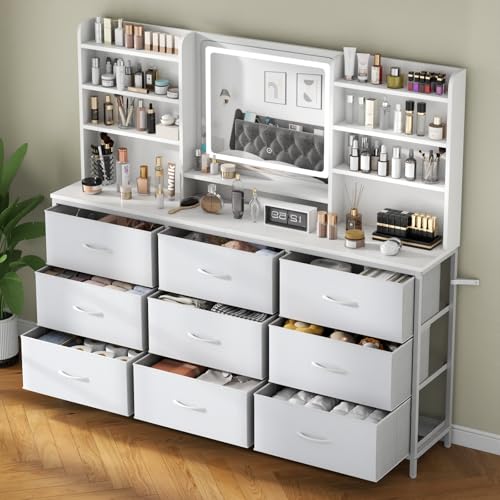
Dresser With Mirror Set: Complete Buying Guide
A dresser with mirror set combines storage and grooming in one coordinated piece. Use this guide to compare mirror styles, drawer layouts, materials, and fit before you decide.
Why this guide helps: A mirror set is more than two pieces sold together. The mirror changes the dresser's footprint, viewing angle, and safety requirements. The sections below walk through the decisions that matter most so you can narrow your options with confidence.
What a Dresser With Mirror Set Includes
A dresser with mirror set usually pairs a drawer chest with a framed mirror designed to sit on top or mount to the back. Some sets add a matching nightstand or bench. The mirror can be attached with brackets, rested on the dresser top with anti-slip pads, or hung separately on the wall above the dresser.
Understanding the attachment method matters. A top-mounted mirror is convenient but adds height and requires a stable base. A wall-mounted mirror frees the dresser top but needs wall anchoring. If you plan to rearrange the room often, a freestanding mirror with a secure bracket offers more flexibility.
Mirror Styles and Shapes
Mirror shape affects both the visual weight of the set and how usable the reflection is. Consider these common options:
- Rectangular mirror: The most versatile shape. It maximizes reflective surface and suits both modern and traditional dressers. A mid-range rectangular mirror with a slim frame is a practical default.
- Arched mirror: Softens angular furniture and adds a focal point. Arched mirrors work well above a low and wide chest of drawers.
- Rounded or oval mirror: A softer look that suits compact rooms. Oval mirrors can make a narrow dresser feel less boxy.
- Full-length mirror: Adds dressing functionality. Requires more wall height and careful placement so the reflection is usable.
- Frameless or beveled mirror: A clean, contemporary look. Beveled edges catch light and add depth without a heavy frame.
Frame material should match or deliberately contrast with the dresser. Wood frames feel cohesive; metal frames add contrast. If you are coordinating a wider room, review materials and finishes before settling on a frame tone.
Drawer Layout and Storage Capacity
The dresser half of the set determines day-to-day usability. A mirror set often works best with a balanced drawer layout rather than a tall, narrow stack, because the mirror sits above a wider surface.
- Three to four drawers: A common layout for compact sets. Shallow top drawers suit accessories; deeper lower drawers hold folded clothing.
- Five to six drawers: More separation for different garment types. Useful for shared bedrooms.
- Deep vs. shallow drawers: Deep drawers hold bulky items but can become disorganized. A chest dresser with deep drawers suits bedding and seasonal items.
Check drawer glide quality. Mid-range sets typically use smoother metal glides, while entry-level sets may use simpler slides. Drawer stops and dovetail joints are signs of sturdier construction. For more on construction quality, see the buying guides section.
Size and Room Fit
Measure before you compare sets. The mirror changes the vertical footprint, and the dresser depth affects walking clearance.
| Room Type | Suggested Dresser Width | Mirror Consideration | Best For |
|---|---|---|---|
| Small bedroom | Compact, single-bank width | Slim wall-mounted or flat bracket mirror | Entry-level to mid-range sets |
| Standard bedroom | Wide double-bank width | Rectangular or arched mirror | Mid-range sets |
| Primary suite | Extra-wide dresser | Large rectangular or full-length mirror | Premium to high-end tier sets |
| Guest or dressing room | Medium width | Full-length mirror for dressing | Balanced tier sets |
Leave at least a comfortable walking gap between the dresser front and the bed or closet doors. If space is tight, a compact small dresser paired with a wall-mounted mirror may fit better than a full set with an attached mirror.
Materials and Finish
Set construction ranges from engineered wood with veneer to solid wood. Each has trade-offs:
- Engineered wood with veneer: Stable and consistent. Common in entry-level and mid-range sets.
- Solid wood: Durable and repairable. A solid wood chest of drawers is a long-term investment when cared for.
- Painted finishes: A white or black painted set suits many decor styles. See white dresser and black dresser options for finish comparisons.
- Wood veneer tones: Cherry, walnut, and oak veneers add warmth. A cherry dresser or wood dresser pairs naturally with a wood-framed mirror.
Mirror frames should be finished consistently with the dresser. Check that the frame backing is sealed to prevent moisture damage in humid rooms.
Safety and Placement
Mirrors add weight and height, so anchoring matters. Follow these practices:
- Secure the dresser to the wall with an anti-tip strap, especially in homes with children or pets.
- Use the manufacturer's mirror bracket. If mounting separately, use wall anchors rated for the mirror's weight.
- Keep the mirror out of direct sunlight to reduce glare and fading of nearby finishes.
- Avoid placing heavy items on the dresser top directly in front of the mirror base.
- Check hardware every few months and tighten any loose brackets.
For rooms where safety is a priority, a chest of drawers for a children's room should always be anchored, and the mirror should be wall-mounted rather than resting loosely.
Coordinating With the Rest of the Bedroom
A mirror set often anchors the bedroom layout. Consider how it relates to the bed, nightstands, and lighting:
- Matching sets: A chest of drawers and nightstand set creates a cohesive look. A dresser set can include a mirror and nightstand together.
- Contrast: A dark dresser with a light-framed mirror adds visual interest.
- Lighting: Place a lamp or sconce so light reaches the mirror without creating harsh glare.
- Wall decor: If the mirror is wall-mounted, keep surrounding decor simple so the reflection stays clean.
If you are furnishing a full room, browse room ideas for layout inspiration before finalizing the set.
Comparing Set Tiers
Sets differ mainly in construction, hardware, and finish quality. Use tier descriptors rather than absolute figures when comparing:
| Tier | Typical Construction | Hardware | Best For |
|---|---|---|---|
| Entry-level | Engineered wood, basic veneer | Simple slides, basic pulls | Guest rooms, starter setups |
| Mid-range | Engineered wood with quality veneer or partial solid wood | Smooth metal glides, sturdier pulls | Primary bedrooms, daily use |
| Premium | Solid wood or high-grade engineered construction | Soft-close glides, refined hardware | Long-term use, design-focused rooms |
| High-end tier | Solid hardwood, hand-finished details | Premium soft-close, custom pulls | Statement pieces, heirloom intent |
Mid-range sets usually offer the best balance of durability and finish consistency for a mirror set used daily.
Common Mistakes to Avoid
- Buying the mirror before measuring wall height. An arched or full-length mirror may not fit under a sloped ceiling or window.
- Ignoring the dresser depth. A deep dresser in a narrow room blocks walking space.
- Overlooking drawer glide quality. Sticky glides make daily use frustrating.
- Skipping wall anchoring. A tall dresser with a mirror is a tip-over risk if unsecured.
- Mismatched finishes. Check frame and dresser finishes in person or request samples when possible.
Frequently Asked Questions
Is a dresser with mirror set suitable for a small bedroom?
Yes, when you choose the right proportions. A compact mid-range set with a single wide drawer bank and a slim mirror can fit well in a small bedroom. Measure wall space and walking clearance first, and consider a mirror that mounts flat against the wall.
How do I attach a mirror to a dresser safely?
Use the manufacturer's bracket or mirror supports. Attach the mirror to the dresser's back rail rather than the top surface, and secure the dresser to the wall with an anti-tip strap. Avoid leaning a large mirror against a wall without anchoring.
What drawer layout works best for a mirror set?
A mix of shallow top drawers for accessories and deeper lower drawers for folded clothing works well. Three to five drawers is typical. If the mirror sits close to the top, keep the top row shallow so items do not block the view.
Which mirror shape should I choose?
Rectangular mirrors maximize viewing area and suit most bedroom layouts. Arched and rounded mirrors soften angular furniture. Full-length mirrors add dressing functionality but require more wall height.
Do mirror sets require special care?
Clean the mirror with a non-ammonia glass cleaner and a soft cloth. Dust the frame regularly and check the mounting hardware every few months. Keep the mirror out of direct sunlight to reduce glare and fading of nearby finishes.
Ready to Compare Options?
Use the buying guides to shortlist sets by drawer layout, mirror style, and construction tier. Then check availability on your preferred retailer.
Explore Buying Guides