The Complete Guide to 6 Drawer Dressers
Discover why a 6 drawer dresser strikes the ideal balance between storage capacity and floor-space efficiency. Learn drawer layouts, sizing standards, material choices, and organization strategies before you decide.
START EXPLORINGWhy six drawers? A six-drawer configuration is one of the most versatile storage solutions in bedroom furniture. It offers roughly 50 percent more capacity than a four-drawer model while keeping the footprint manageable for most rooms.
Whether you are outfitting a primary bedroom, a guest room, or a small apartment, understanding how to evaluate a six-drawer dresser helps you choose a piece that stays functional for years.
What Is a 6 Drawer Dresser?
A 6 drawer dresser is a storage case piece with exactly six drawers, designed primarily for clothing and personal items in a bedroom. The term "dresser" in North American usage typically refers to a wider, lower piece that often includes a flat top surface for a mirror, lamp, or decorative display. In contrast, a six-drawer chest of drawers is usually taller and narrower, focusing on vertical storage.
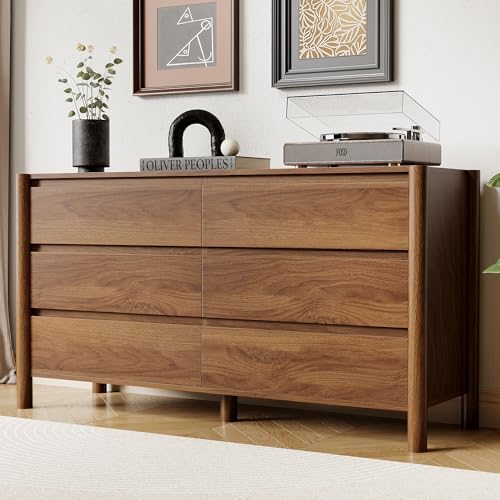
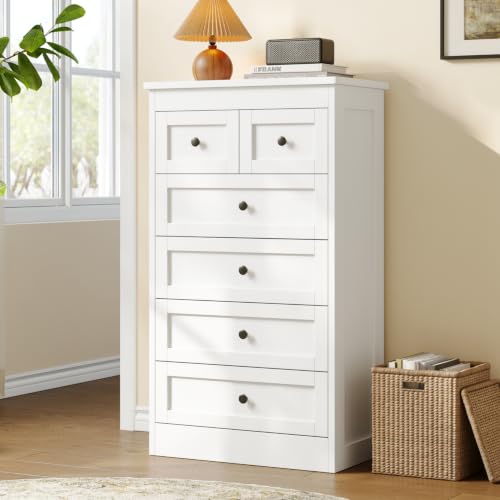
The six-drawer configuration comes in several layouts. A double dresser arranges the drawers in two side-by-side columns of three, yielding a wider profile. A tall six-drawer dresser stacks all six drawers vertically in a single column, creating a compact footprint. Some designs mix drawer sizes, placing deep drawers at the bottom and shallow drawers at the top for versatile storage.
Six-drawer dressers serve a broad range of needs. For a single adult, they hold roughly one to two weeks of folded clothing. For a couple sharing a bedroom, they provide enough space for shared essentials when paired with a closet. For a nursery, a six-drawer piece can double as a changing table dresser when fitted with a safety topper.
Drawer Layouts and Configurations
The layout of a six-drawer dresser affects how usable the storage feels day to day. Two primary configurations dominate the market, and each suits different room shapes and habits.
Double Dresser Layout (2 Columns x 3 Drawers)
This layout spreads six drawers across two columns, producing a wide, low profile. The top surface often spans 48 to 60 inches, providing generous space for a mirror or decor. Because each drawer remains relatively shallow in depth, items stay visible and accessible. This configuration works well in bedrooms with ample wall width but limited height.
Tall Chest Layout (1 Column x 6 Drawers)
A tall six-drawer dresser stacks all six drawers vertically, typically reaching 50 to 60 inches in height while occupying a footprint of roughly 36 by 18 inches. This arrangement suits narrow walls and small rooms where floor area is at a premium. The trade-off is that the top surface sits higher, which may not suit all mirror placements.
Mixed-Depth Layout
Some six-drawer models vary drawer depth within the same unit, placing deeper drawers at the bottom for bulkier items like sweaters and jeans, and shallower drawers at the top for accessories and delicates. This thoughtful configuration improves organization without adding overall footprint.
When comparing a six-drawer double dresser with a tall six-drawer dresser, consider your room's proportions. A wide dresser can anchor a large wall, while a tall model frees up floor space in a compact layout. Many buyers find that a mid-century modern six-drawer dresser combines a clean double-dresser profile with tapered legs that visually lighten the piece.
Size and Dimension Guide
Six-drawer dressers vary in size depending on layout and style, but most fall within predictable ranges. Knowing these ranges helps you plan for delivery, placement, and clearances.
| Configuration | Typical Width | Typical Height | Typical Depth | Best For |
|---|---|---|---|---|
| Double dresser (2x3) | 48–60 in | 30–36 in | 18–20 in | Wide walls, mirror placement, shared bedrooms |
| Tall chest (1x6) | 32–40 in | 50–60 in | 18–20 in | Narrow walls, small rooms, vertical storage |
| Wide six-drawer | 60–72 in | 30–34 in | 18–20 in | Large bedrooms, statement pieces, maximal storage |
If your room has a specific wall width in mind, our guides on the 48-inch wide six-drawer dresser, the 50-inch wide model, and the 60-inch wide option break down clearance and proportion considerations for each size class.
Clearance and Placement Rules
- Leave at least 30 inches of open floor space in front of the dresser for comfortable drawer access.
- Allow 2 to 3 inches of clearance between the top of the dresser and any wall-mounted mirror or artwork.
- Anchor tall six-drawer models to the wall, especially in households with children or pets.
- Confirm doorway and stairwell widths before ordering a wide double dresser.
Materials and Build Quality
Material choice directly influences durability, weight, and how the dresser ages. Six-drawer dressers are available across several material tiers, and each carries distinct trade-offs.
Solid Wood Construction
A six-drawer wood dresser built from solid oak, maple, walnut, or pine represents the premium and luxury tiers of the market. Solid wood resists warping, holds screw threads securely, and can be refinished if the surface wears. A solid wood six-drawer chest of drawers typically features dovetail or mortise-and-tenon joinery, which adds decades of service life.
Oak and maple sit at the higher end for hardness and dent resistance. Pine sits at the entry-to-mid tier, offering lighter weight and a softer, more rustic character. Walnut occupies the premium and luxury tiers, prized for its rich grain and dimensional stability. For a detailed look at wood-specific options, see our guide to the six-drawer oak chest of drawers and the six-drawer pine chest of drawers.
Engineered Wood and Veneers
Mid-range six-drawer dressers often use engineered wood cores with quality veneers. This construction is stable and resists seasonal movement, though it cannot be sanded and refinished as readily as solid wood. Look for thick veneers and sealed edges to extend service life.
Metal and Plastic Options
For utility-focused storage, a six-drawer plastic storage unit with wheels offers lightweight, mobile organization for dorms, closets, or craft rooms. These sit in the essential tier and suit temporary or secondary storage needs rather than primary bedroom furniture.
Hardware and Glides
Drawer glides determine how smoothly the dresser operates over time. Entry-level models may use simple wood-on-wood runners, while mid-range and premium models use side-mounted ball-bearing slides or under-mount soft-close mechanisms. Heavy-duty slides rated for frequent use are a hallmark of professional-grade construction. Check that drawer boxes are joined with dovetails rather than staples or glue alone.
Buying Criteria Checklist
Before committing to a six-drawer dresser, run through this checklist to ensure the piece meets your practical needs.
- Drawer count and depth: Confirm all six drawers are usable, not just decorative. Measure internal drawer depth to ensure it fits folded clothing stacks.
- Weight capacity: Check per-drawer weight ratings, especially for deep bottom drawers intended for denim or sweaters.
- Joinery: Prefer dovetail or box joints over stapled construction for longevity.
- Glide mechanism: Test smoothness and look for soft-close or full-extension slides at the mid-range tier and above.
- Stability: Wide dressers should include anti-tip hardware. Tall models require wall anchoring.
- Finish durability: Look for sealed, water-resistant finishes that resist rings and stains on the top surface.
- Assembly: If you prefer to skip assembly, explore six-drawer dressers that arrive already assembled.
- Matching pieces: For a coordinated bedroom, consider a six-drawer dresser and nightstand set or a six-drawer dresser with matching nightstand.
Organization Strategies for Six Drawers
Six drawers offer enough compartments to assign a clear purpose to each one. A consistent system prevents the dresser from becoming a catch-all.
A Six-Drawer Assignment Plan
- Top drawer (left): Undergarments and socks, using dividers to separate categories.
- Top drawer (right): Accessories, belts, and small folded items.
- Middle drawers: Folded tops such as t-shirts, blouses, and knitwear, filed vertically for visibility.
- Lower middle drawers: Bottoms including jeans, trousers, and skirts, rolled or folded into stacks.
- Bottom drawers: Bulkier items such as sweaters, loungewear, or off-season clothing in vacuum bags.
Folding and Dividers
Vertical filing, often called the KonMari fold, keeps every item visible and prevents deep stacks from collapsing. Adjustable drawer dividers compartmentalize socks, undergarments, and accessories. For a tall six-drawer unit, label each drawer on the inside edge to maintain the system over time.
Seasonal Rotation
Use the bottom drawers for off-season clothing and rotate contents twice a year. This keeps the most-used drawers free for current-season items and extends the effective capacity of the dresser without adding furniture.
For a deeper dive into drawer systems, see our full six-drawer bedroom dresser guide, which covers layout planning for shared bedrooms.
Room-by-Room Placement Ideas
Primary Bedroom
A wide double dresser with a mirror above creates a functional dressing station. Place the dresser on the wall opposite the bed to balance the room's visual weight. A six-drawer wood chest of drawers in a warm finish anchors a neutral palette.
Guest Room
Six drawers provide ample space for guest linens and spare bedding. A white six-drawer chest of drawers keeps the room bright and adaptable to changing decor.
Nursery
A six-drawer dresser with a changing topper serves double duty. Secure the unit to the wall and keep the top drawer reserved for diapering supplies. See our six-drawer changing table dresser guide for safety specifics.
Small Apartment
A tall six-drawer model fits narrow walls and preserves floor space. Pair it with under-bed storage for a complete small-space solution.
Closet or Dressing Room
A six-drawer dresser placed inside a walk-in closet centralizes folded storage and frees bedroom walls for other furniture.
Frequently Asked Questions
What are the typical dimensions of a 6 drawer dresser?
A standard six-drawer dresser typically ranges from 48 to 60 inches wide, 30 to 36 inches tall, and 18 to 20 inches deep. Tall six-drawer models may reach 50 to 60 inches in height while staying narrower at 32 to 40 inches wide. Double dressers stay closer to 32 inches tall.
How many clothes can a 6 drawer dresser hold?
A well-organized six-drawer dresser can hold approximately one to two weeks of clothing for one adult, including folded tops, bottoms, undergarments, and loungewear. Deep drawers accommodate bulkier items like sweaters, while shallow drawers suit accessories. Capacity depends heavily on folding technique and drawer depth.
Is a 6 drawer dresser good for a small bedroom?
Yes. A tall six-drawer model uses a footprint of roughly 36 by 18 inches while providing substantial storage capacity, making it an excellent choice for small bedrooms. The vertical orientation preserves floor space for circulation and other furniture.
What is the difference between a 6 drawer dresser and a 6 drawer chest?
A six-drawer dresser is typically wider and shorter, designed to double as a surface for decor or a mirror. A six-drawer chest is taller and narrower, focusing on vertical storage. Both hold the same number of drawers but serve different room layouts and visual roles.
What materials are best for a 6 drawer dresser?
Solid wood such as oak, maple, or pine offers the best durability and longevity. Oak and maple sit at the premium tier for hardness, while pine suits the entry-to-mid tier with a softer character. Engineered wood with quality veneers provides a stable mid-range option. For heavy-duty use, look for reinforced drawer joints and metal glide mechanisms.
Should I anchor a 6 drawer dresser to the wall?
Yes. All dressers, especially tall six-drawer models, should be anchored to the wall using anti-tip hardware. This is a critical safety measure in households with children or pets and is recommended by furniture safety standards regardless of the dresser's height.