
30 Inch Wide Cabinet with Doors: The Complete Buying Guide
Everything you need to know about choosing a narrow-profile cabinet that maximizes storage without overwhelming your space — sizing, door styles, materials, and organization tips.
Why Choose a 30 Inch Wide Cabinet with Doors?
A 30 inch wide cabinet with doors hits a sweet spot that many furniture shoppers overlook. It is wide enough to hold meaningful storage — linens, clothing, pantry goods, or office supplies — yet narrow enough to fit into spaces where larger furniture simply cannot go. For anyone working with a compact bedroom, a narrow hallway, a small bathroom, or an apartment with limited wall space, this width category is often the difference between cluttered surfaces and a genuinely organized home.
Unlike open shelving or drawer-only units, a cabinet with doors keeps contents concealed and protected from dust and light. Doors also make a room feel calmer because visual clutter disappears behind a clean facade. If you are comparing storage formats, our guide to 30 inch wide chest of drawers explains when drawers serve you better than doors, and when a hybrid approach makes sense.
Quick orientation: Cabinets with doors excel at storing items you want hidden and protected — stacked linens, tall bottles, boxed goods, or clothing on shelves. Drawers excel at items you access frequently and want to see at a glance. Many well-organized rooms use both.
Dimensions and Sizing: What 30 Inches Really Means
The "30 inch wide" label refers to the exterior width of the cabinet body. Interior usable width is typically 1 to 2 inches less once you account for side panels and door thickness. Depth and height vary considerably by category, so match the footprint to your available floor space and the cabinet's intended contents.
| Cabinet Category | Typical Width | Typical Depth | Typical Height | Best For |
|---|---|---|---|---|
| Base / Floor Cabinet | 30 in | 12–18 in | 30–36 in | Bathroom vanities, entryway storage, low media cabinets |
| Tall Storage Cabinet | 30 in | 14–18 in | 60–72 in | Bedroom clothing, hallway linens, pantry overflow |
| Wall-Mounted Cabinet | 30 in | 10–13 in | 24–36 in | Bathroom medicine storage, kitchen upper cabinets, garage |
| Wardrobe-Style Cabinet | 30 in | 20–24 in | 65–75 in | Hanging clothes, coats, full-length garment storage |
Measuring Your Space Correctly
Before shopping, measure the intended wall from baseboard to baseboard, then subtract at least 2 inches of clearance on each side for doors to swing open fully. For tall cabinets, confirm ceiling height and account for any crown molding. If the cabinet sits in a high-traffic path, measure the door swing radius and compare it to walkway width. A 30 inch cabinet with standard doors needs roughly 30 inches of clearance in front to open comfortably — sliding or bi-fold doors reduce that requirement significantly.
Also consider delivery access. A tall 30 inch cabinet may arrive fully assembled, and tight stairwells or narrow doorways can make placement difficult. Confirm the assembled dimensions with the retailer, not just the product's footprint.
Door Styles Compared: Function Meets Aesthetics
The door style you choose affects how the cabinet functions day to day, not just how it looks. Here is how the most common options compare.
Solid Slab Doors
A flat, unadorned panel with no recessed or raised detailing. Slab doors suit modern, minimalist, and Scandinavian interiors. They are easy to clean and hide contents completely. Their simplicity means hardware becomes the focal point, so choose pulls and knobs that match your room's character. Slab doors work especially well on modern navy dresser styles and other contemporary pieces.
Shaker-Style Doors
A five-piece construction with a flat center panel and a raised rectangular frame. Shaker doors are the workhorse of transitional and farmhouse interiors. The recessed panel adds visual depth without fussiness, and the style ages well. They are slightly harder to dust than slab doors because of the interior corners, but the trade-off is timeless appeal.
Glass-Front Doors
Glass panels display contents and add a sense of lightness. They are best for curated collections — folded linens, dishes, books, or decorative objects — rather than utilitarian storage. Frosted or textured glass offers partial concealment while still breaking up visual weight. Be aware that glass-front cabinets demand ongoing tidiness; everything inside is on display.
Louvered Doors
Horizontal slats allow airflow, making louvered doors a smart choice for humid environments such as bathrooms, laundry rooms, and coastal homes. They also hide contents effectively because the slats break up sightlines. Cleaning requires more effort because dust settles on each slat, but the ventilation benefit is real for moisture-prone storage.
Mirrored Doors
A mirrored cabinet doubles as a full-length or partial mirror, which is valuable in small bedrooms and dressing areas. Mirrors bounce light and make narrow rooms feel wider. The downside is fingerprint visibility and the need for regular glass cleaning. For a bedroom where the cabinet also serves as a dressing station, mirrored doors can replace a separate mirror entirely.
Door hardware matters: Soft-close hinges prevent slamming and protect fingers in busy households. If the cabinet includes drawers behind doors, check for full-extension slides — partial-extension slides make rear contents hard to reach.
Materials and Construction: What Determines Longevity
Material choice affects durability, weight, moisture resistance, and how the cabinet ages. Here is a practical breakdown of the most common options for a 30 inch wide cabinet with doors.
Solid Wood
Oak, maple, pine, and walnut are the classic cabinet woods. Solid wood accepts refinishing, develops character over time, and holds hardware securely. It is heavier and more sensitive to humidity swings than engineered alternatives, so solid wood cabinets benefit from stable indoor conditions. Pine is softer and dents more readily; oak and maple are harder wearing. For a deeper comparison, see our notes on brown oak dresser construction and why oak remains a benchmark for durability.
Engineered Wood (MDF and Particleboard)
Engineered wood cores with veneer or laminate faces offer dimensional stability and a smooth surface for painted finishes. Quality varies widely: dense, well-sealed MDF performs far better than lightweight particleboard in humid rooms. If you are considering a painted cabinet, our guide to dresser with painted finish explains how finish quality separates long-lasting pieces from short-lived ones.
Metal
Steel and aluminum cabinets resist moisture, do not warp, and suit industrial, garage, and utility settings. Powder-coated finishes resist rust, and metal cabinets are typically lighter than wood for the same volume. They can feel clinical in bedrooms, so consider placement carefully. Metal is often the most practical choice for laundry rooms and workshops.
Bamboo and Rattan
These renewable materials bring warmth and texture. Bamboo is harder than many conventional woods and resists moisture reasonably well. Rattan and cane webbing add breathability and a relaxed aesthetic, though they are less suited to heavy daily wear. They pair naturally with mid-century modern dresser with mirror silhouettes and boho interiors.
| Material | Durability | Moisture Resistance | Maintenance | Best Environment |
|---|---|---|---|---|
| Solid Oak / Maple | High | Moderate | Occasional oil or wax | Bedrooms, living areas, dry climates |
| Solid Pine | Moderate | Low–Moderate | Light dusting, occasional refinish | Bedrooms, casual interiors |
| MDF with Veneer | Moderate–High | Moderate (if sealed) | Damp cloth only | Bedrooms, offices, painted interiors |
| Powder-Coated Steel | High | High | Wipe clean | Bathrooms, laundry, garage, utility |
| Bamboo | High | Moderate–High | Damp cloth, avoid soaking | Bathrooms, kitchens, eco-conscious interiors |
Room-by-Room Placement Ideas
A 30 inch cabinet adapts to almost any room. Here is how to think about placement in the spaces where it performs best.
Bedroom
In a bedroom, a tall 30 inch cabinet can replace a bulky dresser when floor space is limited, holding folded clothing on adjustable shelves. Pair it with a dresser and nightstand combo for a cohesive storage plan. If the cabinet is primarily for clothing, choose a model with at least one adjustable shelf and consider interior hanging space for wrinkle-prone items.
Bathroom
Bathrooms are where door style and material matter most. Louvered or slatted doors improve airflow around damp towels and toiletries. Metal or sealed engineered wood handles humidity better than untreated solid wood. A 30 inch base cabinet with a countertop can serve as a compact vanity, while a wall-mounted version keeps the floor clear in small bathrooms.
Entryway and Hallway
A narrow 30 inch cabinet with doors is an excellent entryway solution for shoes, umbrellas, gloves, and pet supplies. Choose a depth of 12–14 inches to avoid blocking traffic in a hallway. If you need seating too, consider a cabinet paired with a bench rather than a single oversized unit.
Kitchen and Pantry
In kitchens, a 30 inch tall cabinet works as a compact pantry for dry goods, small appliances, and bakeware. Adjustable shelves accommodate different package heights. For pantry organization, pair the cabinet with drawer dividers for smaller items and labels for shelf zones.
Home Office and Craft Room
Office cabinets hide printers, paper reams, cables, and craft supplies. A lockable model is worth considering if you store sensitive documents. Glass-front options can display reference books and supplies attractively while keeping dust off them.
Laundry Room and Garage
In utility spaces, prioritize metal or heavy-duty engineered wood with powder-coated or sealed finishes. A 30 inch cabinet keeps detergents, tools, and cleaning supplies off surfaces and out of reach of children when fitted with child-safety latches.
Storage Features to Prioritize
Two cabinets with the same exterior dimensions can differ dramatically in usability. These are the features that separate a well-designed cabinet from a frustrating one.
- Adjustable shelving: Shelves that reposition on pegs or brackets let you adapt interior height to changing needs. At least two adjustable shelves is a reasonable baseline for a tall cabinet.
- Soft-close hinges: Quiet, finger-safe closing is especially valuable in households with children or in bedrooms where people sleep nearby.
- Full-extension drawers: If the cabinet includes internal drawers, full-extension slides expose the entire drawer interior. Partial-extension slides leave the rear third unreachable.
- Interior lighting: Battery-powered LED pucks or hardwired strip lights improve visibility in deep cabinets, particularly for dark-painted interiors.
- Ventilation: Louvered doors or ventilation cutouts prevent musty odors in humid rooms and protect stored textiles.
- Anti-tip hardware: Tall cabinets must be anchored to the wall. Confirm the cabinet ships with a wall-anchoring kit or that you can add one.
- Door dampers: Small bumpers or dampers prevent doors from banging against the cabinet frame.
- Removable shelves: Being able to pull shelves out entirely makes cleaning and reorganizing far easier.
Organization pairing: A 30 inch cabinet pairs naturally with clothes drawer organizer inserts if it has internal drawers, and with dresser with organizer solutions when the cabinet functions as a wardrobe supplement.
Quality Tiers Explained
Rather than tracking fluctuating figures, shoppers benefit from understanding how cabinets are positioned in the market. We use three consistent tiers throughout this guide: starter tier, balanced tier, and top-tier.
Starter Tier
Starter tier cabinets use thinner panels, basic hinges, and fewer adjustable shelves. They are appropriate for light-duty storage in dry rooms — a guest bedroom, a home office, or a dorm. Construction is typically flat-pack or partial assembly. The trade-off is shorter service life and less rigidity when the cabinet is moved.
Balanced Tier
Balanced tier cabinets add sturdier hinges (often soft-close), thicker shelving, and better bracing. Assembly is usually more substantial, and the cabinet may arrive mostly built. This is the tier where a 30 inch cabinet becomes a genuine long-term household fixture rather than a temporary solution. For most bedrooms and bathrooms, balanced tier offers the best combination of durability and refinement.
Top-Tier
Top-tier cabinets use solid wood or high-grade engineered cores, precision joinery, premium soft-close hardware, and fine finishes. Details like dovetailed internal drawers, full-extension slides, and furniture-grade veneers appear at this level. These cabinets are long-term investments intended to move between homes and accommodate changing storage needs.
| Feature | Starter Tier | Balanced Tier | Top-Tier |
|---|---|---|---|
| Panel construction | Thin engineered wood | Thicker engineered wood | Solid wood or premium core |
| Hinges | Basic self-closing | Soft-close | Premium soft-close, adjustable |
| Shelving | Fixed or minimal adjustment | Multiple adjustable positions | Adjustable, thick, removable |
| Finish | Laminate or basic paint | Sealed veneer or quality paint | Furniture-grade veneer or solid finish |
| Assembly | Flat-pack | Partial to full assembly | Often fully assembled |
| Best for | Light duty, temporary setups | Everyday household use | Long-term, high-use environments |
Buying Checklist Before You Commit
Run through this list before adding a 30 inch wide cabinet with doors to your cart. It prevents the most common post-purchase regrets.
- Measure twice, including clearance. Confirm width, depth, height, and door swing radius against your wall and walkway.
- Match material to environment. Humid rooms need moisture-resistant materials; dry bedrooms allow more flexibility.
- Check interior configurability. Count adjustable shelves and confirm drawer slides are full-extension if drawers are included.
- Verify safety hardware. The cabinet must include or accept wall-anchoring hardware, especially for tall models.
- Consider door swing direction. Reversible hinges let you change which side the door opens from — useful in tight corners.
- Plan for delivery. Confirm assembled dimensions and whether the cabinet arrives flat-packed or pre-built.
- Review the finish warranty. Finish and hardware warranties indicate the manufacturer's confidence in construction quality.
- Think about future needs. A cabinet that can shift between rooms — bedroom to office to bathroom — extends its useful life.
For related storage planning, explore our guides to chest of drawers for bedroom layouts and dresser and nightstand combo arrangements that pair well with a narrow cabinet.
Frequently Asked Questions
What are the standard dimensions of a 30 inch wide cabinet with doors?
A 30 inch wide cabinet with doors typically measures 30 inches in width, with depth ranging from 12 to 18 inches and height ranging from 30 to 72 inches depending on the model. These cabinets are designed to fit narrow spaces while providing substantial vertical storage. Interior usable width is usually 1–2 inches less than the exterior measurement once side panels and door thickness are accounted for.
Where can I place a 30 inch wide cabinet with doors in my home?
These cabinets work well in bedrooms as clothing storage, bathrooms for linens and toiletries, entryways for shoes and accessories, home offices for supplies, kitchens for pantry items, and laundry rooms for detergents and cleaning supplies. Their narrow profile makes them ideal for hallways and small alcoves where a full-size dresser or wardrobe would block traffic or crowd the room.
What door styles are available for 30 inch wide cabinets?
Common door styles include solid slab doors, shaker-style doors with recessed panels, glass-front doors for display purposes, louvered doors for ventilation, and mirrored doors that add light and visual space. Each style serves different functional and aesthetic purposes. Shaker doors suit transitional and farmhouse interiors; slab doors suit modern and minimalist rooms; louvered doors are preferable in humid spaces.
How do I choose the right material for a 30 inch wide cabinet?
Consider your environment and usage. Solid wood offers durability and natural beauty, engineered wood provides stability and consistency, metal is ideal for humid areas and industrial styles, and MDF with veneer offers a smooth painted finish. For high-humidity spaces like bathrooms, choose moisture-resistant materials such as powder-coated metal, sealed engineered wood, or bamboo. For bedrooms, solid oak or maple offers excellent longevity.
What storage features should I look for in a 30 inch wide cabinet with doors?
Look for adjustable shelving to customize storage height, soft-close hinges for quiet operation, full-extension drawers if applicable, interior lighting for visibility, ventilation cutouts for moisture control, and anti-tip hardware for safety. Some models include built-in organizers or removable shelves. Reversible hinges are a bonus in tight corners because they let you change the door swing direction.
Can a 30 inch cabinet with doors be used as a wardrobe?
Yes, if the interior height and depth are sufficient for hanging garments. A wardrobe-style cabinet at this width typically offers 20–24 inches of depth and 65–75 inches of height, which accommodates a hanging rod for shirts, dresses, and coats. For full-length garments, confirm the interior height leaves room for the rod plus garment length. If hanging space is limited, pair the cabinet with a separate antique wardrobe or a closet system.
Top 30 Inch Wide Cabinets with Doors for Every Space
⚠️ AFFILIATE DISCLOSURE: This website contains affiliate links. As an Amazon Associate, we earn from qualifying purchases. If you make a purchase through these links, we may receive a small commission at no additional cost to you. Read our full affiliate policy.
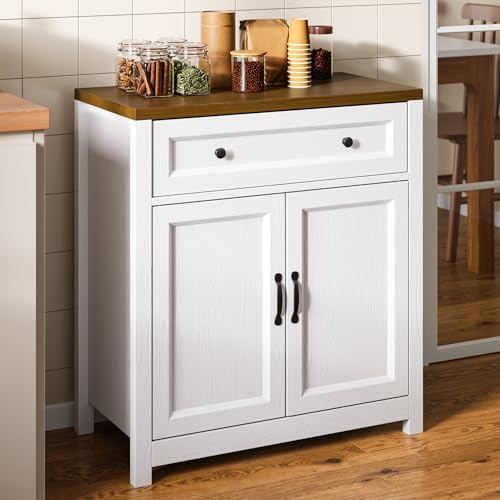
Gizoon Storage Cabinet with Adjustable Shelf, 2-Door Farmhouse Buffet | Barn Door, Large Drawer, Coffee Bar Sideboard, Fits Kitchen/Living/Entryway, Freestanding, 33.3"H x 15.6"D x 30"W
Check price on Amazon
Steeloong 71"Metal Pantry Storage Cabinet with Doors & 4 Adjustable Shelves | Kitchen Pantry Cabinet,White Kitchen Cabinet with 2 Gold Handles,Tall Cabinet for Livingroom,Pantry, Bathroom,Kitchen
Check price on Amazon
IDEALHOUSE 70" Tall Kitchen Pantry Cabinet with Doors and Adjustable Shelves, Tall Storage Cabinet for Dining Room, Freestanding Cupboard, Kitchen, Dining Room, Living Room, Gray
Check price on Amazon
ChooChoo 30" W Coffee Bar Cabinet, Kitchen Storage Cabinet with Drawer | Small Buffet Cabinet, Farmhouse Sideboard Buffet, Adjustable Shelf, Rustic White
Check price on Amazon
IDEALHOUSE 70"H Pantry Cabinet, Antique-White 4-Door, Adjustable Shelves | Wood Kitchen Pantry Storage Cabinet with 4 Doors & 5 Shelves, Dining Room, Kitchen, Living Room, Laundry Room
Check price on Amazon
GarveeHome 70in Tall Kitchen Pantry Cabinet, Storage Cabinet with Doors and Adjustable Shelves, Freestanding Cupboard for Living Room, Dining Room, Bathroom, White
Check price on Amazon
Itaar 70.9" Kitchen Pantry Cabinet,6 Door Shelves and 4 Drawers, White | Farmhouse Kitchen Storage Cabinets, Pantry Cabinet for Bathroom, Kitchen, Laundry Room
Check price on AmazonDisclaimer
The information provided on DresserAdvisor is for educational and informational purposes only. We are not furniture professionals, and our content should not replace professional advice from qualified furniture makers, interior designers, or safety experts. Some content may use AI assistance. Always check product safety standards and certifications before purchasing. If you do not agree, please do not use this website. Read the full disclaimer.