
Antique Wardrobe: A Complete Guide to Choosing a Timeless Piece
Antique wardrobes bring character, craftsmanship, and generous storage to any bedroom. This guide explains the major styles, the woods used, how to inspect condition, and how to care for a piece that can last for generations.
Jump to the Buying ChecklistWhat This Guide Covers
What Counts as an Antique Wardrobe?
In furniture terms, an antique wardrobe is a freestanding storage cabinet used for hanging clothes and, often, storing folded items, shoes, and accessories. It typically features one or two full-length doors, an internal hanging rail, and sometimes drawers or shelves at the base. The term "wardrobe" is used broadly across regions and can overlap with an armoire, a tallboy, or a clothes press depending on local conventions.
Age definitions vary. Many dealers treat pieces over 100 years old as antique, while "vintage" typically covers items 20 to 100 years old. For practical buying, the more useful question is whether the piece is genuinely period-made or a later reproduction. Construction details, hardware, joinery, and finish wear are the strongest indicators.
Major Antique Wardrobe Styles
Style affects both the visual character and the practical interior layout. The categories below are the most commonly encountered in the antique market.
Victorian and Edwardian Wardrobes
These pieces are often large, with carved cornices, panelled doors, and substantial bases. Victorian wardrobes frequently include a hanging section on one side and drawers on the other, a layout that remains highly practical today. Edwardian examples tend to be slightly lighter in proportion with cleaner lines.
Arts and Crafts Wardrobes
Arts and Crafts pieces emphasize honest construction, visible joinery, and straightforward forms. Oak is the dominant wood. These wardrobes often feature paneled doors, simple metal hardware, and a robust, grounded appearance that suits both period and modern interiors.
Art Deco and Early Modern Wardrobes
Art Deco wardrobes favor geometric lines, veneered surfaces, and polished hardware. Interiors may include fitted compartments and mirrors. For a broader look at storage pieces from this era, see our guide to antique Art Deco dressers.
Farmhouse and Country Wardrobes
These are often painted pine pieces with simple panel doors and a practical, unfussy interior. They are common in rural European traditions and pair well with relaxed, contemporary bedroom schemes.
Continental Armoire-Style Wardrobes
French, Dutch, and Belgian armoires typically have a narrower footprint and greater height, often with a crown or bonnet top. Many feature a single hanging section with a shelf above and drawers below.
Wood Types and Finishes
The wood species influences weight, durability, grain character, and how the piece ages. The table below summarizes the most common antique wardrobe woods.
| Wood | Character | Typical Use | Care Note |
|---|---|---|---|
| Oak | Heavy, durable, prominent grain | Victorian, Arts and Crafts, country pieces | Wax polish; avoid over-oiling |
| Mahogany | Rich reddish-brown, fine grain, takes carving well | Georgian, Victorian, Edwardian | Keep out of direct sun to prevent fading |
| Walnut | Dark, elegant grain; often veneered | Edwardian, Art Deco, continental pieces | Check veneer edges for lifting |
| Pine | Lighter weight, knotty, often painted | Farmhouse and country wardrobes | Painted surfaces may need gentle cleaning only |
| Cherry | Warm tone that deepens with age | American and continental pieces | Protect from prolonged direct light |
Original finishes are part of a piece's character and value. A worn but intact patina is generally preferable to a heavy refinish. If a wardrobe has been repainted, confirm that the paint is sound and that the underlying wood has not been compromised.
Anatomy of a Quality Wardrobe
Understanding the components helps you evaluate a piece quickly and ask better questions of a seller.
- Frame and carcass: Look for square, sound corners and consistent panel thickness. Dovetailed or mortise-and-tenon joints are strong indicators of quality construction.
- Doors: Test alignment, swing, and closure. Doors should not sag or rub against the frame. Original hinges and locks add authenticity.
- Hanging rail: Confirm that the rail is firmly fixed and that the internal height suits your longest garments.
- Drawers: Check runners, stops, and drawer bottoms. Drawers should slide without excessive wobble and close flush.
- Back panel: A solid, intact back panel contributes structural stability. Look for signs of patched repairs or water staining.
- Hardware: Handles, escutcheons, and hinges should be functional. Mismatched hardware is common and not necessarily a problem, but note it.
Sizes and Space Planning
Antique wardrobes vary widely in footprint and height. Measure your room carefully before committing to a piece, and account for door swing, ceiling clearance, and access along hallways and stairways.
- Width: Two-door wardrobes commonly range from narrow single-hanging designs to wide pieces with a drawer section. If your room is tight, compare with our guide to 30-inch wide cabinets with doors for proportion reference.
- Depth: Deeper wardrobes accommodate bulky outerwear; shallower pieces suit shirts and folded storage. Confirm that the depth clears door frames and walking paths.
- Height: Tall armoire-style pieces can exceed typical modern ceilings in older homes. Measure the room's clearance and the height of doorways on the route into the room.
- Interior layout: Decide whether you need predominantly hanging space, shelving, drawers, or a combination. Many period wardrobes can be adapted with a fitted rail or removable shelves.
Condition Inspection Guide
Condition is the single most important factor in a long-term purchase. Work through the checks below systematically, ideally in daylight.
Structural Checks
- Stand back and sight along the frame for warping or leaning.
- Press gently on corners and joints to detect looseness.
- Open and close every door and drawer several times.
- Inspect the base and feet for rot, splitting, or past repairs.
Surface and Finish Checks
- Look for lifting veneer, especially along edges and corners.
- Check for water rings, burns, and deep scratches.
- Note any signs of woodworm: small flight holes and fine dust.
- Confirm whether the finish is original, waxed, or refinished.
Hardware and Function Checks
- Test locks and keys; replacements are possible but should be noted.
- Check hinge screws for stripping or splitting in the frame.
- Verify that drawer runners are intact and that stops function.
Antique Wardrobe Buying Checklist
Use this checklist before you commit. It is organized so that you can work through it quickly in a showroom, auction preview, or private sale.
- Measure first: Room width, ceiling height, doorway width, and the route from entrance to bedroom.
- Confirm the interior layout: Hanging height, shelf spacing, and drawer depth for your actual wardrobe contents.
- Inspect structure: Frame squareness, joint tightness, door alignment, and drawer function.
- Inspect surfaces: Veneer integrity, finish condition, and signs of woodworm or rot.
- Check hardware: Hinges, locks, handles, and keys.
- Ask about provenance: Origin, previous repairs, and any restoration work.
- Plan transport: Antique wardrobes are heavy and often cannot be dismantled. Confirm access and moving logistics.
- Plan placement: Avoid direct sunlight, radiators, and damp exterior walls.
If you are also furnishing the rest of the room, our broader dresser guides can help you coordinate storage pieces and maintain a consistent period or modern look.
Care and Maintenance
Antique wardrobes respond well to consistent, gentle care. The goal is to preserve original surfaces and maintain structural stability.
- Dust regularly with a soft, dry cloth. Avoid abrasive cleaners and silicone-based polishes.
- Control humidity and avoid placing the wardrobe against damp walls or directly next to radiators.
- Limit direct sunlight to prevent fading and drying of veneers and finishes.
- Use wax polish sparingly on waxed surfaces; test any product on a hidden area first.
- Address loose joints and hinges promptly to prevent further movement and damage.
- Check periodically for woodworm activity, especially in older pine and oak pieces.
Recommended Antique Wardrobes and Storage Pieces
⚠️ AFFILIATE DISCLOSURE: This website contains affiliate links. As an Amazon Associate, we earn from qualifying purchases. If you make a purchase through these links, we may receive a small commission at no additional cost to you. Read our full affiliate policy.

TOKSOM 4 Doors Freestanding Armoire Wardrobe Closet, 72" Walnut Wardrobe Armoire Wooden Closet Large Capacity Storage with 3 Drawers & 3 Hanging Rod Shelves Clothes Organizer
Check price on Amazon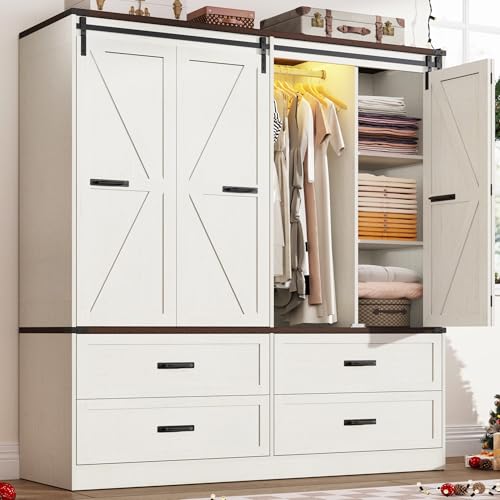
Farmhouse 4 Doors Armoire Wardrobe Closet w/Folding Sliding Barn Door and Lights, LED Armoire Closet w/Drawers for Bedroom, Freestanding Wooden Wardrobe Storage Closets w/Hanging Rod,Antique White
Check price on Amazon
LIKIMIO Armoire Wardrobe Closet 70" with 2 Drawers for Bedroom, White | Farmhouse Wardrobe with Roman Column Doors, Hanging Rod and Side Hooks for Clothing Storage and Organization in Bedrooms
Check price on Amazon
Seang Arched Armoire Wardrobe Closet,70" Wooden Wardrobe Cabinet with 2 Drawers,Hanging Rod,2 Doors Clothing Storage Cabinet for Bedroom,Gym,Cloak Room,Natural
Check price on Amazon
Sauder Palladia Armoire, Vintage Oak finish
Check price on Amazon
75" Tall Farmhouse 4 Doors Armoire Wardrobe Closet with 3 Drawers and LED,Freestanding Closet Wardrobe Cabinet for Bedroom with Hanging Rod,Wooden Armoire Storage Cabinet Adjustable(Rustic Off White)
Check price on Amazon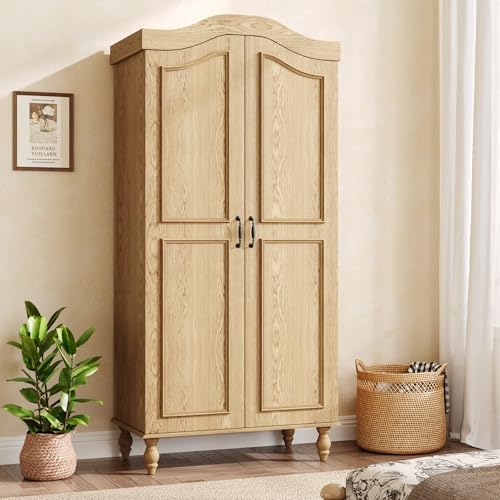
NDOHCUO 71" H Arched Armoire Wardrobe Closet with 2 Doors, Natural | Wooden Wardrobe Cabinet with Hanging Rod and Shelves, Freestanding Armoire Storage Cabinet for Bedroom, Cloak Room
Check price on Amazon
VOWNER 71"H Armoire Wardrobe Closet with 3 Drawers and Mirror | Clothing Storage Cabinet with Hanging Rod, 4 Doors Wooden Wardrobe Cabinet for Bedroom, Large Capacity Storage
Check price on AmazonFrequently Asked Questions
How can I tell if a wardrobe is truly antique?
Look for hand-cut dovetail joints, hand-forged nails, wood shrinkage, patina, and wear patterns consistent with age. Original labels, maker's marks, and construction techniques are strong indicators. When in doubt, consult a qualified appraiser.
Which wood types are most common in antique wardrobes?
Oak, mahogany, walnut, pine, and cherry are the most common. Oak is durable and heavy, mahogany and walnut are prized for grain and color, pine is lighter and often painted, and cherry develops a rich patina over time.
What should I check before buying an antique wardrobe?
Check the frame for warping, inspect drawer runners and hinges, test doors for alignment, look for woodworm or rot, verify that hardware is functional, and confirm the piece fits your space and ceiling height.
How do I care for an antique wardrobe?
Dust regularly with a soft cloth, avoid direct sunlight and humidity extremes, use a wax-based polish sparingly, maintain stable indoor humidity, and address loose joints or hardware promptly with professional help.
Can an antique wardrobe be adapted for modern use?
Yes. Many period wardrobes can be fitted with an additional hanging rail, removable shelves, or interior lighting. Retain original components where possible so the piece can be returned to its original configuration.
Ready to Choose Your Antique Wardrobe?
Use the checklist above, compare interior layouts, and confirm condition before you commit. A well-chosen antique wardrobe is a long-term investment in both storage and character.
Explore Recommended Pieces