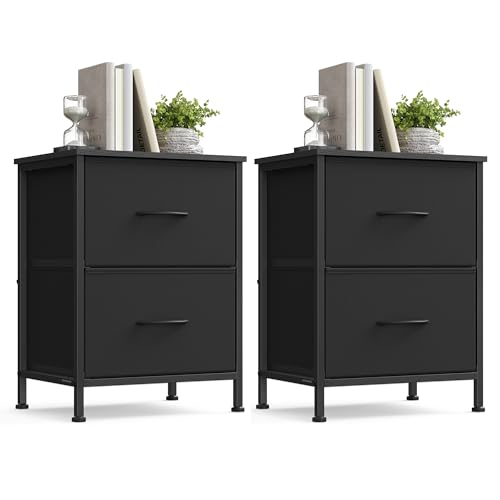
2 Bedside Tables and Chest of Drawers Set: The Complete Buyer's Guide
Learn how to evaluate sizes, drawer layouts, materials, and finishes so you can choose a coordinated bedroom storage set that fits your space and your daily routine.
Why a coordinated set makes sense: A two bedside tables and chest of drawers set removes the guesswork from bedroom storage. Instead of hunting for pieces that may or may not match, you get a consistent finish, matching hardware, and balanced proportions — all designed to sit together in one room.
What's Included in a 2 Bedside Tables and Chest of Drawers Set
A typical set is built around three pieces: two matching bedside tables — also called nightstands — and one chest of drawers. The nightstands are usually identical, designed to flank either side of the bed, while the chest serves as the main clothing storage piece. Some sets pair a chest with a wider dresser instead, and others bundle in a mirror or a bench. Before you commit, confirm exactly which pieces are in the box so you aren't surprised by a missing nightstand or an extra piece you don't need.
The most common configuration places the chest against a wall opposite the bed or along a side wall, with the two nightstands positioned within arm's reach of the mattress. This arrangement keeps the room visually balanced and puts the pieces you use most often — a lamp, a book, a glass of water — exactly where you need them.
If you want to compare this setup against related configurations, our guides on a 2 night stands and dresser set and a 2 piece dresser and nightstand set break down how the piece count changes the footprint and the storage capacity.
Why Choose a Coordinated Bedroom Storage Set
Bedrooms are the hardest rooms to furnish because the furniture has to do double duty: it needs to store a lot and still look calm and uncluttered. A coordinated set solves both problems at once. The finish matches across every piece, the hardware is identical, and the drawer fronts align visually, which makes even a modest bedroom look intentional and pulled together.
There's also a practical benefit. Buying the chest and the nightstands together usually means the manufacturer has already tested the proportions against each other. A tall chest won't dwarf the nightstands, and the nightstand height will usually sit comfortably next to a standard mattress height. That kind of coordination is difficult to replicate when you buy three separate pieces from three different sellers.
For anyone furnishing a guest room, a first apartment, or a primary bedroom from scratch, a set is the simplest path to a finished-looking room. If you prefer more flexibility, a 2 piece dresser set with mirror gives you a different mix of pieces while keeping the coordinated look.
Sizes and Dimensions: Getting the Proportions Right
The single most common mistake when buying bedroom storage is underestimating how much floor space a chest of drawers actually occupies once the drawers are open. A chest needs roughly 24 inches of clearance in front of it for the drawers to slide out fully, and the nightstands need enough room beside the bed for a person to stand and reach the drawers comfortably.
Start by measuring the wall where the chest will live, then subtract door swings, closet doors, and walkways. A chest between 30 and 48 inches wide suits most bedrooms. Narrower chests — in the 24 to 32 inch range — work well in compact rooms and along short walls. Wider chests, from 40 inches up, give you more drawer width and often a more substantial visual anchor for the room.
For nightstands, height matters more than width. Ideally, the top of each nightstand sits within a couple of inches of the mattress top, so you can reach a lamp or a phone without stretching. A 24 to 28 inch wide nightstand is the standard for most beds, while narrower options suit tight spaces between the bed and the wall.
| Room Type | Chest Width Range | Nightstand Width Range | Best For |
|---|---|---|---|
| Compact bedroom | 24–32 inches | 18–22 inches | Tight walls, small footprints |
| Standard bedroom | 36–42 inches | 22–26 inches | Most primary and guest rooms |
| Spacious bedroom | 44–48+ inches | 26–28 inches | Large walls, shared storage |
| Guest or kids' room | 30–36 inches | 18–24 inches | Balanced storage without bulk |
If your room is particularly tight, our guide to 24 inch wide dressers covers the narrowest practical options, while the 36 inch wide dresser page explains why that width is often the sweet spot for a standard bedroom. For wider rooms, a 48 wide dresser gives you substantially more drawer real estate.
Drawer Count and Layout: Matching Storage to Your Routine
Drawer count is less about raw numbers and more about how you fold and sort. A four-drawer chest with deep bottom drawers suits folded sweaters and jeans, while a five- or six-drawer chest with a mix of shallow and deep drawers works better for someone who sorts by category — underwear in one shallow drawer, t-shirts in the next, and bulkier items at the bottom.
Three-drawer chests are the most compact and are often the right choice for guest rooms where storage needs are modest. Four- and five-drawer chests are the most versatile and fit the widest range of bedrooms. Six or more drawers suit shared bedrooms or anyone who keeps most of their clothing in drawers rather than a closet.
Don't overlook the nightstand drawers. Two or three drawers per nightstand is typical, and the top drawer is usually shallow — ideal for small items like chargers, reading glasses, and medications. If you need more bedside storage, a 3 drawer dresser nightstand combines the footprint of a nightstand with a bit more capacity.
For a full comparison of how drawer counts change storage behavior, see our breakdown of 3 drawer chest of drawers in wood and the wider 4 drawer chest dresser category.
Materials and Construction: What to Look For
Construction quality is the biggest differentiator between an entry-level set and a premium one, and it's the part most buyers overlook. At the entry-level end, you'll typically find engineered wood panels with a printed or veneered finish, stapled or cam-lock assembly, and basic drawer slides. These sets can look perfectly good in photos, but the drawers may feel less smooth over time and the finish is more vulnerable to chipping.
Mid-range sets usually upgrade the drawer slides to ball-bearing or soft-close mechanisms, use thicker panels, and add reinforced corner blocks. Premium and luxury sets move toward solid wood frames, dovetail or doweled drawer joints, and heavier hardware. These are the pieces that tend to become long-term investments — furniture you keep through multiple moves rather than replace after a few years.
Drawer Slides
Look for ball-bearing or soft-close slides. They reduce noise and wear, and they make daily use noticeably smoother.
Joinery
Dovetail and doweled joints are stronger than stapled construction. Check the drawer box, not just the front.
Finish
A consistent finish across all three pieces is the whole point of a set. Check for edge sealing and even coverage.
Hardware
Matching knobs and pulls across the chest and nightstands keep the set visually unified. Metal hardware should feel solid, not hollow.
Stability
Anti-tip straps are essential for chests, especially in homes with children. Confirm they're included or available.
Assembly
Some sets arrive fully assembled; others require flat-pack assembly. Factor in the time and tools before you buy.
Material choice also affects how the set ages. Solid wood can be refinished and repaired, while veneered engineered wood is stable and resistant to seasonal movement but harder to repair if damaged. Neither is inherently better — it depends on whether you want a piece you can refinish down the road or one that holds its factory finish with minimal upkeep.
Style and Finish: Making the Set Work in Your Room
A coordinated set already gives you visual consistency, but the finish still has to work with the rest of the room. White and light finishes open up small or dim bedrooms and pair easily with almost any bedding. Natural wood tones — oak, walnut, pine — add warmth and work well in rooms with neutral walls. Black and dark finishes create contrast and a more grounded, hotel-like feel.
Style matters too. Modern sets tend to have clean lines, flat drawer fronts, and minimal hardware. Farmhouse and rustic sets use paneled fronts, distressed finishes, and chunkier hardware. Mid-century sets favor tapered legs and warm wood tones. None of these is inherently better — the right choice is the one that matches the architecture of your home and the bedding you already own.
If you're leaning toward a specific look, our pages on 30 inch wide dressers and 40 wide dressers show how finish and width interact across different room sizes.
Placement and Room Layout: Where the Pieces Should Go
The classic layout places the two nightstands symmetrically on either side of the bed, with the chest of drawers on the opposite wall or along a side wall. This arrangement works in most rectangular bedrooms and keeps the walkway between the bed and the chest clear.
If the room is narrow, consider placing the chest on the wall adjacent to the bed rather than opposite it — this keeps the floor space in front of the bed open. In very small rooms, a chest can double as a nightstand on one side of the bed, though this only works if the chest height is close to mattress height.
Leave at least 24 inches in front of the chest for drawer clearance, and keep nightstands close enough to the bed that you can reach them while lying down. If the room has a closet with a swinging door, make sure the chest doesn't block the door's arc.
Measure twice, buy once: Tape out the footprint of the chest and both nightstands on the floor before ordering. Walk the room for a few days with the tape in place — it's the fastest way to catch a layout problem before the furniture arrives.
Comparing Tier Options for a Bedside Table and Chest Set
Buyers often wonder how much quality changes between tiers. The table below uses universal tier descriptors — entry-level, mid-range, premium, and luxury — rather than any specific figure, so you can see what each tier typically delivers in construction and features.
| Tier | Construction | Drawer Slides | Best For |
|---|---|---|---|
| Entry-level | Engineered wood, cam-lock assembly | Basic side-mount slides | Guest rooms, first apartments, short-term use |
| Mid-range | Thicker panels, reinforced corners, veneered finish | Ball-bearing or soft-close slides | Primary bedrooms, daily use, balanced durability |
| Premium | Solid wood frames, dovetail drawer boxes | Soft-close undermount slides | Long-term use, homeowners, design-focused rooms |
| Luxury | Solid hardwood, hand-finished details, premium hardware | High-end undermount, self-closing | Statement bedrooms, heirloom-quality furniture |
Most buyers land in the mid-range tier because it offers the best balance of durability and construction quality for everyday use. Entry-level sets can work well in low-traffic rooms, while premium and luxury sets make sense when the furniture is meant to last for decades. The key is matching the tier to how hard the set will be used — a guest room doesn't need the same construction as a primary bedroom.
A Practical Checklist Before You Buy
Before you commit to a set, run through these checks. They take only a few minutes and catch the most common sources of buyer regret.
- Measure the wall where the chest will go, then subtract door swings and walkway clearance.
- Confirm the nightstand height sits within a couple of inches of your mattress top.
- Check the drawer count and layout against how you actually fold and sort clothing.
- Verify the finish matches your existing bedding, wall color, and floor tone.
- Read the construction details — drawer slides, joinery, and panel thickness.
- Confirm whether anti-tip hardware is included.
- Check whether assembly is required and what tools you'll need.
- Compare the set against buying pieces separately if you need different sizes.
Related Bedroom Set Configurations to Consider
Not every bedroom needs the same combination of pieces. If you're still deciding on the right mix, these related configurations are worth reviewing:
- A 2 piece dresser and chest set skips the nightstands and gives you two larger storage pieces instead.
- A 3 piece dresser and nightstand set adds a dresser to the nightstands, which works well for larger rooms.
- A 4 piece dresser and nightstand set expands further, often with a mirror or bench included.
- If you need two matching tall pieces instead of a wide chest, a 2 tall dressers side by side setup offers a different footprint.
- For a smaller bedside-focused arrangement, a 2 drawer dresser can work as a compact nightstand alternative.
Frequently Asked Questions
What is included in a 2 bedside tables and chest of drawers set?
A complete set typically includes two matching bedside tables (nightstands) and one chest of drawers. The pieces share the same finish, hardware, and design language, giving a coordinated bedroom look without the effort of mixing and matching separately.
How wide should a chest of drawers be for a typical bedroom?
For most bedrooms, a chest of drawers between 30 and 48 inches wide works well. Narrower chests suit small rooms and tight walls, while wider chests offer more drawer space and can serve as a focal piece. Always measure your wall and leave clearance for doors and walkways.
Are bedside tables and chests sold as sets better than buying pieces separately?
Sets offer a guaranteed match in finish, hardware, and proportions, which saves time and reduces styling decisions. Buying separately gives more flexibility if you need different sizes or want an eclectic look. Sets are usually the more convenient choice for a cohesive bedroom.
What material is best for a bedside table and chest set?
Solid wood is the most durable option and ages well, while engineered wood with quality veneers offers a stable, consistent finish. Mid-range and premium sets often use solid wood frames with reinforced joinery and soft-close drawer slides for smoother daily use.
How many drawers should a chest of drawers in a set have?
Three to five drawers covers most clothing storage needs. Taller chests with five or more drawers suit smaller footprints, while wider four-drawer chests work well for shared bedrooms. Consider your folding habits and how much clothing you store in drawers versus a closet.
Final Thoughts
A two bedside tables and chest of drawers set is one of the most practical furniture purchases you can make for a bedroom. It solves the matching problem, the proportion problem, and the storage problem at once — provided you measure carefully and choose a tier that matches how hard the set will be used.
Start with the room, not the furniture. Measure the walls, note the door swings, and mark out the footprint of each piece. Then choose the drawer layout and construction tier that fits your routine. If you do those two things in that order, the set you choose will feel right on day one and stay right for years.