
2 Tall Dressers Side by Side: The Complete Layout & Buying Guide
Placing two tall dressers side by side is one of the smartest ways to multiply bedroom storage without giving up floor space. This guide explains sizing, symmetry, safety, and how to choose a pair that works together beautifully.
Why Pair Two Tall Dressers Side by Side?
A tall dresser uses vertical space that wide, low dressers leave empty. When you place two tall dressers next to each other, you create a storage wall that reaches upward rather than outward — ideal for bedrooms with limited floor area but generous wall height. This arrangement is particularly popular in primary bedrooms, guest rooms, and shared spaces where two people need separate drawer zones.
The benefits go beyond raw capacity:
- Doubled drawer count. Two tall units typically deliver 8–12 drawers combined, enough to separate clothing by category or by person.
- Smaller footprint. Each unit stays narrow, so the pair hugs the wall instead of protruding into walking space.
- Symmetrical focal point. A matched pair frames a bed, window, or artwork with pleasing balance.
- Flexible separation. The pair can later be split into two rooms if your needs change.
If you are still deciding between furniture forms, our breakdown of the difference between a dresser and a chest of drawers clarifies which silhouette suits your room. For buyers who want maximum drawer count in a vertical format, a 10-drawer tall chest of drawers is a natural candidate for doubling up.
How Tall Is a Tall Dresser?
There is no universal standard, but the furniture industry generally treats anything above roughly 40 inches as tall. Within the tall category, three sub-ranges matter when you plan a side-by-side pair:
- Mid-tall (about 40–48 inches). Comfortable eye-level access to the top drawers; the top surface remains usable as a display or catch-all area.
- Tall (about 48–56 inches). The classic tallboy proportion — the top drawer sits near shoulder height for most adults.
- Extra-tall (56 inches and above). Maximum vertical storage, but the top drawers require reaching. Best against a full-height wall with nothing mounted above.
When pairing, keep both units within the same sub-range. A 44-inch unit beside a 58-inch unit creates a visual step that can look accidental rather than intentional. If you want a specific benchmark, our notes on a 40-inch tall dresser and a 30-inch tall dresser show how height changes usability and styling options.
Pro tip: Measure from the floor to the bottom of any window sill, wall art, or light switch on the intended wall. The taller of your two dressers should sit at least a few inches below the lowest obstruction so the pair reads as one clean block.
Sizing & Wall Spacing for a Side-by-Side Pair
Width is where most side-by-side plans succeed or fail. Two narrow tall dressers can fit a wall that one wide dresser cannot, but the combined width plus clearance still needs to be checked. Use this planning sequence:
- Measure the available wall length between baseboards, doors, and any furniture that must stay.
- Add the two dresser widths together. Allow a gap of roughly 2–6 inches between them so drawers on adjacent sides can open without colliding.
- Reserve side clearance. Leave at least 2–4 inches on the outer edges for baseboard trim and air circulation.
- Check drawer pull-out depth. Each drawer needs its full depth of clear floor space in front — usually 15–18 inches — before it hits a bed or walkway.
Narrow tall units are the easiest to pair. A 24-inch wide dresser paired with another 24-inch unit gives you a 48-inch storage wall plus a center gap. If your wall is tighter, a 20-inch wide dresser pair can squeeze into a 42–44 inch span. On the opposite end, a 48-inch dresser is already wide enough that doubling it usually requires a full bedroom wall.
| Pair Configuration | Approx. Combined Width | Best For | Tier Note |
|---|---|---|---|
| Two 20-inch wide tall dressers | ~42–44 in with gap | Tight alcoves, small bedrooms | Entry-level to mid-range |
| Two 24-inch wide tall dressers | ~50–52 in with gap | Standard bedroom wall | Mid-range sweet spot |
| Two 30-inch wide tall dressers | ~62–66 in with gap | Primary bedroom storage wall | Mid-range to premium |
| Two 36-inch wide tall dressers | ~74–78 in with gap | Large bedrooms, shared rooms | Premium to luxury |
For rooms where wall length is the hard constraint, our guide to dressers for small spaces covers complementary strategies such as corner placement and vertical shelving.
Symmetry & Visual Balance
Two tall dressers placed side by side create a strong vertical rhythm. Whether that rhythm feels intentional or awkward depends on a few design decisions:
Match heights and tops
Identical heights let the top surfaces form a continuous line, which you can style as one long display. Slightly mismatched heights can work if you deliberately step them — for example, centering the shorter unit beneath a taller one — but a near-match that is off by an inch or two tends to look like an error.
Align the drawer lines
Drawers that line up across both units create a subtle horizontal grid. Units with different drawer counts (say, a 4-drawer beside a 5-drawer) break that grid. This is not automatically bad — it can add character — but it requires more deliberate styling.
Use the center gap intentionally
A narrow gap between the units can hold a slim lamp, a tall plant, or a laundry hamper. A wider gap can be treated as a mini niche with a mirror or artwork. If the gap is purely functional clearance, keep both units flush to the wall and let the gap read as a shadow line.
For styling ideas that work across both units, see our dresser styling tips and dresser top decor guides.
Safety & Anti-Tip Essentials
Tall furniture carries a higher tip-over risk than low dressers, and a pair doubles the number of anchors you need. Treat anti-tip hardware as non-negotiable, not optional.
- Anchor both units. Use the wall-anchoring kit supplied with each dresser, or a furniture strap rated for the unit's weight.
- Anchor into studs or use appropriate wall anchors. Drywall alone will not hold under a sudden load.
- Keep heavy items low. Store dense clothing and folded linens in the bottom drawers of both units.
- Avoid climbing hazards. Do not place stools or low shelves beside the dressers that a child could use to climb.
- Check drawer stops. Drawers that pull all the way out shift weight forward; full-extension slides with stops are safer for tall units.
If the pair sits in a nursery or a room used by young children, cross-reference the safety notes in our nursery dressers guide before finalizing placement.
Matching vs. Contrasting Styles
There are two credible approaches to styling a side-by-side pair, and both can look polished when executed with intent.
The matched pair
Two identical tall dressers are the safest choice. They guarantee matching heights, drawer alignment, hardware, and finish. Matched pairs are especially effective in modern, minimalist, and transitional bedrooms where repetition reads as order. If you want the pair to be the room's anchor, matching is the default.
The intentional mismatch
Two different tall dressers can work if they share at least one visual thread: the same wood tone, the same hardware finish, or the same leg style. A common recipe is two units of similar height but different drawer configurations — for example, a 4-drawer dresser beside a 5-drawer dresser in the same finish family. The mismatch adds personality while the shared thread keeps the pair cohesive.
Finish family matters more than exact match. A white dresser beside a whitewashed unit reads as a pair; a white dresser beside a black dresser reads as a deliberate contrast. Both can work, but decide which story you are telling before you buy.
Rule of thumb: If the two units are different, keep everything above them coordinated. A single long shelf, a matched pair of lamps, or one continuous piece of artwork will tie mismatched dressers together.
Quality Tiers Explained
Because two tall dressers represent a larger furniture commitment than a single unit, understanding construction tiers helps you compare like with like. We use three consistent descriptors across this guide:
- Entry-level tier. Engineered wood panels, basic drawer glides, and simpler hardware. Fine for guest rooms and short-term setups; expect lighter construction and fewer refinements.
- Mid-range tier. A mix of solid wood and engineered components, smoother metal glides, and sturdier joinery. This is the sweet spot for a side-by-side pair that needs to hold up to daily use.
- Premium tier. Solid wood frames, dovetail or reinforced drawer boxes, full-extension soft-close glides, and durable finishes. The pair feels substantial and resists wobble over time.
Within each tier, look for signs of solid build: drawer boxes with finished interiors, glides that extend fully, and backs that are attached rather than stapled. A mid-range pair with good glides often outperforms an entry-level pair with heavier-looking panels. If you are weighing wood options, our materials and finishes guide explains how oak, walnut, pine, and engineered boards behave in humid rooms and high-traffic bedrooms.
Layout Scenarios That Work
Flanking the bed
This is the most popular side-by-side configuration. Place one tall dresser on each side of the bed, aligned with the headboard. The pair creates a balanced frame and gives each sleeper their own storage. Keep the units shallow enough that they do not crowd the bed — a pair of 28-inch wide dressers usually leaves comfortable walking room on either side of a queen bed.
A single storage wall
Push the two units together against the longest uninterrupted wall in the room. This works best when the wall has no windows or doors and when the pair is not directly opposite the bed's foot. The combined surface becomes a long display shelf, and the drawer count supports seasonal rotation.
Opposite wall with a gap
If the units are not identical, leave a deliberate gap of 12–24 inches and place a tall mirror or a slim accent chair between them. The gap softens the mismatch and turns two separate pieces into a composition.
Alcove and recessed walls
Two narrow tall dressers fit beautifully into a recessed wall or closet alcove. Measure the alcove depth against the dresser depth — a 12-inch deep dresser can tuck into shallow recesses that a standard 18-inch unit cannot.
Common Mistakes to Avoid
- Forgetting the gap. Placing two tall dressers flush together can block the side-mounted drawer pulls or cause drawers to scrape. Plan a small gap unless the units are specifically designed to butt together.
- Ignoring drawer swing. A drawer that opens into a doorway or walkway is a daily annoyance. Sketch the open-drawer footprint on the floor with painter's tape before buying.
- Skipping the wall anchor. Tall pairs look stable until a drawer is pulled fully open with weight inside. Anchor both units.
- Mismatching heights by accident. If the pair is meant to match, verify the listed heights carefully — catalogs sometimes round to the nearest inch.
- Over-styling the top. Two tall dressers offer a lot of surface area. Cluttering both tops with small objects makes the room feel busy; choose one statement object per unit or treat the pair as a single long display.
- Blocking ventilation or outlets. Leave access to wall outlets and avoid pressing units against heating vents.
Ready to Compare Tall Dressers?
Browse our curated selection of tall dressers and storage pieces, filtered for the side-by-side layout described in this guide.
Explore OptionsFrequently Asked Questions
How much space should I leave between two tall dressers placed side by side?
Leave roughly 2–6 inches between the units if you want the drawers on the adjacent sides to open without touching. If the dressers have side-mounted pulls or wide drawer fronts, measure the pull-out path and add a little extra. If the two units are meant to read as a single continuous piece, a narrower gap of 1–2 inches is enough to prevent scraping.
Do both tall dressers need to be the same height?
No, but they should be within the same height sub-range if you want a cohesive look. Two units in the mid-tall range pair naturally; a mid-tall unit beside an extra-tall unit creates a visual step that can look accidental. If you deliberately want a stepped effect, make the difference pronounced — at least 8–10 inches — so it reads as a design choice.
Can two narrow tall dressers replace one wide dresser?
Yes. In fact, two narrow units often fit walls that a single wide dresser cannot, and they usually deliver more total drawer count. The trade-off is that you lose one continuous top surface and gain a center gap. For rooms with limited floor depth or awkward wall segments, the pair is usually the more adaptable choice.
What is the safest way to secure a pair of tall dressers?
Anchor each unit independently to a wall stud using the manufacturer's anti-tip kit or a furniture safety strap rated for the dresser's weight. Do not rely on drywall anchors alone. Keep the heaviest items in the bottom drawers, and avoid placing climbable objects beside the units.
Will two tall dressers make a small bedroom feel crowded?
Not necessarily. Tall dressers use vertical space instead of floor space, so a matched pair can actually make a small bedroom feel more organized than one bulky wide dresser. The key is keeping the tops uncluttered and choosing a finish that matches or closely complements the walls so the pair visually recedes.
What drawer count should I look for in each tall dresser?
For a pair, 4–6 drawers per unit is the most versatile range. That gives 8–12 drawers combined, enough to separate clothing categories or assign one unit per person. Units with more than 6 drawers tend to have shallower drawers, which suit accessories and folded items rather than bulky clothing.
Best Tall Dressers for a Side-by-Side Pair
⚠️ AFFILIATE DISCLOSURE: This website contains affiliate links. As an Amazon Associate, we earn from qualifying purchases. If you make a purchase through these links, we may receive a small commission at no additional cost to you. Read our full affiliate policy.

Sweetcrispy Nightstands Set of 2 with 2 Storage Drawer, Small Bedside Table | Small Dresser with 2 Removable Fabric Drawers, Steel Frame with MDF Top, Adjustable Feet, Guest Room, Dorm, Nursery, 2PC
Check price on Amazon
Furologee Nightstand Set of 2 with LED Lights, Charging Station, Black Oak | Night Stand Set 2 with USB & Outlets, Side Table with Storage, Industrial End Table, for Living Room/Bedroom, Dorm
Check price on Amazon
SONGMICS Nightstand with 2 Fabric Drawers, Bedside Table, Side End Table | Set of 2 Small Dresser for Bedroom, Modern basic, Ink Black, BELLAH Collection ULGS112BH02S
Check price on Amazon
LOAKEKEL Night Stand, Nightstands Set of 2 with Charging Station | Bed Side Table with 2 Fabric Drawers for Bedroom, End Tables with Storage Shelf for Small Spaces, Rustic Brown
Check price on Amazon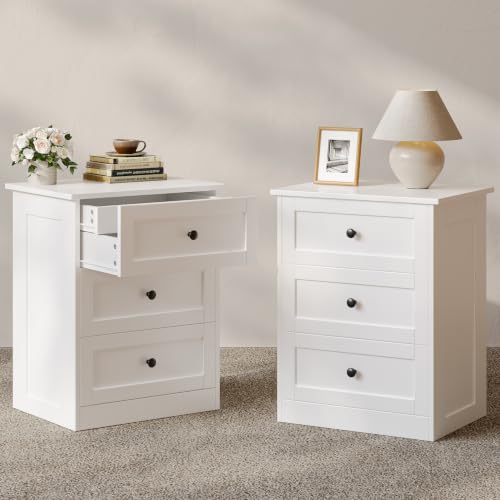
wanan Nightstands Set of 2 with Hidden Drawer, White | Bedside Table with 4 Drawers, Wooden Dresser for Bedroom, Modern Side Table with Storage 19"W x 15"D x 25.2"H
Check price on Amazon
Sweetcrispy Nightstand Set of 2, White Night Stands, 2-Drawer Bedside Table | Small Dresser with 2 Removable Fabric Drawers, Steel Frame with MDF Top, Adjustable Feet, Guest Room, Dorm, Nursery, 2PC
Check price on Amazon
VASAGLE 23.6‑Inch Wide Nightstands, Set of 2, LED Lights, 2 Drawers | Modern Side End Tables, 23.6 Inch Wide, Open Shelf, 2 AC Outlets USB Ports, Ink Black, CUSTOS Collection
Check price on Amazon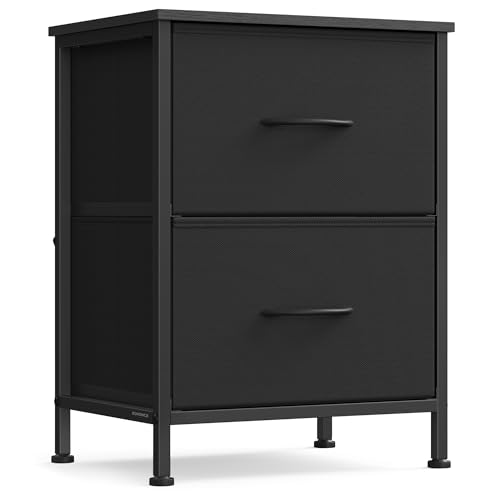
SONGMICS Nightstand with 2 Fabric Drawers, Bedside Table, Side End Table | Small Dresser for Bedroom, Modern, Ink Black and Ebony Black, BELLAH Collection ULGS312B01S
Check price on AmazonDisclaimer
The information provided on DresserAdvisor is for educational and informational purposes only. We are not furniture professionals, and our content should not replace professional advice from qualified furniture makers, interior designers, or safety experts. Some content may use AI assistance. Always check product safety standards and certifications before purchasing. If you do not agree, please do not use this website. Read the full disclaimer.