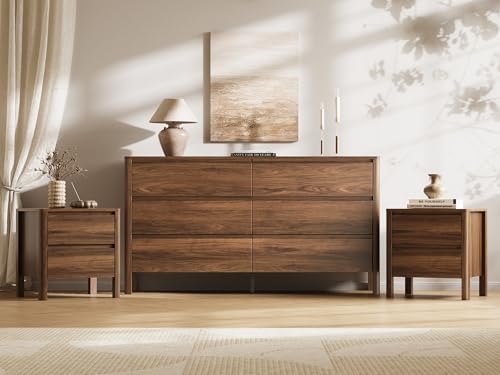
Wood Dresser Set: The Complete Buying Guide
Everything you need to choose a coordinated wood dresser and nightstand set — wood types, drawer layouts, finish options, sizing rules, and styling ideas for every bedroom.
Why a matching set makes sense: A wood dresser set pairs a dresser with a coordinating nightstand (and often a mirror or chest) in the same wood species, stain, and hardware. The result is a bedroom that feels intentional rather than pieced together — and one less decision to make when furnishing a room from scratch.
What Is a Wood Dresser Set?
A wood dresser set is a curated bedroom furniture collection built around a wooden dresser. The most common configuration is a two-piece set: one wood dresser paired with a single matching nightstand. Larger sets add a second nightstand for symmetry on either side of the bed, a vanity mirror, or a tallboy chest of drawers for additional storage.
What separates a true set from a random pairing is consistency across five details: wood species, stain or paint finish, drawer front profile, hardware style, and leg or base design. When those five elements align, the pieces read as a single collection even if they were purchased separately. If you are building a set piece by piece, start with the dresser and match the nightstand to its hardware and finish first — those are the most visible points of continuity.
2-Piece Set
One dresser plus one nightstand. The essential configuration for most bedrooms and the easiest entry point into a coordinated look.
3-Piece Set
Dresser, nightstand, and mirror — or dresser plus two flanking nightstands for a balanced bed wall.
4-Piece+ Collection
Adds a chest, bed frame, or bench. Best suited to primary bedrooms with generous floor space.
Mix-and-Match Set
Same finish family, different silhouettes. A more relaxed look that still reads as coordinated.
Choosing the Right Wood Type
The wood species determines durability, grain character, and how the finish will age. This is the single most important decision in a dresser set, because it affects both longevity and visual weight in the room. For a deeper dive into grain and patina, see our guide to wood types for antique furniture.
| Wood Type | Grain Character | Durability | Best For | Tier |
|---|---|---|---|---|
| Oak | Open, pronounced grain | Very high — dense hardwood | Family bedrooms, high-traffic use | Mid-Range |
| Maple | Fine, subtle grain | Very high — hard and close-grained | Modern and minimalist interiors | Mid-Range |
| Walnut | Rich, flowing, chocolate tones | High — stable hardwood | Premium primary bedroom suites | Premium |
| Cherry | Smooth grain that darkens with age | High — traditional furniture wood | Classic and transitional bedrooms | Premium |
| Pine | Knotty, rustic character | Moderate — softer surface | Guest rooms, kids' rooms, cottage style | Entry-Level |
| Rubberwood | Uniform, subtle grain | Moderate — often used in painted sets | Starter bedrooms and rental spaces | Entry-Level |
A note on construction: solid hardwood drawer fronts paired with dovetail joints and full-extension metal slides represent the top-tier build standard. Mid-tier sets often use solid fronts with box joints and side-mounted slides, while entry-level sets rely on engineered wood cores with veneer and stapled or glued drawer boxes. If you want a set that survives a move or two, prioritize joint type and slide quality over the wood name on the label.
Drawer Configuration: How Many Do You Need?
Drawer count should follow what you actually store. A useful rule of thumb is to inventory your folded clothing by category before choosing a layout — then match deep drawers to bulky items and shallow drawers to accessories.
- 3-drawer dressers: Best for guest rooms, entryways, or as an accent piece. Deep drawers handle linens and bulky knitwear.
- 4 to 5-drawer dressers: The practical sweet spot for a single adult. Combine two deep bottom drawers with three shallow upper drawers.
- 6 to 7-drawer dressers: Suited to couples or anyone with a substantial wardrobe. Look for a mix of drawer depths rather than uniform sizing.
- 8+ drawer dressers: Maximum storage in a wide footprint. Ideal for primary bedrooms where the dresser doubles as the main clothing store.
If floor space is tight, a wide dresser with deep drawers delivers more usable volume per inch of wall than a tall, narrow unit. Conversely, in narrow rooms, a tallboy chest of drawers keeps the footprint small while adding vertical storage. For a full breakdown of every configuration, our wood chest of drawers for bedroom guide covers the trade-offs in detail.
Sizing Rules for a Wood Dresser Set
Getting the dimensions right is what separates a set that feels built-in from one that feels crammed. Before ordering, measure the wall, the walking path, and the door swing.
- Walking clearance: Allow at least 30 inches (76 cm) of open floor in front of the dresser for drawer pull-out and foot traffic.
- Bedside clearance: Keep 24 inches (61 cm) between the bed edge and the nightstand so the drawer opens without obstruction.
- Height: A dresser top between 30 and 36 inches (76–91 cm) sits comfortably for most adults and doubles as a usable surface.
- Proportion: A dresser should be roughly two-thirds the width of the bed it faces, or wider than the wall segment it occupies to avoid a floating look.
- Anchor point: Any dresser taller than 30 inches should be wall-anchored, especially in nurseries and children's rooms.
Style Directions for Wood Dresser Sets
Mid-Century Modern
Tapered legs, clean horizontal lines, and warm walnut or teak tones define this look. Mid-century sets pair beautifully with wood mid-century modern drawer pulls in brass or matte black. Keep the styling minimal — a single lamp and a small tray are enough.
Farmhouse and Cottage
Painted or whitewashed finishes, beadboard drawer fronts, and simple cup pulls. A whitewash dresser and nightstand set is the easiest way to achieve this look without committing to a full matching collection. Pine and rubberwood are common species here.
Transitional and Classic
Cherry or mahogany finishes, bracket feet, and hardware in antique brass or bronze. These sets work in both traditional and contemporary rooms depending on the styling above the dresser.
Industrial and Mixed Material
Wood tops with metal frames and blackened hardware. If you like this direction but still want a unified set, a wood and metal dresser paired with a matching open-frame nightstand reads as a deliberate collection rather than a mismatch.
Hardware and Finish: The Details That Unify a Set
Hardware is the cheapest way to tie a set together — and the fastest way to make two matching pieces look unrelated. If your dresser and nightstand share a finish but not hardware, swapping the pulls is a 20-minute fix.
- Black hardware on natural wood creates contrast and suits modern and industrial rooms. See wood dresser with black handles for reference combinations.
- Gold and brass hardware warm up cool-toned finishes and work well with walnut and dark stains. Our wood dresser with gold handles guide covers finish pairings.
- Matched pulls vs. mixed pulls: Keep the same pull profile across both pieces. Mixing bar pulls on the dresser with knobs on the nightstand is fine, as long as the metal finish matches.
- Finish consistency: A "natural" finish on one piece and a "honey" stain on another will read as two different woods under bedroom lighting. Confirm the stain name and lot where possible.
Matching Set vs. Buying Separately
There is a real case for both approaches, and the right answer depends on how long you plan to keep the furniture and how much flexibility you want.
Matching Set: Advantages
Guaranteed finish and hardware consistency, one delivery, one assembly session, and a cohesive bedroom from day one. Best for primary bedrooms you plan to keep long-term.
Matching Set: Trade-offs
Less flexibility if you later want to swap one piece. Sets also tend to be priced as a bundle, so you may pay for a piece you did not need.
Separate Pieces: Advantages
You can size each piece to the room, upgrade one item at a time, and mix silhouettes for a more collected look. Easier to replace a damaged nightstand.
Separate Pieces: Trade-offs
Finish matching becomes your responsibility. Slight tone differences between batches are common, especially with stained solid wood.
A practical middle path: buy the wood dresser and nightstand set as a pair, then add accent pieces separately. The two most-used surfaces stay coordinated, while the rest of the room can evolve. If you are furnishing a small space, a wood dresser set in a compact footprint solves storage and styling in one purchase.
Room-by-Room Recommendations
Primary Bedroom
Prioritize drawer count and build quality here — this is the set you use daily. A 6 to 8-drawer dresser in oak, maple, or walnut paired with two matching nightstands is the standard configuration. For a broader look at layouts, see wood dressers for bedroom.
Guest Room
A 3 or 4-drawer dresser plus one nightstand is sufficient. Guest rooms are low-traffic, so pine and painted finishes hold up well and add character. Choose a set that leaves clear floor space for luggage.
Nursery and Kids' Room
Wall-anchoring is non-negotiable. Look for sets with rounded corners, soft-close slides, and drawer stops. A wood cabinet with drawers that sits at changing-table height can double as a diaper station.
Small Apartments and Studios
Choose a tall, narrow silhouette and pair it with a single compact nightstand. A wood dresser for sale in a narrow profile keeps the walking path clear. Avoid wide sets that block closet doors.
Pre-Purchase Checklist
- Measure twice: Wall width, walking clearance, door swing, and ceiling height for tall pieces.
- Check drawer slides: Full-extension ball-bearing slides are the top-tier standard; side-mounted slides are typical of mid-tier sets.
- Inspect joints: Dovetail joints indicate a higher build standard than stapled or glued boxes.
- Confirm the finish name: Ask for the exact stain or paint code so future additions match.
- Check anchoring hardware: Anti-tip straps should be included or available for the model.
- Plan the delivery path: Confirm the assembled dimensions fit through doorways and stairwells.
- Read the assembly notes: Know whether handles, legs, or slides require installation.
Frequently Asked Questions
What is included in a wood dresser set?
A wood dresser set typically includes a dresser and a matching nightstand, often sharing the same wood species, finish, and hardware. Larger sets may add a second nightstand, a mirror, or a chest of drawers to create a coordinated bedroom collection.
Which wood type is best for a dresser set?
Oak and maple are dense, durable hardwoods suited to daily use, while walnut offers a premium look with rich grain. Pine is softer and best for guest rooms or low-traffic spaces. Solid hardwood construction generally outlasts engineered wood in the long run.
How do I choose the right dresser size for my bedroom?
Leave at least 30 inches of walking space in front of the dresser and 24 inches beside the bed. Measure wall width and account for baseboards and door swing. Tall dressers save floor space in small rooms, while wide dressers suit larger bedrooms.
Do wood dresser sets need assembly?
Many sets ship flat-packed and require assembly of legs, handles, or drawer slides. Premium sets often arrive fully assembled. Check the product listing for assembly requirements and confirm the tools included before delivery.
Can I mix a wood dresser set with other furniture styles?
Yes. The most reliable approach is to keep the wood tone family consistent while varying silhouettes. A mid-century dresser can sit comfortably alongside a modern upholstered bench if the wood undertones match. Avoid mixing warm and cool wood tones in the same sightline.
Ready to Compare Wood Dresser Sets?
Browse curated options below, filtered by wood type, drawer count, and bedroom size.
Explore Options