
Solid Wood Crib and Dresser Set: The Complete Guide
Everything expectant and new parents need to evaluate materials, safety, storage capacity, and long-term durability before choosing a nursery furniture set.
Start the GuideWhy this guide matters: A solid wood crib and dresser set is one of the largest purchases you will make for a nursery. It shapes sleep safety, daily organization, and how long the furniture serves your family. This guide walks through material grades, safety standards, drawer configurations, style options, and practical room-fit considerations so you can decide with confidence.
What Makes a Solid Wood Crib and Dresser Set Different
A solid wood crib and dresser set pairs two of the most-used pieces in a nursery into a coordinated purchase. The crib provides the sleep environment, and the dresser handles clothing, bedding, and diapering supplies. Buying them together often means matching finishes, consistent hardware, and a unified look that is difficult to replicate with separately sourced pieces.
The defining feature is the material. Solid wood — whether oak, maple, birch, or pine — is cut from lumber rather than composed of glued particles or veneered panels. This affects weight, repairability, screw-holding strength, and how the furniture ages. Solid wood can typically be sanded and refinished if it becomes scratched, which matters for pieces intended to last through multiple children or be passed down.
That said, solid wood is not automatically better in every scenario. High-grade engineered wood can be more dimensionally stable and less prone to seasonal movement. The right choice depends on your priorities: longevity and refinishability favor solid wood, while consistent flatness and lower weight favor quality engineered options. For a broader comparison, see our breakdown of solid wood versus engineered furniture.
Key Buying Factors to Evaluate
1. Wood Species and Construction Quality
Species affects hardness, grain character, and how the finish takes. Oak and maple are dense and resist dents well. Birch offers a clean, consistent grain. Pine is softer and develops character marks more readily. Beyond species, examine joinery: dovetail drawers, mortise-and-tenon frames, and reinforced corner blocks signal a sturdier build than stapled butt joints.
- Drawer joinery: Dovetail joints outlast stapled or nailed construction.
- Drawer slides: Metal slides with soft-close mechanisms reduce slamming and wear. See our notes on soft-close drawer hardware.
- Finish: Look for low-emission, water-based finishes and Greenguard Gold certification where available.
- Back panels: A solid or thick plywood back panel adds rigidity compared with thin fiberboard.
2. Crib Safety Standards
The crib is the safety-critical component. In the United States, cribs must meet current CPSC standards, and JPMA certification provides an additional layer of verification. Check that the crib has fixed sides (drop-side cribs are prohibited), slat spacing no greater than 2⅜ inches, and a snug mattress fit with no gaps.
Also confirm:
- No cutouts or decorative openings that could trap a limb or head.
- Hardware that locks securely and resists loosening.
- Clear instructions for assembly and mattress height adjustment.
- Convertibility options — toddler rail included or available separately.
3. Dresser Stability and Anti-Tip Compliance
Dresser tip-over incidents remain a leading nursery hazard. Choose a dresser that complies with ASTM F2057 or includes a wall-anchoring kit, and plan to anchor it regardless. Drawers should have stops to prevent them from pulling fully out, and the unit should feel stable when a drawer is open.
If you plan to use the dresser as a changing station, check the top depth and surface area. A depth of at least 16 inches accommodates most contoured changing pads. For dedicated options, browse our guides to a solid wood changing table dresser and a changing pad sized for dresser tops.
4. Drawer Count and Storage Layout
Storage needs vary by household, but most nursery dressers fall into three practical configurations:
| Configuration | Best For | Trade-offs |
|---|---|---|
| 4-drawer dresser | Compact nurseries, minimal wardrobes | Less separation between clothing sizes and supplies |
| 5-drawer dresser | Balanced storage with a mix of deep and shallow drawers | Layout varies by model; check drawer heights |
| 6-drawer dresser | Full nursery storage, diapering supplies plus clothing | Requires more floor space and wall width |
| Tall chest (5–6 drawers stacked) | Small footprints, closets, narrow walls | Higher center of gravity; anchoring is essential |
For tight rooms, a tall solid wood chest of drawers maximizes vertical storage. If you need a wider low profile, a six-drawer solid wood dresser offers generous capacity with a stable stance.
5. Dimensions and Room Fit
Measure twice before ordering. Standard crib footprints are roughly 28–30 inches wide and 52–56 inches long, but conversion rails and sleigh-style ends add depth. Dressers commonly range from 30 to 60 inches wide. Leave at least 30 inches of clear floor space between furniture pieces for safe movement, and confirm that the dresser top is reachable without stretching while holding a baby.
Doorway and stair clearance matter too. Solid wood pieces are heavy; verify that the assembled or boxed dimensions can pass through your home's entry points. If space is genuinely limited, explore small solid wood chest of drawers options before committing to a full-size set.
6. Style and Finish Coordination
Coordinated sets remove the guesswork of matching wood tones. Common directions include clean modern lines, mid-century silhouettes, farmhouse detailing, and classic panel styles. Finish choice affects maintenance: painted finishes hide small scratches but can chip, while natural wood tones show wear as patina that many families prefer.
If you lean contemporary, a mid-century modern solid wood dresser pairs well with tapered-leg cribs. For a bright nursery, a white solid wood dresser keeps the room feeling open. Natural oak remains the most versatile neutral; see our solid oak dresser guide for finish and grain considerations.
Quality Tiers: How to Position a Set Before You Choose
Nursery furniture spans a wide range of build quality. Rather than focusing on any single number, use these universal tiers to frame your comparison. They describe relative market position and construction characteristics, not a specific monetary figure.
| Tier | Typical Construction | Best For |
|---|---|---|
| Entry-level | Solid wood frames with engineered panels; basic metal slides; simple finish | Short-term nursery use, secondary homes, first-time setups with limited space |
| Mid-range | Mostly solid wood with some engineered components; dovetail or reinforced drawer boxes; soft-close slides | Families planning for multiple children; balanced durability and design choice |
| Premium | Solid hardwood throughout; mortise-and-tenon joinery; premium low-emission finishes; conversion kits included | Long-term investment pieces intended to be handed down |
| Luxury / flagship | Heirloom-grade hardwoods; hand-finished detailing; custom hardware; full convertible systems | Design-led nurseries and families prioritizing craftsmanship |
A mid-range set typically delivers the most sensible balance for most families: it offers smoother drawer mechanisms and sturdier joinery than entry-level builds without the full premium outlay. If the set will be used by multiple children and then retained as guest-room furniture, stepping up a tier is often worthwhile.
Practical Setup and Safety Checklist
- Assemble the crib according to the manufacturer's instructions and re-check hardware monthly.
- Anchor the dresser to a wall stud using the provided anti-tip kit; do not rely on drywall anchors alone.
- Confirm the mattress is the correct size for the crib with no more than two fingers' width of gap.
- Keep the crib free of bumpers, pillows, and loose bedding.
- Place the changing pad on a non-slip surface and use the safety strap every time.
- Route monitor and lamp cords well away from the crib and dresser reach.
- Check drawer stops and soft-close mechanisms after assembly.
- Retain the assembly manual and any conversion kit parts for future use.
Space-Saving Alternative: Pair a Crib with a Compact Dresser
Not every nursery can accommodate a full-width dresser. If your room is narrow, pairing a convertible crib with a compact solid wood chest preserves circulation space while keeping storage on hand. Families who prefer a low, wide profile sometimes pair the crib with a solid wood dresser with shelves for a mix of open and closed storage. For an integrated look, a coordinated solid wood dresser and nightstand combination can extend the set beyond the nursery years.
Matching the Set to Your Nursery Layout
Layout drives satisfaction more than any single specification. Walk through your room's traffic flow: the path from door to crib, the reach from the changing area to supplies, and the clearance around closet doors. A dresser placed opposite the crib creates a natural changing zone, while a dresser beside the door keeps the sleep area calm and uncluttered.
If you expect to rearrange the room as your child grows, favor pieces that work independently. A convertible crib that becomes a toddler bed and a dresser that transitions to a child's room or guest space will serve longer than a strictly coordinated visual set. For inspiration on adapting nursery pieces over time, see our guide to solid wood bedroom dresser sets.
Frequently Asked Questions
Recommended Solid Wood Crib and Dresser Sets
⚠️ AFFILIATE DISCLOSURE: This website contains affiliate links. As an Amazon Associate, we earn from qualifying purchases. If you make a purchase through these links, we may receive a small commission at no additional cost to you. Read our full affiliate policy.

Sorelle Furniture Farmhouse 3-Piece Nursery Set with 4-in-1 Convertible Crib, 4-Drawer Dresser, and Changing Table with Shelves, Baby Furniture Made of Wood, Non-Toxic Finish-Chocolate and White
Check price on Amazon
Child Craft Atwood Design 4-in-1 Convertible Baby Crib Nursery Furniture Set, Baby Bed and 3 Drawer Dresser, for Babies, Toddlers and Kids Bedroom (2 Piece - Cocoa Bean Brown)
Check price on Amazon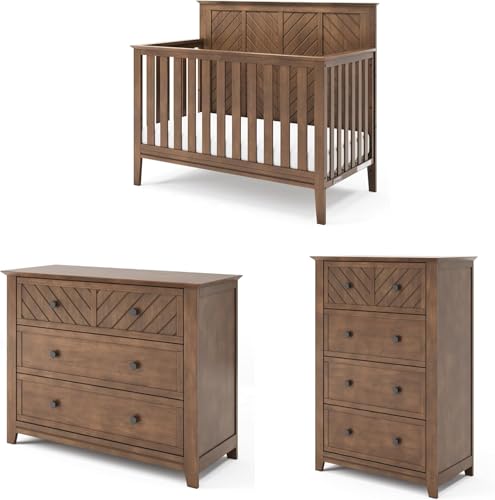
Child Craft Atwood Design 4-in-1 Convertible Baby Crib Nursery Furniture Set, Baby Bed, 3 Drawer Dresser and Chest Drawer, for Babies, Toddlers and Kids Bedroom (3 Piece - Cocoa Bean Brown)
Check price on Amazon
dadada Harmony Crib & Dresser Set Nursery Furniture Combo, White/Walnut | Soho 3-in-1 Convertible, Beechwood, Made in Italy, Modern Baby Crib and Austin 5 Drawer Baby Safe, Durable Nursery Dresser
Check price on Amazon
Storkcraft Horizon 6 Drawer Dresser, Driftwood | GREENGUARD Gold Certified, Wood Dresser for Nursery & Kids Bedroom, Nursery Storage with Interlocking Drawer System
Check price on Amazon
Graco Hadley 5-in-1 Convertible Crib & Changer, Driftwood | GREENGUARD Gold Certified, Fits Standard Crib Mattress, Converts to Toddler Bed and Full Bed, 4 Adjustable Mattress Heights
Check price on Amazon
Delta Children Asher Crib and Dresser Nursery Furniture – 6-in-1 Convertible Crib with Toddler Rail | Fully Assembled 6 Drawer Dresser with Changing Top | Rustic Mist
Check price on Amazon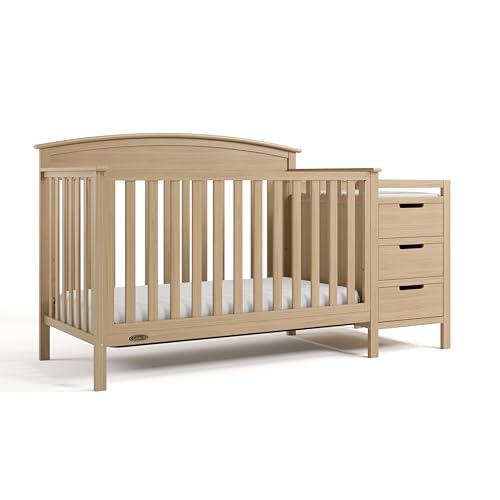
Graco Benton 4-in-1 Convertible Crib and Changer, Driftwood
Check price on AmazonDisclaimer
The information provided on DresserAdvisor is for educational and informational purposes only. We are not furniture professionals, and our content should not replace professional advice from qualified furniture makers, interior designers, or safety experts. Some content may use AI assistance. Always check product safety standards and certifications before purchasing. If you do not agree, please do not use this website. Read the full disclaimer.