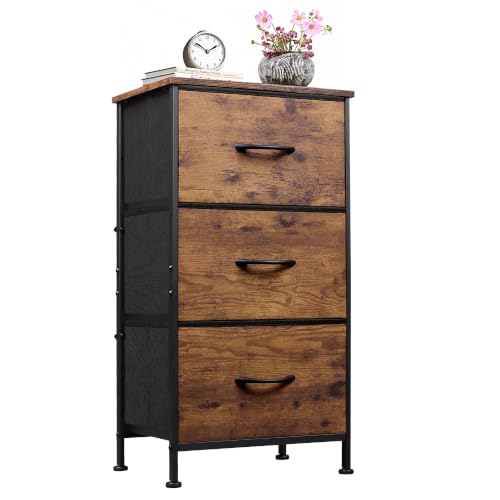
Small Bedroom Cabinet with Drawers
Your complete guide to choosing a compact, space-saving cabinet with drawers that keeps a small bedroom organized without crowding your floor plan.
EXPLORE RECOMMENDED OPTIONSWhat You Will Learn
Why Choose a Small Bedroom Cabinet with Drawers
A small bedroom cabinet with drawers solves a very specific problem: how to store folded clothing, accessories, and daily essentials without sacrificing walking space. Unlike a full-size dresser that can dominate a compact room, a scaled-down cabinet fits into corners, beside the bed, or along a short wall while still offering practical drawer storage.
These cabinets are especially useful for renters, apartment dwellers, guest rooms, and dorm-style spaces where every inch counts. A well-chosen compact unit can serve as a primary storage piece for one person, a secondary organizer beside a closet, or a multifunctional nightstand-and-dresser hybrid.
If you are weighing whether a compact cabinet can replace a traditional dresser, our guide on small bedroom dresser ideas explains how to combine furniture pieces for maximum efficiency. For rooms with very tight corners, a narrow dresser or a skinny dresser can be a strong alternative to a standard-width cabinet.
Quick insight: The best small cabinet is not simply the smallest one you can find. It is the one that balances drawer capacity, depth, and height against your actual floor plan and storage needs.
Size and Footprint Guide
Understanding dimensions before you shop prevents the most common mistake: buying a cabinet that technically fits but leaves no room to open drawers or walk past it. Measure your available wall length, the depth from the wall to the nearest obstruction, and the height clearance if you plan to place items on top.
| Category | Typical Width | Typical Depth | Best For |
|---|---|---|---|
| Compact corner cabinet | Under 24 inches | 14–16 inches | Tight corners, beside the bed |
| Standard small cabinet | 24–36 inches | 16–20 inches | Primary storage for one person |
| Slim tall cabinet | 18–24 inches | 14–18 inches | Vertical storage in narrow gaps |
| Wide low cabinet | 36–48 inches | 16–20 inches | Under-window placement, top surface use |
Depth matters as much as width. A cabinet that is 20 inches deep needs roughly 20 to 24 inches of clear space in front for drawers to open fully. In a room where the bed sits close to the wall, a shallower 14- to 16-inch unit is often the smarter choice. Our guide to shallow depth dressers for small spaces covers this trade-off in more detail.
Height is the third dimension people overlook. A taller slim cabinet uses vertical space and frees up floor area, which is ideal when the room is narrow but has good wall height. A lower, wider cabinet provides a useful top surface for lamps, books, or decorative trays.
Drawer Configurations
The number and layout of drawers directly affect how usable a small cabinet feels. A unit with three deep drawers stores bulky items but offers less separation. A unit with five or six shallower drawers gives you more categories and easier access to small items.
Common configurations
- Three-drawer cabinet: Best for essentials, bedding, or a single person's folded clothing. Simple and easy to organize.
- Four-drawer cabinet: A balanced option that adds one more category without increasing footprint much.
- Five- or six-drawer cabinet: Ideal when you need separation between clothing, accessories, and linens. Look for a mix of deep and shallow drawers.
- Cabinet with doors and drawers: Combines open shelf or closed-door storage with drawer space. Useful for items you prefer to keep hidden. See our guide to a small cabinet with doors and drawers for layout ideas.
Drawer glide quality is a practical detail that separates tiers. Entry-level models often use basic side-mounted glides, while mid-range and premium cabinets typically offer smoother ball-bearing or undermount glides with soft-close action. If you open drawers daily, that difference is noticeable.
Materials and Build Quality
Material choice affects durability, weight, and how well the cabinet holds up over years of daily use. In a small bedroom, the cabinet is often close to the bed and handled frequently, so build quality matters more than it might in a low-traffic room.
Solid wood
Solid wood offers durable construction and can be sanded and refinished if the surface wears. Oak, maple, and pine are common choices. A solid wood cabinet is typically a long-term investment and sits in the mid-range to premium tier depending on joinery and finish. Our solid wood chests overview explains how to evaluate construction quality.
Engineered wood
Engineered wood with a quality veneer or laminate provides a solid build at a more accessible tier. It resists warping better than solid wood in humid conditions, but the edges and drawer fronts are more vulnerable to chipping. Check that edges are sealed and that drawer boxes are sturdy rather than thin panels.
Metal and mixed materials
Metal frames with wood or engineered panels suit modern and industrial styles. They are often lighter and easier to move, which helps in small rooms. Look for rust-proof finishes and reinforced drawer runners if you plan to store heavier items.
Quality check: Open and close every drawer in the store or read reviews about glide smoothness. A cabinet with excellent dimensions but poor drawer action will frustrate you daily.
Placement in a Small Bedroom
Where you place the cabinet determines how much usable storage you actually gain. The goal is to keep walking paths clear and drawer swing zones unobstructed.
- Beside the bed as a nightstand alternative: A compact cabinet can replace a nightstand and add several drawers of storage. Choose a height close to the mattress top for convenience.
- In a corner: Corner placement uses otherwise dead space. Measure the diagonal clearance to ensure drawers can open.
- Along a short wall: A slim tall cabinet fits narrow wall segments and uses vertical space efficiently.
- Opposite the foot of the bed: Only if there is at least 24 inches of clearance for drawer access and walking.
- Inside or beside a closet: A short cabinet can sit inside a closet for folded clothing, freeing bedroom floor space. See our guide to a short dresser for closet placement.
If the room is especially tight, consider a slim dresser for small bedroom layout or a small accent cabinet with drawers as a secondary piece. Both approaches keep the footprint controlled while adding functional storage.
Organization Tips for a Small Cabinet
A compact cabinet rewards careful organization. Because space is limited, every drawer should have a clear purpose. These habits keep a small unit feeling spacious:
- Assign one category per drawer. Folded tops in one, bottoms in another, accessories in a third. Avoid mixing categories.
- Use vertical folding. Filing clothes upright lets you see everything at a glance and uses drawer depth efficiently.
- Add drawer dividers. Dividers keep small items contained and prevent drawers from becoming a jumble. Our drawer dividers guide covers options for shallow and deep drawers.
- Rotate seasonal items. Store off-season clothing elsewhere and keep only current-season pieces in the cabinet. See our tips on seasonal clothing storage.
- Use the top surface wisely. Keep it mostly clear. A small tray for daily items and a lamp is usually enough.
- Label or mentally map drawers. A consistent system prevents the cabinet from becoming a catch-all.
For a deeper walkthrough, read our full dresser organization guide. If you are also dealing with a closet that is bursting, pair the cabinet with a closet organization plan so the two storage zones complement each other.
Buying Checklist
Use this checklist before you commit to a small bedroom cabinet with drawers:
- Measure twice: wall length, depth clearance, and drawer swing zone.
- Confirm drawer count and layout: match the configuration to your categories.
- Check glide quality: ball-bearing or undermount glides are smoother than basic side glides.
- Inspect material and joinery: solid wood or quality engineered wood with sealed edges.
- Consider safety: anti-tip hardware is essential for taller or narrower units.
- Plan the top surface: decide what will live on top before you buy.
- Verify assembly needs: some units ship flat-packed and require tools and time.
If you are still comparing formats, our overview of small 4 drawer dressers and small 3 drawer dressers can help you decide which drawer count matches your routine. For rooms where a traditional silhouette fits better, a short dresser for bedroom is another compact option worth reviewing.
Frequently Asked Questions
What size cabinet with drawers fits a small bedroom?
A typical small bedroom cabinet with drawers measures between 24 and 36 inches wide, 16 to 20 inches deep, and 30 to 48 inches tall. Narrow options under 20 inches wide work well in tight corners, while taller slim designs use vertical space instead of floor area.
How many drawers do I need in a small bedroom cabinet?
Most people find three to five drawers sufficient for a small bedroom. A three-drawer unit handles essentials for one person, while a four- or five-drawer model adds room for folded clothing, linens, and accessories without taking up much floor space.
Can a small bedroom cabinet with drawers replace a full dresser?
Yes, in many cases. If you store bulky items elsewhere or have a closet for hanging clothes, a compact cabinet with drawers can replace a full dresser. Pair it with under-bed storage or a closet organizer to cover all your clothing needs.
What materials are best for a small bedroom cabinet with drawers?
Solid wood offers the most durable construction and can be refinished over time. Engineered wood with a quality veneer provides a solid build at a mid-range tier, while metal frames work well for modern or industrial styles. Check drawer glides and joinery quality regardless of material.
Should I choose a tall slim cabinet or a low wide cabinet?
Choose a tall slim cabinet when floor space is the main constraint and wall height is available. Choose a low wide cabinet when you want a usable top surface and have enough wall length. In very small rooms, the tall slim format usually preserves more walking space.
Whichever format you choose, the key is matching the cabinet to your actual measurements and daily routine. A well-planned small cabinet with drawers can make a compact bedroom feel organized, calm, and fully functional.