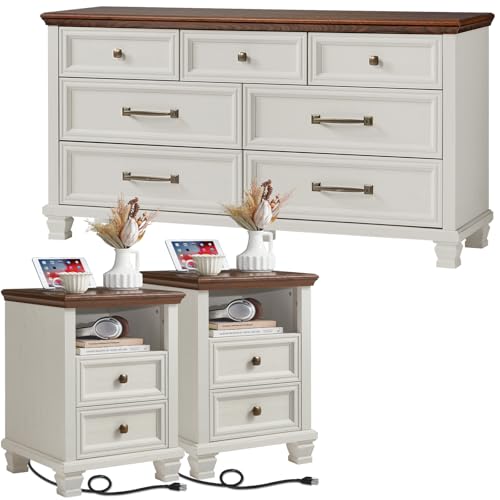
Rustic White Dresser and Nightstand Set: Your Complete Buying Guide
Everything you need to know before choosing a matching rustic white dresser and nightstand set for a cohesive, charming bedroom. Explore styles, construction quality, sizing, and organization strategies to make a confident purchase decision.
Why a matching set matters: A coordinated rustic white dresser and nightstand set instantly elevates your bedroom's visual harmony while delivering consistent storage solutions on both sides of the bed. This guide walks you through the essential considerations—from finish techniques and wood species to drawer mechanics and room layout—so you can select a set that serves both your aesthetic vision and daily storage needs.
What Defines a Rustic White Dresser and Nightstand Set?
Rustic white furniture occupies a distinct space in bedroom design—it's warmer than stark modern white, more casual than formal traditional pieces, and versatile enough to bridge farmhouse, coastal, and shabby chic aesthetics. A true rustic white set typically exhibits several defining characteristics:
Distressed or Whitewashed Finish
The white finish often shows intentional wear, wood grain peek-through, or a whitewash technique that lets natural wood tones emerge. This creates depth and character that a solid painted finish cannot replicate.
Natural Wood Elements
Look for visible grain patterns, knots, and subtle color variations. These natural imperfections are celebrated in rustic design rather than concealed.
Rustic Hardware
Wrought iron pulls, wooden knobs, cup pulls, and antiqued metal finishes complement the white finish. Hardware choice significantly influences whether the set leans farmhouse, coastal, or vintage.
Substantial Proportions
Rustic pieces often feature thicker tops, chunkier legs, and more generous drawer fronts compared to sleek modern designs, conveying a sense of permanence and craftsmanship.
If you're drawn to this aesthetic but want to explore broader rustic options beyond white, our guide to rustic dresser and nightstand sets covers additional finish and style directions. For those specifically interested in the white iteration, understanding these foundational elements helps you evaluate sets critically rather than simply reacting to a pleasing photo.
Style Variations Within Rustic White Furniture
"Rustic white" is an umbrella term, and within it you'll find meaningful stylistic distinctions. Recognizing these helps you articulate what you actually want and evaluate whether a particular set aligns with your broader bedroom design.
Farmhouse Rustic White
Farmhouse style emphasizes practicality and warmth. Expect beadboard details, apron fronts, cup pulls, and a finish that feels gently worn rather than heavily distressed. This style pairs naturally with shiplap walls, galvanized accents, and natural fiber rugs. A rustic farmhouse dresser in white often features these exact characteristics and serves as the anchor piece for the entire bedroom.
Coastal Rustic White
Coastal rustic leans lighter and breezier. The white finish may be brighter, hardware often shifts to brushed nickel or simple wooden knobs, and profiles tend to be slightly slimmer. This variation works beautifully in bedrooms with abundant natural light and a palette of soft blues, sandy neutrals, and weathered textures.
Shabby Chic Rustic White
Shabby chic embraces visible wear, chipping, and a romantic vintage quality. If this softer, more decorative interpretation appeals to you, explore our shabby chic dresser guide for a deeper understanding of the finish techniques and styling approaches that define this look.
Rustic White with Grey Undertones
Some sets incorporate grey washes or glazes that cool the white and add depth. These pieces bridge rustic and transitional styles effectively. Our coverage of the rustic grey dresser and nightstand set explores how grey undertones shift the overall mood and what room palettes they complement.
Construction Quality: Evaluating Tiers Without Getting Lost
Furniture quality varies enormously, and marketing language often obscures rather than clarifies. To make an informed decision, focus on construction details rather than labels. The table below outlines what you can generally expect at different market tiers:
| Tier | Frame Construction | Drawer Box & Joints | Glides & Hardware | Finish Durability |
|---|---|---|---|---|
| Entry-Level | Engineered wood with veneer; may use particle board in non-structural areas | Stapled or glued corners; simpler joint types | Basic side-mounted roller glides; standard metal knobs | Spray-applied finish; may show wear sooner in high-use areas |
| Mid-Range | Solid wood frame with engineered panels; reinforced corner blocks | Dovetail or dado joints; thicker drawer sides | Side-mounted ball-bearing glides; upgraded metal or wood hardware | Multi-step finish process; better resistance to daily wear |
| Premium | Solid hardwood throughout; kiln-dried for stability | English or French dovetail joints; solid wood drawer boxes | Undermount soft-close glides; solid brass or wrought iron hardware | Hand-applied or catalyzed finish; excellent long-term durability |
| Luxury / Heirloom | Select hardwood; traditional joinery; hand-finished details | Hand-cut dovetails; premium solid wood drawer boxes | High-end undermount glides; artisan-crafted hardware | Hand-rubbed or specialty finishes; designed to age gracefully over decades |
The mid-range tier typically represents the sweet spot for most buyers: you get solid construction fundamentals, smoother drawer operation, and a finish that holds up well—without the premium of artisan-level detailing. Within this tier, a rustic white dresser often delivers the best balance of visual authenticity and structural reliability.
Construction Details to Verify In Person or Through Reviews
Check whether drawer bottoms are captured in grooves (better) versus stapled to the drawer back (weaker). Confirm that corner blocks are glued and screwed, not just stapled. Test drawer glide smoothness with a load—empty drawers can mask mediocre glides. For white finishes, ask whether the finish is a painted solid color, a whitewash, or a distressed technique, as each has different maintenance implications.
Sizing Your Set: Proportional and Practical
A dresser and nightstand set is only as good as its fit in your actual room. Sizing errors are among the most common and frustrating furniture-buying regrets, so approach this dimension with care.
Dresser Sizing Guidelines
- Wall Length: The dresser should occupy roughly 60–75% of the wall it sits against. Too small and it looks lost; too large and it crowds the room.
- Walking Clearance: Maintain at least 30 inches of clear floor space in front of the dresser for comfortable drawer operation and passage.
- Height: The dresser top should typically sit between 30 and 36 inches from the floor for comfortable use. If the dresser doubles as a changing table or display surface, prioritize ergonomic height.
- Drawer Count: A four-to-six drawer dresser suits most couples or individuals. Larger households or those storing bulky items may benefit from six to eight drawers. For smaller rooms, a small six-drawer dresser offers efficient capacity without dominating the floor plan.
Nightstand Sizing Guidelines
- Height: The nightstand top should ideally align with or sit slightly below the mattress top—typically 24 to 28 inches from the floor.
- Width: Allow 18 to 24 inches of width per nightstand. Ensure the nightstand doesn't obstruct access to the bed or closet doors.
- Balance with Dresser: Visually, the nightstands should feel proportionate to the dresser. If the dresser is tall and substantial, undersized nightstands will look out of place, and vice versa.
If your bedroom is compact, consider a rustic dresser and nightstand pairing with narrower profiles. Shallow-depth options can preserve floor space while maintaining the visual cohesion of a matching set.
Materials and Finishes That Hold Up
The white finish on rustic furniture is subjected to daily wear—keys tossed on the top, jewelry dragged across the surface, sunlight streaming through windows. Choosing the right material and finish technology pays dividends in longevity.
Wood Species Commonly Used
- Pine: Soft, affordable, and takes distressing beautifully. However, pine dents more easily. Best for entry-level and mid-range pieces where rustic character is prized over pristine surfaces.
- Oak: Hard and durable with pronounced grain. Whitewashed oak is a stunning rustic option that balances toughness with visual texture. A rustic oak dresser is an excellent long-term investment.
- Poplar: Often used for painted surfaces because it takes paint well and is moderately hard. Common in mid-range painted white sets.
- Maple and Birch: Harder than pine, with subtler grain. Good for cleaner rustic interpretations where you want durability without heavy texture.
Finish Types
- Solid Paint: Opaque white with no grain show-through. More modern than rustic, but some sets use a matte or chalk-paint finish to soften the look.
- Whitewash: A thin, translucent white stain that leaves grain visible. This is the quintessential rustic white finish—it ages gracefully and hides minor scratches well.
- Distressed / Rub-Through: Intentional wear patterns where the white is rubbed away to reveal wood or a darker undercoat. The quality of execution varies; hand-distressing looks more natural than mechanical.
- Glazed: A darker glaze applied over white and wiped back, emphasizing crevices and edges. Adds depth but can read as more traditional than purely rustic.
Finish Durability Check
Ask whether the finish includes a protective topcoat (lacquer, polyurethane, or conversion varnish). A white finish without adequate topcoat will show ring marks from glasses and absorb oils from hands. Premium tiers typically apply multiple topcoat layers; entry-level pieces may have minimal protection. If buying in person, run a fingernail lightly across an inconspicuous area—a finish that feels chalky or easily indents may need extra care.
Organizing Your Set for Real-Life Use
A beautiful set is only useful if it supports your daily routines. Before purchasing, think through how you'll actually use the dresser and nightstands, and whether the drawer configuration aligns with your storage needs.
Dresser Drawer Strategy
Dressers work best when drawers are assigned specific categories. A common and effective approach:
- Top Drawer: Undergarments, socks, and small accessories. Use dividers to keep items contained.
- Middle Drawers: Folded tops—t-shirts, sweaters, workout wear.
- Bottom Drawers: Bulky items—jeans, linens, off-season items stored in bins.
For detailed folding techniques and drawer divider recommendations, see our dresser organization guide.
Nightstand Functionality
Nightstands serve a different purpose than dressers—they hold items you need within arm's reach while in bed. Prioritize nightstands with:
- A top surface large enough for a lamp, phone, and a book
- At least one drawer for small items (glasses, chargers, medications)
- Optional open shelf or cubby for books or a sleep mask
- Drawer glides that operate quietly—you don't want a squeaky drawer waking you or a partner
If you're setting up a nursery or guest room with this set, consider how the nightstand can adapt. Some parents use the nightstand as a secondary changing station or feeding supplies caddy. For safety considerations in nursery contexts, review our guide to securing a changing pad to a dresser and the broader rustic white dresser overview, which addresses multi-use scenarios.
Coordinating the Set with Your Bedroom Design
A matching rustic white set can either anchor a cohesive bedroom design or clash with surrounding elements if not considered holistically. Here's how to integrate it smoothly:
Color Palette Pairings
- Warm Neutrals: Beige, cream, taupe, and soft greige walls allow the white furniture to stand out without competition.
- Soft Blues and Greens: Sage, dusty blue, and seafoam create a calm, coastal-adjacent feel that suits rustic white beautifully.
- Contrasting Dark Accents: Charcoal, navy, or black in bedding, rugs, or artwork provides visual grounding and prevents the room from feeling washed out.
Textures That Complement
Rustic white furniture pairs well with natural textures: linen bedding, jute or wool rugs, rattan or wicker baskets, and distressed wood wall art. Avoid pairing with highly polished metals or glossy surfaces, which can create stylistic friction.
Scale and Proportion
If your bedroom is large, a substantial dresser with generous proportions will feel appropriate. In smaller rooms, a more compact set prevents crowding. The visual weight of rustic pieces—thicker tops, chunkier legs—means you should err on the side of slightly smaller rather than slightly larger in tight spaces. For tight floor plans, explore small bedroom dresser ideas that maximize function without overwhelming the room.
If you're considering extending the rustic white theme beyond the bedroom—into a bathroom or kitchen—note that white rustic finishes can work in those spaces too, though moisture exposure requires extra finish protection. Guides on replacing bathroom cabinet doors and drawers and replacement kitchen drawer fronts can help you carry the aesthetic through your home thoughtfully.
Maintaining Your Rustic White Set
Rustic white furniture tolerates everyday life better than pristine high-gloss finishes, but it still benefits from consistent care. Simple habits extend the life and appearance of your set significantly:
- Dust regularly with a soft, dry cloth. Avoid silicone-based polishes, which can build up and dull the finish.
- Clean spills promptly with a slightly damp cloth and mild soap. Wipe dry immediately—prolonged moisture is the enemy of any wood finish.
- Use coasters and felt pads on the dresser top to prevent rings and scratches.
- Avoid direct sunlight or use window treatments to prevent uneven fading, especially on white finishes that may yellow slightly over time.
- Check hardware periodically and tighten screws on pulls and knobs. Loose hardware can enlarge holes and cause long-term damage.
- Lubricate drawer glides annually with a silicone-based lubricant (not oil, which attracts dust).
If the finish eventually shows wear—common on high-touch areas like drawer fronts and edges—you have options. Light sanding and repainting can refresh a solid-painted white piece. Whitewashed or distressed finishes are more challenging to touch up invisibly, but their inherent variation makes minor wear less noticeable. For repainting guidance, see our resources on sanding and repainting furniture.
Common Mistakes When Buying a Rustic White Set
- Buying without measuring: Always measure your wall space, doorways, and stairwells before ordering. Furniture that doesn't fit through the door is a costly problem.
- Ignoring drawer glide quality: Smooth, quiet glides matter more than almost any other feature for daily satisfaction. Test them if possible.
- Overlooking the finish topcoat: A beautiful white finish without adequate protection will degrade quickly. Ask specifically about the topcoat.
- Mismatching scale: A massive dresser with tiny nightstands (or vice versa) looks disjointed. Buy the set together when possible.
- Assuming "solid wood" means fully solid: Many pieces labeled "solid wood" use solid wood for the frame but engineered panels elsewhere. Ask for specifics.
- Neglecting future needs: If you're planning to move or expand your family, consider whether the set's size and style will adapt.
Frequently Asked Questions
What makes a dresser set "rustic white"?
A rustic white dresser set typically features distressed or whitewashed finishes, natural wood grain showing through, and hardware like wrought iron or wooden knobs. The style blends farmhouse charm with casual elegance, often incorporating visible knots, subtle wear patterns, and substantial proportions that convey craftsmanship.
How do I choose the right size dresser and nightstand set for my bedroom?
Measure your available wall space, leaving at least 30 inches of clearance for walking and drawer operation. Nightstands should be roughly the same height as your mattress top—typically 24 to 28 inches. The dresser should occupy 60–75% of its wall. Consider drawer count based on your storage volume and the room's proportions; a set that's too large will crowd the space, while an undersized set will look lost.
Are rustic white dresser sets durable?
Durability depends on construction quality. Solid wood frames with dovetail joints and quality glides offer the best longevity. Mid-range and premium tiers typically use reinforced construction methods—corner blocks, thicker drawer sides, and undermount soft-close glides. Entry-level sets may use stapled joints and basic roller glides, which are serviceable but less robust over time. Always check the specific construction details rather than relying on style labels alone.
Can I mix a rustic white dresser with different nightstands?
Yes—eclectic pairings can work beautifully if you maintain visual harmony through consistent wood tones, hardware finishes, or proportional scale. However, a matching set offers the easiest path to a cohesive look, especially in smaller rooms where visual clutter is a risk. If you mix, ensure the nightstands are similar in height and visual weight to the dresser.
How do I prevent a white finish from yellowing?
Limit direct sunlight exposure with curtains or blinds, and maintain stable indoor humidity (30–50% is ideal). Some yellowing is natural over many years, but consistent sun protection and avoiding silicone-based polishes will slow the process. If yellowing occurs, a light sanding and fresh topcoat can often restore the original appearance.
Ready to Find Your Perfect Set?
Explore curated rustic white dresser and nightstand sets that balance craftsmanship, style, and practical storage—then compare features and availability to make your final choice with confidence.
View Recommended Sets