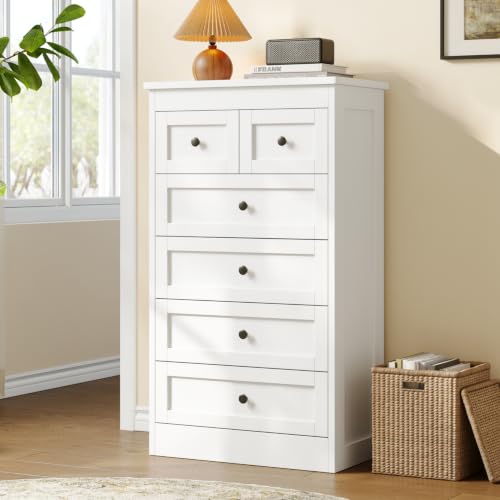
What "Real Wood" Actually Means
The phrase real wood is used loosely in furniture retail. In practice, it can describe several different constructions, and the distinction matters when you are evaluating a white chest of drawers:
- Solid wood: The frame, drawer fronts, and often the drawer boxes are cut from a single wood species. This is the most durable and repairable construction, and it is what most buyers mean by "real wood."
- Solid wood with engineered panels: The visible frame and drawer fronts are solid wood, while interior panels or the back panel use plywood or MDF. This is a common and reasonable approach that keeps structural strength where it counts.
- Wood veneer over engineered core: A thin layer of real wood covers a plywood or particleboard core. This can look convincing and perform well, but it is not the same as solid wood and cannot be sanded and refinished as many times.
If your priority is a piece that can be sanded, repainted, and passed down, insist on solid wood for the frame and drawer fronts. If you want a specific white look with a lighter footprint, a high-quality veneer can still be a sensible option. For a broader comparison of storage formats, see our guide to real wood chest of drawers and the wider collection of real wood dressers.
Choosing the Right Wood Species for a White Finish
Because the white finish sits on top of the wood, the species matters less for appearance and more for durability, weight, and how well the paint adheres. The table below compares the most common options.
| Species | Character | Best For | Finish Behavior |
|---|---|---|---|
| Oak | Hard, dense, open grain | High-traffic bedrooms, long-term use | Grain texture can show through thin paint; a primer and topcoat even it out |
| Maple | Hard, fine, closed grain | Smooth, modern white finishes | Takes paint beautifully with minimal grain telegraphing |
| Pine | Soft, knotty, lightweight | Farmhouse and casual styles | Knots may bleed through paint without a sealer; dents more easily |
| Birch | Hard, uniform, closed grain | Clean contemporary looks | Excellent paint adherence and a smooth white surface |
| Rubberwood | Medium-hard, consistent | Entry-level solid wood pieces | Accepts paint well; grain is subtle |
For a crisp, furniture-grade white, maple and birch are the most forgiving because their closed grain produces a smooth surface. Oak is the most durable but requires a more careful finishing schedule if you want a perfectly flat look. Pine suits relaxed, cottage-inspired rooms but is softer and more prone to dents. If you are comparing broader solid wood options, the oak dressers collection is a useful reference point for grain and durability expectations.
White Finishes and How They Age
A white chest of drawers can be finished in several ways, and the finish determines how the piece looks and wears over time:
- Lacquered white: A factory-applied lacquer creates a smooth, durable surface that resists moisture and everyday marks. This is common on mid-range and premium pieces.
- Painted white: Brushed or sprayed paint offers a slightly more tactile surface. Quality paint with a primer and topcoat holds up well, but very thin paint can chip at drawer edges.
- Water-based topcoat: Color-stable and low-odor, water-based finishes resist yellowing better than older oil-based formulas.
- Distressed or rubbed white: Intentional wear on edges and corners creates a relaxed, vintage feel. This look hides minor scuffs naturally.
Whichever finish you choose, ask whether the interior drawer surfaces are also finished. Sealed interiors reduce moisture absorption and keep clothing free of dust and splinters. If you prefer a different tone, our guide to off-white dresser options explains how warmer whites compare to crisp ones.
Drawer Construction and Hardware
The frame and finish get the attention, but the drawers do the daily work. Focus on these details:
- Drawer boxes: Solid wood sides with dovetail or box joints are the strongest. Stapled or glued particleboard boxes are a sign of entry-level construction.
- Drawer bottoms: A sturdy bottom panel set into a groove handles heavier loads without sagging. Thin, stapled bottoms are a weak point.
- Slides: Metal ball-bearing slides with soft-close action are the most reliable. Look for under-mounted slides on premium pieces for a cleaner look.
- Stops: Drawer stops prevent accidental pull-out. A small feature that protects both the drawer and your toes.
- Hardware: Solid metal pulls and knobs outlast plated or plastic alternatives. If you plan to swap hardware later, check that the hole spacing is standard.
For a quick benchmark, a mid-range piece should offer dovetail or reinforced joints and smooth metal slides; premium pieces typically add soft-close under-mount slides and fully finished drawer interiors. If you are weighing different storage formats, our comparison of oak chest of drawers styles shows how construction varies across categories.
Sizing a White Chest of Drawers for Your Bedroom
Measure your space before you fall in love with a design. Key dimensions to note:
| Dimension | What to Check | Practical Tip |
|---|---|---|
| Width | Wall space plus clearance for doors and walkways | Leave at least 24 inches of walking space in front |
| Depth | Standard chests are 16–20 inches deep | Deeper drawers hold bulkier items but project further |
| Height | Top surface should sit comfortably at hip or waist height | Consider whether the top will be used as a display surface |
| Drawer count | Match to your clothing volume and folding style | Mix shallow and deep drawers for versatility |
A five- or six-drawer chest works well for a single adult, while a taller chest with more drawers suits couples or shared rooms. If space is tight, the plain white dresser page covers compact, understated options that fit narrow walls.
Styling a White Wooden Chest of Drawers
A white chest is a versatile anchor for bedroom decor. A few approaches that work well:
- Warm neutrals: Pair white wood with linen bedding, rattan accents, and warm wood tones for a calm, layered look.
- Contrast hardware: Black or brass pulls against white create a crisp, intentional focal point.
- Art and mirrors: Lean a framed mirror or artwork above the chest to draw the eye upward and make the room feel taller.
- Top-surface discipline: Limit the top to a lamp, a tray, and one decorative object to keep the piece feeling airy.
For more inspiration, explore our real wood white chest of drawers reference and the off-white dresser and nightstand set ideas if you want a coordinated bedroom look.
Care and Maintenance
A white solid wood chest is easy to maintain with a simple routine:
- Dust weekly with a soft, dry cloth to prevent abrasive buildup.
- Wipe marks with a slightly damp cloth, then dry immediately—never leave moisture sitting on the finish.
- Avoid abrasive cleaners, solvents, and furniture polish with silicone, which can dull the finish.
- Keep the chest out of direct sunlight to slow finish aging and color shifts.
- Check and tighten hardware periodically, and lubricate metal slides if they begin to feel stiff.
If the finish eventually shows wear, solid wood can be sanded and recoated. That repairability is one of the strongest arguments for choosing real wood over veneer.
Quality Tiers at a Glance
Rather than anchoring on numbers, use these universal tier descriptors to frame your expectations. The right tier depends on how long you intend to keep the piece and how heavily it will be used.
| Tier | Typical Construction | Best For |
|---|---|---|
| Entry-level | Solid wood frame with engineered interior panels; basic metal slides | Guest rooms, first apartments, short-term needs |
| Mid-range | Solid wood drawer fronts and boxes with reinforced joints; ball-bearing slides | Primary bedrooms and daily use |
| Premium | Solid hardwood throughout; dovetail drawers; soft-close under-mount slides | Long-term investment and heirloom use |
| Luxury | Premium hardwoods, hand-finished surfaces, precision hardware, fully finished interiors | Design-forward spaces and collectors |
As a rule of thumb, mid-range pieces usually offer the most balanced combination of durability and refined details, while entry-level options are better suited to lighter use. Premium and luxury tiers justify their position through materials and craftsmanship that hold up over decades.
Related Guides on DresserAdvisor
Ready to Compare Real Wood White Chests?
Browse our curated selection of solid wood white chests of drawers and find the right fit for your bedroom layout, storage needs, and design style.
View Recommended OptionsFrequently Asked Questions
Is a real wood white chest of drawers durable?
Yes. Solid wood construction with dovetail or reinforced joints and a properly sealed white finish can last for decades. Hardwoods such as oak and maple resist wear better than softwoods, which is worth considering for high-traffic bedrooms.
Will a white finish on solid wood crack or yellow over time?
A quality factory finish or a well-applied lacquer or water-based topcoat resists yellowing and cracking. Water-based finishes are especially color-stable. Cheaper finishes on any material tend to age faster, so finish quality matters more than wood species alone.
How do I clean a white solid wood chest of drawers?
Dust regularly with a soft cloth, wipe with a slightly damp cloth for marks, and dry immediately. Avoid abrasive cleaners and excessive moisture. For painted or lacquered surfaces, a mild pH-neutral cleaner is usually sufficient.
What drawer mechanism should I look for?
Metal side-mounted or under-mounted ball-bearing slides with soft-close action are the most reliable. Dovetail drawer boxes with solid wood sides are a strong indicator of durable construction in mid-range and premium pieces.
Can I repaint a white solid wood chest of drawers?
Yes. Solid wood can be lightly sanded and recoated with a fresh white finish if it shows wear. This is one of the key advantages of real wood over veneer, which has a limited number of refinishing cycles.