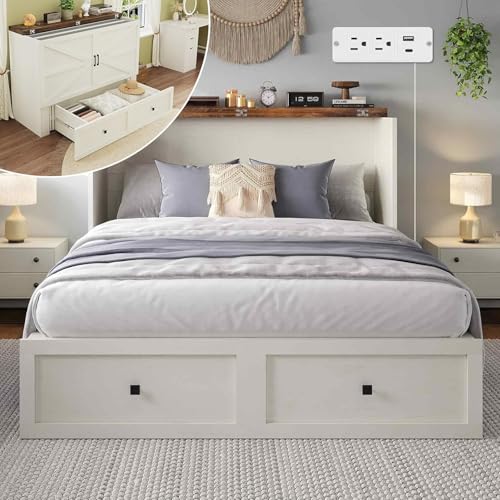
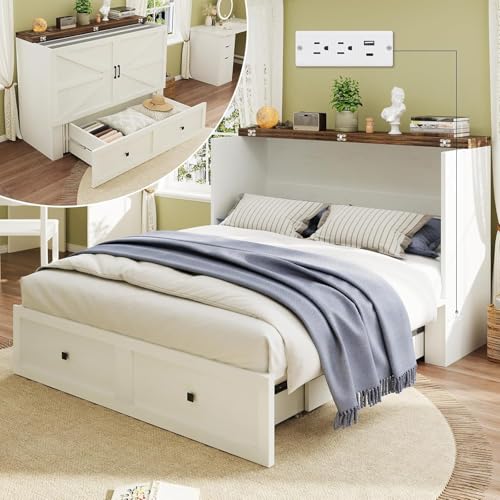
Murphy Bed in a Dresser: The Ultimate Space-Saving Solution
Transform any room into a dual-purpose space with a clever Murphy bed dresser that hides a full bed inside a stylish storage cabinet. Learn how these hybrid pieces work, what to look for, and how to choose the right model for your home.
Explore Recommended ModelsWhy consider a Murphy bed in a dresser? In small homes, guest rooms, and studio apartments, floor space is precious. A Murphy bed dresser lets you reclaim an entire room — you get a functional dresser for daily storage and a comfortable bed for overnight guests, without dedicating a permanent footprint to either.
What Is a Murphy Bed in a Dresser?
A Murphy bed in a dresser — sometimes called a hidden bed dresser or wall bed dresser — is a piece of convertible furniture that disguises a fold-down bed inside a cabinet designed to look like a standard dresser or chest of drawers. When the bed is stowed, the unit presents as a normal bedroom dresser with drawers, doors, or decorative panels. When guests arrive, the front panel folds down and the mattress platform rotates out, converting the dresser into a full sleeping surface.
This hybrid design is especially popular in:
- Studio apartments where every square foot must serve multiple purposes
- Guest rooms that double as a home office or hobby room
- Small bedrooms that need both storage and occasional sleeping capacity
- Vacation homes and cabins where flexible sleeping arrangements are essential
If you are still comparing storage formats, our guide to modern chest of drawers explains how traditional drawer configurations differ from convertible furniture like this.
How Does a Murphy Bed Dresser Work?
The mechanism is the heart of any Murphy bed dresser. Most models use one of two systems:
Piston-Assisted Mechanism
Compressed gas pistons counterbalance the weight of the mattress and frame. When you unlatch the bed, the pistons gently lower the platform; when you push it back up, they assist the lift. Piston systems are common in mid-range and premium models and tend to offer smoother, more controlled motion.
Spring-Loaded Mechanism
Heavy-duty springs provide the counterbalance instead of pistons. Spring systems are typically found in entry-level and essential-tier models. They are reliable but may require more physical effort to operate and can feel less refined than piston-assisted designs.
Manual / Counterweight Mechanism
A few professional-grade and custom-built units use a counterweight or manual lift system. These are less common in residential dresser-style beds but appear in some high-end cabinetry installations.
Installation tip: Murphy bed dressers must be anchored to wall studs or a reinforced mounting plate. Never rely on drywall anchors alone — the combined weight of the frame, mattress, and bedding demands structural fastening.
Types of Murphy Bed Dressers
Not every Murphy bed dresser is built the same way. Understanding the main configurations helps you match the furniture to your room layout and storage needs.
Decorative-Front Dresser Bed
The front panel mimics a dresser with faux drawer fronts, but storage is minimal or non-existent. Best for buyers who primarily need the space-saving bed function and have storage elsewhere.
Functional Drawer Dresser Bed
Includes real working drawers — often two to four — integrated into the cabinet sides or below the bed cavity. A solid choice for guest rooms that need genuine daily storage.
Full Storage Cabinet Bed
Combines the bed with deep drawers, adjustable shelving, and sometimes a folding desk or side cabinets. These units function as a complete bedroom storage wall when the bed is closed.
You can also find configurations that pair a Murphy bed dresser with a matching nightstand or narrow dresser for small bedroom layouts, creating a cohesive look in compact spaces.
Vertical vs. Horizontal Orientation
| Orientation | How It Opens | Best For | Considerations |
|---|---|---|---|
| Vertical (Portrait) | Bed folds down lengthwise along the wall | Narrow rooms, hallways, rooms with limited side clearance | Requires more wall height; the dresser profile is taller |
| Horizontal (Landscape) | Bed folds out sideways from a wider cabinet | Rooms with ample wall width and lower ceilings | Needs more horizontal wall space; dresser profile is wider and shorter |
Sizing Guide: Will It Fit Your Room?
Measuring your space before buying is essential. A Murphy bed dresser needs clearance in two states: closed (dresser mode) and open (bed mode).
Closed Footprint
Most dresser-style Murphy beds protrude 12 to 18 inches from the wall when closed. Width varies by mattress size and orientation — expect roughly 60 to 70 inches for a queen vertical model and 80 to 90 inches for a queen horizontal model.
Open Clearance
When deployed, the bed extends into the room by the length of the mattress plus the frame — typically 80 to 85 inches for a queen. You also need walkway clearance around the foot of the bed. As a rule of thumb, leave at least 24 inches of walking space on the open side.
| Mattress Size | Typical Closed Width | Typical Open Depth | Minimum Room Width (Vertical) |
|---|---|---|---|
| Full | 56–62 in | 78–82 in | 7 ft |
| Queen | 62–70 in | 84–88 in | 8 ft |
| King | 78–84 in | 84–88 in | 9 ft |
For rooms tighter than these dimensions, consider a narrow dresser paired with a separate folding guest bed, or explore dressers for small spaces to optimize storage independently.
Choosing the Right Mattress
The mattress you pair with a Murphy bed dresser directly affects how well the mechanism works and how comfortable your guests sleep.
- Thickness: Most units accept mattresses between 8 and 12 inches. A mattress that is too thick may prevent the bed from folding flush into the cabinet.
- Weight: Memory foam and hybrid mattresses are generally lighter than dense innerspring models, which makes lifting and lowering easier — especially important for spring-loaded mechanisms.
- Flexibility: A mattress with some flex is easier to fold. Very rigid mattresses can strain the hinge and piston system over time.
- Retention: Many Murphy beds include a mattress retention strap or bar to keep the mattress in place when the bed is stored vertically.
Pro tip: If you plan to use the bed frequently, invest in a mattress designed specifically for Murphy beds. These models are thinner, lighter, and built to tolerate repeated folding without developing permanent creases.
Storage and Organization: Getting the Most From Your Dresser Bed
A Murphy bed dresser is only as useful as the storage it provides. Here is how to make the most of the cabinet space around the bed cavity.
Drawer Configuration
Look for units with full-extension drawer slides and dovetail or reinforced box joints. Entry-level models may use stapled or glued drawer boxes, while mid-range and premium models typically feature metal side-mount or under-mount slides for smoother operation.
Using the Drawers Wisely
- Store folded clothing and linens in the dresser drawers so the unit remains functional even when the bed is deployed.
- Keep bedding and pillows in a dedicated drawer or shelf near the bed cavity for quick setup.
- Use drawer dividers to organize smaller items — our drawer dividers guide covers options for different drawer depths.
- Rotate seasonal clothing so the most-used items stay in the most accessible drawers.
Side Cabinets and Shelving
Premium Murphy bed dressers often include flanking cabinets or open shelving. These are ideal for books, display items, or a small dresser lighting setup. If your unit lacks side storage, a narrow accent cabinet with drawers placed nearby can fill the gap.
Safety Considerations
Because a Murphy bed dresser contains a heavy moving mechanism, safety should be a top priority.
- Wall anchoring: The unit must be fastened to wall studs. Follow the manufacturer's instructions precisely and use the supplied hardware.
- Safety lock: A quality model includes a locking pin or latch that prevents the bed from opening unexpectedly.
- Clearance zone: Keep the area in front of the bed clear of furniture, rugs with curled edges, and tripping hazards.
- Child safety: If children share the room, choose a model with a lock that requires deliberate action to release — not a simple pull handle.
- Weight limits: Respect the manufacturer's stated weight capacity for both the bed and the drawers.
What to Look For When Buying
Use this checklist to evaluate models across quality tiers:
Starter Tier Priorities
Focus on safe wall anchoring, a reliable locking mechanism, and a straightforward spring or piston system. Accept that drawer storage may be decorative rather than functional, and that the finish may be laminate or veneer rather than solid wood.
Balanced Tier Priorities
Expect real working drawers, smoother piston operation, and better hardware. Look for plywood or solid-wood drawer boxes, metal slides, and a finish that resists scratching. This tier often offers the best balance of features and durability.
High-End Tier Priorities
Premium models deliver solid hardwood construction, precision piston systems, integrated side storage, and refined finishes. These are long-term investments built to withstand frequent use in a primary guest room or multi-use space.
Flagship Tier Priorities
At the top of the market, expect custom sizing, hand-finished cabinetry, integrated lighting, and mechanisms rated for daily operation. These units are often designed to blend seamlessly with existing bedroom furniture collections.
Materials and Construction
Solid wood (oak, maple, walnut, or pine) offers the best durability and repairability. Engineered wood with quality veneers is a practical alternative in mid-range models. Avoid particleboard in high-stress areas like the bed frame and hinge mounts. For more on material choices, see our materials and finishes section.
Hardware and Mechanism Quality
Check the piston rating, hinge type, and drawer slide brand. Heavy-duty steel hinges and branded drawer slides (such as those from established hardware makers) are a good sign of build quality. Ask whether replacement parts are available — a well-supported mechanism can extend the life of the furniture considerably.
Finish and Style
Murphy bed dressers come in a range of finishes to match your bedroom decor. Popular options include:
- White and painted finishes — bright and versatile; see our white dressers collection
- Natural wood tones — warm and classic; explore natural wood dressers
- Dark and navy finishes — bold and modern; compare navy blue dressers
- Modern minimal styles — clean lines; browse modern dressers for bedroom
Murphy Bed Dresser vs. Other Space-Saving Options
How does a Murphy bed in a dresser compare with alternatives?
| Option | Space Saved | Storage Included | Best For |
|---|---|---|---|
| Murphy Bed Dresser | High — bed folds into dresser | Yes — drawers and cabinets | Guest rooms, studios, multi-use rooms |
| Standard Murphy Bed | High — bed folds into wall cabinet | Limited — usually no drawers | Dedicated guest rooms with separate storage |
| Sofa Bed | Moderate — remains as seating | No | Living rooms doubling as guest spaces |
| Storage Bed (Drawers Under Bed) | Low — bed stays deployed | Yes — under-bed drawers | Bedrooms with permanent bed placement |
If you are considering a storage bed instead, our guide to storage beds covers under-bed drawer options. For rooms that need a dedicated dresser alongside a permanent bed, compare modern tall dressers and narrow dressers for small spaces.
Frequently Asked Questions
What is a Murphy bed in a dresser?
A Murphy bed in a dresser is a space-saving furniture piece that conceals a fold-down bed inside a cabinet that resembles a dresser or chest of drawers. When closed, it looks like a standard dresser; when opened, the bed folds out for sleeping.
How much floor space does a Murphy bed dresser save?
A Murphy bed dresser typically frees up the footprint of a full bed, which can be around 30 to 40 square feet of floor space in a guest room or studio. The dresser itself protrudes only about 12 to 18 inches from the wall when closed.
Do Murphy bed dressers include storage drawers?
Many models incorporate drawers, shelves, or cabinets around the bed cavity. Entry-level models may have only a decorative dresser front, while mid-range and premium models often include functional drawers and side storage.
What mattress thickness works with a Murphy bed dresser?
Most Murphy bed dressers accommodate mattresses between 8 and 12 inches thick. Thicker mattresses may prevent the bed from folding flush into the cabinet. Always check the manufacturer's recommended mattress specifications.
Is a Murphy bed dresser safe for daily use?
Yes, when properly installed and anchored to wall studs, a quality Murphy bed dresser is safe for daily use. Look for models with piston or spring-assisted mechanisms and safety locks that prevent accidental opening.
Can I use a Murphy bed dresser in an apartment?
Yes — but check your lease and building regulations first. Wall anchoring is required, and some rentals prohibit permanent wall modifications. Freestanding cabinet-style units that anchor to studs with removable brackets are often the best fit for renters.
How do I maintain the mechanism?
Lubricate pistons and hinges according to the manufacturer's schedule, check wall anchors periodically, and keep the track clear of debris. If the bed becomes difficult to lift or lower, inspect the pistons or springs for wear and replace worn components promptly.
Final Thoughts
A Murphy bed in a dresser is one of the most practical furniture investments for anyone short on space. It solves two problems at once — sleeping capacity and clothing storage — while keeping the room looking like a normal bedroom when the bed is stowed. Focus on the mechanism quality, wall anchoring, and the amount of real storage you need, and choose a tier that matches how often the bed will be used. With the right model, your guest room, studio, or home office can serve double duty for years to come.
Ready to explore specific models? Scroll down to our recommended selection below, or browse related guides on dresser types and buying guides to compare other storage solutions.