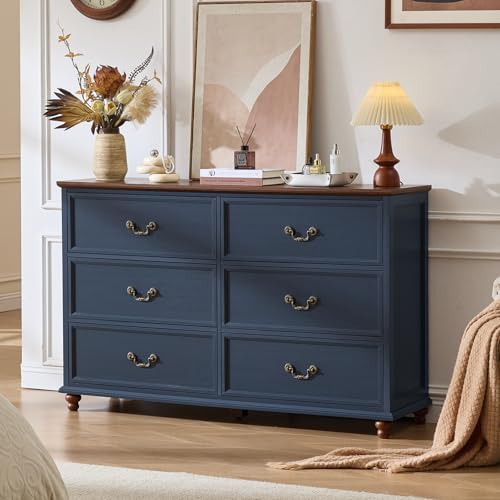
Navy Blue Dresser: The Complete Buying and Styling Guide
Everything you need to know before choosing a navy blue dresser — from finish options and drawer configurations to room pairing and hardware selection. Research-backed guidance for confident buying decisions.
Why a Navy Blue Dresser Deserves a Place in Your Bedroom
Navy blue has moved far beyond its traditional association with formal living rooms and menswear. In bedroom furniture, it has become one of the most requested finishes because it occupies a rare sweet spot: deep enough to feel sophisticated, yet neutral enough to work with a wide range of palettes. A navy blue dresser anchors a room without the heaviness of black or the visual fatigue of overly bright colors.
From a design standpoint, navy functions as a grounding neutral. It reflects far less light than white or pastel finishes, which gives a dresser visual weight and presence. In a bedroom where the bed is the focal point, this helps the storage piece read as intentional architecture rather than an afterthought. Designers frequently use navy as the "bridge" color between warm wood floors and cool wall tones, which is why it appears in coastal, transitional, and modern farmhouse interiors alike.
For buyers in the research phase, the practical takeaway is this: navy is not a trend color that will date quickly. It has been used in furniture finishing for centuries and continues to be reformulated in matte, satin, and lacquered versions. That longevity matters when you are selecting a piece you intend to keep for years.
Navy Blue Dresser Styles and Finish Variations
Not all navy dressers are created equal. The finish, silhouette, and detailing dramatically change how the color reads in a room. Below is a breakdown of the most common interpretations you will encounter while shopping.
Matte Navy
Matte finishes absorb light and produce a soft, chalky appearance. They suit modern farmhouse and Scandinavian-influenced interiors and hide fingerprints better than glossy alternatives. A matte navy dresser pairs naturally with natural wood accents and woven textures.
Satin Navy
Satin sits between matte and high-gloss. It has a subtle sheen that catches light gently, giving the piece a slightly more polished look without the mirror-like reflections of lacquer. Satin navy works well in transitional bedrooms where you want a touch of formality.
High-Gloss or Lacquered Navy
Glossy navy reflects the room around it, making the dresser appear more sculptural. This finish is common in contemporary and Hollywood Regency-inspired designs. It shows dust and smudges more readily, so it suits buyers who do not mind routine wiping.
Distressed or Antiqued Navy
Distressed navy dressers have intentionally rubbed edges and a slightly uneven patina. They read as vintage or cottage-inspired and work beautifully in rooms with reclaimed wood, linen, and layered textiles. This style is often found in the mid-tier and premium segments of the market.
Two-Tone Navy
A growing number of designs pair navy drawer fronts with natural wood tops or white-painted frames. These two-tone pieces lighten the visual weight of the dresser and are especially effective in smaller bedrooms where an all-navy piece might feel too dominant.
If you are comparing this color against other dark options, our broader guide on dresser materials and finishes explains how paint, stain, and lacquer differ in durability and maintenance.
Choosing the Right Drawer Configuration for a Navy Dresser
The drawer count and layout determine how usable a dresser is day to day. Navy dressers are available in nearly every configuration, so match the piece to your actual wardrobe rather than to a showroom display.
| Configuration | Best For | Typical Placement |
|---|---|---|
| 3-drawer navy dresser | Small bedrooms, nurseries, guest rooms, and entryway storage | Narrow walls, beside a bed, or in a compact apartment |
| 4-drawer navy dresser | Single adults with a moderate wardrobe | Standard bedroom walls and mid-sized rooms |
| 5 to 6-drawer navy dresser | Couples or buyers with seasonal clothing rotation | Primary bedrooms with dedicated furniture walls |
| 7 to 9-drawer navy chest | Large wardrobes, shared storage, or linen and accessory organization | Spacious bedrooms and dressing areas |
| Tall or narrow navy dresser | Small footprints and vertical storage needs | Corners and tight wall spaces |
Beyond count, pay attention to drawer depth. Shallow drawers are ideal for folded shirts and accessories, while deep drawers handle denim, knitwear, and bedding. If you are working with limited floor space, our guide to narrow dressers explains how to maximize storage without crowding the room.
Soft-close glides are a meaningful upgrade in the mid-range and premium tiers. They reduce noise and prevent drawers from slamming, which matters in nurseries and shared bedrooms. If that feature matters to you, our overview of the modern dresser with soft-close drawers is a useful reference point.
Hardware Pairings That Elevate a Navy Blue Dresser
Hardware is the fastest way to shift a navy dresser from casual to formal, or from traditional to modern. Because navy is a deep, cool-toned base, the metal you choose becomes a defining visual element.
Gold and Brass
Gold hardware against navy is one of the most enduring combinations in furniture design. The warm metallic contrast reads as upscale and works particularly well in traditional, transitional, and glam-inspired bedrooms. A navy blue dresser with gold hardware is a strong choice if you want the piece to feel like a statement.
Black
Black pulls and handles create a moodier, more industrial look. This pairing suits modern and minimalist bedrooms and works well when the room already includes black window frames, lighting, or bedding accents.
Satin Nickel and Brushed Silver
Cool metals tone down the formality of navy and suit coastal and contemporary interiors. They are a safe choice if you plan to keep the rest of the room neutral.
Leather and Wood Pulls
Leather tab pulls and wood knobs soften navy's formality and lean into Scandinavian and organic modern aesthetics. These are often found on mid-tier and premium dressers with a design-forward focus.
If you are considering a hardware swap on an existing piece, our guide to modern drawer pulls covers sizing and style compatibility.
Room-by-Room Placement Guide
Navy is more versatile than many buyers expect. The key is balancing its visual weight with lighter elements elsewhere in the room.
Primary Bedroom
A navy dresser in a primary bedroom works best against lighter walls — white, cream, or pale greige — so the piece reads as a deliberate focal element. Pair it with warm wood flooring and light bedding to prevent the room from feeling cave-like. Our article on the navy blue dresser for bedroom setup covers layout and lighting considerations in more detail.
Nursery
Navy is increasingly popular in nurseries because it grows with the child. A navy dresser paired with white or light wood crib furniture creates a calm, timeless palette. If you need a changing surface, look at options like a navy blue changing table dresser that combines storage with a dedicated changing top.
Guest Room
In a guest room, a navy dresser adds a hotel-like polish. Keep the surrounding palette simple and choose a configuration with at least one empty drawer so guests have space to unpack.
Living Room or Entryway
Navy dressers are increasingly used outside the bedroom as accent storage. A navy chest of drawers can serve as a media console, entryway catch-all, or linen storage in a hallway. The dark finish hides wear better than white in high-traffic areas.
Small Bedrooms
In compact rooms, choose a tall, narrow navy dresser to preserve floor space. Pair it with a mirror above or beside it to reflect light and reduce the perceived weight of the dark finish.
Materials and Build Quality
A navy finish can mask lower-grade materials in photographs, so it is worth understanding what sits beneath the paint. Solid wood dressers — particularly oak, maple, and poplar — offer the best long-term durability and can be refinished if the surface is damaged. Engineered wood with a painted finish is common in the entry-level and mid-range tiers and is a reasonable choice for guest rooms or short-term needs.
Joinery matters as much as material. Dovetail joints in drawer boxes signal a more durable build than stapled or glued construction. Drawer glides should feel smooth and consistent across their full travel; side-mounted roller glides are common at entry level, while under-mount ball-bearing glides with soft-close appear in the mid-range and premium tiers.
For buyers comparing construction methods, our guide on the modern solid wood chest of drawers explains what to look for in drawer boxes and carcass construction.
Advantages and Trade-offs of a Navy Blue Dresser
Advantages
- Versatile dark neutral that pairs with warm and cool metals
- Hides minor scuffs and wear better than white finishes
- Adds visual anchor and depth to a bedroom
- Works across modern, coastal, traditional, and farmhouse styles
- Grows with a child in nursery settings
- Available across all drawer counts and price tiers
Trade-offs
- Can make small, poorly lit rooms feel heavier
- Shows dust more visibly than light finishes
- Glossy navy shows fingerprints and smudges
- Requires balancing with lighter walls and textiles
- Deep navy can clash with strongly warm color palettes if unmanaged
Navy Blue Dresser Buying Checklist
Before you commit to a purchase, work through this checklist to make sure the piece fits your room and your routines.
- Measure the wall and the walking path. Leave at least 30 inches of clearance in front of the dresser for drawers to open fully.
- Confirm drawer count and depth. Count your folded clothing categories before choosing between a 4-drawer and 6-drawer configuration.
- Decide on finish. Matte for low maintenance, satin for a polished look, gloss for a statement piece.
- Choose hardware that matches existing metals. Mixing metals is fine, but limit it to two families per room.
- Check the drawer glide type. Soft-close and under-mount glides are worth prioritizing in the mid-range and premium tiers.
- Verify anti-tip hardware is included. This is especially important for tall navy dressers and nursery use.
- Plan lighting. A navy dresser benefits from a bedside lamp or overhead fixture to prevent the corner from feeling dark.
Frequently Asked Questions
What room works best with a navy blue dresser?
Navy works well in bedrooms, nurseries, guest rooms, and even living rooms. It pairs naturally with white walls, warm wood tones, and metallic accents, making it adaptable to modern, coastal, traditional, and transitional interiors.
How many drawers should a navy blue dresser have?
A 3-drawer model suits small bedrooms and nurseries, a 4 to 6-drawer model covers most adult wardrobes, and a 7 to 9-drawer chest works well for couples or large clothing collections.
What hardware looks best on a navy blue dresser?
Gold and brass create a classic, high-contrast look. Black hardware delivers a modern industrial feel, while satin nickel and brushed silver offer a cooler, more understated contrast for contemporary bedrooms.
Is a navy blue dresser suitable for a small bedroom?
Yes. Choose a narrow or tall silhouette to preserve floor space, and pair it with light bedding and a mirror to keep the room feeling open. Navy reads as intentional in a small room when balanced with lighter elements.
Can a navy dresser be paired with a matching nightstand?
Absolutely. A coordinated navy blue dresser and nightstand set creates a cohesive bedroom look. If you prefer a lighter palette, pair the dresser with natural wood or white nightstands instead.
Ready to Compare Navy Blue Dresser Options?
Browse curated navy dressers, chests, and matching sets selected for build quality and design versatility.
View Recommended Navy Dressers