Makeup Mirror with Table: The Complete Buying Guide
Everything you need to know about choosing a makeup mirror with table — mirror types, table designs, lighting, storage, and setup tips for a flawless daily routine.
EXPLORE RECOMMENDATIONSWhy a makeup mirror with table matters: A dedicated makeup station combines proper lighting, comfortable seating, and organized storage in one functional piece. Whether you are setting up a first vanity or upgrading an existing bedroom corner, understanding the components helps you choose a setup that fits your space, routine, and long-term needs.
What Is a Makeup Mirror with Table?
A makeup mirror with table is a combined furniture piece designed for grooming and cosmetics. It pairs a reflective surface — often lighted or magnifying — with a flat work surface and storage drawers. This setup differs from a standalone makeup dresser because the table and mirror are integrated as one coordinated unit, optimizing the workspace for seated use.
These setups are popular in bedrooms, dressing areas, and bathrooms where floor space is limited but a dedicated routine zone is valued. Many models also function as a secondary workspace or writing desk when the mirror is folded away, making them versatile for compact living.
Key Components to Evaluate
Before comparing specific models, understand the four core components that determine how well a makeup mirror with table performs in daily use.
Mirror Type
Standard, lighted, magnifying, or tri-fold. Lighted and magnifying mirrors improve precision for detailed application, while standard mirrors suit general grooming.
Table Surface
Solid wood, engineered wood, glass, or marble-effect tops. Surface material affects durability, cleaning ease, and how well the piece matches existing bedroom furniture.
Storage Layout
Drawer count and configuration matter. Shallow drawers suit cosmetics, deeper drawers hold skincare and tools, and side compartments keep brushes organized.
Lighting Setup
Built-in LED, surround bulbs, or reliance on room lighting. Consistent, diffused light reduces shadows and improves color accuracy during application.
Mirror Types Explained
The mirror is the functional heart of the setup. Choosing the right type depends on your grooming habits and the ambient light in your room.
Standard Flat Mirrors
A simple flat mirror offers a clear reflection without built-in illumination. These are the most straightforward option and work well in rooms with strong natural light or well-placed overhead fixtures. They are easier to maintain and typically more durable than lighted alternatives.
Lighted LED Mirrors
Built-in LED strips or surround bulbs provide consistent illumination that mimics daylight. This is especially helpful for evening routines or rooms with limited windows. Look for adjustable brightness and color temperature settings if you want flexibility between warm and cool lighting.
Magnifying Mirrors
Magnification (typically 2x to 10x) helps with detailed tasks like eyeliner, brow shaping, and skincare application. Some setups include a detachable magnifying panel alongside the main mirror, giving you both wide-view and close-up options in one station.
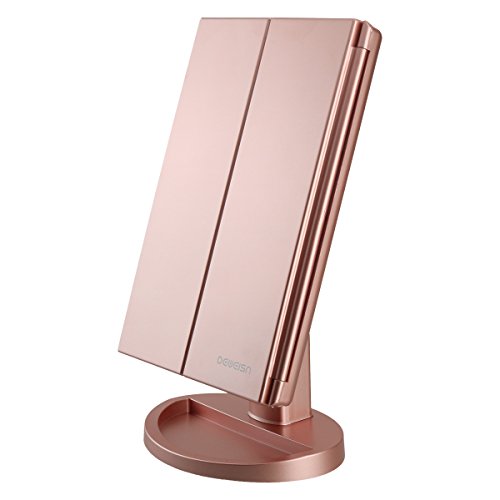
Tri-Fold and Winged Mirrors
Tri-fold designs provide side angles that help with profile views and peripheral styling. They are common in makeup vanity and dresser combo units and offer a more immersive grooming experience.
Table Styles and Configurations
The table portion defines how the unit fits into your room and how much workspace you have. Consider these common configurations:
- Compact single-drawer tables: Best for small bedrooms or corners. These entry-level setups typically include one shallow drawer and a fixed mirror.
- Multi-drawer vanity tables: Mid-range configurations with three to five drawers offer dedicated storage for cosmetics, skincare, and tools without cluttering the surface.
- Wide double-sided tables: Premium layouts with split storage and a broader work surface. These suit shared bedrooms or users with extensive collections.
- Corner and wall-mounted tables: Space-saving designs that tuck into unused corners or attach to the wall. Ideal for apartments and dorm rooms.
If you are comparing a standalone makeup vanity table without mirror against an integrated unit, note that combined setups save space but limit future flexibility. Integrated units are best when you want a single coordinated piece.
Quality Tiers: What to Expect
To compare setups without referencing specific figures, use these universal quality tiers. Each tier reflects construction quality, material grade, and feature depth relative to the category.
| Tier | Best For | Typical Characteristics |
|---|---|---|
| Entry-level | First setups, tight spaces | Engineered wood construction, basic flat mirror, one or two drawers, simple assembly |
| Mid-range | Daily routines, moderate storage | Solid wood or reinforced engineered wood, lighted or magnifying mirror options, three to five drawers, smoother hardware |
| Premium | Extensive collections, shared use | Solid hardwood frames, adjustable LED lighting, tri-fold or large mirrors, soft-close drawers, reinforced joinery |
| Luxury | Dedicated dressing rooms | Premium materials such as marble-effect tops, custom hardware, integrated charging, professional-grade mirror clarity |
In general, mid-range and premium models offer smoother drawer mechanisms and more consistent lighting compared to entry-level units. The upgrade is worthwhile if the setup will be used daily or holds a large collection of products.
How to Choose the Right Size
Measure your available floor space and account for seating clearance before deciding on a table size. A comfortable setup needs roughly 24 to 30 inches of width for the seated user, plus space to pull the chair back.
- Small rooms (under 100 sq ft): Choose a compact table no wider than 32 inches. Corner designs or wall-mounted options preserve floor space.
- Standard bedrooms: A 36 to 48 inch table fits well along a wall and provides ample surface for daily essentials.
- Large rooms or shared spaces: Wider tables with split storage suit two users or extensive collections. Confirm drawer clearance and mirror height relative to seating.
Mirror height should align with your seated eye level. If the mirror is fixed, check that the reflection captures your face and upper shoulders without requiring you to lean forward.
Lighting Considerations
Good lighting is the difference between a functional station and a frustrating one. If the table includes a lighted mirror, verify that the light is diffused and adjustable. Harsh point lighting creates shadows that make blending and color matching difficult.
For setups without built-in lighting, position the table near a window if possible, or add a soft, adjustable desk lamp at eye level. Avoid placing the mirror directly under a single overhead bulb, which casts shadows downward across the face.
Organization and Storage Tips
A makeup mirror with table works best when the surface stays clear. Use these practical strategies to keep the station functional:
Workspace Organization Checklist
- Use drawer dividers to separate cosmetics by category (face, eyes, lips, tools).
- Keep daily essentials on a small tray within arm's reach; store backups in deeper drawers.
- Add a makeup organizer for dresser top if surface clutter accumulates quickly.
- Store brushes upright in a holder to preserve bristle shape and save drawer space.
- Rotate seasonal products to keep the active workspace uncluttered.
- Wipe the mirror and surface weekly to prevent product buildup.
If storage needs grow beyond the table's capacity, consider pairing it with a nearby makeup dresser with mirror or a dedicated chest of drawers for overflow.
Materials and Finishes
The material affects durability, maintenance, and visual harmony with your bedroom. Solid wood frames resist wear better over time, while engineered wood offers stability at lower weight. Glass and marble-effect tops are easy to clean but should be protected from heavy impacts.
Match the finish to your existing furniture where possible. Neutral finishes — white, natural wood, black, or walnut — blend easily and remain versatile if you redecorate. For more on coordinating pieces, see our materials and finishes guide.
Setup and Placement Tips
Placement affects both usability and the room's flow. Position the table where the mirror receives even light and where you can sit comfortably without blocking walkways. Leave at least 24 inches of clearance behind the chair for easy movement.
If the room has limited natural light, choose a spot near an outlet for a lighted mirror or a supplementary lamp. Keep the table away from direct heat sources and humid areas to protect wood finishes and mirror coatings.
Frequently Asked Questions
What is a makeup mirror with table?
A makeup mirror with table is a combined vanity furniture piece that pairs a mirror with a dedicated table surface for cosmetics, skincare, and grooming essentials. It creates a dedicated station for daily routines.
What size makeup table with mirror should I choose?
Choose based on available floor space and storage needs. Compact setups work well in small bedrooms, while wide tables with multiple drawers suit larger rooms and extensive collections. Always measure your space and account for comfortable seating clearance.
Are lighted makeup mirrors worth it?
Lighted mirrors provide consistent illumination that mimics natural daylight, which helps with color accuracy and precision. They are especially useful in rooms with limited natural light or uneven overhead lighting.
How do I organize a makeup table with mirror?
Use drawer dividers, acrylic organizers, and small trays to separate categories. Keep daily essentials within arm's reach, store seasonal or backup items in deeper drawers, and regularly declutter to maintain a functional workspace.
Can a makeup table double as a desk?
Yes. Many flat-top designs work as a writing or laptop desk when the mirror is folded or removed. Check that the table height and surface area suit seated work if dual use is important to you.