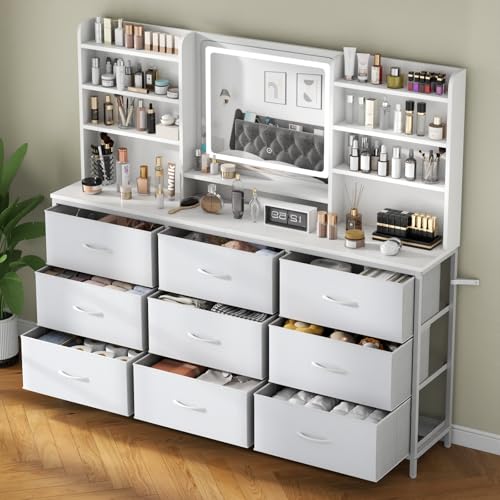
Long White Dresser With Mirror: The Complete Buying Guide
A long white dresser with mirror combines generous horizontal storage with a bright, airy look that suits modern, farmhouse, coastal, and transitional bedrooms. This guide explains how to evaluate dimensions, drawer layouts, materials, mirror types, and placement so you can choose a piece that fits your room and your daily routine.
Why Choose a Long White Dresser With Mirror
A long dresser spreads storage across a wide footprint instead of stacking it vertically. That horizontal format suits bedrooms where wall space is plentiful but floor depth is limited. The white finish reflects light and keeps the room feeling open, while the mirror adds a second layer of brightness and gives you a practical spot for a final check before leaving the house.
The combination is especially effective in primary bedrooms, guest rooms, and dressing areas. A single wide surface holds a lamp, a tray for everyday items, and a few decorative pieces without feeling crowded. If you are comparing formats, our guide to long dresser options explains how width changes the way a room feels, and the long dresser for bedroom overview covers layout planning in more detail.
Dimensions and Room Fit
Width is the defining measurement for a long dresser. Most long models fall between roughly 60 and 80 inches wide, with depth typically between 18 and 20 inches. Height varies more widely, from low-profile designs around 30 inches to taller models near 40 inches. Always confirm the exact figures for a specific piece before planning the room.
Leave at least 30 inches of clear walkway in front of the dresser so drawers can open fully. If the dresser sits opposite the bed, check that the total depth of the dresser plus the open drawer does not block movement. For narrow rooms, a long narrow dresser can preserve floor space while still offering a wide top surface.
| Room Scenario | Suggested Width Range | What to Watch For |
|---|---|---|
| Small bedroom, single wall | Compact long format | Drawer clearance and walkway width |
| Primary bedroom, wide wall | Full long format | Mirror proportion and top surface balance |
| Guest room or dressing area | Mid-width long format | Storage separation for shared use |
| Open-plan bedroom with sitting area | Full long format | Sightlines from the bed and seating |
If your room leans toward a larger footprint, the large white dresser with mirror guide covers wider configurations. For a broader comparison of white finishes across sizes, see the large white dresser overview.
Drawer Layouts and Storage Capacity
Long dressers typically offer six to nine drawers, often arranged in two or three columns. The layout matters more than the raw count. A mix of deep drawers for folded clothing and shallow drawers for accessories keeps the piece practical day to day.
Common configurations
- Six-drawer layout: Two columns of three, with a balanced mix of deep and medium drawers. A solid choice for couples sharing storage.
- Seven-drawer layout: Often adds a central column or a split top row for smaller items.
- Eight-drawer layout: Usually four columns of two, which suits organised separation of clothing categories.
- Nine-drawer layout: Three columns of three, offering the most granular separation for folded clothing, linens, and accessories.
Drawer glide quality matters as much as the count. Entry-level models often use basic side-mounted glides, while mid-range and premium tiers typically move to full-extension or soft-close mechanisms. Full-extension glides let you reach the back of the drawer, which is especially useful on deep drawers in a wide dresser.
For rooms that need maximum drawer count in a wide format, the long dresser with lots of drawers overview compares high-count layouts. If you prefer deeper storage for bulky items, the long dresser with deep drawers guide explains the trade-offs.
Materials and Finishes
The white finish is only as good as the substrate beneath it. Solid wood and high-grade engineered wood are the most common constructions, and each has practical implications for durability and long-term appearance.
Solid wood
Solid wood frames and drawer fronts resist wear and can be refinished if the surface is damaged. Oak, maple, and pine are common choices. Solid wood is heavier, which can make a long dresser harder to move, but the weight often contributes to a more stable feel.
Engineered wood
Engineered wood with a durable painted or lacquered finish offers a consistent surface and is generally lighter. Quality varies widely, so check the drawer joinery and the thickness of the panels. A well-built engineered wood dresser in the mid-range tier can perform well for years in a bedroom setting.
Finish considerations
- Painted finish: Classic white look, easy to touch up in small areas.
- Lacquered finish: Smoother surface with a slight sheen, often easier to wipe clean.
- Matte finish: Hides minor marks well and suits modern and minimalist rooms.
- Distressed finish: Suits farmhouse and cottage styles but can show wear patterns unevenly over time.
If you are weighing materials across a wider range of pieces, the laminate dresser guide covers how laminate surfaces compare with painted and lacquered finishes. For a broader look at white finishes across formats, see the long white dresser overview.
Mirror Types and Attachment Styles
The mirror is what separates this piece from a standard long dresser. Attachment style affects both the look and the practicalities of installation.
Attached mirror
An attached mirror is fixed to the dresser frame, often with a wooden frame that matches the dresser. This creates a cohesive look and simplifies alignment, but it makes the piece taller and heavier to move.
Detached mirror
A detached mirror sits on top of the dresser and is usually secured with brackets or a stand. It offers more flexibility for repositioning and is easier to move, but it requires careful alignment during setup.
Mirror shape and proportion
- Rectangular mirror: The most common pairing for a long dresser; echoes the horizontal lines of the piece.
- Arched mirror: Softens a rectangular dresser and suits transitional and farmhouse styles.
- Framed vs. frameless: A framed mirror adds visual weight and can match the dresser finish; a frameless mirror keeps the look lighter.
Style Directions
A long white dresser with mirror fits several design directions. The right choice depends on the surrounding room rather than the dresser alone.
Modern and minimalist
Clean lines, flat drawer fronts, and minimal hardware suit modern bedrooms. A frameless or thin-framed mirror keeps the look light. Handleless or push-to-open drawers are common in this style.
Farmhouse and cottage
Raised panel details, bracket feet, and classic hardware suit farmhouse rooms. An arched mirror or a mirror with a gently distressed frame reinforces the cottage feel.
Coastal and transitional
White finishes naturally suit coastal rooms. Look for subtle paneling, brushed metal hardware, and a mirror with a soft arch or a simple rectangular frame.
Mid-century inspired
Tapered legs, angled drawer pulls, and a low profile can bring a mid-century feel to a white dresser. A rectangular mirror with a slim frame complements this direction.
For more styling inspiration, the living room dresser ideas guide shows how a long dresser can work outside the bedroom, and the light-colored dresser overview covers how pale finishes interact with different room palettes.
Quality Checkpoints by Tier
Quality tiers describe relative position in the market rather than absolute figures. Use them to set expectations for construction and features before you compare specific pieces.
| Tier | Typical Construction | Drawer Glides | Best For |
|---|---|---|---|
| Entry-level | Engineered wood panels, basic joinery | Side-mounted, partial extension | Guest rooms and light daily use |
| Mid-range | Solid wood fronts or higher-grade engineered wood | Full-extension or soft-close | Primary bedrooms with daily use |
| Premium | Solid wood frame and drawer boxes, reinforced joinery | Soft-close full-extension, metal runners | Long-term use and frequent opening |
| Luxury | Hardwood construction, dovetail joinery, hand-finished surfaces | High-grade soft-close hardware | Statement pieces and heirloom use |
Regardless of tier, check three things in person or in detailed product photos: how the drawer boxes are joined, whether the glides feel smooth under load, and whether the mirror is securely attached. A mid-range model with well-built drawers often outperforms a higher-tier model with weak hardware.
Placement and Room Planning
A long dresser with mirror is a focal point, so placement matters. The most common position is against the longest uninterrupted wall in the bedroom, either opposite the bed or perpendicular to it.
Opposite the bed
This placement works well when there is enough clearance for drawer extension. The mirror reflects the room and can make the space feel larger, but avoid placing it directly opposite a window if glare is a concern.
Perpendicular to the bed
This arrangement keeps the dresser accessible from the side of the bed and often provides a better sightline from the doorway. It also leaves the wall opposite the bed free for artwork or a window.
Dressing area or walk-in closet
A long white dresser with mirror can anchor a dressing area or a large walk-in closet. In these settings, the mirror serves a practical function as a full-length check point. The large walk-in closet dresser guide covers storage planning for these spaces.
Lighting considerations
Place the dresser where the mirror can catch natural light without facing a direct glare source. A lamp on one side of the dresser top balances the composition and provides task lighting for the mirror.
Care and Maintenance
White finishes show marks more readily than darker woods, so a simple routine keeps the piece looking fresh.
- Wipe the surface with a soft, slightly damp cloth and dry immediately.
- Avoid abrasive cleaners on painted and lacquered finishes.
- Clean the mirror with a glass cleaner and a lint-free cloth.
- Check drawer glides periodically and tighten hardware as needed.
- Keep the dresser out of direct sunlight to slow finish fading.
- Re-tighten anti-tip hardware after moving the dresser.
If the finish becomes worn in a small area, a matching touch-up paint or a professional refinish can restore the surface. Solid wood pieces are easier to refinish than engineered wood, which is worth considering if you plan to keep the piece for many years.
Frequently Asked Questions
What size room suits a long white dresser with mirror?
A long white dresser with mirror works best in bedrooms with at least one full wall of open floor space. Measure the wall and leave clearance for drawer extension and walkways before committing.
How many drawers should a long white dresser with mirror have?
Most long models offer six to nine drawers. Six-drawer layouts suit couples sharing storage, while nine-drawer layouts provide more separation for folded clothing, linens, and accessories.
Is a mirrored dresser safe for a nursery or child's room?
Choose models with tempered glass and anti-tip anchoring hardware. Secure the dresser to the wall and avoid placing heavy items on top near the mirror edge.
What materials are best for a white dresser with mirror?
Solid wood and high-grade engineered wood with a durable painted or lacquered finish hold up well. Check drawer joinery, glide quality, and hardware before deciding.
Ready to Compare Long White Dressers With Mirrors?
Review the recommended options below to compare drawer layouts, mirror styles, and construction quality. Use the guide above to match a model to your room and daily storage needs.
Explore Recommended Options