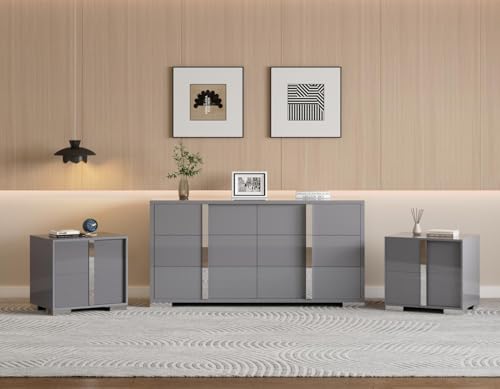
Gray Nightstand and Dresser Set: Your Complete Buying Guide
A matching gray nightstand and dresser set brings instant cohesion to your bedroom. Learn how to choose the right size, finish, and construction quality so you invest in a coordinated set that lasts for years.
Explore Buying CriteriaWhy a matching set makes sense: A gray nightstand and dresser set eliminates the guesswork of mixing finishes, ensures proportional harmony, and typically offers better overall value for its tier than buying each piece separately. This guide walks you through every decision point — from gray tone selection to drawer glide quality — so you can buy with confidence.
Why Choose a Gray Nightstand and Dresser Set?
Gray has become one of the most requested bedroom furniture finishes for good reason. It sits comfortably between warm wood tones and stark white, making it remarkably adaptable to different design styles. A coordinated gray set works equally well in modern, transitional, farmhouse, and Scandinavian interiors.
Beyond aesthetics, a matching set solves a practical problem: proportion and finish consistency. When the nightstand and dresser share the same gray tone, hardware style, and construction approach, the room feels intentional rather than assembled piecemeal. This is especially valuable in smaller bedrooms where visual clutter is harder to hide.
- Versatile neutral: Gray pairs with virtually any bedding color, wall paint, and accent palette.
- Light-reflective: Lighter gray tones help small rooms feel more open compared to darker wood finishes.
- Cohesive design: Matching hardware and finish create a polished, designer-like result.
- Long-term relevance: Gray is a well-established neutral that resists short-lived trend cycles.
Choosing the Right Gray Tone
Not all grays are equal. The undertone of your gray furniture will dramatically affect how it reads in your room, especially under different lighting conditions. Before committing to a set, identify whether you want a warm, cool, or true neutral gray.
| Gray Tone | Undertone | Best For | Pairs Well With |
|---|---|---|---|
| Warm Gray | Beige, taupe, greige | Cozy, traditional bedrooms | Warm wood floors, cream bedding, brass hardware |
| Cool Gray | Blue, green, silver | Modern, minimalist spaces | White walls, chrome hardware, navy accents |
| True Neutral Gray | Balanced, no strong cast | Transitional, flexible rooms | Almost any palette, black or gold hardware |
| Charcoal / Dark Gray | Deep, near-black | Dramatic, spacious rooms | Light walls, light bedding, metallic accents |
Key Buying Criteria for a Gray Nightstand and Dresser Set
When you are researching a coordinated set, there are five criteria that matter most. Evaluate each one against your room and storage habits before narrowing your options.
1. Material and Construction Quality
The frame material determines durability, weight, and how the gray finish ages. Solid wood sets sit at the premium and luxury tiers, offering the longest lifespan and the ability to be refinished. Engineered wood with quality veneers occupies the mid-range tier and delivers a smooth, uniform gray finish that resists warping in stable indoor climates. Entry-level sets often use particle board with laminated finishes — serviceable for light use but less resilient over time.
- Solid wood: Premium tier; repairable, heavy, and long-lasting.
- Engineered wood with veneer: Mid-range tier; consistent finish, good stability.
- Laminated particle board: Entry-level tier; lighter weight, best for low-traffic rooms.
2. Drawer Glide Mechanisms
Drawer glides are the most overlooked quality indicator. Basic sets use side-mounted roller glides, while mid-range sets upgrade to ball-bearing side glides, and top-tier sets often feature soft-close under-mount glides. If you plan to use the dresser daily, prioritize a set with at least ball-bearing glides — the difference in smoothness and longevity is substantial. For those comparing hardware specifications, a resource on heavy-duty drawer slides can help you understand what to look for.
3. Proportional Sizing
A matching set should be proportionally balanced. As a general rule, the nightstand height should sit within a few inches of your mattress top, while the dresser should leave at least 24 inches of walking clearance in front of it. Measure your room and mark the footprint with painter's tape before purchasing.
- Nightstand: Typically 20–28 inches tall; ensure top is level with or slightly below mattress height.
- Dresser: Standard widths range from compact 40-inch models to wide 72-inch options.
- Clearance: Allow 24–36 inches of open floor space in front of drawers for comfortable use.
4. Finish Durability
Gray finishes vary in their resistance to scratches, moisture, and fading. Painted finishes offer a smooth, opaque look but can chip at drawer edges. Laminate finishes are more resistant to moisture and scratches but lack the tactile warmth of painted or veneered surfaces. Look for sets that mention a protective topcoat or sealed finish.
5. Hardware and Styling Details
Hardware is where a gray set expresses its personality. Brushed nickel and chrome read as modern and cool, while brass and gold warm up the gray considerably. Matte black hardware creates a bold, contemporary contrast. If you prefer flexibility, choose a set with standard-spaced hardware holes so you can swap pulls later without redrilling.
Sizing Guide: Matching Nightstand and Dresser to Your Room
Room dimensions dictate what set configuration will work best. Below is a practical breakdown based on common bedroom sizes.
| Bedroom Size | Recommended Dresser Width | Nightstand Configuration | Space-Saving Tip |
|---|---|---|---|
| Small (under 100 sq ft) | 40–50 inches | Single nightstand | Choose a tall, narrow dresser to free floor space |
| Medium (100–150 sq ft) | 50–60 inches | One or two nightstands | Keep at least 24 inches between bed and dresser |
| Large (150+ sq ft) | 60–72 inches | Two nightstands | Consider a wide dresser with a mirror for visual balance |
If your room is on the smaller side, explore compact options such as a 24-inch wide cabinet with drawers or a 40-inch dresser to preserve walking space. For larger rooms, a 50-inch dresser or 72-inch heavy-duty configuration may suit your storage needs better.
Pros and Cons of Buying a Matching Gray Set
✔ Advantages
- Guaranteed finish and hardware consistency
- Proportional design already coordinated
- Often better overall value for the tier than separate pieces
- Simplifies the design decision process
- Creates a polished, intentional bedroom look
✘ Considerations
- Less flexibility to mix styles or finishes later
- Set configurations may not fit every room layout
- Replacing one damaged piece can be harder
- Some sets pair a large dresser with a very small nightstand
Styling Your Gray Nightstand and Dresser Set
Once the set is in place, styling determines whether the room feels complete. Here are practical approaches for three popular design directions.
Modern Minimalist
Keep surfaces sparse. A single sculptural lamp on the nightstand, a low-profile tray on the dresser, and a framed print or two above. Let the clean gray finish carry the visual weight. Choose hardware in brushed nickel or matte black.
Warm Transitional
Introduce texture through a woven runner, a small plant, and brass or gold hardware accents. Layer a mirror above the dresser to reflect light and add depth. Warm gray undertones pair especially well with cream and oatmeal textiles.
Soft Farmhouse
Pair the gray set with white bedding, a distressed wood mirror frame, and simple ceramic decor. Avoid over-styling — farmhouse works best when the furniture feels functional and lived-in. A gray dresser with mirror can anchor this look beautifully.
Organizing Your Gray Dresser and Nightstand
A coordinated set is only as good as how you use it. Assign clear roles to each piece so the system stays functional.
- Nightstand: Keep only daily essentials — a book, charging cable, reading glasses, and a small lamp. Use the drawer for one or two items you need at arm's reach.
- Dresser top: Reserve for decor and a mirror or jewelry tray. Avoid letting it become a drop zone for loose items.
- Dresser drawers: Designate top drawers for small items (socks, accessories), middle drawers for folded tops, and bottom drawers for bulkier clothing or linens. Drawer dividers make a significant difference.
- Seasonal rotation: Store off-season clothing in under-bed bins or a closet, keeping dresser drawers focused on current-season items.
For deeper drawer organization strategies, see our guide to dressers with deep drawers and consider how drawer depth affects what you can store.
Maintenance and Care for Gray Furniture
Gray finishes show dust and smudges more readily than dark wood, so a light maintenance routine keeps the set looking fresh.
- Dust weekly with a soft microfiber cloth — avoid paper towels, which can micro-scratch painted surfaces.
- Use a damp cloth with mild soap for sticky spots, then dry immediately.
- Avoid silicone-based polishes on painted or laminate gray finishes.
- Use felt pads under decor items on the dresser top to prevent scratches.
- Keep the set out of direct sunlight to prevent uneven fading.
- Tighten hardware screws every few months to prevent loosening.
Common Mistakes to Avoid
- Buying without measuring: Always tape out the footprint before purchasing.
- Ignoring drawer glide quality: Cheap glides are the first component to fail.
- Mismatching gray undertones: A cool gray nightstand next to a warm gray dresser looks unintentional.
- Overlooking mattress height: A nightstand that sits far below the mattress is awkward to use.
- Skipping the anchor kit: Dressers should be wall-anchored for safety, especially in homes with children.
Related Set Options to Explore
If you are still comparing configurations, these related set styles may help narrow your decision.
Frequently Asked Questions
What should I look for in a gray nightstand and dresser set?
Focus on consistent finish quality, drawer glide mechanisms, material construction, and proportional sizing between the nightstand and dresser. Check that the set fits your room dimensions and complements your existing decor. Solid wood and quality engineered wood sets offer the best long-term durability.
Are gray bedroom furniture sets suitable for small rooms?
Yes. Gray is an excellent neutral that reflects light and creates an airy feel. Choose a compact dresser and a single nightstand for smaller spaces, and opt for lighter gray tones to maximize the sense of openness. Tall, narrow dressers preserve floor space while offering vertical storage.
How do I maintain a gray dresser and nightstand set?
Dust regularly with a soft microfiber cloth, avoid harsh chemical cleaners, and use coasters to prevent water rings. For painted finishes, touch up minor scuffs promptly. Keep furniture away from direct sunlight to prevent fading, and tighten hardware periodically.
Can I mix a gray set with other wood tones?
Absolutely. Gray is a flexible neutral that layers well with warm wood floors, walnut accents, and even black metal details. The key is to repeat the secondary tone at least twice in the room so the mix feels intentional rather than accidental.
What drawer glide type is best for daily use?
Ball-bearing side glides offer a good balance of smoothness and durability for mid-range sets. Soft-close under-mount glides sit at the top tier and provide the quietest, most refined operation. Basic roller glides are serviceable but less smooth over time.