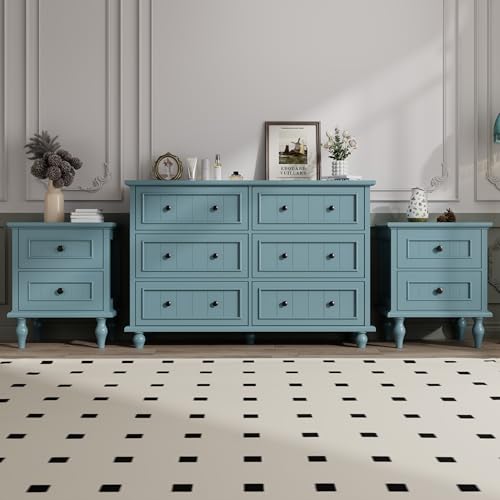
Blue Dresser and Nightstand Set
Discover how a coordinated blue dresser and nightstand set can transform your bedroom into a calm, cohesive retreat. Learn about finishes, construction quality, drawer configurations, and styling strategies before you invest.
Why choose a blue dresser and nightstand set? A coordinated pair removes the guesswork from bedroom design. The matching finish and hardware create visual harmony, while the dresser handles bulk storage and the nightstand keeps daily essentials within arm's reach. Blue, in particular, brings a soothing, grounded quality that works across coastal, modern farmhouse, transitional, and contemporary interiors.
Why a Matching Blue Dresser and Nightstand Set Works
Purchasing furniture as a set offers practical and aesthetic advantages that individual pieces rarely match. When the dresser and nightstand share the same paint or stain, hardware finish, and design language, the bedroom immediately feels intentional rather than assembled piecemeal.
Visual Cohesion
Identical finishes and hardware eliminate mismatched tones. The eye reads the two pieces as a single design statement, which makes even a modest bedroom look more polished and considered.
Simplified Shopping
One decision covers two essential pieces. You avoid the trial-and-error of trying to match a new nightstand to an existing dresser, and you save time comparing finishes across different manufacturers.
Consistent Construction
Sets from the same collection typically share drawer glide systems, joinery methods, and material grades. This consistency makes it easier to predict how both pieces will hold up over years of daily use.
Color Psychology
Blue is associated with calm, stability, and restfulness — ideal qualities for a sleeping space. A matched blue set reinforces that atmosphere without requiring bold wall colors or heavy accessorizing.
Blue Tones and Finishes to Consider
Not all blues behave the same way in a bedroom. The tone you choose affects perceived room size, lighting, and how easily the set coordinates with bedding and wall colors.
| Blue Tone | Character | Best For |
|---|---|---|
| Navy / Midnight Blue | Deep, dramatic, grounding | Larger bedrooms, statement rooms, paired with brass or gold hardware |
| Slate / Steel Blue | Muted, versatile, contemporary | Transitional and modern bedrooms, easy to layer with neutrals |
| Light Blue / Powder Blue | Airy, soft, coastal | Small rooms, nursery-adjacent spaces, coastal and cottage styles |
| Teal / Peacock Blue | Rich, saturated, expressive | Eclectic and bohemian bedrooms, accent-forward interiors |
| Distressed / Antiqued Blue | Textured, rustic, lived-in | Farmhouse, shabby chic, and vintage-inspired rooms |
Finish matters as much as hue. A matte or chalk-painted finish softens the color and hides minor wear, while a lacquered or satin finish reflects light and feels more contemporary. If you prefer a natural wood look with a blue tint, look for stained or washed finishes that let the grain show through.
Construction Quality: What Separates Tiers
Blue dresser and nightstand sets span a wide range of construction approaches. Understanding the tier system helps you align expectations with the build quality you need for daily use.
| Tier | Typical Construction | Best For |
|---|---|---|
| Entry-level | Engineered wood panels, stapled or cam-lock assembly, basic metal glides | Guest rooms, dorm spaces, short-term setups |
| Mid-range | Solid wood fronts with engineered panels, screwed assembly, ball-bearing glides | Primary bedrooms with regular daily use |
| Premium | Solid wood construction, dovetail drawer joints, soft-close glides, reinforced backs | Long-term daily use, heavier clothing storage |
| Luxury / Heirloom | Hardwood carcass, hand-finished details, premium hardware, fully finished interiors | Design-focused bedrooms, investment furniture |
For a primary bedroom, mid-range and premium tiers typically offer the best balance of durability and refinement. Entry-level sets can work well in low-traffic spaces, but check that the drawer bottoms are reinforced and the glides are rated for repeated use. If you want a set that lasts through multiple moves and room redesigns, prioritize solid wood construction and dovetail joinery.
Choosing the Right Drawer Configuration
The dresser and nightstand in a set serve different storage roles. The dresser should handle folded clothing, linens, and bulky items, while the nightstand manages books, devices, medications, and small accessories.
Dresser Drawer Count
A 6-drawer dresser is the most versatile choice for couples. A 5-drawer dresser suits single sleepers or rooms with limited wall space. Look for a mix of deep and shallow drawers if you store both bulky knitwear and folded shirts.
Nightstand Drawer Count
Two drawers is the practical standard: one shallow drawer for accessories and one deeper drawer for books or clothing. A single-drawer nightstand with an open shelf works well in compact rooms.
Drawer Glides
Ball-bearing glides offer smooth, quiet operation. Soft-close mechanisms prevent slamming and extend the life of the drawer fronts. Test the glide action in person if possible, or look for detailed specifications online.
Interior Finishing
Higher-tier sets sand and finish drawer interiors, which protects clothing from splinters and moisture. If the interior is unfinished, consider adding drawer liners — especially important for delicates and knitwear.
Sizing the Set for Your Bedroom
Proportion matters as much as color. An oversized dresser can overwhelm a small room, while an undersized nightstand can look lost next to a king bed. Use these guidelines to narrow your search.
Quick Sizing Checklist
- Dresser width: Allow at least 30 inches of clearance in front of the dresser for comfortable drawer access.
- Nightstand height: The top of the nightstand should sit level with or slightly below the top of your mattress for comfortable reach.
- Bed-to-nightstand gap: Leave 2–4 inches between the mattress edge and the nightstand so bedding does not catch.
- Wall space: Measure the available wall length before choosing a wide dresser; a narrow dresser with vertical storage may suit better.
- Door swing: Confirm that dresser drawers and room doors do not conflict when fully open.
- Walkway width: Maintain at least 24–30 inches of walking space between the dresser and the bed or other furniture.
For rooms under 120 square feet, consider a narrow blue dresser paired with a compact nightstand. A tall, vertical dresser preserves floor space while offering generous storage. In larger rooms, a wide 6-drawer dresser anchors the wall and provides room for styling accessories on top.
Styling Your Blue Dresser and Nightstand Set
Blue furniture is forgiving to style because it functions as a neutral-with-personality. The key is balancing the cool tone with warmth and texture so the room does not feel cold or overly matched.
Layer Warm Neutrals
Cream, oatmeal, and soft tan bedding soften navy and slate blue sets. Add a textured throw or woven basket to introduce warmth without competing with the furniture.
Choose Hardware That Pops
Brass and gold hardware warm up cool blues. Matte black hardware creates a crisp, modern contrast. If the set comes with hardware you dislike, swapping knobs is a low-effort upgrade.
Curate the Dresser Top
Keep it intentional: a mirror, a small tray for jewelry, a lamp, and one plant or object of interest. Avoid overcrowding — negative space lets the blue finish breathe.
Repeat the Accent
Echo one accent color from the dresser styling on the nightstand — a matching lamp base, a small vase, or a book cover. This visual rhyme ties the set together without literal matching.
Placement Strategies for the Set
The dresser and nightstand do not need to be adjacent to read as a set. In fact, separating them can improve flow and function.
Place the nightstand beside the bed where you need it most — typically the side closest to the door or the side with the reading light. Position the dresser on an adjacent wall or opposite the bed, wherever it fits without blocking walkways. The shared finish creates the visual link even when the pieces are several feet apart. If the room is large, a second nightstand from the same collection can balance the bed, but a single nightstand paired with a dresser is sufficient for many layouts.
For rooms with sloped ceilings or awkward corners, a tall blue dresser can fit into a narrow wall segment that would not accommodate a wide piece. Pair it with a compact nightstand, and use the dresser top as a secondary styling surface for a lamp or mirror.
Care and Maintenance for Painted and Stained Blue Furniture
Blue finishes — especially painted ones — benefit from gentle, consistent care. Dust with a soft microfiber cloth weekly to prevent buildup. For deeper cleaning, use a slightly damp cloth with a mild soap solution, then dry immediately. Avoid abrasive cleaners, which can dull the finish or remove paint over time.
Keep the set out of direct, intense sunlight if possible; prolonged exposure can fade or shift blue tones, particularly on stained wood. Use felt pads under lamps and decorative objects to prevent scratches. Check hardware screws periodically and tighten them to keep drawers operating smoothly. If the set has soft-close glides, avoid slamming drawers and they will reward you with years of quiet operation.
Blue vs Other Set Colors: A Quick Comparison
| Color Family | Mood | Styling Flexibility |
|---|---|---|
| Blue (navy, slate, light blue) | Calm, grounded, restful | High — pairs with neutrals, brass, black, and wood tones |
| White | Bright, clean, airy | High — but can feel stark without texture and warm accents |
| Black | Dramatic, modern, bold | Moderate — requires careful lighting and contrast |
| Gray | Neutral, transitional, understated | High — very forgiving but can lack personality |
| Wood tones (oak, walnut) | Warm, natural, timeless | High — but harder to coordinate with existing finishes |
Blue offers a distinct advantage: it introduces color without dominating the room. It reads as neutral in many palettes yet brings a point of view that white or gray sets cannot. For buyers who want a bedroom that feels designed rather than default, a blue set is a strong, versatile choice.
Final Buying Checklist
Before You Commit to a Blue Dresser and Nightstand Set
- Measure your wall space, walkways, and bed height before selecting sizes.
- Confirm the construction tier matches your intended use and longevity expectations.
- Check drawer glide type and drawer interior finishing.
- Verify the blue tone against your existing bedding, wall color, and flooring.
- Review hardware finish options and whether knobs are replaceable.
- Confirm assembly requirements and whether the set ships fully assembled.
- Check return policy and warranty coverage for both pieces.
Ready to Compare Blue Dresser and Nightstand Sets?
Browse curated options below and find the set that fits your bedroom size, style, and storage needs.
Related Dresser and Nightstand Guides
Explore more coordinated bedroom storage options and buyer guides:
- Navy Blue Dresser and Nightstand — deeper blue tones for statement bedrooms.
- Light Blue Dresser — airy finishes for smaller or coastal-inspired rooms.
- Gray Nightstand and Dresser Set — neutral alternative with similar layout benefits.
- Brown Dresser and Nightstand Set — warm wood tones for traditional spaces.
- Dark Grey Dresser and Nightstand Set — moody, contemporary coordination.
- 5 Drawer Dresser and Nightstand Set — balanced storage for single sleepers.
- 3 Piece Dresser and Nightstand Set — expanded matching collections.
- Mid-Century Modern Dresser and Nightstand Set — retro silhouettes with coordinated finishes.
Frequently Asked Questions
What should I look for in a blue dresser and nightstand set?
Focus on solid wood or high-grade engineered construction, smooth drawer glides, dovetail joints where possible, consistent paint or stain finish across both pieces, and a size that fits your room layout. Check that the nightstand height aligns comfortably with your mattress top.
How do I style a blue dresser and nightstand set?
Balance the cool blue tone with warm wood accents, brass or gold hardware, soft neutral bedding, and layered lighting. Keep the dresser top curated with a mirror, a small tray, and a plant or lamp. Repeat one or two accent colors between the dresser and nightstand for visual cohesion.
Is a blue bedroom furniture set suitable for small rooms?
Yes. Lighter blues and navy tones can both work in small rooms when the pieces are scaled appropriately. Choose a narrow dresser and compact nightstand, keep walls light, and use vertical storage. A blue set can actually add depth without making the room feel closed in.
What drawer count is best for a dresser and nightstand set?
A 6-drawer dresser paired with a 2-drawer nightstand is a balanced configuration for most couples. Single sleepers may prefer a 5-drawer dresser with a 1- or 2-drawer nightstand. Consider deep drawers for bulky items and shallow drawers for accessories.