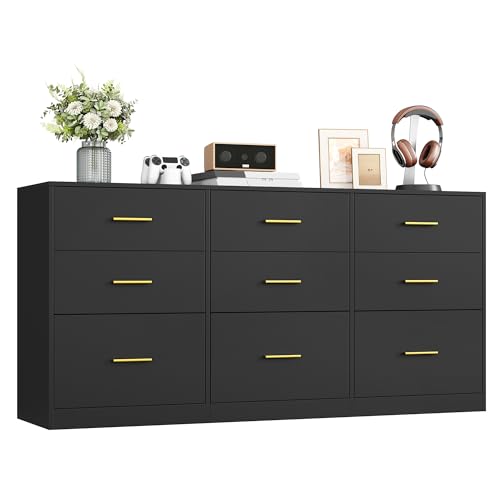
Why Choose an Extra Large Dresser with Deep Drawers
An extra large dresser with deep drawers is the ultimate storage solution for bedrooms that need serious capacity without sacrificing floor space. Unlike standard dressers that force you to cram bulky items into shallow compartments, deep drawers accommodate folded sweaters, thick denim, bedding sets, and off-season clothing with room to spare.
For households with multiple occupants or anyone who prefers to keep everything in one place, an extra large dresser eliminates the need for overflow bins and under-bed boxes. The deep drawer configuration is particularly valuable in guest rooms, master suites, and shared bedrooms where storage demands are high.
Bulk Storage Without Clutter
Deep drawers swallow bulky knitwear, bedding, and winter layers that would overflow standard compartments.
Reduced Furniture Count
One oversized unit replaces multiple small dressers, freeing up wall space and simplifying your room layout.
Better for Shared Rooms
Wide configurations with separate drawer banks let two people share a single dresser without mixing belongings.
Long-Term Versatility
A high-capacity piece adapts as your storage needs change, from nursery overflow to guest room essentials.
If you are specifically looking for maximum width, explore our guide to an extra wide dresser to compare horizontal layouts. For taller configurations, the extra tall dresser with deep drawers offers vertical storage that suits narrow wall spaces.
Dimensions and Size Considerations
An extra large dresser typically measures 72 inches or wider, with some flagship models reaching 80 inches. Height usually ranges from 32 to 42 inches, while depth sits between 18 and 22 inches. Deep drawers add 2 to 6 inches of interior depth compared to standard units.
Key Measurements to Verify Before Purchase
- Wall width: Ensure at least 6 inches of clearance on each side for a balanced look and easy access.
- Walking clearance: Leave 30 to 36 inches of floor space in front of the dresser for comfortable drawer operation.
- Drawer extension: Fully extended deep drawers project further into the room. Measure your walkway with drawers open.
- Ceiling height: Tall configurations should leave at least 12 inches above the dresser top for decorative items or mirrors.
For bedrooms with limited floor area, an extra large dresser for bedroom should be paired with a clear furniture plan. Measure doorways and stairwells before delivery, as oversized units may require disassembly for entry.
| Configuration | Typical Width | Best For |
|---|---|---|
| Standard large dresser | 60–66 inches | Average bedrooms, single occupant |
| Extra large dresser | 72–80 inches | Master suites, shared rooms, high-capacity needs |
| Extra wide dresser | 80+ inches | Long wall installations, open-plan layouts |
| Extra tall dresser | 36–48 inches (vertical emphasis) | Narrow spaces, vertical storage optimization |
Understanding Drawer Depth and Capacity
Deep drawers are the defining feature of this category. Interior depth typically runs 16 to 20 inches, compared to 12 to 14 inches on standard dressers. That extra space translates into noticeably higher cubic capacity per drawer, making a 6-drawer extra large unit roughly equivalent to a 10-drawer standard dresser in usable volume.
What Deep Drawers Store Best
- Bulky knitwear: Sweaters, hoodies, and fleece that resist folding flat.
- Bedding and linens: Sheet sets, duvet covers, and pillowcases stored as complete sets.
- Denim and heavy trousers: Stacked without compression wrinkles.
- Seasonal clothing: Off-season rotation without vacuum bags.
- Towels and overflow linens: Useful for guest rooms and multi-purpose bedrooms.
Depth is only useful when the drawer slides support the load. Look for heavy-duty drawer slides rated for consistent daily use. Undermount slides with a soft-close mechanism reduce wear and prevent slamming on deep, loaded drawers.
Key takeaway: Deep drawers are not simply "bigger" — they change how you organize. Vertical folding (file-style) works better than horizontal stacking in deep compartments, and drawer dividers become essential to prevent items from migrating to the back.
If you prefer a chest configuration over a wide dresser, an extra deep drawer chest of drawers offers similar capacity in a taller, narrower footprint. For very large single units, an extra large 12-drawer dresser provides exceptional segmentation for mixed storage.
Materials and Build Quality
An oversized dresser with deep, loaded drawers places significant stress on the frame and joinery. Material choice directly affects longevity, stability, and how well the unit handles weight distribution over time.
Solid Wood
Oak, maple, walnut, and ash are the gold standard for extra large dressers. Solid wood frames resist warping, support heavy loads, and can be refinished if the surface wears. Dovetail or mortise-and-tenon joinery is a strong indicator of quality. For a full overview of premium options, see our guide to an extra large solid wood dresser.
Engineered Wood
High-density fiberboard (HDF) and plywood with reinforced corner blocks offer solid mid-range performance. These materials are stable and resist humidity changes, but drawer boxes should still feature metal or dovetail joints rather than stapled construction.
Metal and Mixed Materials
Steel frames with wood or laminate drawer fronts suit modern and industrial interiors. Metal construction is inherently strong and often includes adjustable leveling feet, which help stabilize wide dressers on uneven floors.
| Tier | Typical Construction | Best For |
|---|---|---|
| Essential Tier | Engineered wood, stapled or glued joints, basic slides | Guest rooms, light-duty use, temporary setups |
| Balanced Tier | Plywood or HDF with reinforced corners, metal slides | Main bedrooms, daily use, moderate loads |
| Premium Tier | Solid wood frames, dovetail drawers, soft-close undermount slides | Master suites, long-term investment, heavy loads |
| Luxury Tier | Hardwood construction, hand-finished joinery, premium hardware | Custom interiors, flagship bedrooms, heirloom use |
Organization Strategies for Deep Drawers
Deep drawers reward planning. Without a system, items sink to the bottom and the back of the drawer becomes a storage black hole. The following strategies maximize usability:
Vertical Folding
File-fold clothing so items stand upright rather than stacking flat. This approach lets you see every item at a glance and prevents the bottom layer from being crushed under the weight of the drawer's contents.
Drawer Dividers and Compartments
Adjustable dividers create zones for categories — one section for socks, another for workout wear, a third for folded tops. Bamboo and fabric dividers are lightweight and repositionable. For a deeper look at segmentation, review our dresser organization guide.
Assign Depth by Category
Use the deepest drawers for bedding and bulky knitwear, and reserve shallower drawers (often the top row) for accessories, undergarments, and small items. Labeling the front of each drawer helps maintain the system over time.
Seasonal Rotation
Deep drawers are ideal for storing off-season clothing. Rotate contents twice a year and use breathable cotton storage bags rather than plastic, which traps moisture.
For a wider perspective on full-room storage planning, see our bedroom storage hub. If your extra large dresser sits in a shared space, an end of bed dresser placement can double as a bench and storage unit.
Ready to Compare Your Options?
Browse our curated selection of extra large dressers with deep drawers below. Each listing includes detailed specifications, drawer dimensions, and customer feedback to help you make a confident decision.
Product Tiers and What to Expect
Extra large dressers with deep drawers span a wide range of construction quality. Understanding what each tier offers helps you set realistic expectations for durability, hardware, and finish.
Essential Tier
Entry-level models typically use engineered wood with basic metal slides. They are suitable for guest rooms, seasonal use, or temporary setups. Drawer boxes may be stapled rather than dovetailed, and the finish may be a laminate rather than a wood veneer.
Balanced Tier
Mid-range dressers offer the sweet spot for most buyers. Expect reinforced corner construction, plywood drawer boxes, and smooth-gliding metal slides with a soft-close feature. These units handle daily use and moderate loads without issue.
Premium Tier
Premium models feature solid wood frames, dovetail drawer joints, and undermount soft-close slides rated for heavy loads. Finishes are often hand-applied, and hardware is upgraded to solid metal with a durable coating. These are long-term investments.
Luxury Tier
Flagship dressers are built with hardwood, hand-finished joinery, and premium hardware. They often include custom sizing options, unique finishes, and detailing that reflects craftsmanship. Suitable for primary suites and design-led interiors.
If you are furnishing a full bedroom, matching sets are worth considering. Our guide to an espresso dresser and nightstand set covers how to coordinate an extra large dresser with complementary pieces.
Pros and Cons of Extra Large Dressers with Deep Drawers
Pros
- Exceptional storage capacity per drawer
- Reduces the need for additional storage furniture
- Ideal for bulky clothing and bedding
- Wide models support shared use by two people
- Available in a range of materials and finishes
Cons
- Requires significant wall space
- Heavier unit — delivery and assembly are more involved
- Deep drawers need organization to avoid clutter
- Load capacity depends on slide quality
- May dominate smaller bedrooms visually
For rooms where width is a constraint but capacity is still a priority, an extra large tall dresser with deep drawers offers a vertical alternative. If you need the widest possible layout, the extra wide dressers for bedroom collection covers full-wall configurations.
Frequently Asked Questions
What is the standard depth of deep drawers in an extra large dresser?
Deep drawers in extra large dressers typically range from 16 to 20 inches in interior depth, compared to 12 to 14 inches for standard drawers. This additional depth accommodates bulky items like sweaters, bedding, and jeans without overstuffing the compartment.
How wide should an extra large dresser be?
Extra large dressers generally measure 72 inches or wider, with some models reaching 80 inches. Select a width based on your bedroom wall space, leaving at least 30 inches of clearance for walking and drawer operation. Always measure doorways and stairwells before delivery.
Are deep drawers better for bedroom storage?
Deep drawers excel at storing bulky clothing, bedding, and seasonal items, reducing the need for overflow storage elsewhere in the room. However, they require a deliberate organization system — vertical folding and drawer dividers prevent items from getting lost at the bottom.
What materials are best for an extra large dresser with deep drawers?
Solid wood constructions such as oak, maple, and walnut offer the best durability for large dressers supporting heavy loads. Engineered wood with reinforced joinery is a solid mid-range option. Metal drawer slides rated for heavy-duty use are essential regardless of the frame material.
Can one person assemble an extra large dresser?
Most oversized dressers require two people for safe assembly and positioning due to weight and dimensions. Some premium models arrive fully assembled and need only placement and leveling. Always check the delivery and assembly requirements before ordering.
For additional context on how dresser depth affects storage, our extra deep dresser guide explores the trade-offs between depth and footprint. And if you are planning a cohesive bedroom setup, the extra wide dresser for bedroom page covers layout considerations in detail.