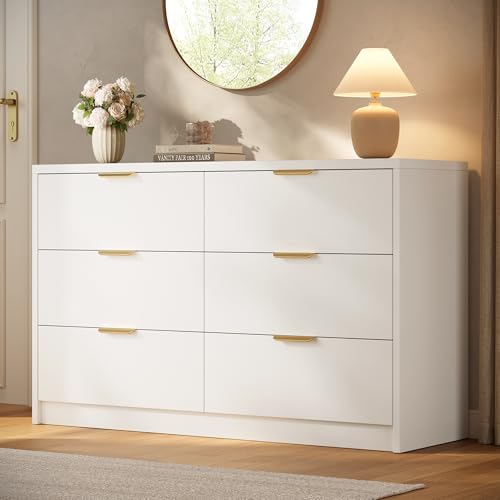
What Counts as an Extra Wide Dresser?
In bedroom furniture terms, an extra wide dresser generally refers to a unit that stretches well beyond the standard double-dresser footprint. While a typical six-drawer dresser might span around 50 to 60 inches, extra wide models often push past that range and deliver a broader top surface plus more usable drawer frontage. The exact threshold varies by maker, but the defining trait is horizontal scale: these dressers prioritize width over height.
That distinction matters because width changes how a dresser functions. A wide unit gives you longer drawers that can hold folded shirts in a single row, wider top space for display and daily essentials, and a stronger visual anchor along a bedroom wall. If you are still comparing formats, our overview of the extra large dresser category helps clarify how wide, tall, and deep dimensions interact.
It is also worth separating wide dressers from long dressers. A long dresser emphasizes linear span for placement along extended walls, while a wide dresser may combine substantial width with deeper drawers. Many shoppers use the terms interchangeably, but checking the actual measurements — width, depth, and height — is the only reliable way to confirm what you are getting.
Quick rule of thumb: If the dresser width is noticeably greater than its height and it offers four or more drawers across the front, you are likely looking at an extra wide model. Always confirm with the manufacturer's published dimensions rather than relying on category labels alone.
Key Benefits of Extra Wide Dressers for Bedrooms
Wide dressers solve specific bedroom problems that taller units cannot. The most obvious is storage volume per drawer. Long drawer fronts mean each drawer holds more in a single layer, which reduces stacking, makes folding easier to organize, and keeps clothing visible at a glance. For anyone who folds by category — shirts in one drawer, workout wear in another — that horizontal space is genuinely useful.
A second benefit is the broad top surface. An extra wide dresser creates a natural landing zone for a mirror, lamp, jewelry tray, and decorative objects without feeling crowded. In smaller bedrooms where a dedicated vanity is not realistic, that wide top can serve double duty as a grooming or accessory station.
- More single-layer storage: long drawers accommodate folded items without deep piling.
- Stronger visual anchor: a wide unit balances a large bed wall and makes the room feel intentional.
- Flexible styling surface: ample top space supports mirrors, lighting, and decor.
- Lower profile options: wide dressers can stay low, keeping sightlines open in compact rooms.
- Better for shared bedrooms: two people can use separate drawer zones side by side.
If you are weighing a broad unit against a taller chest, our comparison of extra large chest of drawers options explains when vertical storage is the smarter choice.
Sizing and Space Planning
Before comparing finishes or drawer counts, measure your room carefully. Width gets the attention, but depth is the dimension that most often causes regret. A wide dresser with deep drawers projects further into the room and can crowd walking paths. Plan for at least 30 to 36 inches of clear floor space in front of the dresser so drawers can open fully without blocking traffic.
Also account for wall features: outlets, baseboard heaters, window sills, and door swings. A wide dresser placed under a window can work beautifully, but only if the height clears the sill and the unit does not obstruct ventilation. For rooms where depth is tight, consider a wide dresser sized specifically for bedrooms rather than a deep living-room-style unit.
| Bedroom Size | Suggested Dresser Width | Placement Notes |
|---|---|---|
| Compact (under 100 sq ft) | 48–56 in | Anchor on the longest clear wall; leave 30 in clearance in front. |
| Standard (100–150 sq ft) | 56–66 in | Opposite or adjacent to the bed; watch window sill height. |
| Spacious (150+ sq ft) | 66–80 in | Can serve as a feature wall anchor with mirror and lighting. |
Measure twice, then measure the delivery path. Wide dressers often ship fully assembled or in large panels, and stairwells, hallway turns, and door frames can become bottlenecks. Check the package dimensions against your entry route before ordering.
Drawer Layouts That Work
Width alone does not guarantee usefulness — the internal drawer configuration determines how well the dresser actually organizes your clothing. Most extra wide dressers fall into a few common layouts:
Equal-Row Layout
Four to six drawers of similar height across the front. This is the most common arrangement and works well for general folded clothing, linens, and mixed storage. The trade-off is that deep items and small accessories share the same drawer height.
Tiered Layout
Shallower drawers on top for accessories, socks, and undergarments, with deeper drawers below for sweaters and bulkier items. This layout suits people who want a place for everything without adding drawer dividers.
Split-Front Layout
Two columns of drawers side by side within one wide frame. This is excellent for shared bedrooms because each person gets a dedicated vertical zone. It also makes organizing by category intuitive.
Whatever the layout, check drawer extension. Full-extension slides let you reach the back of long drawers easily; three-quarter extension slides are common in entry-level units and make the rear third harder to access. Our guide to heavy-duty drawer slides covers what to look for in load ratings and smoothness.
Materials and Construction
Construction quality separates a dresser that lasts a decade from one that sags within a few years. Wide drawers place more stress on slides and drawer boxes, so material choices matter more here than on narrow units.
Solid wood — oak, maple, walnut, and pine — offers the most durable frame and drawer fronts. Solid wood wide dressers resist warping and can be refinished. They sit in the premium to luxury tiers and represent a long-term investment. Our overview of the extra wide solid wood dresser format explains how grain direction and joinery affect stability across a broad span.
Engineered wood — MDF, particleboard, and plywood — dominates the mid-range and entry-level tiers. Quality varies enormously: high-density MDF with well-glued joints performs well, while thin particleboard with stapled construction is a durability risk in wide formats. Look for reinforced drawer boxes, metal corner braces, and a solid back panel.
Metal and mixed media — steel frames, metal drawer glides, and upholstered or glass accents add style but require the same scrutiny of load ratings. A wide drawer full of denim is heavy, and slides rated for light loads will wear quickly.
Construction checkpoint: On a wide dresser, open each drawer and press down gently on the front edge. Flex or creaking suggests a thin drawer bottom or weak slide mounting. Dovetail or box joints at the drawer corners signal better construction than stapled butt joints.
Styles and Finishes
A wide dresser occupies a large visual area, so finish and style have an outsized effect on the room. The good news is that wide formats are available across nearly every design language.
- Modern and minimalist: clean lines, handleless fronts, and matte finishes keep a broad unit from feeling heavy. Explore extra wide mid-century dresser options for tapered legs and warm wood tones.
- Farmhouse and cottage: painted finishes, beadboard details, and cup pulls soften the scale. A white extra wide dresser brightens compact bedrooms and pairs easily with most color schemes.
- Glam and contemporary: glossy fronts, metallic hardware, and mirrored accents turn the dresser into a focal point.
- Rustic and natural: live-edge tops, reclaimed wood, and visible grain emphasize the horizontal span.
Consider the room's light. Dark finishes absorb light and can make a wide dresser feel like a solid block in a dim bedroom; lighter finishes and reflective hardware help a broad unit recede. If you are furnishing a full bedroom, our extra large dresser for bedroom guide covers pairing options with beds and nightstands.
Quality Tiers Explained
Rather than anchoring decisions to numeric figures, it helps to understand where a dresser sits in the market by tier. The table below describes what each tier typically delivers so you can match expectations to construction.
| Tier | Typical Construction | Best For |
|---|---|---|
| Entry-Level | Engineered wood panels, three-quarter extension slides, stapled or cam-lock joinery | Guest rooms, first apartments, temporary setups |
| Mid-Range | Higher-density engineered wood or wood veneer, full-extension slides, reinforced drawer boxes | Primary bedrooms with everyday use |
| Premium | Solid wood frame with veneered panels, dovetail drawers, soft-close slides | Long-term family use, rooms that get daily traffic |
| Luxury | Solid hardwood throughout, hand-finished surfaces, premium hardware, heirloom joinery | Design-led bedrooms, investment pieces meant to be refinished and passed on |
The practical takeaway: for a wide dresser holding heavy clothing, the jump from entry-level to mid-range usually delivers the most noticeable improvement in drawer smoothness and structural rigidity. Premium and luxury tiers add refinement, longevity, and finish quality.
Buying Checklist for Extra Wide Dressers
Use this checklist during the research phase to compare models on equal footing. It focuses on the details that reviews and listings often bury.
- Confirm exact dimensions: width, depth, height, and drawer interior measurements — not just the outer frame.
- Check drawer extension type: full-extension slides are the standard to aim for on wide drawers.
- Verify load ratings: wide drawers need slides rated for heavier contents.
- Inspect joinery: dovetail or box joints at drawer corners; reinforced frame corners.
- Review the back panel: a solid back adds rigidity across a wide span.
- Plan anti-tip anchoring: any dresser over 30 inches tall should be wall-anchored; wide units benefit even when low.
- Check assembly requirements: some wide dressers ship flat-packed; confirm whether tools and two people are needed.
- Read the finish warranty: finish durability matters on a large surface area.
If you are still deciding between a wide dresser and a deeper storage format, our comparison of the extra deep dresser explains how drawer depth changes capacity and room flow.
Placement and Care Tips
Proper placement protects both the dresser and the room. Keep the unit out of direct sunlight if the finish is painted or veneered — UV exposure causes uneven fading across a broad surface. Leave a small gap between the back panel and the wall to allow air circulation and reduce moisture buildup.
Distribute weight evenly. Loading one side of a wide dresser with heavy items while leaving the other side light can stress the frame over time. Rotate seasonal clothing between drawers to keep the load balanced. For care, use a soft, slightly damp cloth for routine cleaning and avoid abrasive polishes on veneer or painted finishes.
Finally, anchor the unit. Wide dressers are stable in normal use, but children climbing on open drawers can tip even a low, heavy piece. A wall-anchor strap is a small addition with meaningful safety value.
Frequently Asked Questions
How wide should an extra wide dresser be for a standard bedroom?
For a standard bedroom of roughly 100 to 150 square feet, a width between 56 and 66 inches typically balances storage capacity with comfortable circulation. Measure the wall you plan to use and leave at least 30 inches of clearance in front so drawers can open fully. If the room is compact, a 48 to 56 inch wide model often fits better.
Are wide drawers harder to open and close?
Only if the slides are underspecified. Wide drawers hold more weight, so they need full-extension slides with adequate load ratings. Mid-range and premium wide dressers usually include slides designed for the additional span. Entry-level units may use lighter slides, which can feel stiff when the drawer is full.
Should I choose a wide dresser or a tall chest?
Choose a wide dresser when you want long single-layer drawers, a broad top surface, and an anchor along a long wall. Choose a tall chest when floor space is limited and vertical storage is the priority. Many bedrooms benefit from combining the two — a wide dresser for folded clothing and a tall chest for accessories and linens.
Do extra wide dressers need to be anchored to the wall?
Yes, wall anchoring is strongly recommended for any dresser over 30 inches tall, and it is good practice for low wide units as well. Anti-tip straps are inexpensive and easy to install. Anchoring protects against tipping if drawers are left open or if children climb on the furniture.
What is the difference between an extra wide and an extra long dresser?
The terms overlap, but width usually refers to the overall horizontal span of the unit, while length often refers to the usable drawer frontage along an extended wall. In practice, many wide dressers are also long. Always compare the published dimensions — width, depth, and height — rather than relying on the label.
Can a wide dresser work as a bedroom media console?
Yes. The broad top surface and long drawer rows make wide dressers a natural fit under a wall-mounted television or as a media base. Just confirm the top's weight capacity and avoid placing a heavy TV on a unit that is not designed for it. A dedicated entertainment dresser for bedroom offers cable management and sturdier tops if media use is the primary goal.