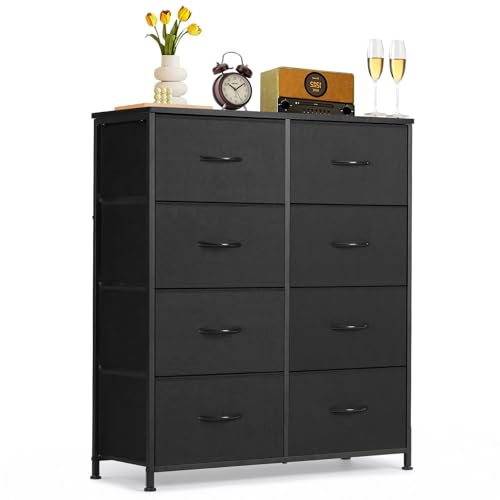
Extra Wide Dresser for Bedroom: The Complete Buyer's Guide
A broad dresser can transform a bedroom wall into a full storage system. Learn how to size, choose, and place an extra wide dresser that fits your room, your wardrobe, and your long-term needs.
Explore Recommended OptionsWhy this guide matters: An extra wide dresser is a significant furniture investment that occupies a large wall footprint. Buyers who understand span limits, drawer mechanics, and clearance requirements avoid the most common regret: a beautiful piece that sags, blocks walkways, or cannot hold what they own. This guide walks you through every decision point so you can buy with confidence.
What Counts as an Extra Wide Dresser for a Bedroom?
An extra wide dresser for a bedroom typically measures 60 inches or more across the front, compared with the 40 to 55 inches common in standard dressers. The defining characteristic is not height or drawer count but a broad horizontal span that turns a long, otherwise underused wall into organized storage. These pieces are sometimes labeled wide dressers, long dressers, or double dressers, and the terminology varies between manufacturers.
The appeal is practical. A wide footprint spreads weight across a longer base, offers more top surface for display or daily-use items, and accommodates side-by-side drawer columns that separate clothing categories cleanly. For shared bedrooms, the extra width lets two people claim their own zone without mixing belongings. If you are weighing a long profile against a taller one, our comparison of extra long dresser options for bedrooms explains when length beats height and vice versa.
It is worth distinguishing an extra wide dresser from an extra large dresser for bedroom use. Large dressers may be tall, deep, or broad; extra wide specifically refers to the horizontal measurement. That distinction matters because width is what constrains wall placement, while height determines visual weight and tip-over risk.
Width Categories at a Glance
Use the table below to map broad dressers onto your room before shopping. Categories are descriptive, not tied to any specific product or retailer.
| Category | Typical Width Range | Best For | Drawer Layout Tendency |
|---|---|---|---|
| Standard dresser | 40–55 inches | Small bedrooms, apartments, single users | Two columns, four to six drawers |
| Wide dresser | 55–60 inches | Medium bedrooms with a dedicated wall | Two or three columns, six to eight drawers |
| Extra wide dresser | 60–72 inches | Primary bedrooms, shared rooms, long walls | Three columns, eight to twelve drawers |
| Ultra wide dresser | 72 inches and above | Large suites, guest rooms with generous floor plans | Three to four columns, ten to sixteen drawers |
These ranges are approximate. A manufacturer may call a 58-inch unit extra wide while another reserves the term for 66 inches. Always confirm the actual front-to-back depth and drawer extension distance, since depth affects how far the unit projects into the room.
Measuring Your Bedroom Before You Buy
Width alone does not determine fit. Follow this sequence to confirm an extra wide dresser belongs in your space.
- Measure the wall run: Record the full usable length between doors, corners, and windows. Subtract trim and baseboard protrusions.
- Add drawer clearance: A fully extended drawer typically needs 20 to 30 inches of open floor space. If the dresser faces a bed, confirm the gap between the foot of the bed and the dresser front leaves room for drawers plus walking.
- Check door swings: Closet and room doors need a clear arc. An extra wide piece placed beside a door can block it entirely.
- Verify the delivery path: Measure stairwells, hallway turns, and doorway widths. A 66-inch-wide dresser often ships in one piece or in large panels, and tight corners can defeat a perfect floor plan.
- Leave breathing room: Aim for at least two to three inches of gap on each end so the piece does not look wedged into the wall.
If your wall is short but the storage demand is high, consider a tall dresser profile instead, which trades width for vertical capacity. Conversely, if the wall is long but depth is limited, an extra deep dresser may be less appropriate because it projects further into the room.
Drawer Configuration: The Real Deciding Factor
Two extra wide dressers of identical outer dimensions can behave very differently depending on how the interior is divided. The best layout matches how you actually fold, store, and retrieve clothing.
Deep drawers versus shallow drawers
Deep drawers suit bulky items such as sweaters, jeans, and linens. Shallow drawers keep folded shirts, undergarments, and accessories visible and accessible. A balanced wide dresser typically pairs a top row of shallow drawers with lower rows of deeper drawers. Buyers who own mostly folded casual wear often prefer more shallow drawers; those who store bedding or seasonal layers need depth.
Column count
Three columns are the sweet spot for most extra wide bedroom dressers. They allow one column for daily clothing, one for folded tops, and one for miscellaneous items or accessories. Four-column layouts appear on ultra wide models and suit households with many small categories, but narrower individual drawers can feel cramped for adult clothing.
Drawer glide quality
Wide drawers place more lateral stress on glides than narrow ones. Look for full-extension ball-bearing slides or high-grade undermount runners on mid-range and premium models. Entry-level units often use simpler roller slides that function but wear faster under heavy loads. Our guide to heavy-duty drawer slides for long dressers explains the mechanism differences in detail.
Interior organization potential
A wide dresser rewards buyers who plan dividers. Long drawers spanning 30 inches or more benefit from internal organizers to prevent clothing from sliding and bunching. For layout inspiration, see our dresser organization guide.
Materials and Construction for Wide Spans
Width amplifies structural weaknesses. A 30-inch dresser can survive modest joinery; a 66-inch dresser cannot. The longer the span, the more the top, back panel, and internal frame must resist sagging and racking.
- Solid wood: The most reliable choice for extra wide dressers. Hardwoods such as oak, maple, and walnut hold screws, resist warping, and support the top across a long unsupported run. A solid wood extra wide dresser is the flagship tier for durability.
- High-grade engineered wood: Plywood and furniture-grade MDF with reinforced joinery perform well in the mid-range tier. Look for doweled or cam-and-bolt construction rather than staples alone.
- Entry-level particleboard: Acceptable for lighter loads and occasional use, but wide particleboard units are more prone to sagging under sustained weight. Reinforced center supports and a sturdy back panel help.
- Center support legs: On any dresser wider than 60 inches, a center support leg or a continuous plinth base distributes load and prevents the middle of the frame from bowing.
Finish quality matters too. A durable topcoat resists moisture rings and daily wear across a large surface that invites lamps, trays, and decorative objects. For material comparisons across wood types, see our materials and finishes section.
Style Directions That Suit a Wide Profile
Wide dressers carry visual weight, so the style choice affects how the room feels. A long, low silhouette reads calm and horizontal; a tall, chunky wide dresser can dominate a smaller room.
- Mid-century modern: Tapered legs and clean lines keep a wide dresser from feeling heavy. Explore an extra wide mid-century dresser for a balanced look.
- White and light finishes: Visually recede, making a broad piece feel less imposing. A white extra wide dresser works well in bright or compact bedrooms.
- Farmhouse and rustic: Textured wood and hardware-forward details add character but increase visual weight. Reserve these for rooms with generous floor space.
- Minimalist and Scandinavian: Handleless fronts and flush drawers emphasize the horizontal line and keep the top surface uncluttered.
If your bedroom theme leans toward a specific palette, coordinating with complementary pieces such as an emerald green accent dresser or a matched gray dresser for bedroom settings can tie the room together without competing with the wide centerpiece.
Placement Ideas for an Extra Wide Dresser
The right position depends on the room's traffic pattern and what else occupies the walls.
The primary bedroom wall
Placing an extra wide dresser opposite the bed creates a balanced composition and turns the wall into a functional dressing zone. Keep at least 30 inches of walking space between the bed and the dresser front. Add a mirror above the dresser to reflect light and double as a grooming station.
Under a window
A wide, low dresser can sit beneath a window if the sill height clears the top surface. This placement preserves wall space elsewhere and creates a natural reading or display ledge. Confirm the dresser height leaves at least two inches below the sill.
Paired with a bed and nightstands
A wide dresser acts as the visual anchor opposite the bed. Coordinate finishes and hardware with nightstands for cohesion. If you prefer a matching set, a dresser and nightstand set simplifies the styling decision.
At the foot of the bed
An end of bed dresser placement uses the widest open floor area in many bedrooms. Keep the dresser depth modest and ensure the walkway around the bed stays clear.
Safety, Stability, and Long-Term Care
Wide dressers have a larger top surface and a higher center of gravity when drawers are open, which raises tip-over risk. Anchor the unit to wall studs using the supplied anti-tip kit, and avoid stacking heavy items on the top shelf if the unit has one. Load heavier clothing in lower drawers and keep the top surface for lightweight decor.
For maintenance, dust the large top surface regularly and use coasters or felt pads under lamps and trays. Check drawer glides every few months on wide units, since repeated use puts more strain on outer columns. Tighten hardware and confirm the center support leg has not shifted. A well-maintained extra wide dresser can serve for decades, which makes it a worthwhile long-term investment for a primary bedroom.
Common Buying Mistakes to Avoid
- Buying on width alone: Ignoring depth and drawer extension can leave a beautiful piece that blocks the room.
- Underestimating drawer load: Wide drawers filled with heavy clothing need quality glides. Entry-level mechanisms may not hold up.
- Skipping the delivery path check: A unit that fits the wall but not the stairwell creates expensive returns.
- Choosing too many shallow drawers: Some buyers overvalue drawer count and end up without depth for sweaters or bedding.
- Neglecting anchoring: The larger the footprint, the more important wall attachment becomes, especially in homes with children.
Pre-Purchase Checklist
- Wall length measured, including trim and baseboards
- Drawer clearance confirmed (20 to 30 inches of open floor space)
- Door swings and walkways checked for obstruction
- Delivery path measured from entry to bedroom
- Drawer layout matched to clothing types
- Glide quality verified on wide drawers
- Center support or plinth base present on units over 60 inches
- Anti-tip anchoring planned
- Finish coordinated with existing bedroom furniture
Frequently Asked Questions
How wide is considered an extra wide dresser for a bedroom?
An extra wide dresser for a bedroom generally measures 60 inches or more across the front. Standard dressers tend to fall between 40 and 55 inches wide, so anything from roughly 60 to 80 inches qualifies as extra wide. The exact threshold depends on the manufacturer, but the defining trait is a broad horizontal footprint that prioritizes lateral storage over height.
How many drawers should an extra wide dresser have?
Most extra wide dressers for bedrooms offer six to twelve drawers arranged across two or three columns. A six-drawer layout is common in mid-range models, while eight to twelve drawers appear in premium and luxury tiers. More drawers mean finer organization but also more hardware and potential failure points, so weigh drawer count against build quality.
Will an extra wide dresser fit in a standard bedroom?
It depends on the room. An extra wide dresser needs a wall section long enough to hold the unit plus clearance for drawers to open fully, typically about 24 to 30 inches of floor space in front. Measure the available wall length, account for door swings and walkways, and confirm that the piece leaves at least 30 inches of clear passage.
What material is best for an extra wide dresser?
Solid wood is the most durable choice for an extra wide dresser because a long span puts more stress on the frame. Hardwoods like oak, maple, and walnut resist sagging and hold hardware securely. High-grade engineered wood with reinforced joinery is a solid alternative in the mid-range tier, while entry-level particleboard units are best suited to lighter use.
Do extra wide dressers need to be anchored to the wall?
Yes. Any dresser taller than 30 inches should be anchored, and extra wide dressers carry additional tip-over risk because of their broad top surface and forward-weighted drawers. Use the anti-tip kit supplied by the manufacturer and secure the unit into wall studs. This is especially important in homes with children or pets.
Ready to Narrow Down Your Options?
With your wall measurements, drawer layout preferences, and material tier in hand, you are ready to compare specific models. Explore our curated selection of extra wide dressers for bedrooms below.
View Recommended Wide Dressers