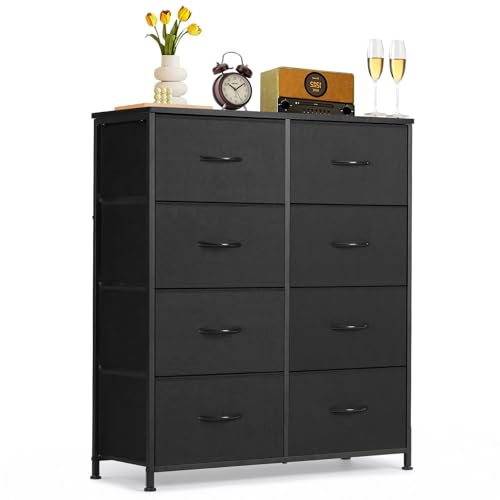
When bedroom storage runs short, an extra large chest of drawers for the bedroom can transform a cluttered space into an organized retreat. Unlike standard dressers that offer limited capacity, oversized chests provide generous drawer space for clothing, linens, accessories, and more. But choosing the right piece requires more than picking the biggest option available.
This guide walks you through the key considerations for selecting an extra large chest of drawers, from precise sizing and drawer depth to material quality and safety features. Whether you share a bedroom with a partner or simply need more room for your wardrobe, you will find practical guidance to make a confident decision.
What Makes a Chest of Drawers "Extra Large"?
The term "extra large" is not standardized across the furniture industry, but it generally refers to chests that exceed the dimensions of a conventional bedroom dresser. A typical standard chest measures around 30 to 44 inches wide, 30 to 40 inches tall, and 16 to 18 inches deep. An extra large chest pushes those boundaries significantly.
In practical terms, an extra large chest of drawers for the bedroom usually features:
- Width: 50 to 72 inches or more, providing a broad footprint for multiple drawer columns.
- Height: 36 to 60 inches, with taller models offering additional vertical storage without consuming extra floor space.
- Depth: 18 to 22 inches, accommodating bulkier items such as sweaters, blankets, and bedding.
- Drawer count: 6 to 12 drawers, often arranged in mixed configurations of deep and shallow compartments.
These dimensions place extra large chests in a category of their own. They are substantial pieces that anchor a bedroom and provide storage capacity comparable to a small wardrobe. If you are comparing categories, our guide to extra large chest of drawers explains how these pieces differ from standard and oversized dressers.
Quick Reference: Size Categories
Standard chest: Up to 44 inches wide, 16–18 inches deep.
Large chest: 44–50 inches wide, 18–20 inches deep.
Extra large chest: 50–72 inches wide, 18–22 inches deep, often 6–12 drawers.
Why Choose an Extra Large Chest for Your Bedroom
The appeal of an oversized chest goes beyond raw storage volume. For many households, an extra large chest of drawers for the bedroom solves specific organizational challenges that smaller furniture cannot address.
Accommodating Shared Storage
Couples often struggle to fit two wardrobes' worth of folded clothing into a single standard dresser. An extra large chest with eight to twelve drawers provides dedicated space for each person, reducing the daily friction of overlapping storage. Separate drawer columns allow each partner to claim their own section without mixing items.
Consolidating Multiple Storage Pieces
Instead of scattering several small dressers, nightstands, and storage bins around the room, a single extra large chest can consolidate storage into one cohesive piece. This approach simplifies organization and creates a cleaner visual line in the bedroom. For rooms with limited wall space, a tall and wide chest maximizes vertical and horizontal capacity simultaneously.
Storing Bulky Items
Deep drawers in an extra large chest are ideal for items that standard dressers cannot handle: folded blankets, winter sweaters, bedding sets, and off-season clothing. If deep storage is a priority, explore our guide to the extra large dresser with deep drawers for models designed specifically around volume.
Anchoring the Bedroom Design
A large chest serves as a visual anchor in the bedroom. Its substantial presence can balance a king-size bed and fill an empty wall with purpose. When selected in a style that complements the room, an oversized chest elevates the overall design rather than simply adding storage.
Sizing Guide: Width, Height, and Depth
Getting the dimensions right is the single most important step in choosing an extra large chest of drawers for your bedroom. A piece that is too large will overwhelm the room and block circulation; one that is too small will leave you short on storage. Measure your space carefully before shopping.
Measuring Your Bedroom
Follow these steps to determine the maximum footprint your room can accommodate:
- Measure the available wall length. Identify the wall where the chest will stand and measure the unobstructed length. Account for doors, windows, and outlets.
- Check clearance for drawer opening. Add at least 30 inches of depth in front of the chest for comfortable drawer access. For deep drawers, allow up to 36 inches.
- Consider walkways. Maintain at least 30 inches of walking space between the chest and other furniture or walls.
- Account for ceiling height. Tall chests (48–60 inches) work well in rooms with standard 8-foot ceilings but may feel imposing in rooms with low ceilings.
Width: The Primary Constraint
Width is usually the limiting factor in bedroom placement. A chest that is 60 to 72 inches wide requires a substantial wall. If your wall space is limited, consider an extra wide dresser for bedroom that prioritizes horizontal spread over height, or a taller narrow design that uses vertical space more efficiently.
Height: Vertical Storage Without Footprint Cost
Tall chests offer a smart way to increase storage without consuming additional floor area. A 50- to 60-inch-tall chest with six to eight drawers can store as much as a much wider low chest. However, taller models require careful attention to stability and anti-tip anchoring. Our article on the extra large tall dresser with deep drawers covers the specific considerations for vertical storage designs.
Depth: The Forgotten Dimension
Drawer depth directly affects what you can store. Standard drawers at 14 to 16 inches deep work for folded shirts and accessories but struggle with bulky items. Extra deep drawers at 18 to 22 inches accommodate sweaters, linens, and bedding with room to spare. If maximizing storage volume matters to you, read our detailed comparison of the extra deep drawer chest of drawers.
| Dimension | Standard Chest | Extra Large Chest | Best For |
|---|---|---|---|
| Width | 30–44 in | 50–72 in | Shared storage, wide wall placement |
| Height | 30–40 in | 36–60 in | Vertical storage, low ceiling rooms |
| Depth | 16–18 in | 18–22 in | Bulky items, blankets, bedding |
| Drawer Count | 3–5 | 6–12 | Organized categories, shared use |
Drawer Configuration and Capacity
An extra large chest of drawers for the bedroom is only as useful as its drawer layout. The number, size, and arrangement of drawers determine how efficiently you can organize your belongings. A well-designed configuration separates clothing types and prevents the chaotic mixing that plagues poorly planned storage.
Common Configurations
- Six-drawer (2 columns × 3 rows): A balanced layout that suits couples who need moderate capacity. Wide drawers accommodate folded clothing; the compact column count keeps the chest narrower.
- Eight-drawer (2 columns × 4 rows): Adds one more row of storage, often with a mix of deep bottom drawers and shallower upper drawers for accessories.
- Nine-drawer (3 columns × 3 rows): A classic arrangement that offers dedicated columns for separate users or categories. The French provincial dresser 9 drawer exemplifies this configuration in a traditional style.
- Twelve-drawer (3 or 4 columns): Maximum capacity for large households or extensive wardrobes. The extra large 12 drawer dresser provides near-wardrobe-level storage in a single piece.
Deep vs. Shallow Drawers
The best extra large chests combine both drawer depths. Shallow top drawers (5–7 inches deep) suit jewelry, accessories, and undergarments. Mid-depth drawers (7–9 inches) handle folded shirts and pants. Deep bottom drawers (10–12 inches) store sweaters, blankets, and bedding. This layered approach lets you organize by category without wasting space.
Drawer Width Considerations
Wide drawers (30–36 inches) maximize storage volume but can become difficult to slide when heavily loaded. Narrower drawers (18–24 inches) are easier to operate but hold less. If you choose very wide drawers, verify that the slides are rated for the load. Our guide to extra long heavy duty drawer slides explains the hardware specifications that matter for large drawers.
Materials and Construction Quality
An extra large chest carries significant weight even before you fill it with clothing. The materials and joinery must be robust enough to support years of daily use without sagging, cracking, or drawer misalignment.
Solid Wood
Solid wood chests in oak, maple, walnut, pine, or mahogany represent the top tier of durability. Hardwoods like oak and maple resist wear and hold joinery tightly over decades. Softer woods like pine offer a traditional look at a lower tier but may dent more easily. For a long-term investment, solid hardwood construction is the gold standard. Explore options in our guide to the extra large solid wood dresser.
Engineered Wood
MDF, particleboard, and plywood with high-grade veneers provide stable, consistent surfaces at a mid-range tier. Quality engineered wood resists warping better than solid wood in humid conditions. However, check that the drawer boxes and structural frames use substantial thickness—at least 5/8 inch for drawer sides and 3/4 inch for frames.
Joinery Details
Inspect the joinery before buying:
- Dovetail joints: The strongest drawer box connection, with interlocking pins and tails. Look for dovetails on both front and back corners.
- English dovetail vs. French dovetail: English dovetails are visible on the drawer front and indicate premium construction. French dovetails are hidden but still strong.
- Reinforced drawer bottoms: Large drawers need thick bottoms (at least 1/4 inch, ideally 3/8 inch) supported by corner braces or a center support rail.
- Corner blocks and glue blocks: Reinforce the chest frame and prevent racking.
Finishes
A quality finish protects the wood and resists stains and scratches. Look for catalyzed lacquer, polyurethane, or conversion varnish finishes applied in multiple coats. Painted finishes should be smooth and even, with no drips or bare patches. If you prefer a natural look, ensure the finish is clear and does not yellow over time.
Hardware and Drawer Slides
The drawer slides on an extra large chest of drawers for the bedroom endure constant use and heavy loads. Under-specified hardware leads to sticky drawers, sagging boxes, and eventual failure. This is one area where investing in quality pays off in daily usability.
Slide Types
- Metal ball-bearing slides: Smooth, durable, and widely used. Look for full-extension slides that let you pull drawers out completely, giving access to the back of deep drawers.
- Undermount slides: Concealed beneath the drawer, offering a clean look and smooth operation. Premium undermount slides include soft-close mechanisms.
- Side-mount slides: Attach to the drawer sides and are visible when the drawer is open. Generally less refined than undermount but robust.
- Wood-on-wood slides: Traditional and often found in antique or vintage chests. They require waxing to operate smoothly and lack the load capacity of metal slides.
Load Ratings
Drawer slides are rated by load capacity. Standard slides handle 50–75 pounds per drawer; heavy-duty slides handle 100–150 pounds or more. Extra large chests with wide drawers should use heavy-duty slides, especially for bottom drawers that store bulky items. Premium slides with 100-pound-plus ratings prevent sagging and ensure smooth operation over years of use.
Soft-Close and Self-Close
Soft-close slides prevent drawers from slamming, reducing wear and noise. Self-close slides pull the drawer shut automatically. Both features add convenience and are common on mid-range and premium extra large chests. If you value quiet operation, prioritize these features.
Hardware Finish and Style
Drawer pulls and knobs contribute to the chest's visual character. Popular finishes include brushed nickel, matte black, antique brass, and gold. For a cohesive look, match the hardware to other bedroom furniture or light fixtures. If you plan to customize, our guide to gold hardware dressers explores options for upgrading the look.
Style and Room Integration
An extra large chest occupies significant visual space in the bedroom. Its style should harmonize with the room's existing design language rather than compete with it. Consider the following style families when shopping:
Modern and Contemporary
Clean lines, minimal ornamentation, and sleek hardware define modern chests. These pieces suit contemporary bedrooms with neutral palettes and uncluttered layouts. A modern extra large chest often features flat-front drawers, integrated pulls, and a low-profile base.
Farmhouse and Rustic
Farmhouse chests embrace distressed finishes, plank detailing, and warm wood tones. They pair well with shiplap walls, natural textures, and cozy textiles. If this style appeals to you, our collection of farmhouse style chest of drawers covers the key design elements.
Traditional and French Provincial
Traditional chests feature carved details, bracket feet, and ornate hardware. French provincial designs add curved profiles and elegant flourishes. These styles suit classic bedrooms with upholstered headboards and layered bedding. Explore the French provincial dresser category for examples.
Mid-Century Modern
Tapered legs, warm wood tones, and geometric drawer pulls characterize mid-century designs. These chests bring a retro sophistication to the bedroom while remaining versatile enough for contemporary interiors. Our guide to the extra wide mid-century dresser highlights the best options in this style.
Color Considerations
Color affects how a large piece integrates with the room. White and light-toned chests keep the room feeling open and airy, ideal for small bedrooms. Dark finishes like espresso, walnut, or black add drama and anchor the space. For a bold statement, consider a painted chest in a saturated hue. Browse our gray chest of drawers collection for neutral versatility, or explore espresso 6 drawer dresser options for a darker, richer look.
Matching the Chest to Your Bedroom
Small bedroom: Choose a tall, light-colored chest to maximize vertical storage without visually crowding the room.
Large bedroom: A wide, dark-toned chest can anchor a spacious wall and balance a king-size bed.
Shared bedroom: Select a multi-column design with distinct sections for each person's belongings.
Safety and Stability Considerations
Large furniture pieces present safety risks if not properly secured. An extra large chest of drawers for the bedroom is tall and heavy, and an open drawer shifts the center of gravity forward. Anti-tip anchoring is not optional—it is essential.
Anti-Tip Kits
Every chest should come with or be paired with an anti-tip kit that secures the back of the unit to the wall. This simple installation prevents the chest from tipping forward if someone leans on an open drawer or if a child attempts to climb it. If the manufacturer does not include a kit, purchase one separately.
Wall Anchoring for Tall Models
Tall extra large chests (48–60 inches or higher) require wall anchoring even more urgently than shorter models. Anchor the chest into wall studs, not just drywall. For heavier chests, use heavy-duty brackets rated for the weight of the loaded piece.
Drawer Stops
Drawer stops prevent drawers from pulling all the way out and falling. Some slides include integrated stops; others require separate installation. Ensure each drawer has a functional stop mechanism. This is especially important for large, heavy drawers that could cause injury if they fall.
Child Safety
If children share or visit the bedroom, choose a chest with drawer interlocks that prevent multiple drawers from opening at once. A single open drawer is manageable; three open simultaneously can destabilize the chest. Also consider drawer locks for medications or other hazardous items stored in the bedroom.
Weight Distribution
Distribute weight evenly across drawers. Heavy items like blankets and winter clothing should go in bottom drawers to keep the center of gravity low. Avoid overloading top drawers, which raises the center of gravity and increases tip risk.
Organization Tips for Large Chests
An extra large chest of drawers provides abundant space, but without a system, that space can become a disorganized jumble. These organization strategies help you make the most of every drawer.
Assign Categories to Drawers
Dedicate each drawer to a specific category: one for shirts, one for pants, one for undergarments, one for activewear, and so on. This "one category per drawer" rule prevents mixing and makes finding items effortless.
Use Drawer Dividers
Large drawers benefit from dividers that create compartments for smaller items. Adjustable dividers work well for socks, undergarments, and accessories. For deeper drawers, stack dividers vertically to create two layers of storage.
Fold with Purpose
Folding technique matters in large drawers. Use the KonMari vertical folding method to store clothing upright, so you can see every item at a glance. For deep drawers, fold bulkier items flat and stack them in columns.
Rotate Seasonal Items
Use bottom drawers for off-season clothing and blankets. When seasons change, rotate items between the deep bottom drawers and upper drawers. This keeps frequently used items accessible and protects seasonal pieces from unnecessary handling.
Label Drawers
Labels reduce search time, especially in shared chests. Use removable labels or small tags on the inside of drawer fronts to indicate contents. For a cleaner look, labels can be placed inside the drawer rather than on the exterior.
Maintain Empty Space
Resist the urge to fill every drawer to capacity. Leaving 10–20% empty space allows for easy opening and closing and provides room for new items. Overstuffed drawers strain slides and accelerate wear.