
Dresser with Baskets: Smart Storage & Style Guide
Blend the structure of a traditional dresser with the flexibility of removable baskets. Learn how this hybrid storage solution can transform your bedroom, nursery, or entryway organization.
Explore the GuideWhy choose a dresser with baskets? A dresser with baskets combines the sturdy frame and flat top of a conventional dresser with open cubbies or shelves that hold woven, fabric, or wire baskets. This design offers a unique advantage: you get the solid structure and surface area of a dresser, plus the grab-and-go convenience of removable bins. For anyone who has ever struggled with deep drawers or wanted a more flexible way to sort laundry, toys, or accessories, this hybrid piece is a practical and stylish answer. In this guide, we break down the types, materials, and buying considerations so you can decide whether a basket dresser fits your home.
What Exactly Is a Dresser with Baskets?
A dresser with baskets is a storage unit that typically features a combination of closed drawers and open cubbies or shelves designed to hold baskets. The baskets themselves may be included with the piece or sold separately, and they can be made from woven materials like wicker, rattan, or seagrass; soft fabrics like canvas or felt; or even wire mesh. The key distinction from a standard dresser is the open, accessible nature of the basket compartments. Instead of pulling open a heavy drawer, you simply lift out a lightweight basket. This makes the piece especially appealing for families with young children, for people who want to sort items by category without dedicated drawers, and for anyone who values a more relaxed, approachable storage aesthetic.
Many models pair a few traditional drawers at the top or bottom with basket cubbies in the middle, giving you the best of both worlds: concealed storage for items you want out of sight, and open basket storage for things you need to access frequently. If you are still comparing furniture categories, our guide on dresser vs chest of drawers can help clarify the differences before you commit to a basket-based design.
Main Types of Basket Dressers
Drawer + Basket Combo
The most common configuration: a few solid drawers for concealed items, paired with open cubbies that hold baskets. Ideal for mixed storage needs in a primary bedroom.
All-Basket Cubby Unit
A grid of open cubbies with no traditional drawers. Every compartment holds a basket. Great for playrooms, entryways, or anyone who prefers a fully modular system.
Basket-Topped Dresser
A standard dresser with a flat top and a shelf or rack above it where baskets sit. This style maximizes vertical space and keeps frequently used items within reach.
Rolling Basket Dresser
Mounted on casters, this mobile version can move between rooms. The baskets are usually lightweight, making it easy to reconfigure storage on the fly.
Key Benefits of Basket-Based Storage
- Flexibility: Baskets can be removed, swapped, and rearranged. You are not locked into a fixed drawer layout.
- Accessibility: Lifting a basket is often easier than pulling a heavy drawer, especially for children or anyone with limited grip strength.
- Ventilation: Woven and fabric baskets allow air to circulate, which helps prevent musty odors in stored clothing or linens.
- Visual sorting: Open cubbies make it easy to see what is inside each basket, reducing the chance of forgotten items.
- Style versatility: Changing the baskets is a quick way to refresh the look of the piece without replacing the entire dresser.
Materials and Quality Tiers
The frame and the baskets are two separate considerations. Frames are typically made from solid wood, engineered wood (MDF or particleboard), or metal. Baskets are usually woven natural fibers, synthetic rattan, fabric, or wire. The table below uses universal quality tiers to help you compare options without relying on numeric figures.
| Tier | Typical Frame Construction | Basket Quality | Best For |
|---|---|---|---|
| Entry-Level | Engineered wood with laminate finish; basic hardware | Non-woven fabric or thin wire baskets | Guest rooms, dorm spaces, light-duty use |
| Mid-Range | Engineered wood with solid wood trim; smoother glides | Woven synthetic rattan or sturdy canvas | Primary bedrooms, nurseries, everyday family use |
| Premium | Solid wood frame; dovetail or reinforced joinery | Natural seagrass, rattan, or heavy-duty woven fiber | High-use areas, design-focused rooms, long-term use |
| Luxury | Hardwood construction; hand-finished details; premium hardware | Handwoven natural fibers or custom leather-trimmed baskets | Custom interiors, statement pieces, collector-grade furniture |
When evaluating a basket dresser, pay attention to how the baskets fit into the cubbies. A well-designed unit will have baskets that slide in and out smoothly without wobbling, and the frame should feel solid when you lift a loaded basket. If you prefer a more traditional all-wood construction, our guide to solid wood dressers that require no assembly may be a useful comparison.
How to Choose the Right Basket Dresser
1. Measure Your Space First
Basket dressers can be wider than standard dressers because the open cubbies often add depth. Measure the wall space, account for door swing, and leave at least a few inches of clearance around the piece. If your room is tight, consider a narrow or corner-friendly configuration. Our article on dressers for small spaces offers additional layout strategies.
2. Decide on the Drawer-to-Basket Ratio
Ask yourself how much you want to conceal versus how much you want quick access to. If you need to hide paperwork, delicates, or valuables, opt for a model with at least two solid drawers. If the piece is primarily for toys, laundry, or accessories, an all-basket unit may be more practical.
3. Consider the Basket Material
Natural woven baskets are breathable and visually warm but can snag delicate fabrics. Fabric baskets are softer and quieter but may not hold their shape as well over time. Wire baskets are durable and easy to clean but offer less visual warmth. Choose based on what you plan to store and how much maintenance you are comfortable with.
4. Check the Frame Stability
A basket dresser is only as good as its frame. Look for reinforced corners, a solid back panel, and anti-tip hardware. If children will be using the piece, wall anchoring is essential. For nursery-specific guidance, see our page on dressers that double as changing tables.
5. Plan for Future Flexibility
One of the biggest advantages of a basket dresser is that you can change the baskets without replacing the furniture. Choose a frame with standard cubby dimensions so you can easily find replacement or additional baskets later. A neutral frame color will also make it easier to update the look over time.
Pro tip: Label each basket on the inside rim with a small adhesive tag. Because the baskets are removable, you can rotate seasonal items without emptying an entire drawer. This simple habit keeps the system organized and makes the most of the open-cubby design.
Organization Ideas for Basket Dressers
Because the baskets are modular, you can assign each one a specific category. Here are a few practical setups:
- Bedroom: One basket for socks, one for workout clothes, one for accessories, and one for items to donate or repair.
- Nursery: Separate baskets for diapers, wipes, swaddles, and toys. Keep the most-used basket at arm's reach.
- Entryway: Baskets for gloves, hats, pet supplies, and outgoing mail. The flat top of the dresser becomes a drop zone for keys and bags.
- Craft room: Sort supplies by material type: fabric, paper, tools, and embellishments. Removable baskets make it easy to carry a project to another table.
If you want to go deeper into drawer and cubby organization, our guide on dressers with cubbies and drawers covers hybrid layouts in more detail.
Common Mistakes to Avoid
- Overloading baskets: A basket that is too heavy is difficult to lift and can strain the frame. Keep each basket to a comfortable weight.
- Ignoring basket dimensions: Not all cubbies are the same size. Measure the opening before buying replacement baskets.
- Skipping wall anchoring: Any dresser, especially one with open cubbies that invite climbing, should be secured to the wall.
- Choosing style over function: A beautiful woven basket that snags clothing will quickly become a frustration. Match the basket material to the items you store.
Frequently Asked Questions
Are baskets included with a basket dresser?
It depends on the model. Some units ship with a full set of baskets, while others are sold as frames only. Always check the product description. If baskets are not included, confirm the interior cubby dimensions before ordering third-party baskets.
Can I use a dresser with baskets in a nursery?
Yes, but safety comes first. Anchor the dresser to the wall, choose baskets without sharp edges, and avoid placing heavy items in the top cubbies. A basket dresser can work well as a changing station if the top surface is at a comfortable height and the baskets hold diapers and supplies within easy reach.
How do I clean woven baskets?
Dust woven baskets regularly with a soft brush or vacuum attachment. For deeper cleaning, wipe with a slightly damp cloth and allow them to air-dry completely before placing them back in the cubbies. Avoid soaking natural fibers, as this can cause warping or mold.
Can a basket dresser replace a traditional dresser?
It can, depending on your storage needs. If you need a large amount of concealed hanging or folded storage, a traditional dresser or a wardrobe may be more suitable. If you prefer modular, visible, and easily accessible storage, a basket dresser is a strong alternative. Many people use both in the same room for different categories of items.
Final Thoughts
A dresser with baskets is more than a furniture trend. It is a practical response to the way people actually organize their homes: by category, by frequency of use, and by the need to adapt as life changes. Whether you are setting up a nursery, streamlining a small bedroom, or creating a landing zone near the entryway, the combination of solid drawers and removable baskets offers a level of flexibility that traditional dressers struggle to match.
As you compare options, focus on frame stability, basket quality, and the ratio of open to closed storage. Measure your space, plan your categories, and choose a tier that matches your expected use. With the right piece, a basket dresser can become the most hardworking and adaptable storage solution in your home.
Ready to explore specific models? Browse our curated selection of dressers with baskets and compare features side by side.
Recommended Dressers with Baskets
⚠️ AFFILIATE DISCLOSURE: This website contains affiliate links. As an Amazon Associate, we earn from qualifying purchases. If you make a purchase through these links, we may receive a small commission at no additional cost to you. Read our full affiliate policy.

eHemco 3 Tier X-Side End Storage Cabinet, Walnut | 6 Wicker Baskets
Check price on Amazon
WLIVE Tall Dresser for Bedroom, 9 Drawer Chest of Drawers, Dark Grey | 9 roomy fabric drawers, Tall storage design, Bedroom or closet use, Sturdy steel frame, Smooth wood tabletop
Check price on Amazon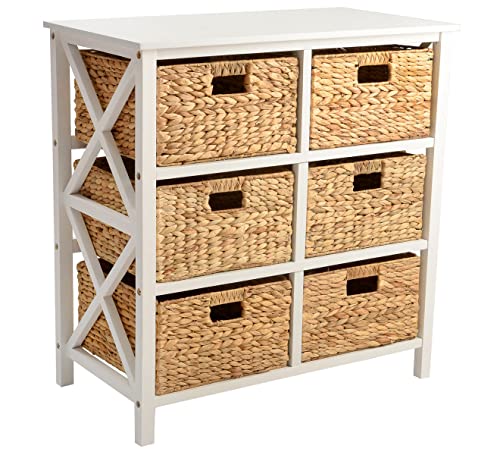
eHemco 3 Tier X-Side End Storage Cabinet Table, White | 6 Wicker Baskets, For Bedroom, For Living Room
Check price on Amazon
WLIVE Tall Dresser for Bedroom, 9 Drawer Chest of Drawers, Rustic Brown | 9 roomy fabric drawers, Tall storage design, Bedroom or closet use, Sturdy steel frame, Smooth wood tabletop
Check price on Amazon
WLIVE Tall Dresser for Bedroom, 5 Drawer Dresser, Rustic Brown | 5 vertical fabric drawers, Tall vertical design, Bedroom or closet use, Dresser for small spaces, Chest of drawers
Check price on Amazon
SONGMICS Dresser for Bedroom, Wide Dresser with 5 Fabric Drawers | Chest of Drawers with Steel Frame, for Closet & Entryway, Ink Black and Ebony Black, BELLAH Collection ULGS322B01S
Check price on Amazon
eHemco Hampton Meadows 3 Tier X-Side End Storage Cabinet, Walnut | 6 Wicker Baskets, Hand Woven Water Hyacinth
Check price on Amazon