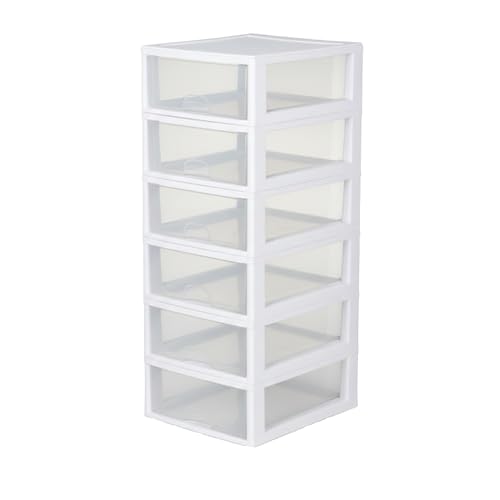
6 Tier Plastic Storage Drawers: The Complete Guide
Everything you need to know about six-tier plastic storage drawer towers — capacity, materials, stability, assembly, and room-by-room organization — so you can choose the right unit with confidence.
Explore Buying FactorsWhy six tiers? A 6 tier plastic storage drawer unit delivers substantial vertical storage in a surprisingly compact footprint. It is one of the most practical solutions for bedrooms, closets, dorm rooms, garages, and craft spaces — especially when you need visible, lightweight, and easily movable organization. This guide breaks down exactly what to look for before you buy.
What Are 6 Tier Plastic Storage Drawers?
A 6 tier plastic storage drawer unit is a freestanding tower with six stacked drawers made primarily from molded plastic — typically polypropylene or a similar durable polymer. These units are designed to organize lightweight-to-moderate items while keeping contents visible and accessible. Unlike solid wood dressers, plastic drawer towers are lightweight, easy to relocate, and usually assembled with snap-together components.
The six-tier format is popular because it maximizes vertical space. A tower that occupies roughly the footprint of a small nightstand can provide six separate compartments, making it ideal for rooms where floor space is limited. Many models feature translucent or clear drawers so you can identify contents at a glance, while others use opaque fronts for a cleaner look.
If you are comparing this format with traditional wooden storage, our 24 inch tall chest of drawers guide and our small storage chest with drawers overview can help you weigh the trade-offs between plastic and wood construction.
Key Buying Factors for 6 Tier Plastic Storage Drawers
Before choosing a model, evaluate these core factors. They determine how well the unit will perform in your space and how long it will last.
1. Drawer Capacity and Dimensions
Six-tier units vary widely in drawer depth, width, and height. Deep drawers suit folded clothing and bedding, while shallow drawers work better for accessories, craft supplies, and office items. Measure your available floor space and the height clearance of your room before selecting a tower. Also consider whether you need uniform drawer sizes or a mix of shallow and deep compartments.
2. Plastic Quality and Frame Construction
Entry-level units often use thinner plastic and a basic frame, while mid-range and premium models use reinforced side panels, thicker drawer walls, and stronger runners. Heavy-duty and commercial-grade units are built for frequent use and heavier loads. Look for features such as reinforced corners, molded ribs, and smooth-glide drawer tracks.
3. Stability and Anti-Tip Safety
Tall, narrow towers can tip if overloaded or if multiple drawers are pulled out at once. Choose a unit with a wide base, a rigid frame, and — ideally — anti-tip hardware for wall anchoring. Distribute heavier items in lower drawers to keep the center of gravity low.
4. Drawer Glide Mechanism
Plastic drawers typically slide on molded tracks rather than metal slides. Mid-range and top-tier models often include smoother runners or stop mechanisms that prevent drawers from pulling all the way out. If smooth operation matters to you, compare models in the balanced tier and above. For a different storage style with metal hardware, see our guide to 5 drawer chest of drawers solid wood.
5. Assembly and Portability
Most six-tier plastic units assemble in minutes with snap-together parts. Some premium models arrive fully assembled. Because plastic towers are lightweight, they are easy to move between rooms — a major advantage for renters and dorm residents.
6. Ventilation and Visibility
Translucent drawers improve visibility but may look less polished in a formal bedroom. Opaque drawers offer a cleaner appearance but require labeling for quick identification. Consider ventilation if you plan to store clothing or items that benefit from airflow.
Plastic Drawer Tower Tiers Compared
The table below uses universal quality descriptors rather than numeric figures, so the comparison stays relevant regardless of market conditions.
| Tier | Typical Construction | Best For | Drawer Glide |
|---|---|---|---|
| Entry-level | Thinner molded plastic, basic snap frame | Light items, dorms, temporary setups | Basic molded tracks |
| Mid-range | Reinforced side panels, thicker drawer walls | Everyday bedroom and closet use | Smoother runners with stops |
| Premium | Rigid frame, high-grade polymer, anti-tip hardware | Frequent use, heavier loads, family homes | Smooth-glide with full extension |
| Heavy-duty | Commercial-grade reinforced frame and drawers | Garage, workshop, high-traffic storage | Reinforced metal-style runners |
A mid-range model usually offers noticeably smoother drawer operation than an entry-level unit, while premium and heavy-duty tiers focus on stability and load tolerance. Matching the tier to your actual usage is the most reliable way to get good value for its tier.
Room-by-Room Uses for 6 Tier Plastic Storage Drawers
Bedroom
Use upper tiers for accessories and lower tiers for folded clothing or bedding. Pair with a small bedroom vanity with drawers for a coordinated storage setup.
Closet
Six tiers fit neatly into narrow closet corners. For dedicated wardrobe solutions, explore our dressers for closet recommendations.
Dorm Room
Lightweight and easy to move between semesters. Ideal for textbooks, snacks, and folded clothing in tight spaces.
Garage & Workshop
Heavy-duty tiers handle tools, hardware, and supplies. Keep heavier items in lower drawers for stability.
Craft Room
Translucent drawers make supplies easy to find. Label each tier by category for fast access.
Nursery & Kids Room
Store diapers, wipes, and small clothing items. Anchor the unit to the wall for safety. See our small chest of drawers for nursery guide.
Organization Tips That Maximize Six Tiers
Six separate drawers give you natural category separation. A practical approach is to assign a purpose to each tier — for example, accessories at the top, folded tops in the middle, and bulkier items at the bottom. Use small bins or dividers inside wider drawers to prevent clutter from spreading.
Because plastic drawers are often translucent, labeling each tier with a simple tag or label keeps organization consistent over time. Rotate seasonal items to upper tiers and keep daily-use items within easy reach. For deeper wardrobe strategies, see our dresser organization guide.
Pre-Purchase Checklist
- Measure floor space and ceiling clearance before choosing a tower height
- Confirm each drawer's load rating for your intended items
- Check for anti-tip hardware and a wide, stable base
- Decide between translucent and opaque drawer fronts
- Verify assembly requirements and whether tools are included
- Consider smooth-glide runners if the unit will be opened frequently
- Plan drawer assignments before the unit arrives
Care and Maintenance
Plastic storage drawers are low-maintenance. Wipe surfaces with a damp cloth and mild soap, and avoid abrasive cleaners that can scratch or cloud the plastic. Check drawer runners periodically for debris, and tighten any connecting components if the frame loosens over time. Keep heavy items low and avoid overloading individual drawers to extend the unit's lifespan.
If you are also considering wood construction for a more permanent piece, our cedar dresser and maple dresser overviews explain the durability and care differences between plastic and solid wood.
Frequently Asked Questions
What are 6 tier plastic storage drawers best used for?
How much weight can a 6 tier plastic storage drawer unit hold?
Are 6 tier plastic storage drawers stable and safe?
Do plastic storage drawers need assembly?
Can 6 tier plastic storage drawers be used in a garage or workshop?
How do plastic storage drawers compare with wooden chests?
Ready to Choose Your Six-Tier Storage Tower?
Review our recommended 6 tier plastic storage drawer options below and compare features that matter most for your space.
View Recommended Options