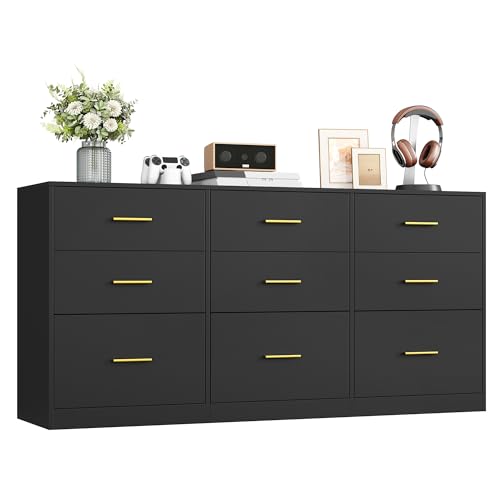
Deep Drawer Dresser: The Complete Guide to Extra Storage Space
If standard dressers leave your bulky sweaters, bedding, and linens fighting for room, a deep drawer dresser could be the storage upgrade your bedroom has been missing. This guide explains how deep drawers work, what to check before buying, and how to choose the right depth for your needs.
Updated: October 29, 2026 · DresserAdvisor Editorial Team
What Exactly Is a Deep Drawer Dresser?
A deep drawer dresser is defined by drawer depth rather than overall width or height. While a conventional dresser might give you roughly 14 to 16 inches of usable drawer depth, a deep drawer model pushes that to 18, 20, or even 24 inches. Because volume scales with depth, that extra few inches translates into substantially more storage space per drawer, often without increasing the dresser's footprint in your room.
This category overlaps with several related designs. A deep drawer chest typically stacks fewer, taller drawers vertically, while a deep dresser may spread the same depth across a wider case. If you want the added depth specifically in a solid timber build, look at a deep drawer dresser solid wood. Shoppers who need depth plus height often compare these with a deep chest of drawers or a deep chest of drawers for bedroom setups.
How Deep Should Dresser Drawers Be?
Drawer depth should follow what you actually store. The table below maps common interior depths to typical use cases. These are measured from the drawer front to the back panel, inside the box.
| Interior Drawer Depth |
Category |
Best For |
| 14–16 inches |
Standard |
T-shirts, underwear, socks, folded tops |
| 18 inches |
Deep |
Jeans, trousers, activewear, light knitwear |
| 20 inches |
Extra-deep |
Bulky sweaters, hoodies, towels, linens |
| 22–24 inches |
Maximum depth |
Bedding, quilts, seasonal clothing, off-season storage |
For most households, 18 to 20 inches covers everyday clothing comfortably. If your main goal is storing thick winter layers or extra bedding, aim for 20 inches or more. Keep in mind that deeper drawers hold more weight, which makes drawer glide quality and box construction more important than on a standard dresser.
Advantages and Trade-Offs of Deep Drawers
Deep drawer dressers solve real storage problems, but they are not the right fit for every bedroom. Here is an honest breakdown.
Advantages
- More cubic storage per drawer without a larger footprint
- Ideal for bulky items that do not fold flat
- Can reduce the need for extra storage furniture
- Fewer, larger drawers can simplify organization
- Works well for seasonal rotation and guest bedding
Trade-Offs
- Needs more clear floor space in front for full extension
- Items at the back can be harder to reach
- Requires sturdier glides to handle heavier loads
- Less suitable for small items like accessories
- Deep drawers can become disorganized without dividers
What to Check Before Buying
Because deep drawers carry more weight, construction quality matters more than it does on a standard dresser. Use this checklist to evaluate any model you are considering.
1. Drawer Glides and Load Rating
Look for full-extension metal ball-bearing glides. Full extension lets you reach the very back of a deep drawer, which is the main usability weakness of deep designs. Check the stated weight rating per drawer and make sure it comfortably exceeds what you plan to store. Premium and luxury tier dressers typically specify higher load ratings and smoother glide action than entry-level models.
2. Joinery and Drawer Box Construction
The drawer box is what carries the load. English dovetail or French dovetail joinery signals durable construction. Stapled or glued butt joints are common at the entry-level tier and can loosen over time under heavy loads. A reinforced bottom panel and solid wood sides are signs of a well-built drawer box.
3. Overall Case Depth and Clearance
Measure twice. A deep drawer dresser's case depth is larger than a standard one, and the drawers need room to extend. Plan for roughly the full drawer depth plus a few inches of clearance in front of the dresser so you can open drawers fully without hitting a bed or wall.
4. Material and Finish
Solid wood frames and drawer fronts hold up best in the long run, especially in deep configurations where the case carries more weight. Engineered wood can be a reasonable option at the mid-tier, but check that the drawer boxes themselves are reinforced. For a broader overview of material options, see our general dresser buying guidance.
5. Interior Organization Features
Deep drawers tend to swallow small items. Look for models with built-in dividers, or plan to add clothes drawer dividers to keep the space usable. A well-organized deep drawer can hold far more than a crowded standard one.
Quality Tier Guide
To help you compare options without getting lost in specs, we group deep drawer dressers into three tiers based on construction and features:
- Entry-level: Engineered wood case, side-mount or basic ball-bearing glides, stapled drawer boxes. Fine for light use and guest rooms.
- Mid-range: Solid wood frame with engineered panels, full-extension ball-bearing glides, dovetail or reinforced drawer boxes. A balanced choice for daily use.
- Premium / luxury: Solid hardwood case and drawer boxes, dovetail joinery throughout, heavy-duty full-extension glides with high load ratings. Built as a long-term investment.
How to Organize a Deep Drawer Dresser
Deep drawers are most useful when you organize by category and use the full depth deliberately. A practical approach:
- Front zone: Frequently worn items you want to grab quickly, like everyday tops and jeans.
- Back zone: Bulky or seasonal items that you access less often, such as sweaters or spare bedding.
- Vertical dividers: Use dividers front-to-back so you can pull out a section at a time instead of digging through the whole drawer.
- File folding: Fold clothes upright so you can see everything at a glance, even in a deep drawer.
For more detailed organization methods, see our guides on closet organization ideas and clothes drawer systems. If you are setting up a whole bedroom, these ideas pair well with a closet dresser or a closet dresser drawers layout.
Who Should Choose a Deep Drawer Dresser?
A deep drawer dresser is a strong fit for:
- Cold-climate households storing thick sweaters and winter layers.
- Guest rooms and linen storage that need to hold bedding and towels.
- Small bedrooms where maximizing capacity per square foot matters more than drawer count.
- Families who want one well-organized dresser to cover multiple storage categories.
It may be less suitable for very tight rooms where you cannot clear space in front of the dresser, or for households that mostly store small accessories and folded t-shirts.
Frequently Asked Questions
What is a deep drawer dresser?
A deep drawer dresser is a storage piece with drawers that extend further back than standard dressers, typically offering 18 to 24 inches of usable depth. This extra depth creates significantly more cubic storage space per drawer, making it ideal for bulky items like sweaters, bedding, and linens.
How deep should dresser drawers be?
Standard dresser drawers are usually 14 to 16 inches deep. Deep drawer dressers range from 18 to 24 inches of interior depth. The right depth depends on what you plan to store: 18 inches suits most clothing, while 20 to 24 inches works better for bulky bedding and seasonal items.
Are deep drawer dressers good for small bedrooms?
Yes, when chosen carefully. A deep drawer dresser provides more storage in the same footprint, which can reduce the need for additional furniture. However, deep drawers require more floor space in front for full extension, so measure your room and clearance carefully before choosing.
What should I look for in a deep drawer dresser?
Focus on drawer glide quality, joinery construction, and material grade. Full-extension metal glides with a high weight rating are essential for deep drawers, which hold more weight. Dovetail joinery and solid wood construction indicate durable build quality in premium and luxury tiers.